Privacy Booths for Offices and Privacy Pods for the Home
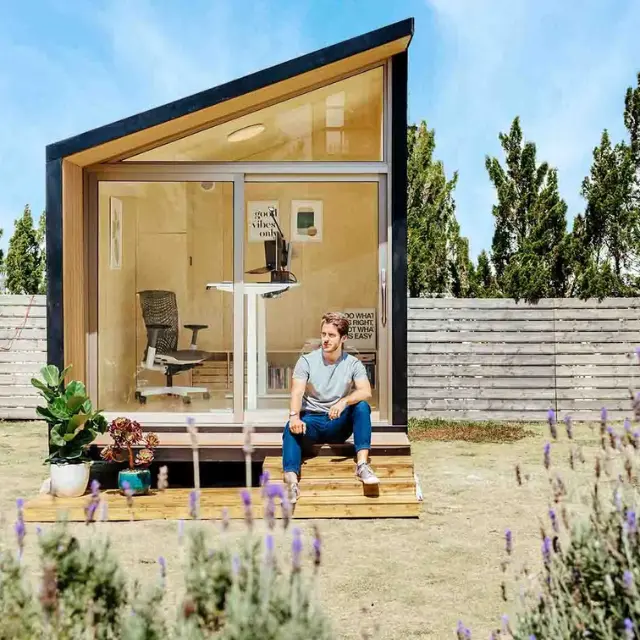
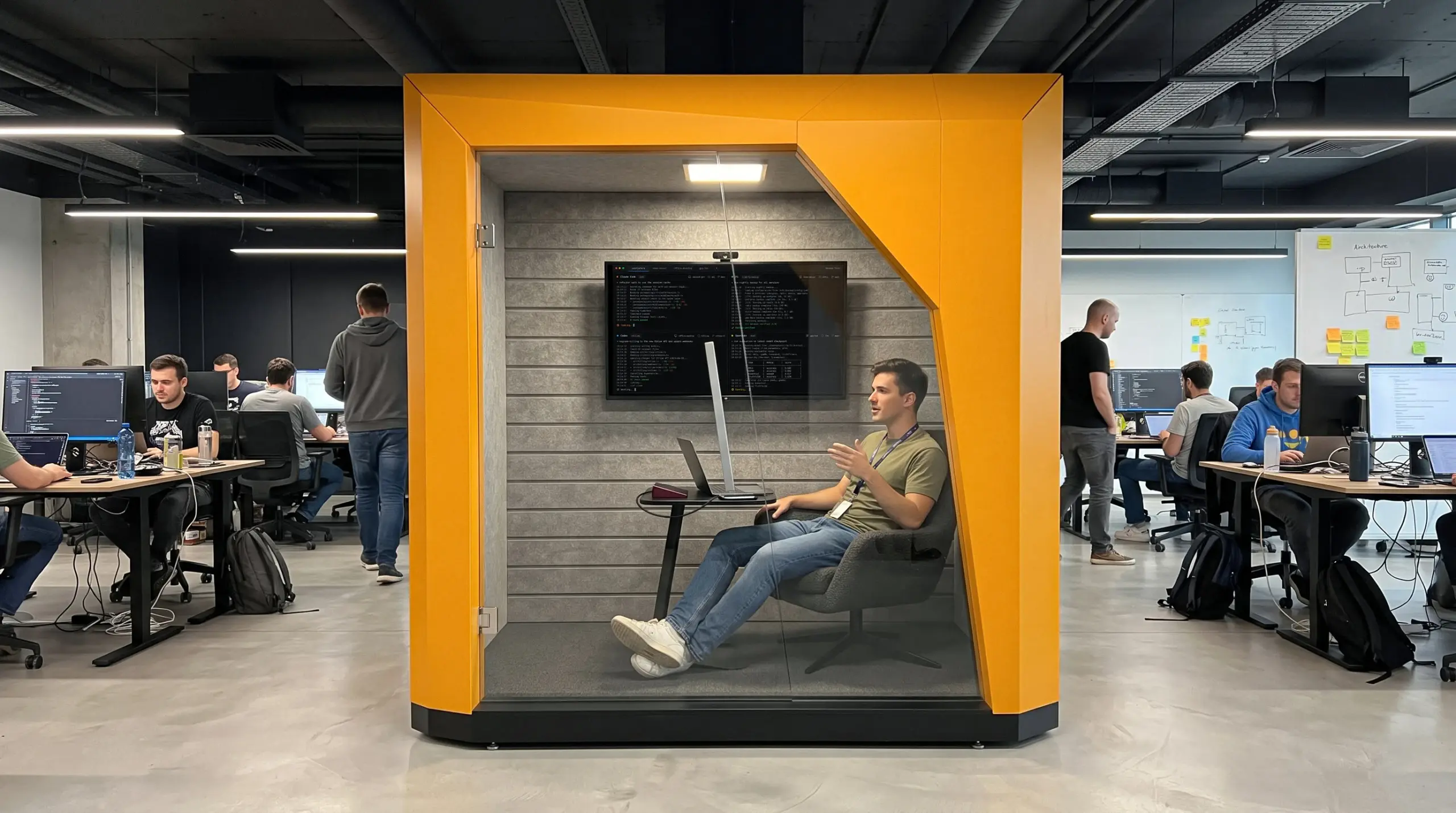
A privacy booth is an enclosed, sound-insulated booth, usually for one person, that stands on an open-office floor so someone can take a call or focus behind a closed door. The catch: it turns nearby speech into a murmur, not silence, and it still needs fresh air, an outlet and floor space. This guide covers how to choose privacy booths for an office, compares indoor picks with listed prices, and ends with backyard privacy pods for a quiet room at home.
Privacy Booth Options at a Glance
One-person privacy booths list from about $5,500 to just over $13,000 before delivery, and a two-person booth costs more than the same maker's one-person unit (Zenbooth lists the Solo at $5,490 and the Duo at $10,490). Backyard pods for a home office are a separate, larger purchase. The table follows the order of the sections below: the Autonomous indoor booth, market examples by starting price, then the Autonomous backyard pods from small to large.
| Pick | Where it goes | People | Sound rating the maker lists | Price from |
|---|---|---|---|---|
| Autonomous Spaceship | Office floor | 1 (a two-person sync fits) | 30 dB speech reduction, preliminary, no standard named | $9,900 |
| Zenbooth Solo | Office floor | 1 | None listed under ISO 23351-1 | $5,490 |
| ROOM Phone Booth | Office floor | 1 | 32 dB noise reduction (NIC scale) | $6,495 |
| Cubicall Phone Booth | Office floor | 1 | No rating listed | $7,995 |
| Framery One | Office floor | 1 | 30 dB, ISO 23351-1 | $13,090 base |
| Zenbooth Duo | Office floor | 2 | None listed under ISO 23351-1 | $10,490 |
| Autonomous MetroPod | Backyard | 1 | No speech rating listed | $18,900 |
| Autonomous WorkPod | Backyard | 1 | No speech rating listed | $20,900 |
| Autonomous StudioPod | Backyard | 1 or more, any use | No speech rating listed | $22,900 |
Prices change periodically; check the product page. The two 30 dB figures are not measured the same way (only Framery names a standard, ISO 23351-1), and ROOM's 32 dB is on the NIC scale, a different measure again; the speech rating check below explains.
What Is a Privacy Booth?
A privacy booth is a walk-in, acoustically insulated room within a room, sized for one or two people, that you place inside an existing office. It also goes by privacy pod, office phone booth, focus pod or acoustic pod.
There is no fixed difference between the names. "Booth" usually means a compact one-person unit for calls, while "pod" also covers larger rooms, including backyard offices you work in all day. Most booths share the same parts: insulated walls, a sealed glass door, fans, a light, power, and room for a chair and a small table or screen.
Why Open Offices Need Privacy Booths
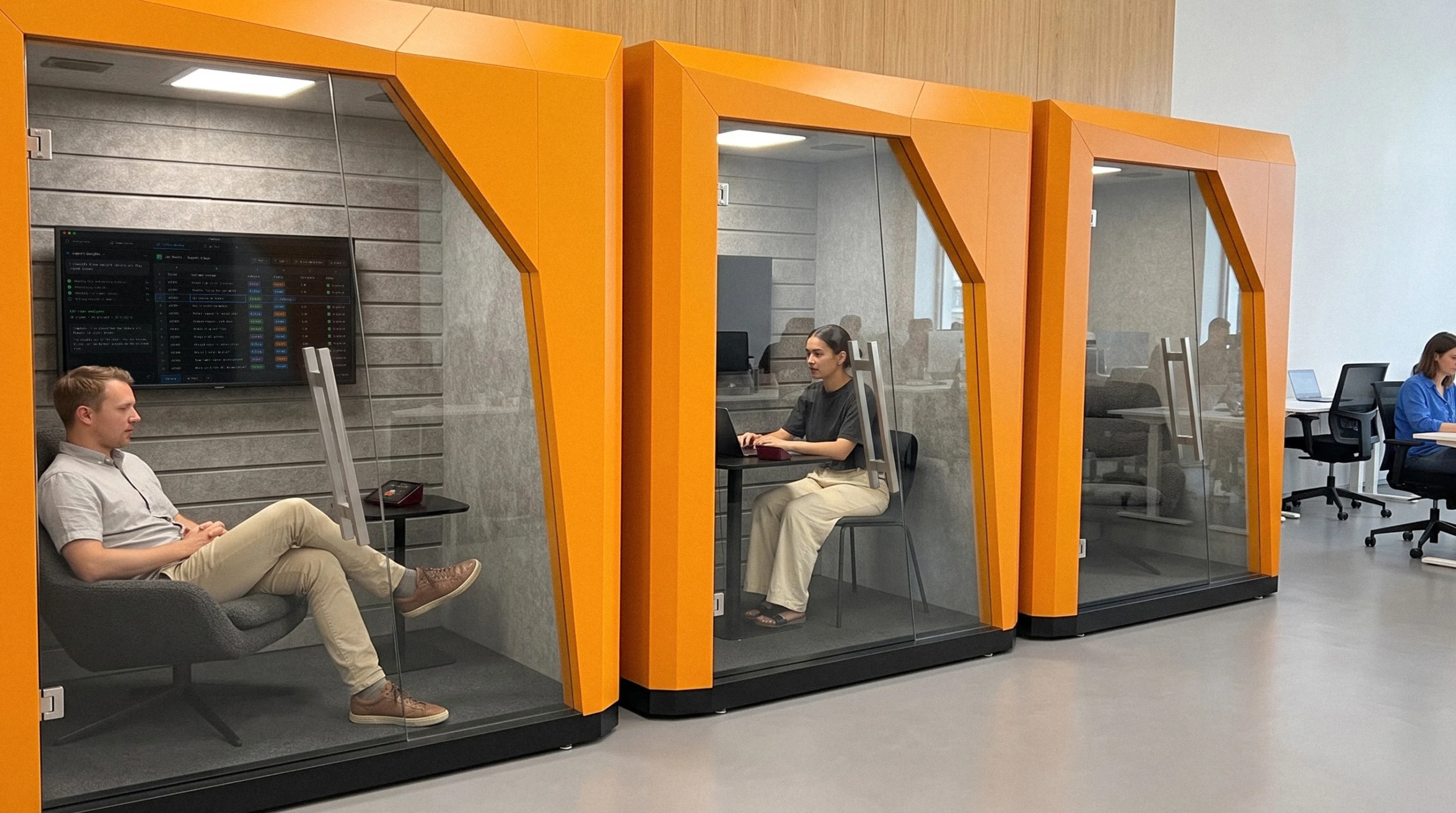
Open offices need privacy booths because an open floor has nowhere to take a call, hold a sensitive conversation or think for an hour without hearing everyone else. Open-concept offices were built to make talking easy, which is the problem for whoever needs quiet, and research on open-plan office noise links it to lower cognitive performance.
The same gap shows up in coworking spaces, libraries and homes where several people work at once. Open floors were also rarely planned for people who are sensitive to noise or simply work better alone.
Cut Out Distractions During Calls
A booth gives anyone on the floor a closed door a few steps away, so an unplanned client call does not compete with office chatter. If the conference room is booked when a client calls back, you walk in and pick up, and nobody waits while you hunt for a quiet corner.
Speech Privacy for Confidential Conversations
A booth keeps your side of a conversation inside the room, which matters for HR talks, sales calls and interviews. It also helps the people who find the open floor hardest. Some neurodivergent employees, including people with ADHD or autism, find open-plan noise harder to filter out, so a quiet room helps them focus.
Visual Privacy Without Hiding People
Visual privacy means people outside can see the booth is in use without hearing why. A glass door does not hide a screen, so face the screen away from the door or keep sensitive work on a laptop turned toward you.
A Quiet Place to Meet Clients
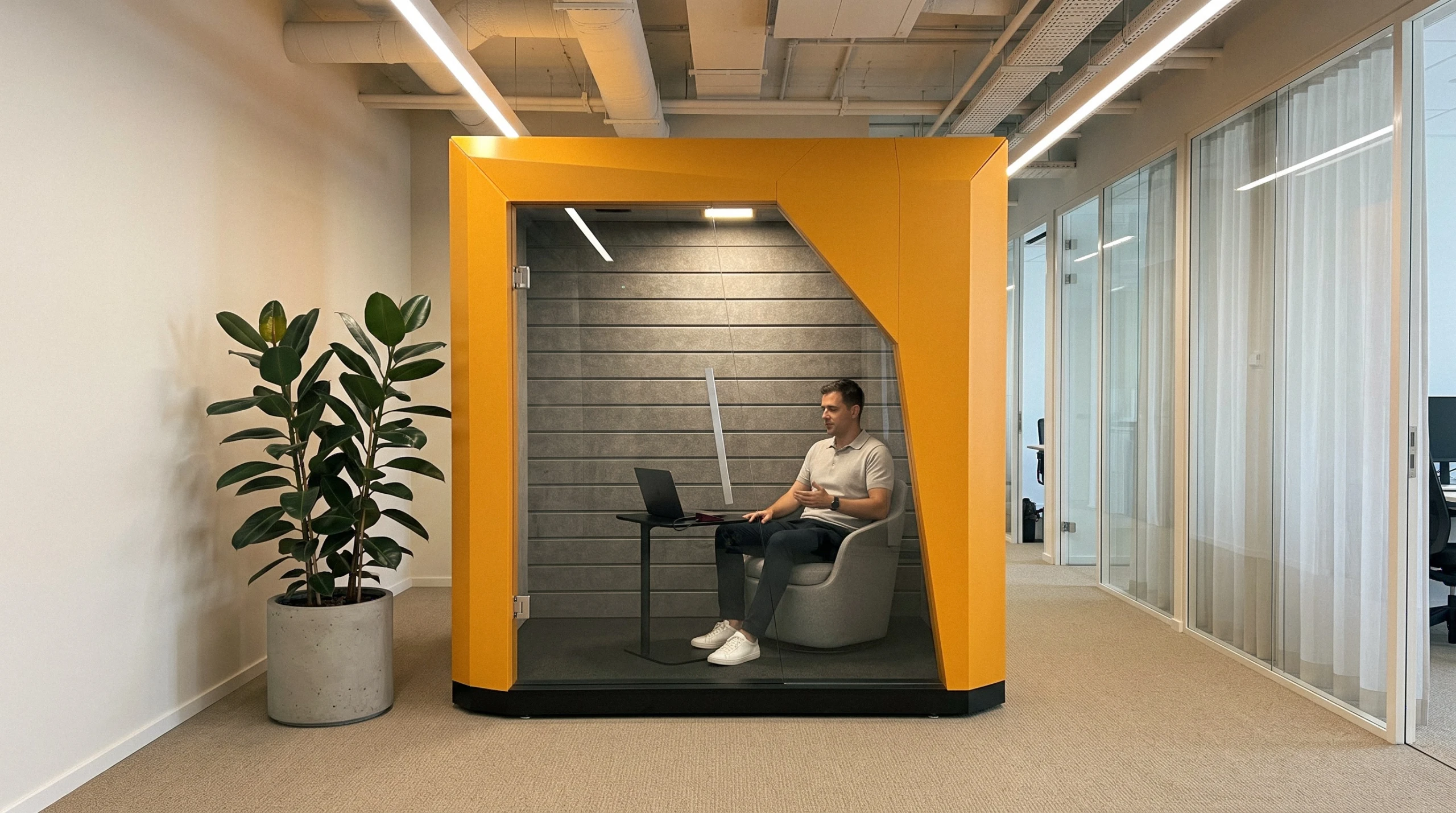
A booth works as an overflow spot for a short client or candidate conversation when every meeting room is taken, and visitors see how the office runs on a normal day. Keep it to two people: a booth built for one is not a meeting room.
A Setup Fitted to One Kind of Work
A booth can be fitted out for the way one person or team works, with a monitor rail, a laptop table, an ergonomic chair and a dimmable light.
Change the Floor Plan Without Construction
A freestanding booth adds a closed room without new walls or ductwork, so it costs less and goes in faster than a built private office. It ships flat-packed and is assembled on site; ask the maker whether it can be taken down and rebuilt if the team moves floors.
Is a Privacy Booth Always a Good Idea?
Not always: a privacy booth pays off only when calls and focus work regularly outrun the meeting rooms. It is a poor buy when the budget is tight or the team rarely needs a closed door. Weigh these downsides first.
- The booth is only part of the cost. Delivery, assembly and furniture often come on top; on Spaceship, the chair, table, screen rail and screen are sold separately.
- It can turn into one person's office. Without a time limit or booking rule, it becomes a private office for whoever gets there first.
- Small rooms do not suit everyone. Some people feel closed in inside a phone-booth-sized unit, so ask the team before you buy.
- It does not quiet the floor. A booth protects whoever is inside; everyone outside still hears the open office.
Cheaper fixes cover part of the same ground. A desk privacy panel blocks sightlines, but sound travels over it. Headphones stop you hearing the room, not the room hearing you, so they help focus but not confidential calls. Booking rules for meeting rooms and a quiet-zone policy cost nothing and are worth trying first if the need is occasional.
How to Choose a Privacy Booth for an Office
Choose a privacy booth by size first, then by a sound rating the maker can back up, the airflow, the power inside, and whether it fits your floor, ceiling and doors. The checks below follow the order most buyers hit them.
Count How Many Booths You Need
Count how many people are on calls at once during your busiest hour, then subtract the meeting rooms free at that hour. The remainder is a sensible first number of booths. Repeat the count across a normal week, since one busy morning overstates it, and add more booths after a month of use rather than ordering for the peak.
Size for One Person or a Team
A one-person booth suits calls and focus work, a two-person booth fits a short sync or interview, and four-person pods are meeting rooms. Zenbooth's range shows the steps: the Solo, the Duo and the Quad, a 7 x 7 ft meeting booth. Group rooms are a different purchase, and the trade-offs between meeting rooms and meeting pods are their own decision.
Speech Reduction Ratings
Look for a tested speech reduction figure with the test standard named, not a "soundproof" label. Framery lists 30 dB of speech level reduction for the Framery One under ISO 23351-1, the lab method for rating how much a pod lowers the speech of the person inside. Autonomous lists 30 dB for Spaceship, measured two desks away and marked preliminary, so the two figures are not like for like.
No booth in this class makes a room silent; Autonomous describes Spaceship's result as normal talk becoming a murmur two desks away. Ask each maker which standard it used and where it measured. STC and other ratings are covered in this look at soundproof office pods.
Ventilation and Fresh Air
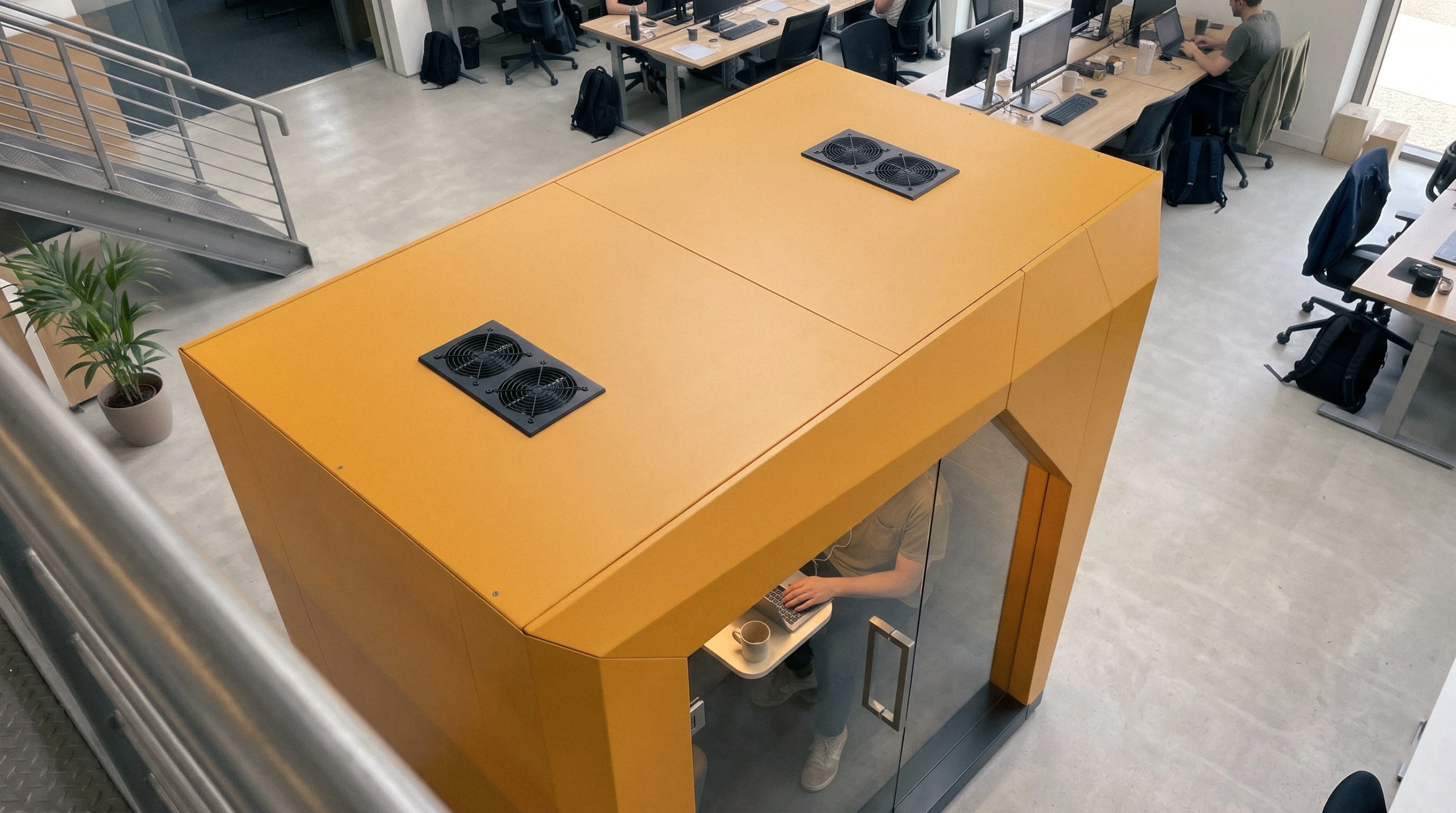
An enclosed booth needs fans that run on their own, because a sealed room gets warm and stuffy fast. Look for separate intake and exhaust, an airflow figure in CFM and a noise figure for the fans. Spaceship uses two 8-inch roof vents, one pulling fresh air in and one pushing stale air out. They move 180 CFM, run at 32 dB(A) at full speed and need nothing switched on.
Power, Data and Light
Check what is wired in: outlets, USB-C, Ethernet and a light you can dim. An Ethernet port only helps if you run a network cable to where the booth will stand. Spaceship runs from a standard 120 V wall outlet and has two outlets, USB-C PD 100 W and Ethernet inside, with a dimmable cove light rated 2700 to 3500 K.
Footprint, Ceiling Height and the Delivery Path
Measure the floor area including the door swing, the ceiling height and every door, elevator and corner on the way in. Spaceship measures 8'2" wide, 5'6" deep and 7'9" tall outside, weighs about 950 lb, and arrives flat-packed by freight for two people to assemble in a day.
Height is the check people miss at home. Spaceship stands 7'9" tall outside, and Autonomous does not list the clearance it needs for assembly or for the roof vents, so ask before you order for a room with a low ceiling. Booths built for rooms in a house are covered in this guide to indoor home office pods.
Glass, Felt and Build Materials
More glass means more light, while more solid wall and felt means less echo and less of you on display. Spaceship's 2.5-inch wall has five layers (aluminum, plywood, acoustic foam, plywood and PET felt) and a 10 mm glass door that seals all round. Hard glass bounces your voice back at the microphone while felt absorbs it, which is also the main lever when you set up an acoustic office pod of your own.
Location on the Floor
Put booths near the people who use them but away from the kitchen, printer and main walkway, with room for the door to open without blocking a path. Ask the building manager whether a roofed booth needs its own sprinkler or smoke detector under local fire code; rules vary by city and building, so settle it before delivery.
Price Tiers
One-person booths list from about $5,500 to just over $13,000, and four-person meeting booths start in the mid-teens, such as the Zenbooth Quad at $16,490, and ROOM's larger Room Collection booths list from $16,995. Add delivery, assembly and furniture before comparing. Office pod prices break down further by type, backyard pods included.
Privacy Booths for Offices Compared
Spaceship is the Autonomous privacy booth for an office floor; the five market examples after it run by starting price, one-person booths first, then a two-person booth. Specs and prices come from each maker's product page, not our own testing.
Autonomous Spaceship for One Person on an Office Floor
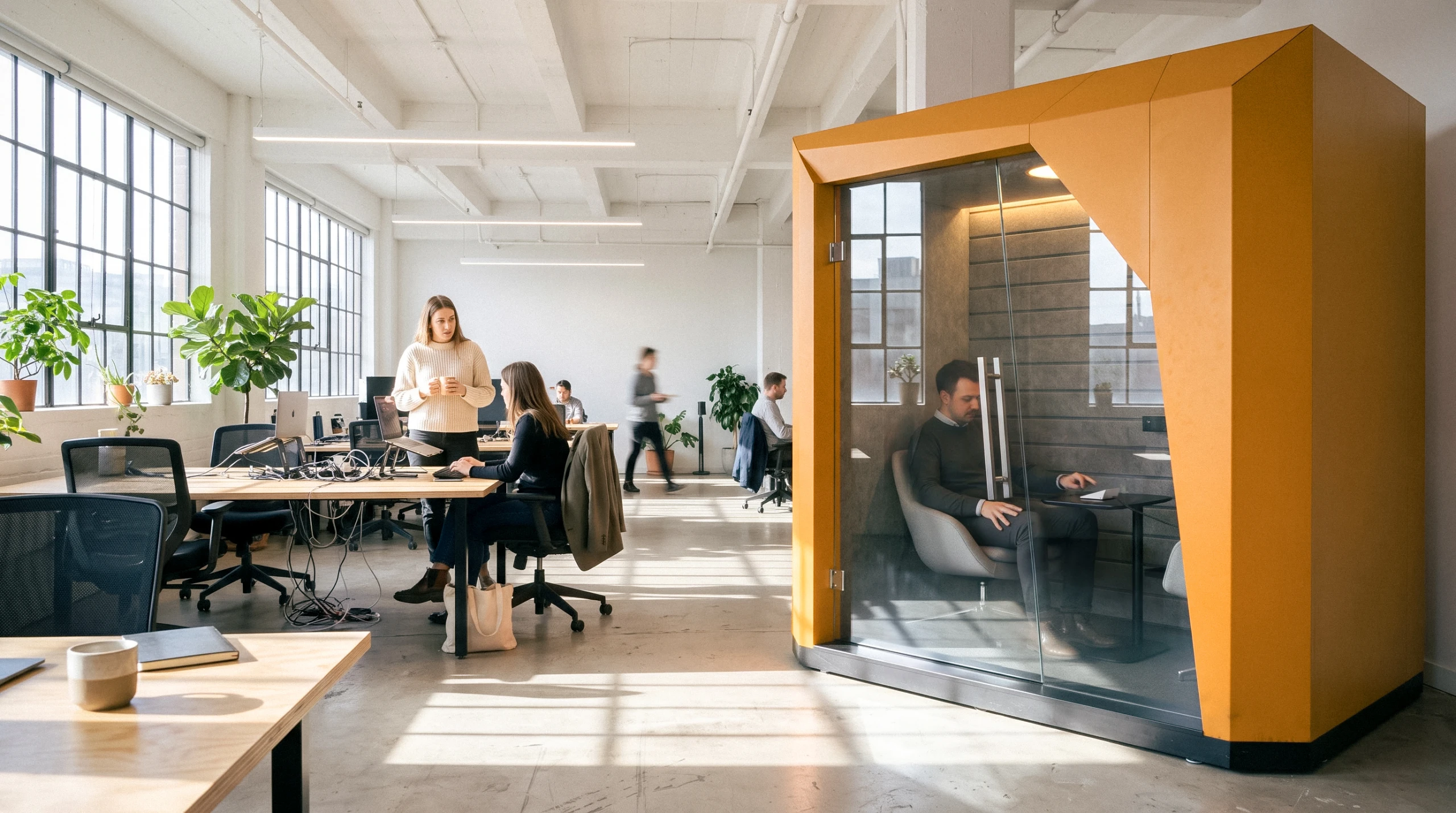
Spaceship is a one-person, sound-insulated room that stands among the desks of an open office, built for calls, recordings and long focus sessions. It has felt walls and ceiling, a 46 x 79 inch sealed glass door and 30 dB of speech reduction, a figure Autonomous marks preliminary. A two-person sync fits if you pull someone in; it is not a meeting room.
The always-on vents, 120 V plug, outlets and Ethernet are covered in the checks above. The swivel lounge chair, laptop table, VESA rail and screen are sold separately, and the warranty is 1 year. Autonomous lowers the per-booth price when an office orders several:
| Spaceship quantity | Price per booth |
|---|---|
| 1 to 2 | $9,900 |
| 3 to 4 | $9,603 |
| 5 to 9 | $9,405 |
| 10 or more | $9,306 |
Prices change periodically; check the product page. One honest limit: at 8'2" by 5'6" it needs more floor than a compact phone booth, so measure before comparing on price.
Zenbooth Solo for the Lowest Listed Starting Price
The Zenbooth Solo is a one-person office phone booth that Zenbooth lists at $5,490, the lowest starting price here. Zenbooth also offers a 30-day return window, which helps if you want to trial one booth before ordering more. Ask for its tested speech reduction figure and the standard behind it.
ROOM Phone Booth for a One-Person Call Room
The ROOM Phone Booth is a one-person booth for calls and focused work that ROOM lists from $6,495, and ROOM sells larger booths in its Room Collection. ROOM lists 32 dB of noise reduction on the NIC scale, which does not line up with the ISO 23351-1 speech figures above, and the booth measures about 3'5" by 3'7", under 13 sq ft.
Cubicall Phone Booth as a Mid-Priced Option
Cubicall lists its phone booth from $7,995, between the entry-level booths and the premium tier, at 41.25" by 41.25" and 88.5" tall outside. Its product page calls it "acoustically sound" but lists no dB rating, so ask for a tested speech reduction figure and the fan airflow before you order.
Framery One for a Rating Under ISO 23351-1
The Framery One is a one-person pod that Framery lists from $13,090 for the base configuration, before delivery and installation. Its 30 dB of speech level reduction is the only rating in this list measured under ISO 23351-1. The catch is the landed price, since delivery, installation and options sit on top.
Zenbooth Duo for Two People
The Zenbooth Duo is a two-person booth that Zenbooth lists at $10,490, for short syncs, interviews and pair work. Measure its footprint (84" by 46.5") and door swing against your floor, and check the product page, since availability varies.
Backyard Privacy Pods for a Home Office
A backyard privacy pod is a small insulated building in the yard, for remote workers who want a door between their remote work setup and the house. It puts a walk between you and the kids, pets and TV, swaps a wall for a view of the yard, and has room for a full desk.
Autonomous makes three of these backyard offices. All are prefab rooms on adjustable feet with no slab, and Autonomous says they go up in 1 to 2 days and stay below the permit threshold in most US cities.
A compact pod covers one person's workday, much like a budget prefab office shed, while a larger prefab studio leaves room for a second use such as a guest room or gym.
If you are weighing a home office shed you build yourself, compare the insulation, wiring and assembly time, not only the price of the shell.
MetroPod for a Small Yard
The MetroPod is the smallest Autonomous backyard pod, with 80 sq ft of floor, a 7.25 ft ceiling, a full-height glass door, five insulated wall layers, two outlets and an Ethernet port. One honest limit: Autonomous rates its comfort range at 65 to 90°F, narrower than the larger pods, so plan for heating or cooling in harsher climates.
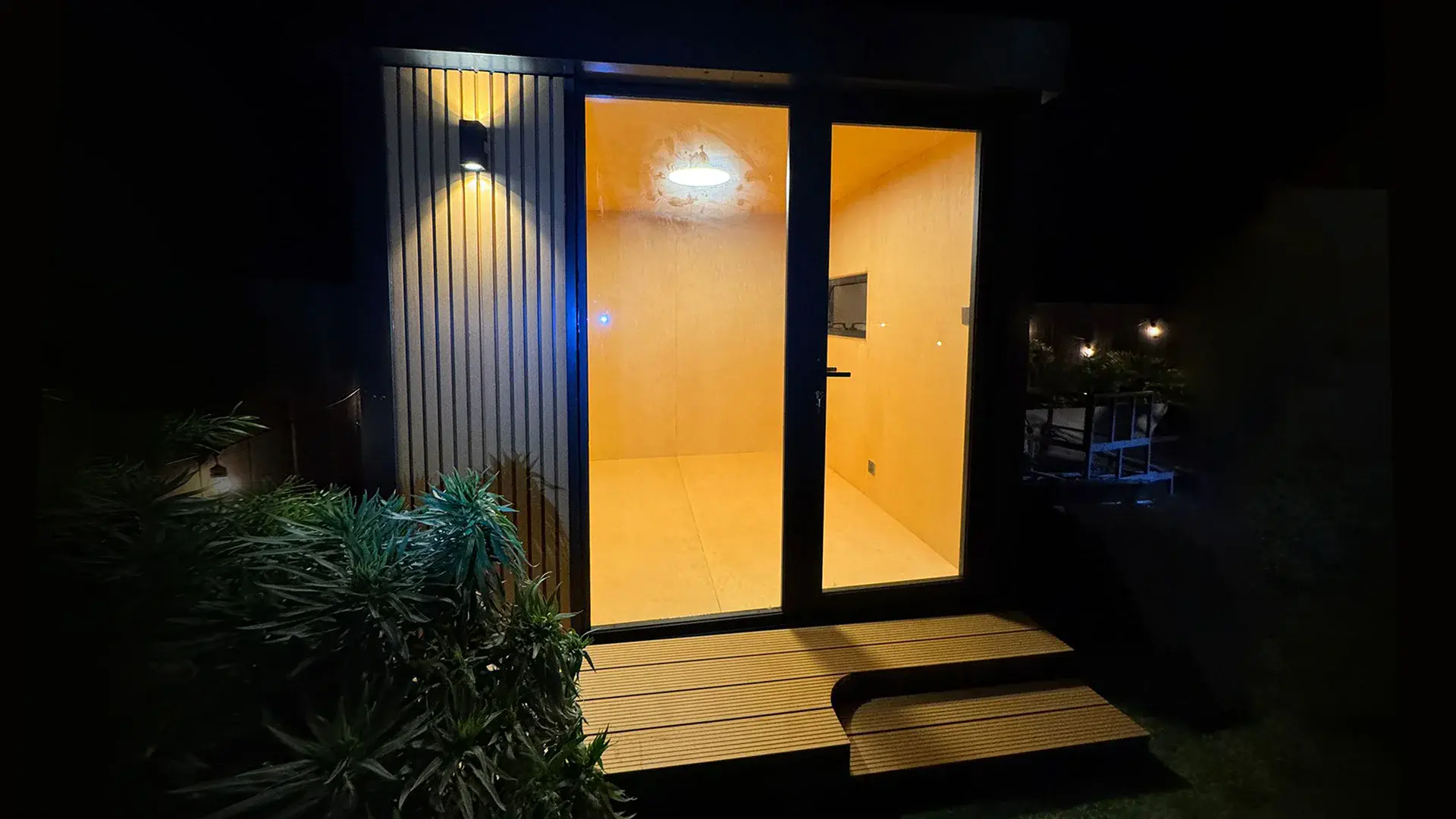
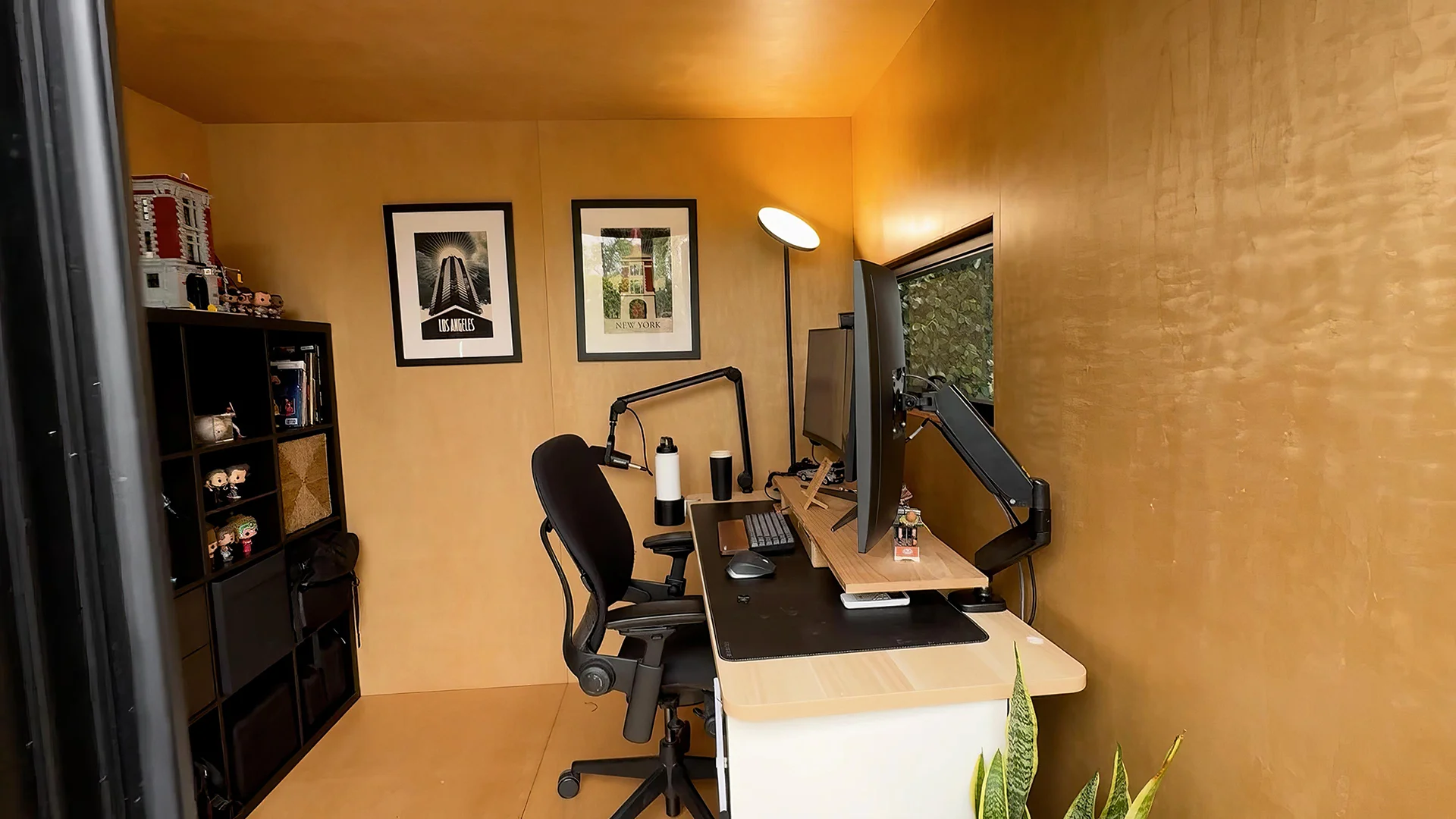
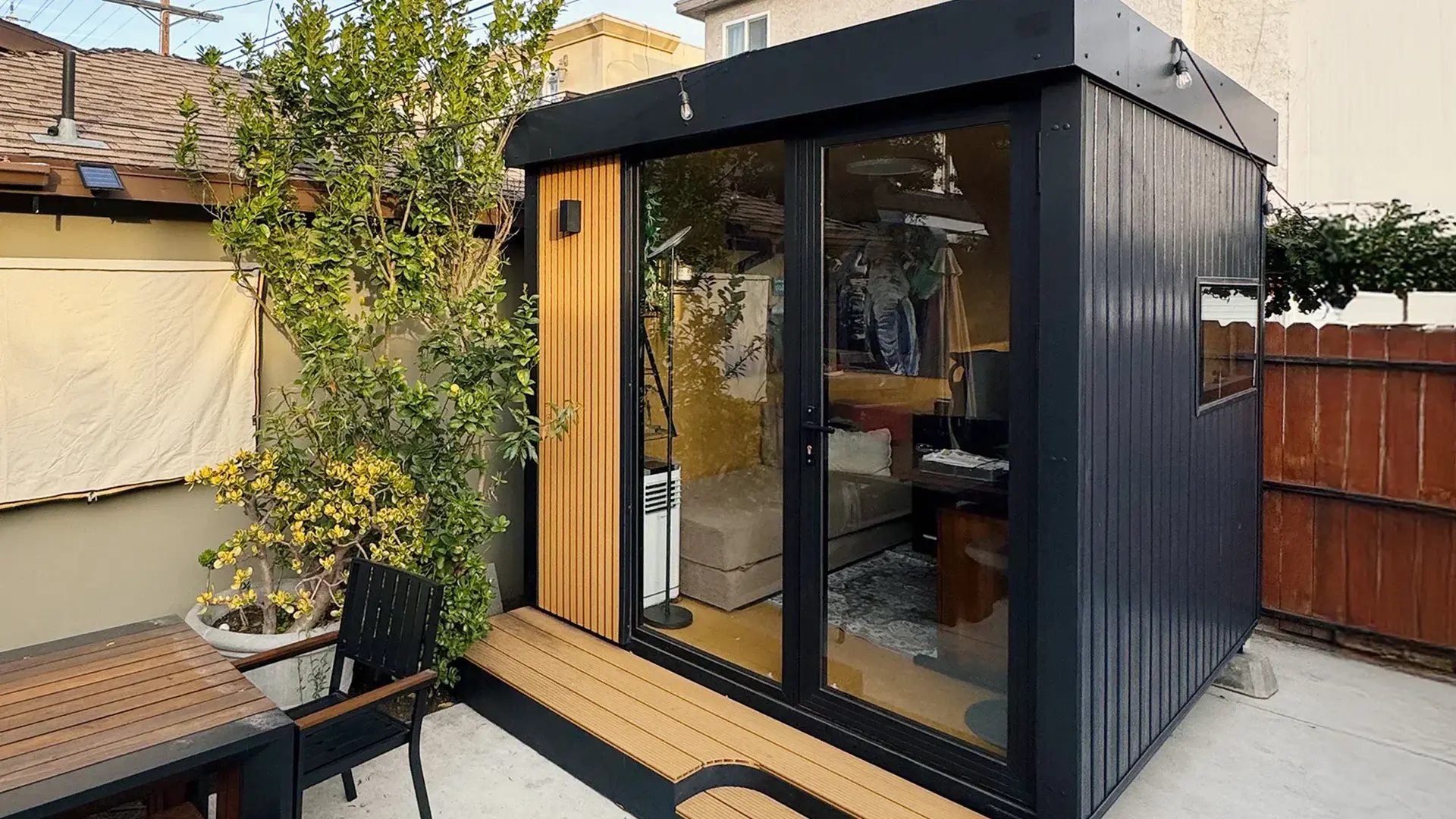
It suits one person who needs a desk, a chair and a door on a city lot, where a larger backyard office shed would take over the yard.

WorkPod for a Full-Time Backyard Office
The WorkPod is a 102 sq ft backyard office pod with six insulated wall layers, a full-height glass door, three side windows, a built-in bookshelf and a ventilator, rated for 45 to 100°F.
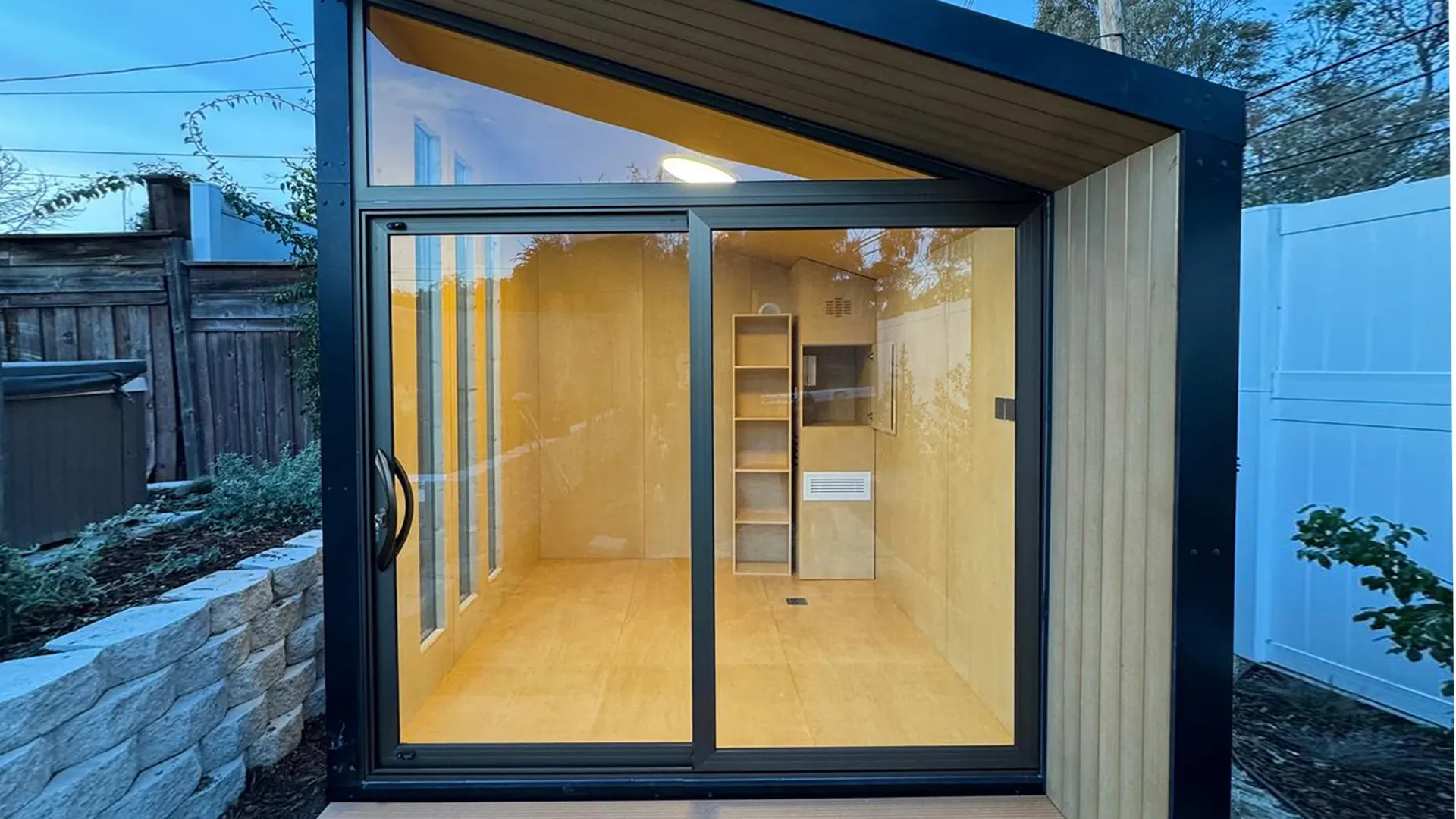
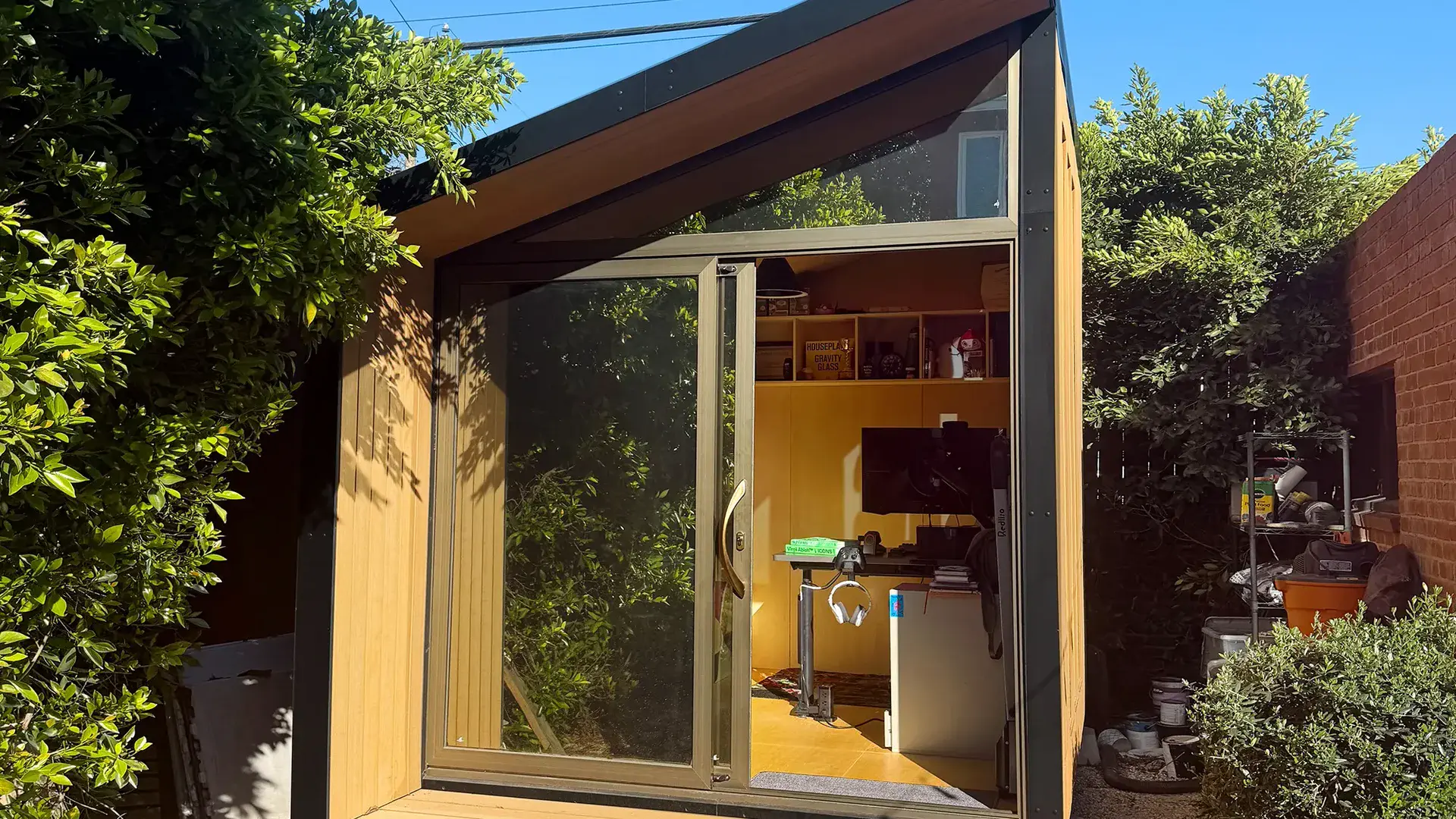
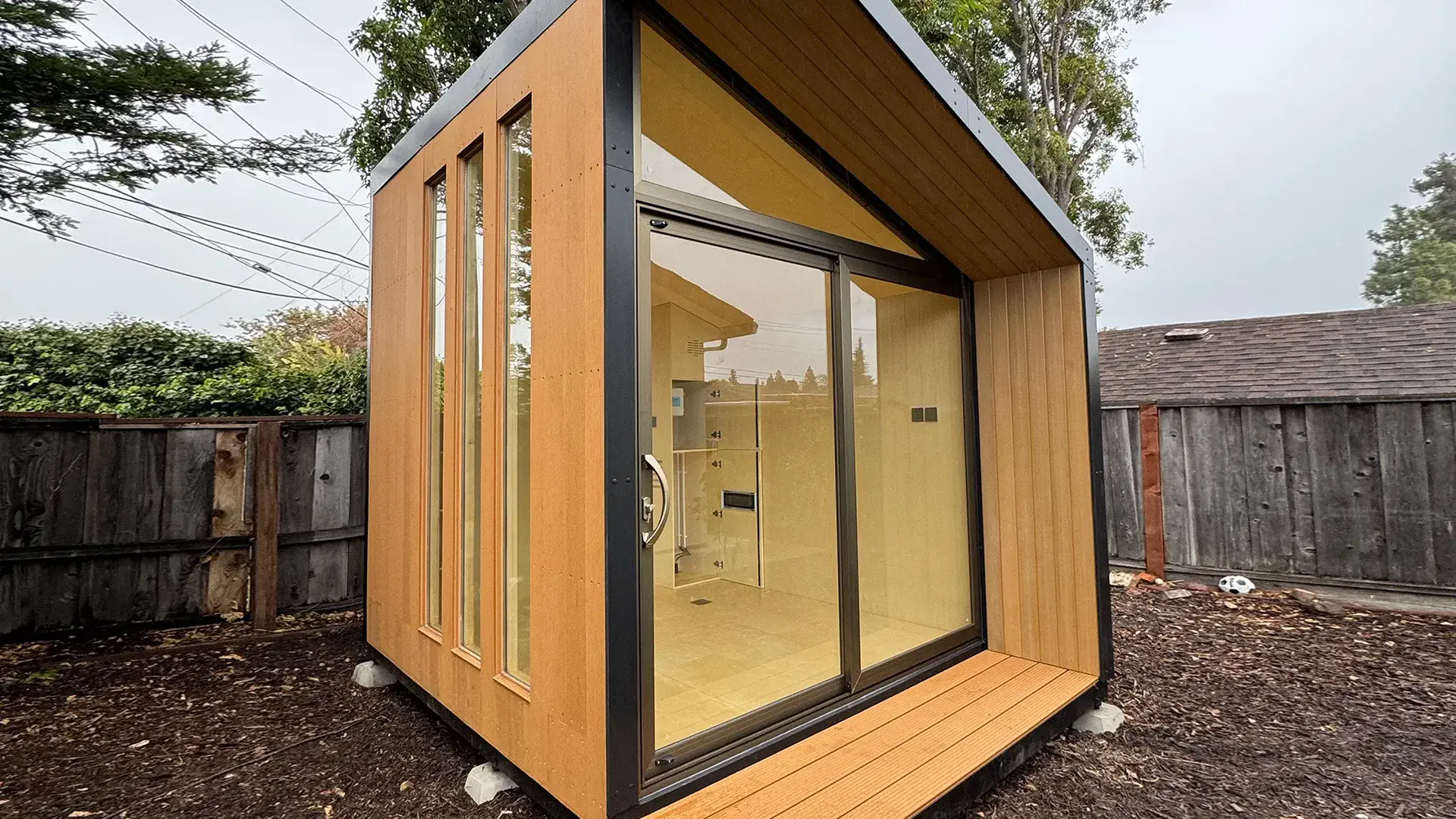
It suits someone who works there all day at a standing desk and takes frequent calls, and the built-in bookshelf covers storage.
To skip the power line from the house, the WorkPod with solar adds three 430 W roof panels and a 10.2 kWh battery, rated at up to 6 kWh a day.
StudioPod for a Room That Changes Jobs
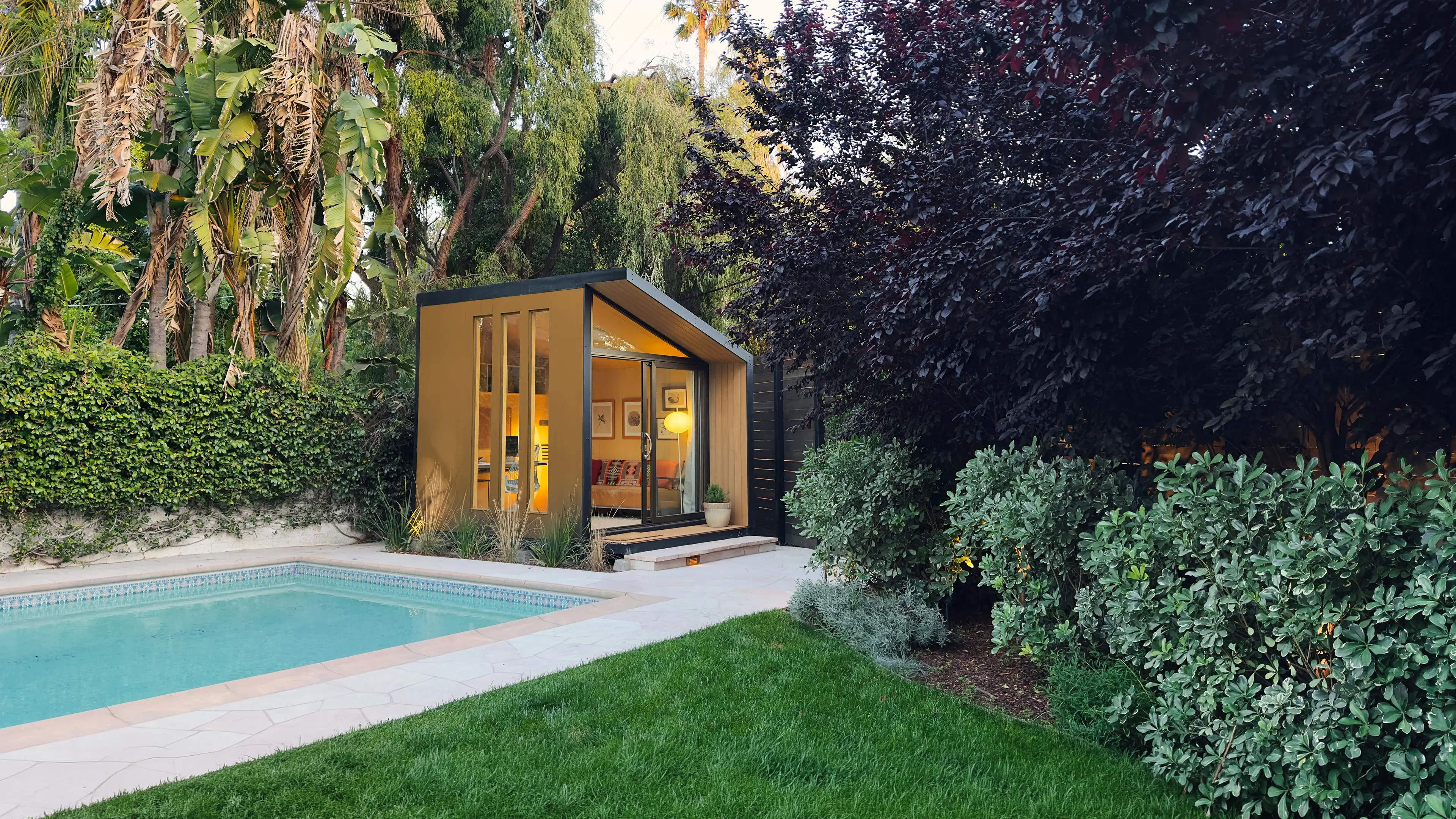
The StudioPod is a 105 sq ft backyard studio that arrives empty, so it can be an office by day and a studio, gym or guest room later. It has six insulated layers, five outlets, four ceiling lights, two Ethernet ports and hinged windows that open for air.

It suits a buyer who wants the room to outlast the home-office need, with space for shelving and work-from-home equipment.

FAQs
Are office privacy pods a good idea?
Office privacy pods are a good idea when calls and focus work regularly outrun the meeting rooms, because a pod adds a closed room without construction. They fit poorly when the budget is tight, the team rarely needs a closed door, or staff dislike small enclosed spaces.
How much does an office phone booth cost?
A one-person office phone booth lists from about $5,500 to just over $13,000 before delivery. Framery lists the Framery One from $13,090 for the base configuration. A two-person booth costs more than the same maker's one-person unit (Zenbooth lists the Solo at $5,490 and the Duo at $10,490).
Are privacy booths soundproof?
Privacy booths reduce sound rather than block it completely. A well-sealed booth turns normal speech inside into a murmur outside, which is enough for calls and focus work. Compare tested speech reduction figures that name their standard, such as ISO 23351-1, rather than a soundproof label.
Do privacy booths need ventilation?
Yes, every enclosed privacy booth needs active ventilation, because the air gets warm and stale fast without it. Look for separate intake and exhaust fans that run automatically and stay quiet. Spaceship, for example, has two 8-inch roof vents rated at 180 CFM and 32 dB(A) at full speed.
How big is an individual office pod?
An indoor booth such as Spaceship has 38 sq ft of floor inside (8'2" by 5'6" outside), compact phone booths from other makers take less (Zenbooth Solo 45.5" by 41" outside; ROOM's phone booth about 3'5" by 3'7" outside), and backyard pods such as the MetroPod, WorkPod and StudioPod run 80 to 105 sq ft.
Can you put a privacy pod in your home?
Yes, a privacy pod can go inside your home if you have the floor area and ceiling height, or in the backyard as a separate room. Indoors, measure the footprint, the outside height and the path through your doors. Outdoors, check local permit and setback rules before you order.
Can I put an Autonomous pod inside an office?
Yes, Spaceship is the Autonomous pod built for an office floor: a one-person, sound-insulated booth that plugs into a standard 120 V outlet. The MetroPod, WorkPod and StudioPod are backyard buildings with adjustable feet and a single outdoor power line, not indoor booths.
What is the Autonomous WorkPod?
The Autonomous WorkPod is a 102 sq ft prefab backyard office with six insulated layers, a full-height glass door, three side windows, built-in wiring and a ventilator. Autonomous lists a 1 to 2 day install, no permit in most US cities, and options for roof solar and Starlink internet.
Conclusion
A privacy booth is worth buying when people on an open floor keep running out of places to take calls and think. Count peak simultaneous calls first, then compare booths on a speech rating with its standard named, quiet always-on airflow, the power inside, and whether the booth clears your floor, ceiling and doors.
For an office floor, Spaceship is the Autonomous indoor booth. For a quiet room at home outside the house, the MetroPod, WorkPod and StudioPod cover small to large yards, and more home office pods for daily work are compared separately.