


How to Size an Office Chair for Real Work

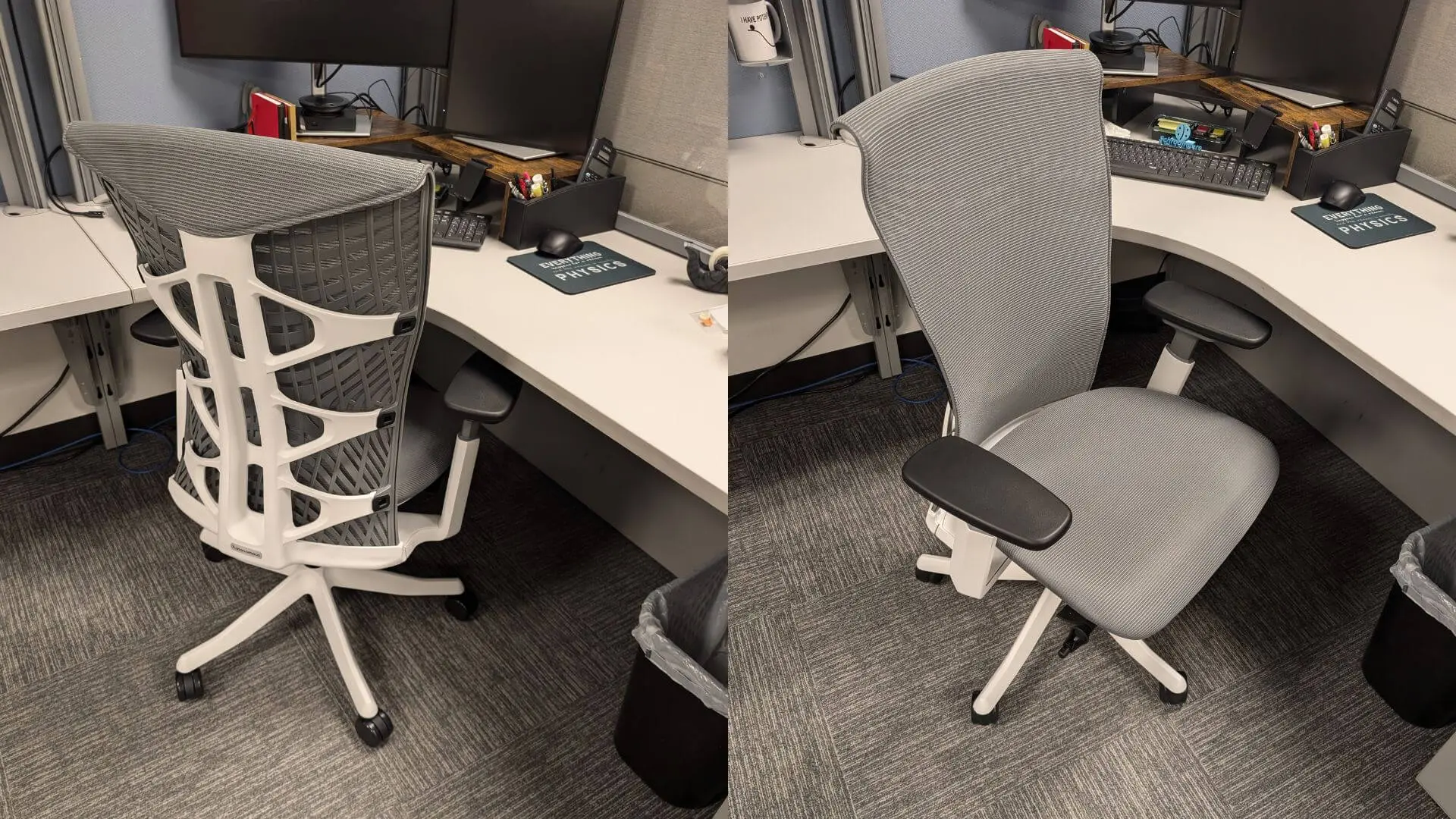
You sit longer than ergonomic catalogs were built for. Twelve hours. Sometimes fourteen. Three monitors, an agent dashboard, a chair that started fine at hour two and feels hostile by hour ten.
Standard office chair size charts were written for the eight-hour worker who takes lunch and walks to meetings. Operators don't take lunch. Here's how to size a chair that holds you through the way you actually work.
What Are the Office Chair Dimensions That Actually Matter?
Five office chair dimensions decide whether a chair works: seat height, seat depth, seat width, backrest height, and armrest height. Everything else is a feature, not a fit measurement.
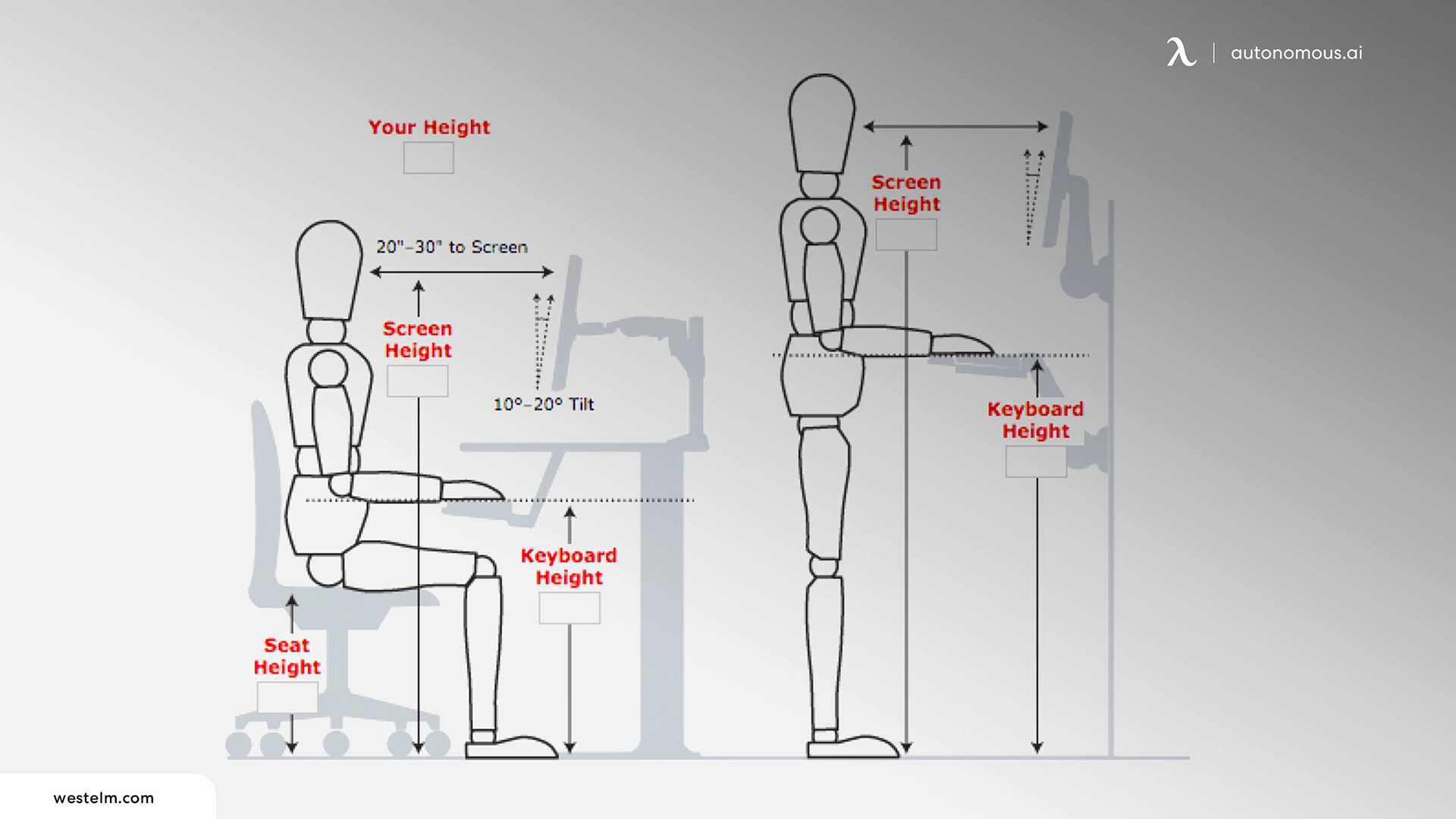
Seat height runs 16 to 21 inches on standard office chair size ranges. That range assumes a 29-inch desk. Adjustable desks broke that assumption a decade ago — your chair height tracks your desk, not a catalog default.
Seat depth is where most chairs fail. Most ship fixed between 16 and 20 inches. This is the dimension responsible for the discomfort you can't quite name: pressure behind the knees, numbness in the thighs, perching on the front edge by 3 p.m.
Seat width has a floor: below 18 inches compresses your hips. Above 22 inches is excess unless you're broader than average through the shoulders.
Backrest height should reach the top of your shoulder blades. Shorter works for under four hours. Longer is what you want for shipping work.
Armrest height puts your forearms level with the desk, shoulders down. Almost no chair lets you set this once and forget it.
How to Measure Your Body Before Measuring the Chair
The right desk chair dimension starts with measuring you, not the chair. Sit in a hard kitchen chair. Feet flat. Record four numbers:
- Floor to the back of your knee → sets seat height
- Back of your hip to the back of your knee → sets seat depth
- Hip width at the widest point → sets minimum seat width
- Floor to relaxed elbow, plus desk height → sets armrest height
Compare to spec sheets, not marketing copy.
Seat Height: The Number Most Charts Get Wrong
The standard formula says set your thighs parallel to the floor. That works for 5'6" to 5'10" at a 29-inch desk. Outside that range, the formula fails.
Better rule: seat height = (knee-to-floor) − 1 inch. An 18-inch knee-to-floor measurement wants a 17-inch seat height. Feet flat, thighs angled slightly down toward the front — which takes pressure off the underside of your thighs and stops you sliding forward.
If your knee-to-floor measurement is over 22 inches, standard office chair size cylinders can't reach you. Look for tall-user cylinders or accept the compromise.
Seat Depth: The Dimension Most Chairs Ignore Entirely
Bodies vary by four to six inches in upper-leg length. Most chairs vary by zero. That's the mismatch.
The rule: back flush against the backrest, two to three fingers fit between the back of your knee and the front edge of the seat. Less compresses circulation. More means your back stops touching the backrest, and you lose every benefit of having one.
Hip-to-knee 18 inches → 16-inch seat depth. Hip-to-knee 21 inches → 19-inch seat depth.
A fixed 18-inch seat pan fits one body and fails the other. Office chairs that adjust seat depth solve this. Chairs that don't never will.
Why Catalog Ergonomics Doesn't Fit Operators
Standard office chair size charts come from posture science built for a worker who sits upright at a typewriter for eight hours, walks to the printer, takes lunch, leaves at five.
That worker doesn't exist anymore. Operators sit longer, move less, lean further forward during focus work, recline harder during thinking work, and switch between modes constantly. Catalog ergonomics holds one posture — the 90-degree-elbow, neutral-spine setup from 1985.
Three failures come out of the mismatch:
Fixed lumbar. Catalog sizing puts a hard bar at one height. It fits when you sit upright. It digs into your spine when you lean forward to debug or back to think.
Static seat depth. Operators shift forward when focused and back when relaxed. A fixed seat pan supports one of those positions, not both.
Armrest geometry. Catalog armrests are positioned for typing. They fail for calls, for gaming, for sessions moving between mouse, keyboard, and tablet.
A chair sized for the catalog worker holds up for four hours of light desk work. Beyond that, the failure modes compound. The right chair for an operator sizes differently, supports differently, and adjusts differently.
The Chair Built Around the Way Operators Actually Sit
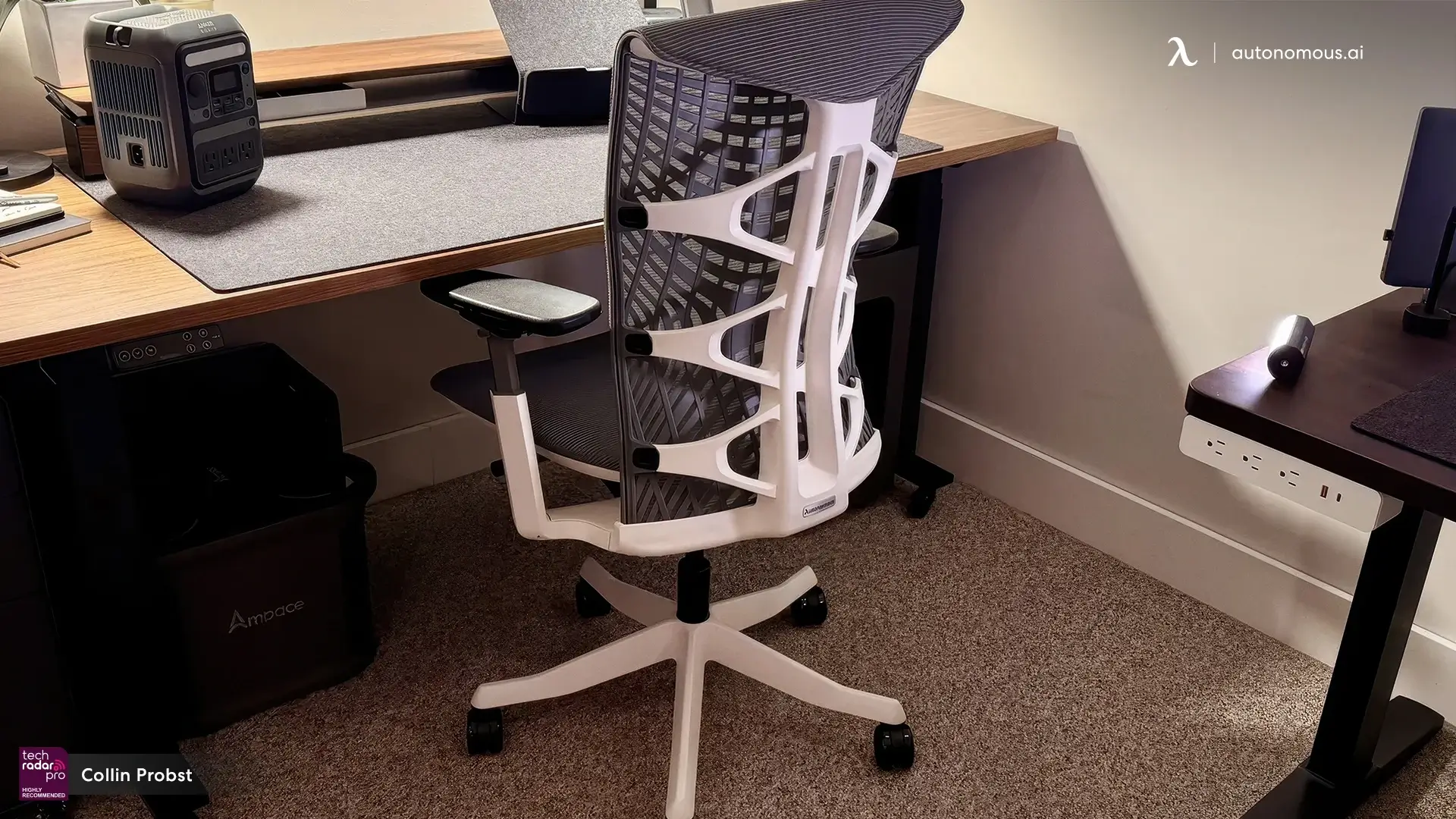
The ErgoChair Ultra 2 was sized for a different workday. Standard chairs fix the lumbar at one height and the seat at one depth. This one moves with you.
No lumbar bar to position. The whole back flexes — forward to debug, back to think, thirty times an hour. No setting to get wrong, because there's no setting to get.
Seat depth adjusts across a range wide enough for most adult leg lengths. Seat height runs taller than the standard cylinder — what operators over 6 feet need and rarely get. The 4D armrests hold position once you set them.
The spec sheet covers the rest. The point isn't the spec sheet. The point is the chair was sized around how operators sit, not how the 1985 office worker did.
FAQs
What is the standard office chair size for someone 6 feet tall?
Seat height around 19–20 inches, seat depth around 19 inches, backrest height at least 22 inches. Most standard chairs top out at a 21-inch seat height, which is workable but tight for users over 6'2".
Is a wider office chair always better?
No. Office chair width above 22 inches usually means worse armrest reach. The chair is wider than your shoulders, so the armrests sit too far out to support your forearms. Match width to your hip and shoulder span, not to "bigger is better."
How do I know if my office chair is too small?
You feel pressure behind your knees, you perch on the front edge instead of using the backrest, or you find yourself adjusting the chair every hour. Two of these three at the same time means the dimensions don't match your body.
Can a single office chair size fit a household with different-sized users?
Only if the chair adjusts seat height, seat depth, and armrest height. Without all three, the chair will fit one person and fight everyone else.
What desk chair dimension matters most for long sessions?
Seat depth, by a wide margin. Wrong seat depth at hour two feels fine. Wrong seat depth at hour ten is the reason you can't focus.
The Right Office Chair Size Fits Your Body, Not the Catalog
Measure yourself first. Check the chair second. The standard office chair size is built around a worker who doesn't exist anymore — the operator running a one-person company on agents needs different numbers, different geometry, and different adjustability. The ErgoChair Ultra 2 was sized for that work.