.svg)



Truemed HSA FSA Eligible Ergonomic Products at Autonomous

Table of Contents
- What Truemed Is — And How It Expands HSA/FSA Eligibility
- The Medical Case for Workspace Products as HSA/FSA Eligible Expenses
- Autonomous × Truemed Partnership — A Direct Path to HSA/FSA Savings on Your Workspace
- How to Use Truemed at Autonomous Checkout
- The Tax Math: What HSA and FSA Savings Look Like on a Workspace Purchase
- FAQs
- Conclusion
Most people assume their HSA or FSA exists for prescriptions, copays, and medical appointments. Less commonly understood is that the IRS definition of a qualified medical expense extends further — to products that treat or prevent a diagnosed condition, including the workspace equipment many people rely on for eight hours a day.
Through a partnership with Truemed, Autonomous now offers a compliant pathway for qualified customers to apply pre-tax HSA or FSA funds toward eligible workspace products, using funds that would otherwise go unspent.
What Truemed Is — And How It Expands HSA/FSA Eligibility
Health savings accounts and flexible spending accounts were built around a specific IRS principle: pre-tax dollars can be applied to the diagnosis, cure, mitigation, treatment, or prevention of a diagnosed medical condition — as defined in IRS Publication 969, the governing document for HSA and FSA rules. In practice, most account holders navigate that definition narrowly — prescriptions, copays, recognized medical devices — because those are the categories their administrators present by default.
Truemed operates within that same IRS framework, but addresses a broader part of it. It is a payment platform and eligibility enablement tool that helps qualified customers use HSA or FSA funds on health products that may not appear on a standard eligible expense list, but may nonetheless qualify when tied to a specific diagnosed condition and supported by appropriate clinical documentation.
The central document in that process is a Letter of Medical Necessity (LMN). An LMN is a formal record issued by an independent licensed clinician confirming that a specific product is medically necessary for a patient's diagnosed condition. It is not a general wellness endorsement — it is condition-specific, patient-specific, and governed by the same IRS requirements that apply to any qualified medical expense.
In practice: after selecting Truemed at checkout, a customer completes a clinical intake form covering their health history and relevant medical needs. That form is reviewed by an independent licensed clinician — not by Truemed — who determines whether the purchase may qualify as medically necessary for that individual. If the clinician determines it does, an LMN is issued and the transaction proceeds. If not, the transaction is reversed. Truemed supports the workflow; the medical necessity determination is made solely by the reviewing clinician.
Several practical details are worth noting. Truemed does not guarantee eligibility for any purchase — qualification is individual, condition-dependent, and subject to the plan administrator's final authority on reimbursement. An LMN, once issued, is typically valid for up to 12 months and may apply to future purchases of the same eligible products within that period, depending on administrator requirements. Reimbursement timelines vary, though claims are generally processed within days to a few weeks of submission.
For qualified customers with a relevant diagnosed condition, this framework makes HSA and FSA spending on workspace products a compliant pathway worth understanding.
The Medical Case for Workspace Products as HSA/FSA Eligible Expenses
Understanding Truemed FSA eligibility begins with a straightforward question: what medical condition does this product address? That question — not the product category itself — is what determines whether a workspace purchase qualifies under IRS guidelines.
For ergonomic workspace products, the clinical foundation is well-established. Musculoskeletal disorders, chronic lower back pain, and conditions arising from prolonged sedentary posture represent some of the most prevalent and well-documented occupational health concerns in the United States — ones that affect how people sustain output across a workday, regardless of employee flexibility arrangements.
The relationship between workspace configuration and these conditions is not incidental — research consistently links inadequate ergonomic support to the onset and progression of spinal compression, postural dysfunction, and repetitive strain injuries. For individuals diagnosed with these conditions, the workspace itself becomes clinically relevant. A productive work environment depends in part on physical conditions that reduce, rather than compound, these risks over time.
The IRS definition of a qualified medical expense covers products used to treat, mitigate, or prevent a diagnosed condition. Under that definition, a standing desk prescribed to address documented musculoskeletal deterioration, or an ergonomic chair recommended for a patient with diagnosed lumbar pathology, sits within the same eligibility framework as a conventional medical device. The product's category is secondary; the clinical relationship between the product and the condition is what governs eligibility.
This is the principle that makes Truemed reimbursement applicable to workspace products for qualified customers. It is not a broad wellness claim — Truemed's process specifically requires that a licensed clinician review an individual's health history and confirm medical necessity before any LMN is issued. General ergonomic improvement, comfort, or productivity are not qualifying grounds. A diagnosed condition that the product demonstrably addresses is.
The range of conditions that may support eligibility for ergonomic workspace products — subject to individual clinical review — includes chronic back and spinal conditions, diagnosed postural disorders, musculoskeletal injuries with documented occupational impact, and conditions where prolonged sitting or inadequate workstation support is clinically contraindicated. The overlap between occupational health and work-life balance is most visible here — where the physical conditions of daily work have direct consequences for long-term health outcomes. Cognitive fatigue associated with neurological or attention-related diagnoses represents an emerging category, one where clinical literature on workspace configuration and cognitive load is continuing to develop.
What this means practically is that HSA and FSA account holders with relevant diagnosed conditions have a legitimate basis to explore whether workspace products qualify under the Truemed HSA FSA pathway — not as a general benefit, but as a condition-specific, clinician-reviewed expense. The determination, in every case, rests with the independent licensed clinician conducting the review.
Autonomous × Truemed Partnership — A Direct Path to HSA/FSA Savings on Your Workspace
For most people, HSA and FSA funds accumulate quietly in the background — drawn down at the pharmacy, occasionally applied to a specialist visit, and in many cases left partially unspent at year end. The question of whether those funds could apply to something as fundamental as a workspace rarely comes up, because until recently, there was no straightforward way to find out.
Autonomous's Truemed partnership changes that. Qualified customers can now complete the full clinical intake and LMN process directly through the Autonomous checkout — without separate provider visits or manual paperwork. The Truemed HSA FSA pathway is integrated into the purchase experience, making it practical for customers who already have a diagnosed condition and pre-tax funds available to act on both at once.
1. Standing Desks
Height-adjustable standing desks have a stronger clinical evidence base than most workspace products, supported by research linking prolonged static sitting to musculoskeletal disorders.
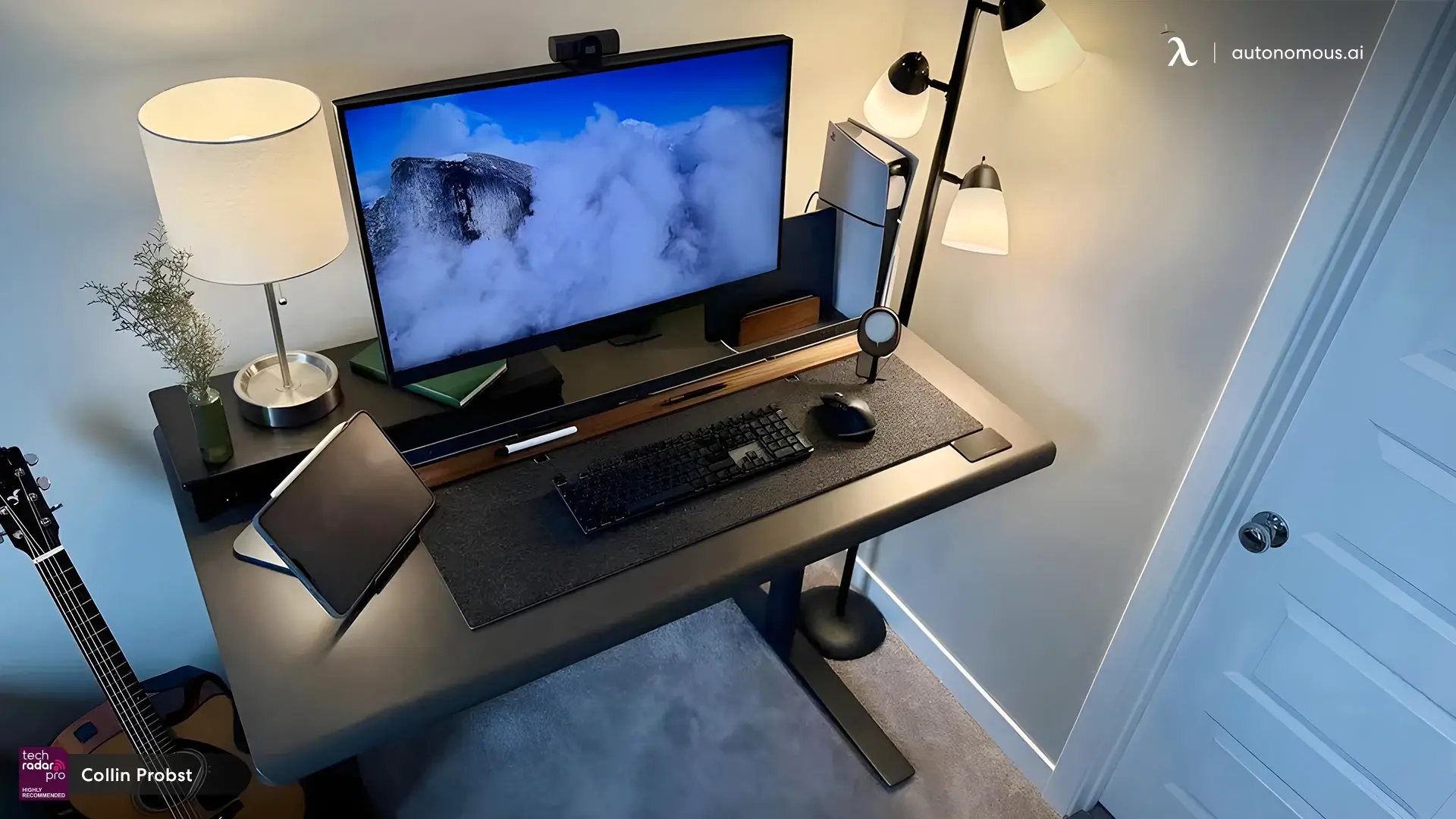
For customers diagnosed with chronic back pain or conditions where static posture is contraindicated, a standing desk addresses a documented clinical need. Where an independent licensed clinician confirms that relationship through the Truemed eligibility review, Autonomous standing desks may be HSA/FSA eligible with a Truemed LMN.

2. Ergonomic Chairs
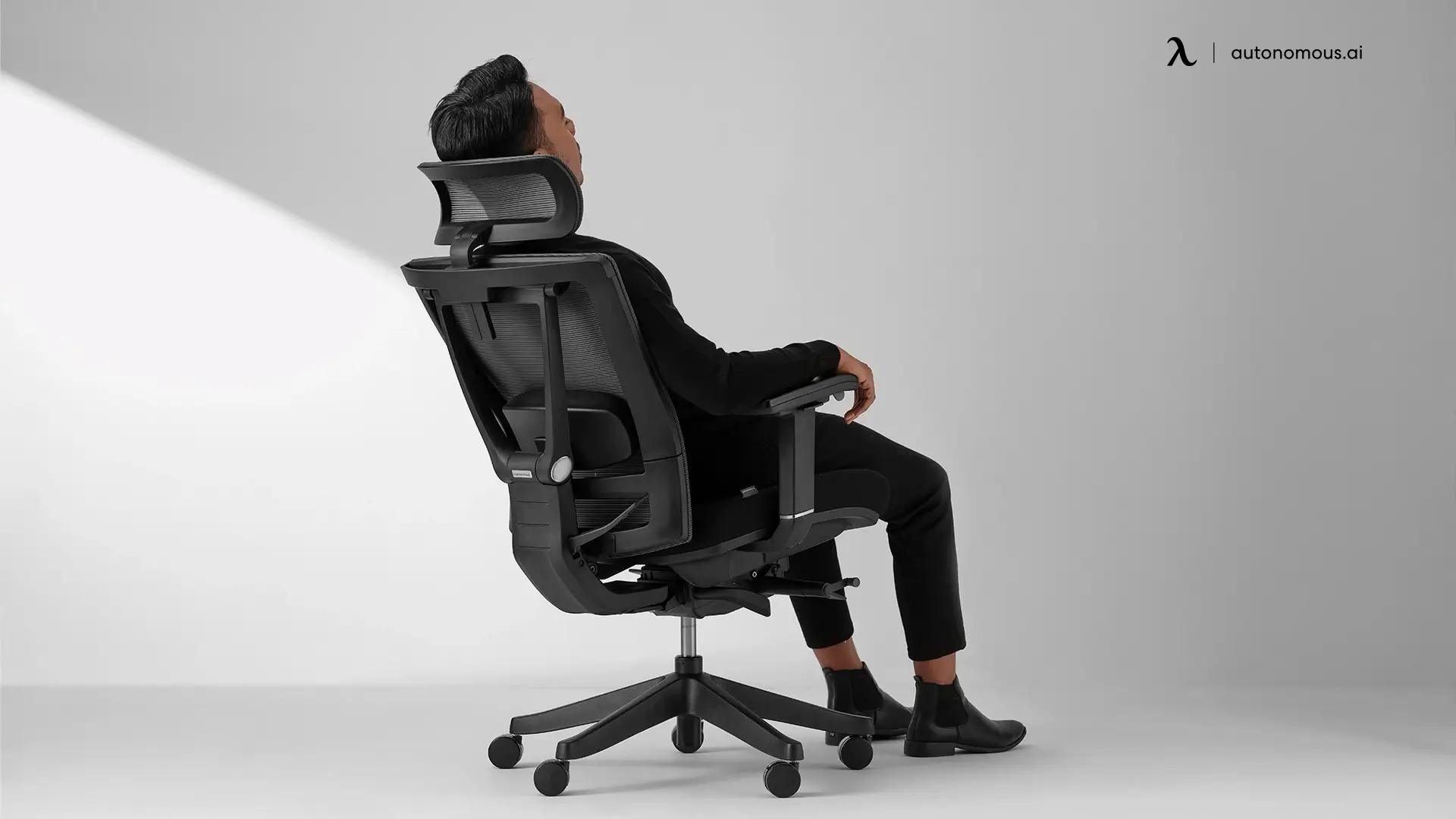
Chronic lower back pain, sciatica, and musculoskeletal disorders are among the most commonly cited conditions in ergonomic chair reimbursement cases. Autonomous ergonomic chairs are included within the Truemed pathway for qualified customers whose clinical history supports medical necessity — assessed individually through the clinical intake form at checkout.

3. Office Accessories
Select office accessories at Autonomous may also be HSA/FSA eligible through the Truemed partnership, where an independent licensed clinician determines they are medically necessary to address a specific diagnosed condition. As with standing desks and ergonomic chairs, eligibility is assessed individually through the clinical intake form at checkout — product category alone does not determine qualification.
What the partnership makes possible, in practical terms: a customer with an existing diagnosed condition, an HSA or FSA balance, and a workspace that hasn't kept pace with their health needs can now address all three within a single, compliant purchase process.
The full range of Autonomous HSA/FSA eligible products is available at checkout, where the clinical intake form and independent clinician review are included in the purchase at no additional cost.
Truemed is for qualified customers. HSA/FSA tax savings vary. Learn more at truemed.com/disclosures.
How to Use Truemed at Autonomous Checkout
The Truemed HSA FSA process at Autonomous is built into the standard checkout flow. There is no separate portal, no advance paperwork, and no provider appointment required. For qualified customers, the entire pathway — from eligibility assessment to documentation — is completed at the point of purchase.
- Step 1: Select HSA/FSA at Checkout
When checking out on autonomous.ai, select the HSA/FSA payment option at checkout. This routes your order through the Truemed pathway and initiates the clinical intake process. Do not use your HSA or FSA card before reaching this step — the Truemed selection must come first for the purchase to be processed compliantly.
- Step 2: Complete the Clinical Intake Form
You will be prompted to complete a clinical intake form covering your health history and relevant medical needs. This information is submitted to an independent licensed clinician — not to Autonomous or Truemed — who reviews your responses and determines whether the purchase qualifies as medically necessary for your specific condition.
If the clinician confirms medical necessity, a Letter of Medical Necessity (LMN) is issued to your email address, typically within two to five hours. If eligibility is not confirmed, the transaction is reversed and no charge is applied.
- Step 3: Choose Your Payment Method
Once your LMN is issued, two payment paths are available. You can pay directly with your HSA or FSA card at checkout, applying pre-tax funds to the purchase at the point of sale. Alternatively, you can complete the purchase with a regular credit or debit card and submit your receipt alongside your LMN to your HSA or FSA administrator for Truemed reimbursement. Both paths are fully compliant — the choice depends on your account setup and administrator's process.
A few practical notes worth keeping in mind. Your LMN is typically valid for up to 12 months from the date of issue, meaning it may apply to future eligible Autonomous purchases within that period without requiring a new clinical intake, depending on your administrator's requirements.
If your HSA or FSA balance does not cover the full purchase amount, a split payment between your benefit card and a personal card is accepted. And for FSA holders specifically — funds typically expire on December 31, with some plans offering a grace period to March 15. The Truemed pathway at Autonomous checkout is available year-round, but the FSA expiration window is worth accounting for when timing a purchase.
Truemed is for qualified customers. HSA/FSA tax savings vary. Learn more at truemed.com/disclosures.
The Tax Math: What HSA and FSA Savings Look Like on a Workspace Purchase
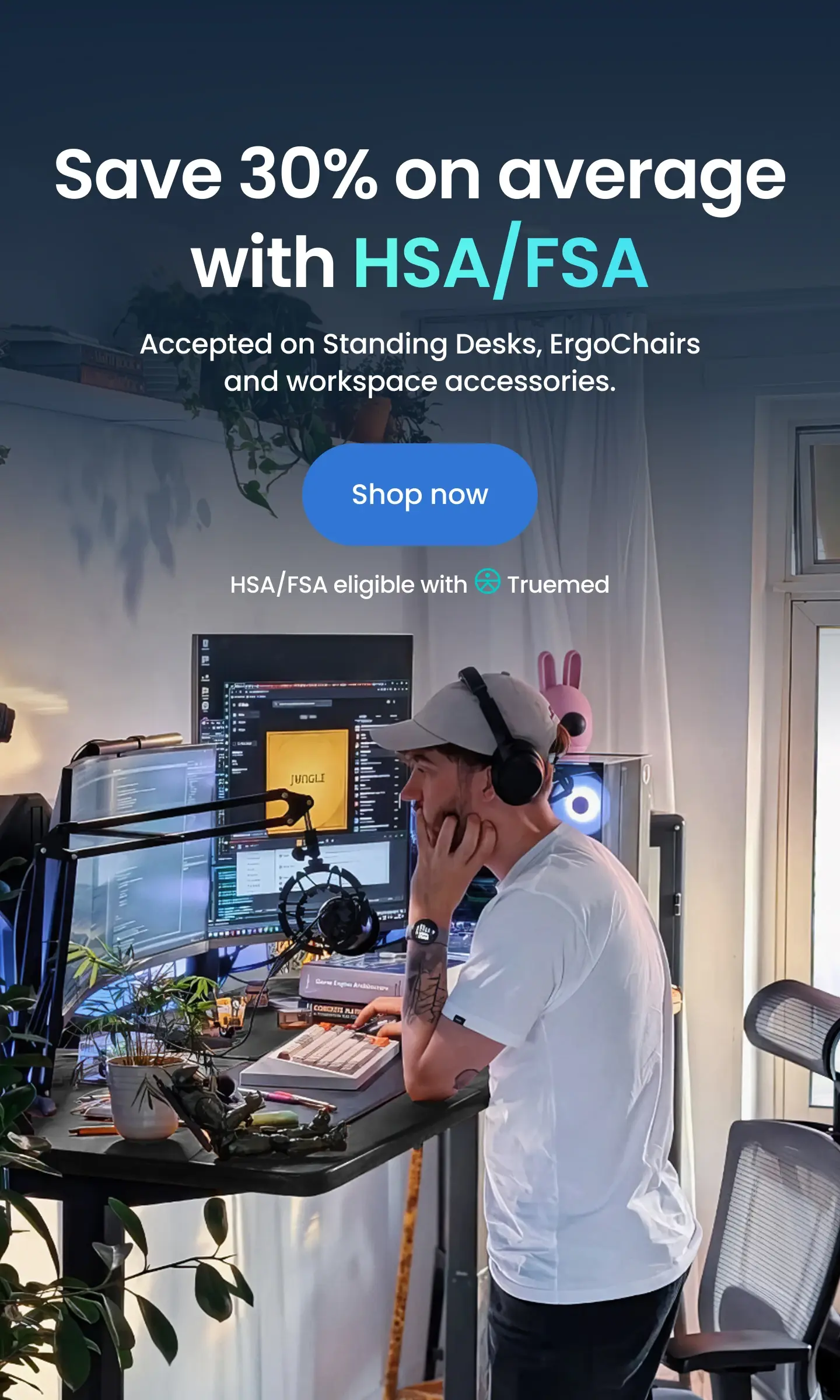
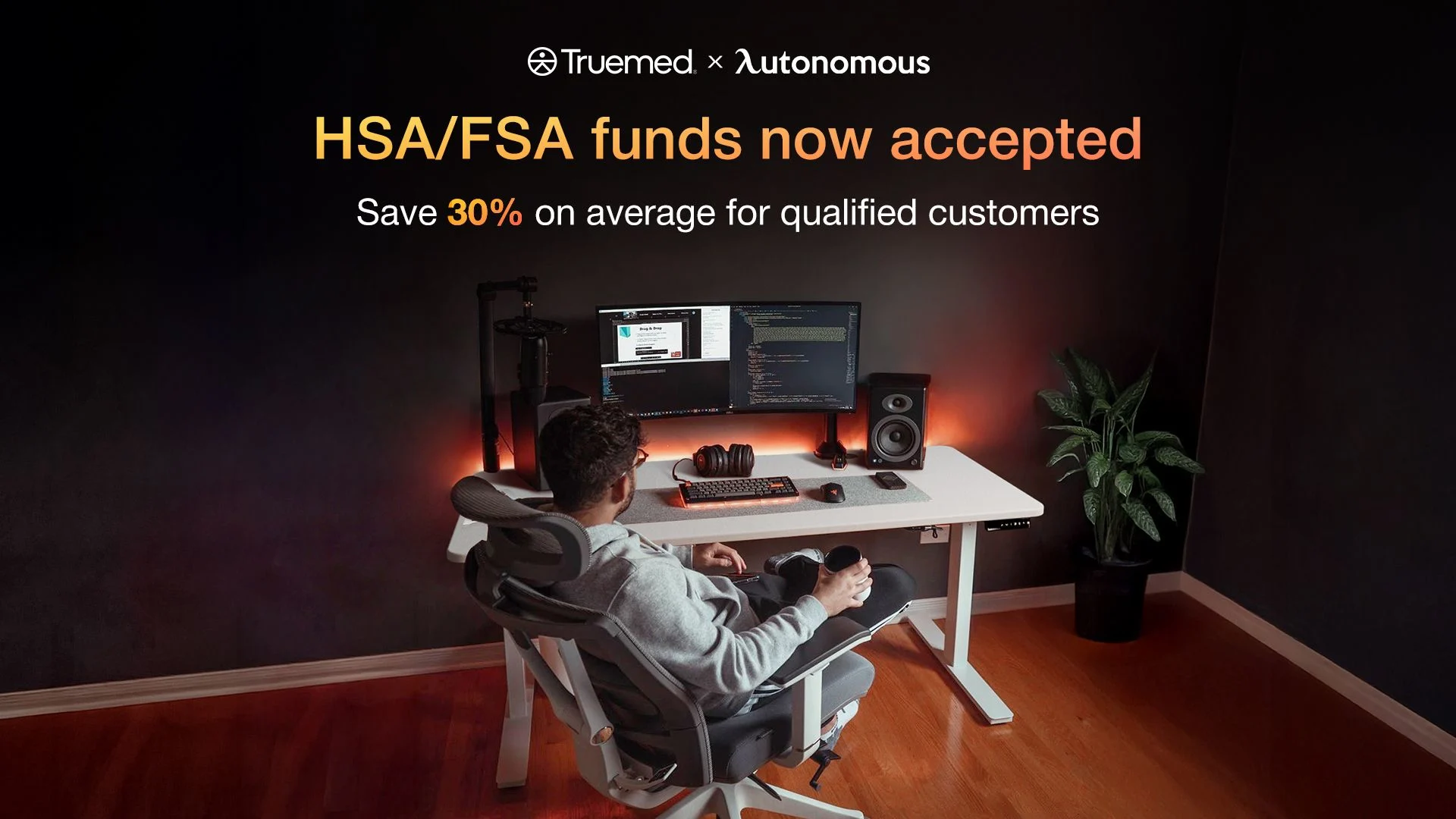
HSA and FSA contributions are drawn from gross income before federal taxes are applied — meaning when those funds are used on a qualified purchase, you are spending money that was never taxed. The effective saving is the portion of the purchase price that would otherwise have been paid as federal income tax, recovered simply by using the right account at checkout. On average, qualified customers using the Truemed HSA FSA pathway save approximately 30% compared to an equivalent out-of-pocket purchase — a figure that reflects the pre-tax nature of the funds rather than a promotional discount.
State income tax compounds this further. Most states that levy income tax apply the same pre-tax treatment to HSA and FSA contributions, meaning the effective saving through Truemed HSA reimbursement exceeds the federal rate alone for the majority of account holders.
For HSA holders, funds carry over without expiration — the decision of when to apply them is entirely personal. For FSA holders, the calculus is different. FSA funds expire at year end, with some plans extending that window to March 15 under a grace period. Those funds don't have to go to waste. Directing them toward an eligible Autonomous workspace product through the Truemed FSA eligibility pathway — before that date — converts an expiring benefit into a clinician-confirmed, IRS-compliant health investment.
It is also worth noting that partial reimbursement is accepted. If your current HSA or FSA balance does not cover the full purchase price, you can apply available funds toward a portion of the order and cover the remainder with a personal card. The pre-tax savings apply proportionally to whatever amount is drawn from the benefit account.

FAQs
Are Autonomous standing desks HSA or FSA eligible through Truemed?
Autonomous standing desks may be HSA/FSA eligible with a Truemed LMN for qualified customers whose diagnosed condition — such as chronic back pain or a musculoskeletal disorder — is confirmed through the clinical intake process at checkout.
Are ergonomic chairs FSA or HSA eligible at Autonomous?
Yes, ergonomic chairs may be HSA/FSA eligible if an independent clinician determines they are medically necessary to treat conditions like chronic back pain, sciatica, or musculoskeletal disorders. This is verified through the Truemed process at checkout.
Do I need a formal diagnosis before starting the Truemed process at Autonomous checkout?
No formal diagnosis is required upfront. The clinical intake form at checkout helps gather your health history and symptoms. An independent clinician will review this information to assess if a diagnosed condition qualifies you for medical necessity.
How does the Truemed FSA and HSA eligibility process work at Autonomous checkout?
At checkout, select the HSA/FSA payment option, then complete the clinical intake form. An independent clinician will review your responses, and if eligible, a Letter of Medical Necessity (LMN) will be sent to your email, allowing you to pay with your HSA/FSA card or submit for reimbursement.
What if I don't qualify — is my Autonomous order still processed?
If you do not meet the medical necessity requirements, your transaction is reversed, and no charge is applied. You can still choose to purchase the item through regular payment methods outside the Truemed pathway.
Will my FSA or HSA administrator accept a Truemed LMN for reimbursement?
Most FSA/HSA administrators accept Truemed LMNs as valid, as they meet IRS requirements. However, some administrators may have specific documentation requirements. If rejected, Truemed can help reissue the LMN in the correct format.
Can I split my payment between an HSA/FSA card and a personal credit card at Autonomous?
Yes, you can split payments. If your HSA/FSA balance does not cover the full cost, you can apply the available balance from your benefit card and pay the rest with a personal card. Pre-tax savings apply to the portion paid with the benefit account.
How is the Truemed process at Autonomous different from submitting for HSA or FSA reimbursement manually?
Unlike the manual process, which requires sourcing your own LMN and submitting it to your administrator, the Truemed pathway at Autonomous integrates everything into the checkout process — including the clinical intake, clinician review, and LMN issuance.
Can I use my HSA or FSA toward an Autonomous purchase if I don't have enough funds to cover the full amount?
Yes, you can use partial HSA/FSA reimbursement for the eligible portion of your purchase. The remaining balance can be paid using a personal card. Pre-tax savings apply to whatever portion is drawn from your benefit account.
Conclusion
HSA and FSA accounts represent a meaningful but frequently underutilized financial resource. For account holders with a relevant diagnosed condition and a workspace that hasn't been built around their health needs, the Autonomous × Truemed partnership offers a direct, IRS-compliant channel to apply those pre-tax funds toward products that a licensed clinician has confirmed as medically necessary.
The process is contained within a single checkout experience. The clinical documentation is handled through Truemed's established eligibility pathway — making it one of the more actionable options available within a broader employee wellbeing strategy for individuals managing their own health expenditure.
What this partnership ultimately reflects is a broader shift in how qualified health spending can be directed — away from reactive care and toward the everyday conditions that affect how people work, move, and manage their physical health over time. Ergonomic workspace products have a documented clinical basis. The Truemed HSA FSA framework exists to make that basis actionable. Autonomous's participation in that framework is what makes it accessible at checkout.

Stay connected with us!
Subscribe to our weekly updates to stay in the loop about our latest innovations and community news!
Interested in a Link Placement?