Secretlab TITAN Evo Review: How It Compares to ErgoChair Pro
.webp)
Table of Contents
Choosing between the Autonomous ErgoChair Pro vs Secretlab TITAN comes down to what matters most in your workspace. The Autonomous ErgoChair Pro offers breathable mesh and extensive adjustability, while the TITAN Evo brings upholstery and racing-inspired design. Both chairs support proper sitting posture for long sessions, but they take different approaches.
We've tested the key differences in comfort, build quality, and features to help you decide which investment makes sense for your desk setup, whether you're working, gaming, or doing both.
Quick Comparison Table
ErgoChair Pro | TITAN Evo | |
Price | From $599 | From $579 |
Design | Mesh ergonomic office chair | Upholstered gaming/hybrid chair |
Adjustability | 9 independent points | 4 integrated systems |
Best for | Office-focused, upright work | Gaming, reclining, 8 hour desk chair switching |
Sizes | One size (5'4" - 6'4") | Small, Regular, XL (5'6" - 6'9") |
Warranty | 2 years | 5 years |
Price & Value
When comparing Autonomous ErgoChair Pro vs Secretlab TITAN, the entry price difference is about $50. But the final cost depends on which version you choose.
ErgoChair Pro uses flat pricing. You pick mesh or high-density foam, and that's your total. No size tiers, no upcharge for colors. This makes budgeting straightforward - what you see is what you pay.
TITAN Evo pricing shifts based on configuration. Size (Small, Regular, XL), upholstery (leatherette, SoftWeave, NAPA leather), and special editions all affect the final number. Two buyers can pay $50+ difference for the same model line. That flexibility is useful if you want exactly the right size and material, but it also means more decisions before checkout.
Neither approach is objectively better. ErgoChair Pro is simpler to buy. TITAN Evo offers more configuration but requires more decisions.
Autonomous.ai offers an extra 5% off with code BLOGFIRST5. It can be used alongside eligible seasonal promotions, subject to terms and availability.
.jpg)
Build Quality & Materials
In the Autonomous ErgoChair Pro vs Secretlab TITAN comparison, build quality shows up in small, repeatable moments: how stable the chair feels when you shift your weight, how well the mechanisms hold their positions, and how the materials age when exposed to sweat, sunlight, pet hair, or daily friction from jeans and belts.
The two chairs approach durability differently, so “better” depends on what kind of wear you expect in your setup. The specs are in the table above - here's what they mean in practice.
ErgoChair Pro | TITAN Evo | |
Frame | Durable nylon plastic | Steel + aluminum |
Seat material | Mesh or high-density foam | Leatherette, SoftWeave, or NAPA leather |
Chair weight | 48.5 lbs | ~73 lbs |
1. ErgoChair Pro: Lighter Build, Office-Chair DNA
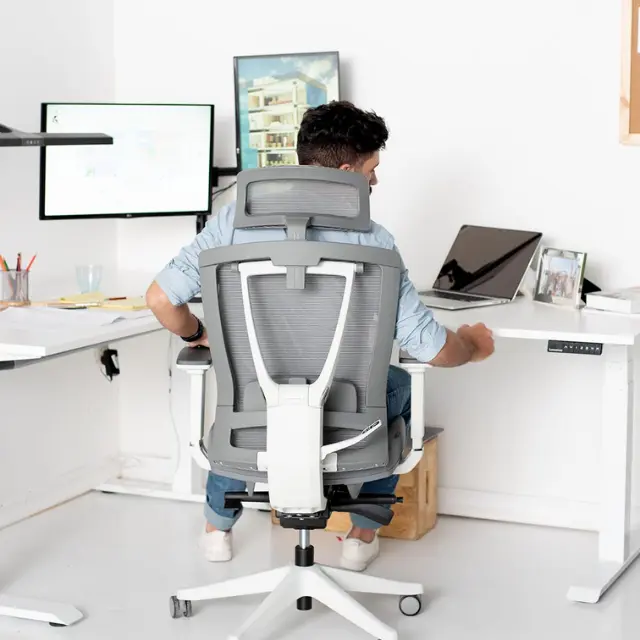
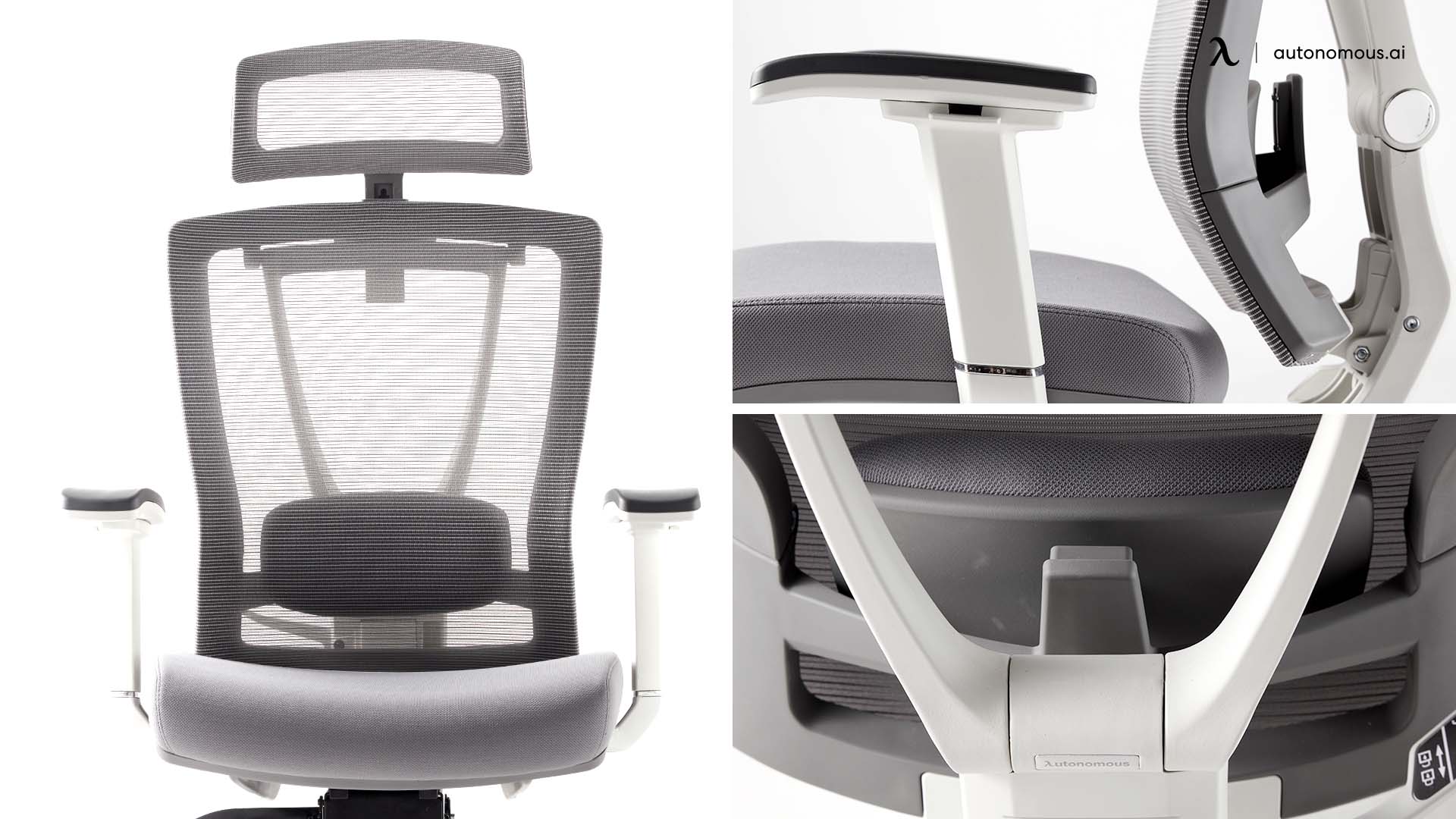
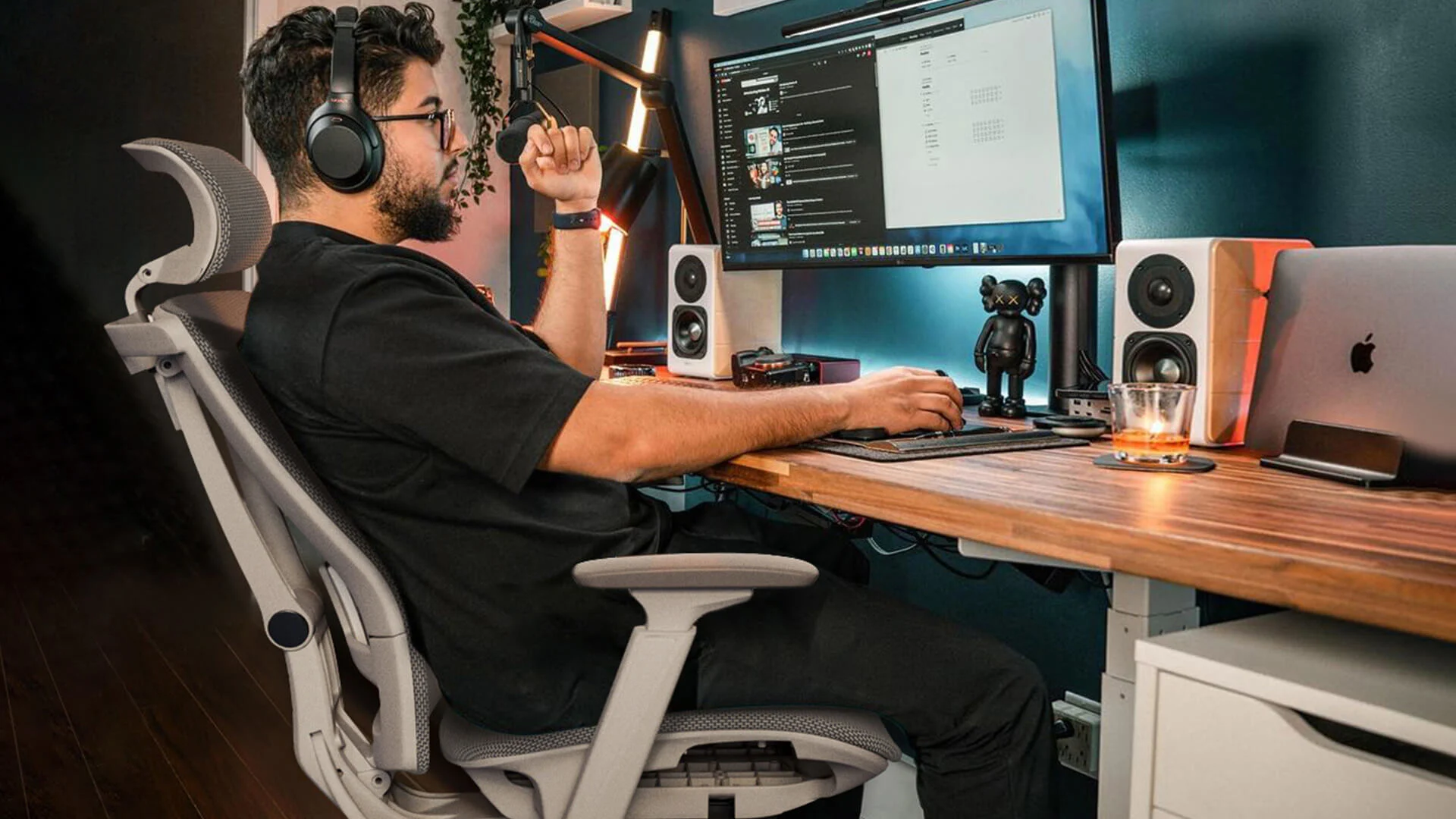
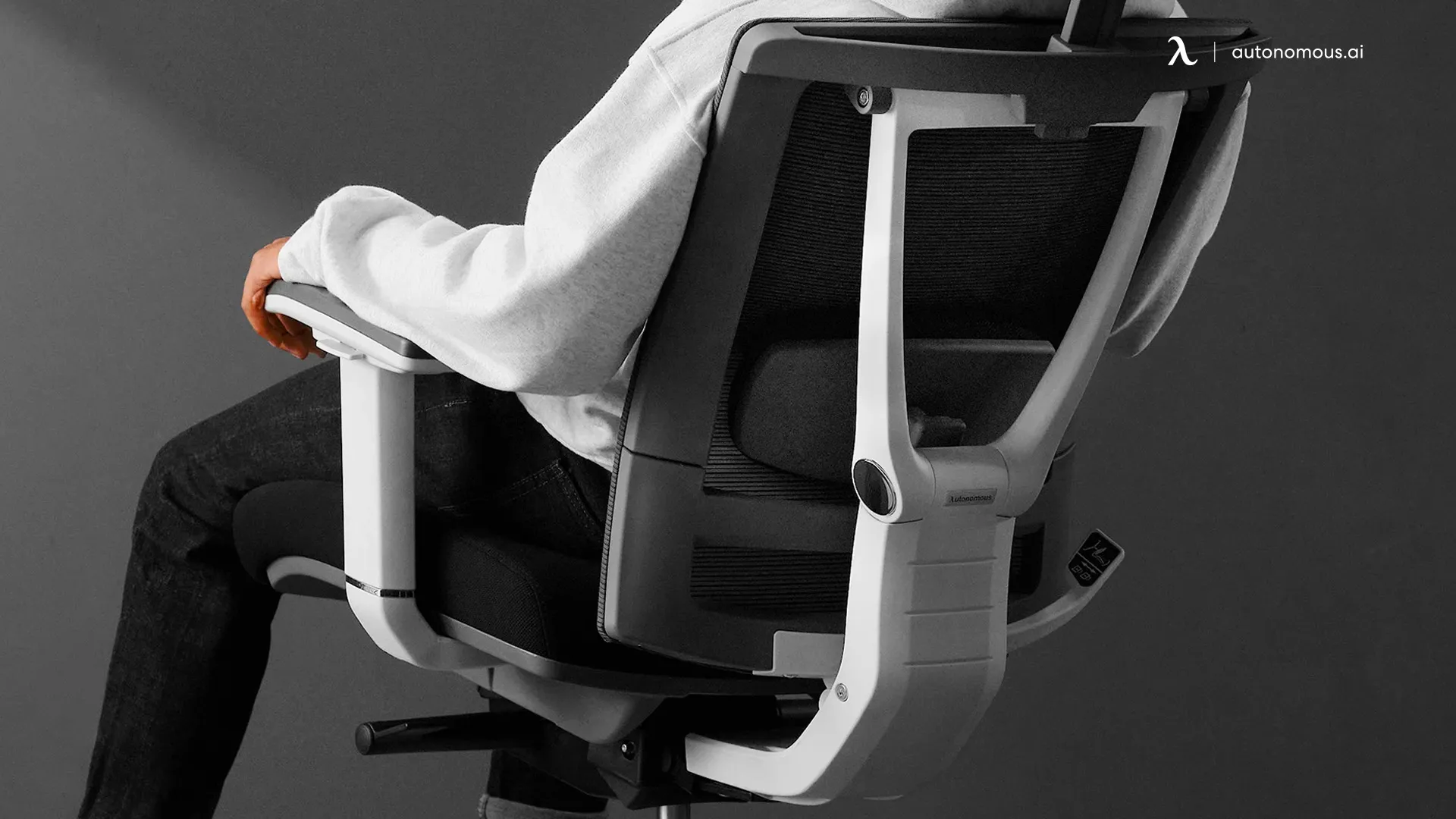
The ErgoChair Pro is built like a modern ergonomic office chair: breathable surfaces, lighter construction, and chair materials that prioritize airflow and flexibility. This combination generally results in a chair that’s easier to move around than heavier, metal-framed builds.
In daily use, this translates to a chair that's easier to move. At 48.5 lbs, it rolls and repositions without much effort, useful if you shift between desk and table, or if your workspace changes throughout the day. The lighter construction also means it doesn't visually dominate smaller rooms.
Autonomous also highlights BIFMA certification, which signals the chair is designed to meet common safety and durability standards used in commercial furniture. That matters if you’re thinking in office-chair terms: consistent daily use, lots of adjustments, and wanting predictable performance more than luxury finishes.
Some users associate weight with quality. If you're coming from a heavy leather executive chair or a steel-framed gaming chair, the ErgoChair Pro may feel less substantial on first sitting, even if it performs reliably over time.
2. TITAN Evo: Heavier Build, Structured Feel
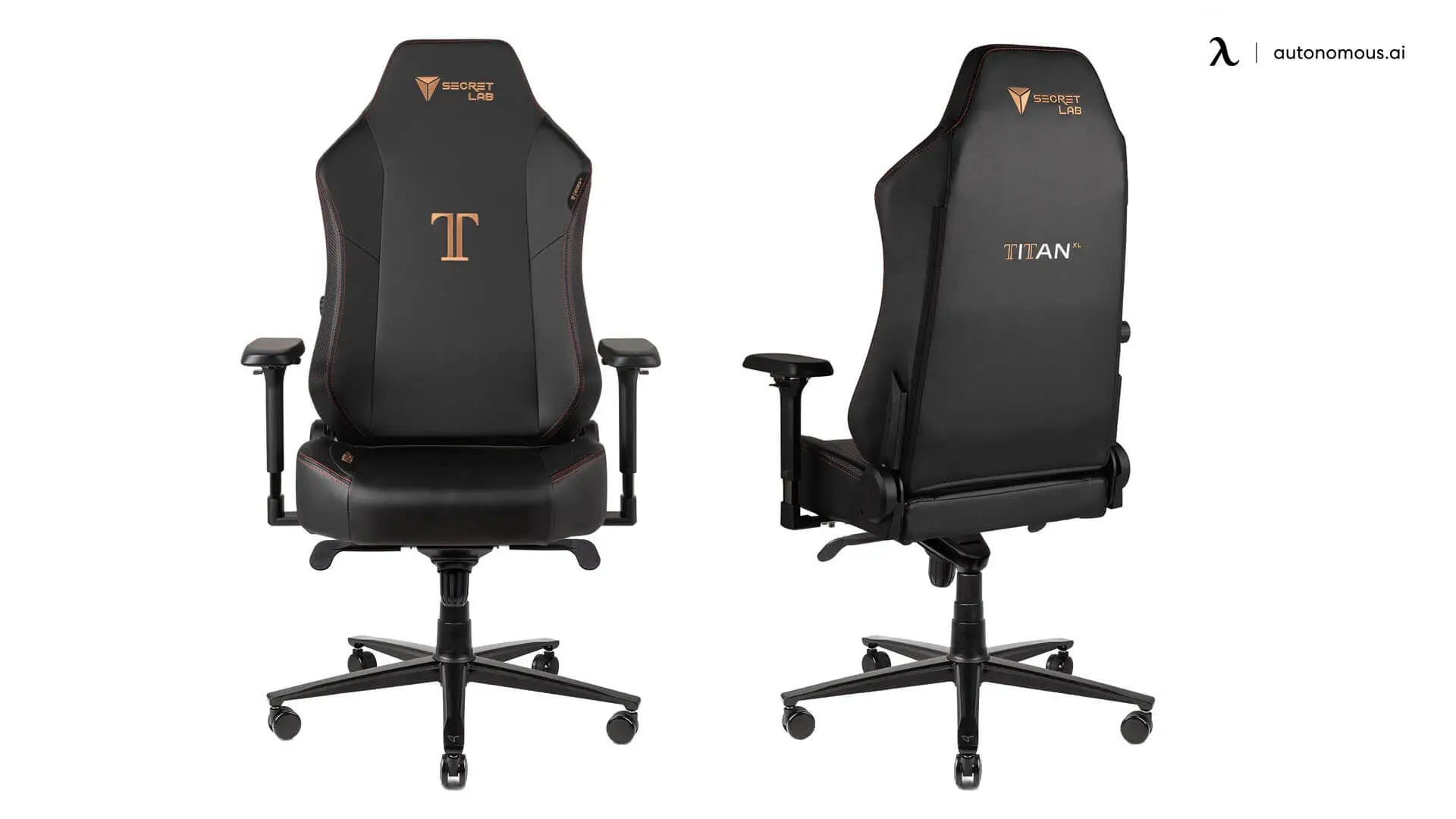
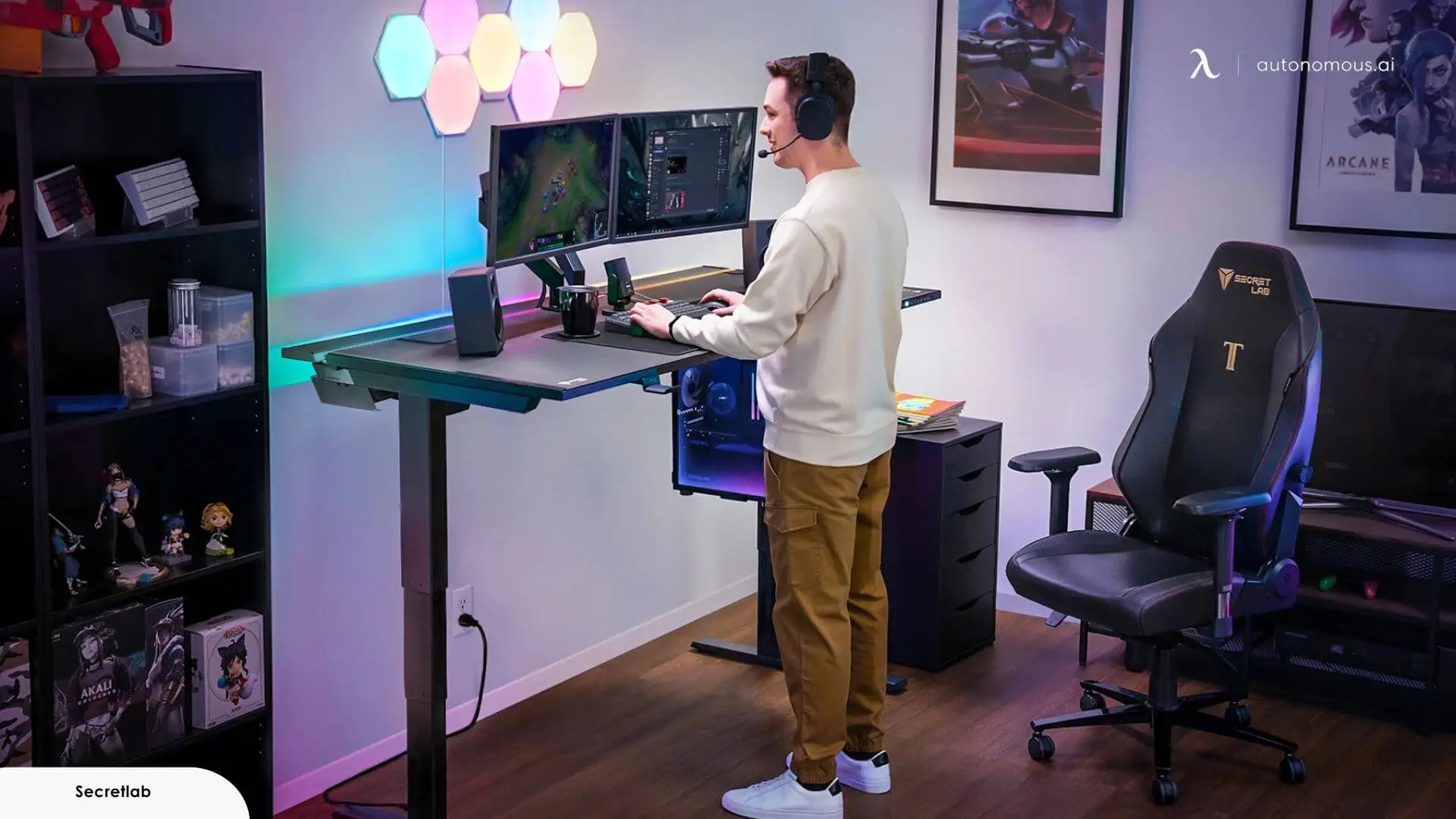
Secretlab’s TITAN Evo is designed with a more armored, upholstered approach. The brand leans heavily into patent-pending cold-cure foam (formulated to be medium-firm) and offers multiple upholstery choices, depending on the region and configuration.
It also uses a steel frame construction, which contributes to that solid, planted feel that a lot of people associate with gaming chairs. It doesn't roll as easily, which some users prefer, less drift during intense gaming sessions or video calls. The weight also creates a sense of solidity when you lean back or shift positions. The XL version supports up to 395 lbs, putting it in the same weight class as most best gaming chair for big guys options
The tradeoff is material management, leatherette is usually easier to wipe down, while fabric tends to feel less warm but can hold onto dust, hair, and spills more easily.
Comfort & Ergonomics
Comfort is where this comparison gets personal. Both chairs can work for long sessions, but they get there in different ways. One emphasizes breathability and fine-tuning through adjustments. The other emphasizes a more structured, upholstered feel and a consistent seat/back shape.
1. ErgoChair Pro: Open, Breathable, Flexible
The ErgoChair Pro's comfort comes from mesh tension and adjustability rather than padding.
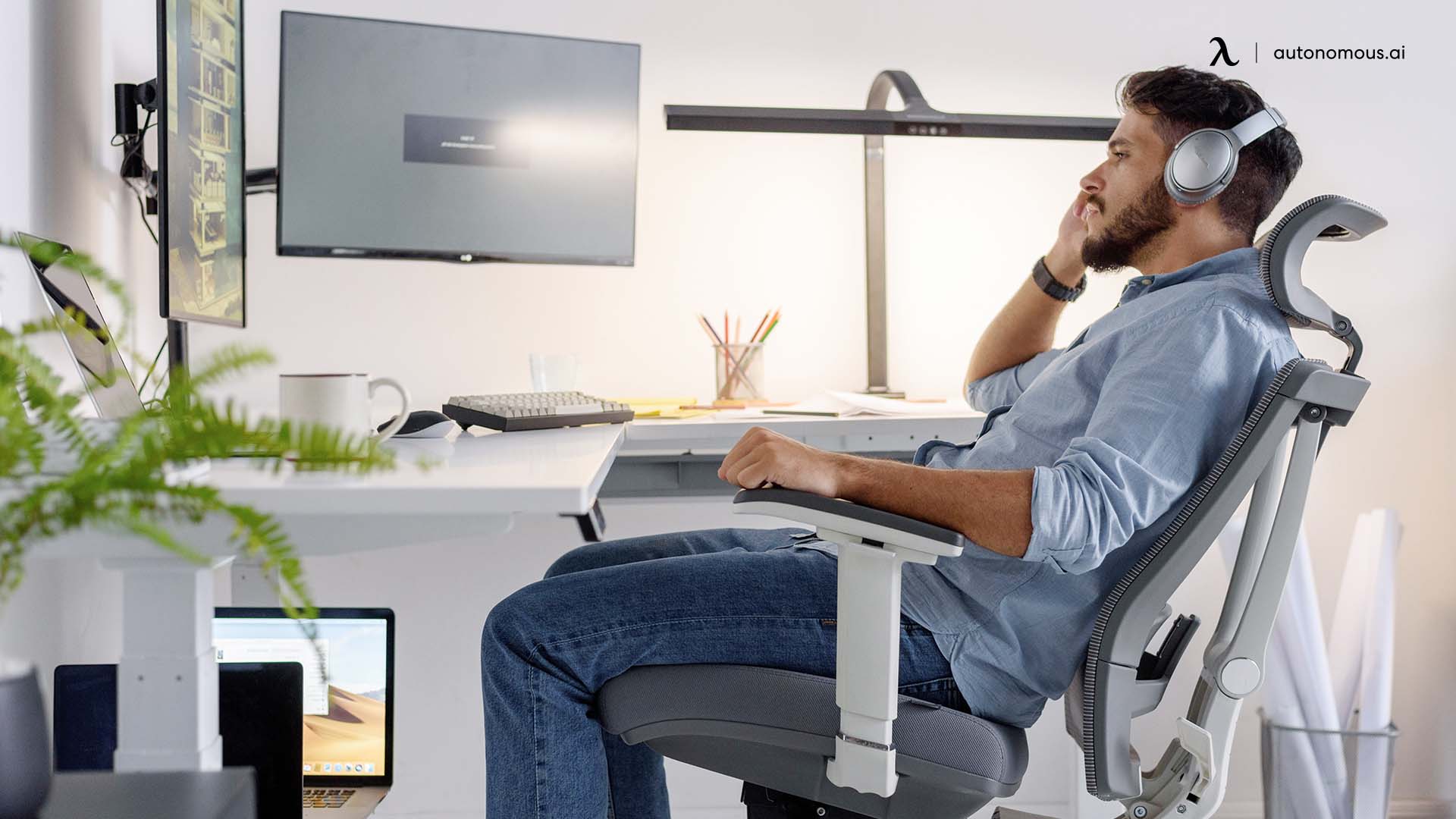
Sitting in it feels more "open" than cushioned. The mesh conforms slightly to your body without the sinking feeling of foam. Air circulates freely, which keeps the seating surface cooler - noticeable after the first hour, especially in warm rooms or during summer months. The synchro-tilt mechanism uses a 2:1 ratio: the backrest reclines twice as far as the seat tilts. This keeps your hips from sliding forward when you lean back, maintaining a more neutral spine position.
That said, comfort here builds over time rather than hitting immediately. The first 15 minutes may feel less plush than expected if you're used to foam chairs. By hour two, the mesh support feels more natural. By hour four, the airflow advantage becomes obvious compared to upholstered alternatives. The chair doesn't "hug" you, if you prefer a defined, cradled sensation, this open feel may read as less supportive, even though the ergonomic support is there.
2. TITAN Evo: Structured, Cushioned, Defined
The TITAN Evo's comfort comes from foam density and a shaped seat base.
Sitting in it feels more immediate. The cold-cure foam is medium-firm, supportive enough to prevent bottoming out, soft enough to feel cushioned. The seat and backrest have defined contours that create a consistent sitting position.
The recline extends to 165°, which is closer to flat than most office chairs offer. Combined with the multi-tilt lock, this allows significant posture variety, fully upright for focused work, partially reclined for reading, deeply reclined for breaks or controller gaming.
In practice, comfort is apparent from the first sit. The foam feels substantial and the structure feels secure. However, heat builds over longer sessions, especially with leatherette upholstery in warmer rooms. By hour three, some users may notice warmth where mesh users stay cool. The chair does "hold" you in position, if you shift around frequently or dislike feeling contained, this structured approach may feel restrictive over time.
3. Lumbar Support: Two Different Philosophies
This is one of the biggest practical differences in the Secretlab vs ergonomic chair debate.
The ErgoChair Pro uses an adjustable cushion that slides up and down the backrest. You position it at your lower back curve, then adjust depth to control how much it pushes forward. This approach lets you place support exactly where your spine needs it, and it stays fixed once set, useful for unusual proportions or specific back issues. The tradeoff is that it requires manual adjustment to find the right spot and doesn't adapt if your posture changes throughout the day.
The TITAN Evo builds lumbar support into the backrest structure. A dial adjusts depth (in/out) and a slider adjusts height (up/down) - all within the backrest itself. This feels more integrated and adjusts without repositioning a separate piece. However, the adjustment range is fixed, and some users find it too "present" - always noticeable against the lower back even when they'd prefer less pressure.
Adjustability
Adjustability is where a chair stops being generic furniture and starts fitting your body. In the Autonomous ErgoChair Pro vs Secretlab TITAN comparison, both chairs offer meaningful adjustment - but they approach it differently.
The ErgoChair Pro gives you more individual controls. The TITAN Evo gives you fewer controls that each cover more range. The practical question is whether you want to fine-tune specific components independently, or adjust integrated systems that handle multiple functions at once.
ErgoChair Pro | TITAN Evo | |
Total adjustment points | 9 independent controls | 4 integrated systems |
Seat height | 18" - 20" | 17.7" - 20.5" (Regular) |
Seat depth | Adjustable: 19" - 21.5" | Fixed per size |
Armrests | 4D (height, depth, angle, width) | 4D (height, depth, angle, width) |
Armrest height from floor | 26.7" - 32.2" | 27" - 31.5" |
Lumbar | Adjustable cushion (height + depth) | Built-in 4-way dial |
Headrest | Fixed mount with tilt | Magnetic pillow, 11" vertical range |
Recline | 22° synchro-tilt (2:1 ratio) | 165° deep recline |
Tilt lock | Multi-position | Multi-position |
1. ErgoChair Pro: 9 Independent Adjustment Points
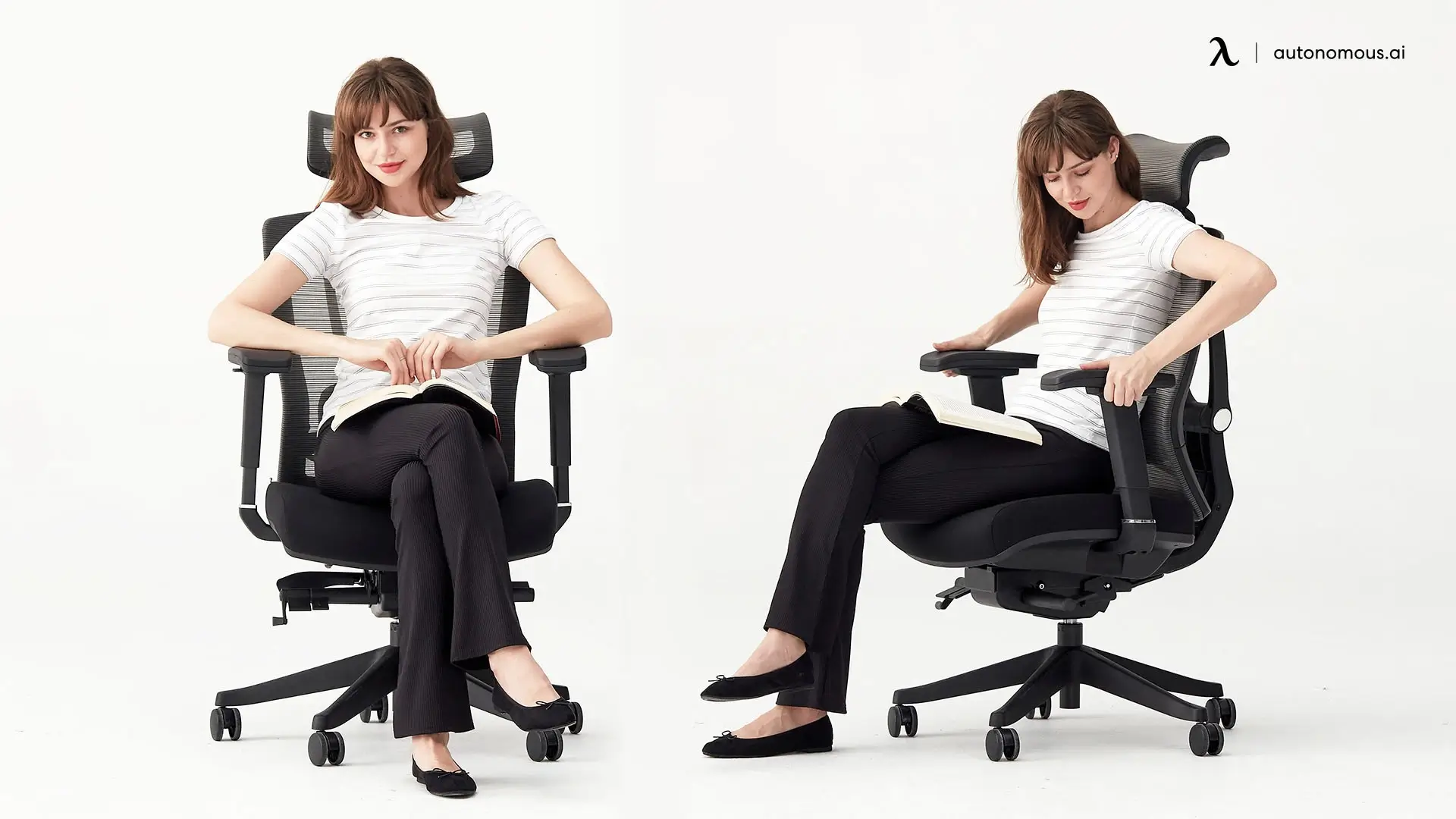
The ErgoChair Pro separates adjustments into distinct controls: seat height, seat depth, armrest height, armrest depth, armrest angle, lumbar height, lumbar depth, headrest height, headrest tilt, backrest tension, and backrest recline angle. Each operates independently, so changing one doesn't affect another.
This approach suits users with non-average proportions or specific fit issues. If your legs are shorter than typical for your height, you adjust seat depth without compromising lumbar position. If your shoulders are broader, you widen armrests without changing their height. The granularity means more setup time upfront, but also more precision once dialed in.
The tradeoff is complexity. Nine adjustment points means nine things to get right. Users who prefer simplicity may find this fiddly, especially during initial setup. And more moving parts theoretically means more components that could loosen or wear over time - though this hasn't been a common complaint in user feedback.
2. TITAN Evo: 4 Integrated Systems
The TITAN Evo consolidates adjustments into fewer, more refined mechanisms. The 4-way lumbar handles height and depth through one integrated dial. The magnetic headrest slides along an 11-inch range without clips or locks. The 4D armrests adjust smoothly in all directions. The recline extends to 165° with a multi-tilt lock.
This approach suits users who want to set the chair once and forget it. Each system feels more polished in daily use, adjustments are smooth, mechanisms feel solid, and there's less to think about. The integrated lumbar especially appeals to users who don't want to reposition a separate cushion.
The tradeoff is less granularity. You can't adjust components the chair has bundled together. And critically, there's no seat depth adjustment, fit depends on choosing the right size (Small, Regular, or XL) upfront. If you're between sizes or have mixed proportions, this becomes a limitation rather than a simplification.
3. Seat Depth: The Underrated Fit Factor
Seat depth doesn't get as much attention as lumbar support or recline, but it affects daily comfort significantly. If the seat is too deep, your back won't reach the lumbar support properly. If you scoot back to fix that, your feet may not sit flat on the floor. This cascades into posture issues over long sessions.
The ErgoChair Pro addresses this with an adjustable seat pan that moves forward and back across a 2.5-inch range (19" to 21.5"). For users with shorter legs or a shorter seated height, this adjustment can be the difference between proper posture and constant fidgeting.
The TITAN Evo handles seat depth through size selection. Small, Regular, and XL each have proportionally scaled seat depths. This works well if one size clearly matches your proportions, you get a seat designed for your frame rather than a compromise setting. But if you're between sizes, or if your leg length doesn't match your overall height, you can't fine-tune after purchase.
For users under 5'7" or those who've struggled with seats feeling too deep in the past, adjustable seat depth reduces fit risk. For users who fit standard sizing well and prefer choosing once rather than adjusting repeatedly, the size-based approach is simpler.
4. Recline and Tilt: Different Use Cases
Recline is where these chairs diverge most clearly in the Secretlab vs office chair comparison.
The ErgoChair Pro uses synchro-tilt with a 2:1 ratio - the backrest reclines twice as far as the seat tilts. This reclining office chair keeps your body in a working posture even when leaning back slightly. The multi-position lock lets you fix the recline angle or leave it floating for dynamic movement. Maximum tilt is 22°, which is enough for posture variation during work but not designed for deep lounging.
The TITAN Evo reclines to 165°, which approaches flat. This is gaming-chair territory, useful for controller sessions, video watching, or taking a genuine break in your chair. The multi-tilt lock works at multiple angles, so you can set it upright for work, partially reclined for reading, or nearly flat for rest.
Design & Aesthetics
These two chairs don’t just look different - they change what your desk space feels like. If you care about how your setup looks on camera, how it fits with the rest of your room, or whether your chair fades into the background, this section matters as much as comfort.
1. ErgoChair Pro: Office-Forward, Visually Light
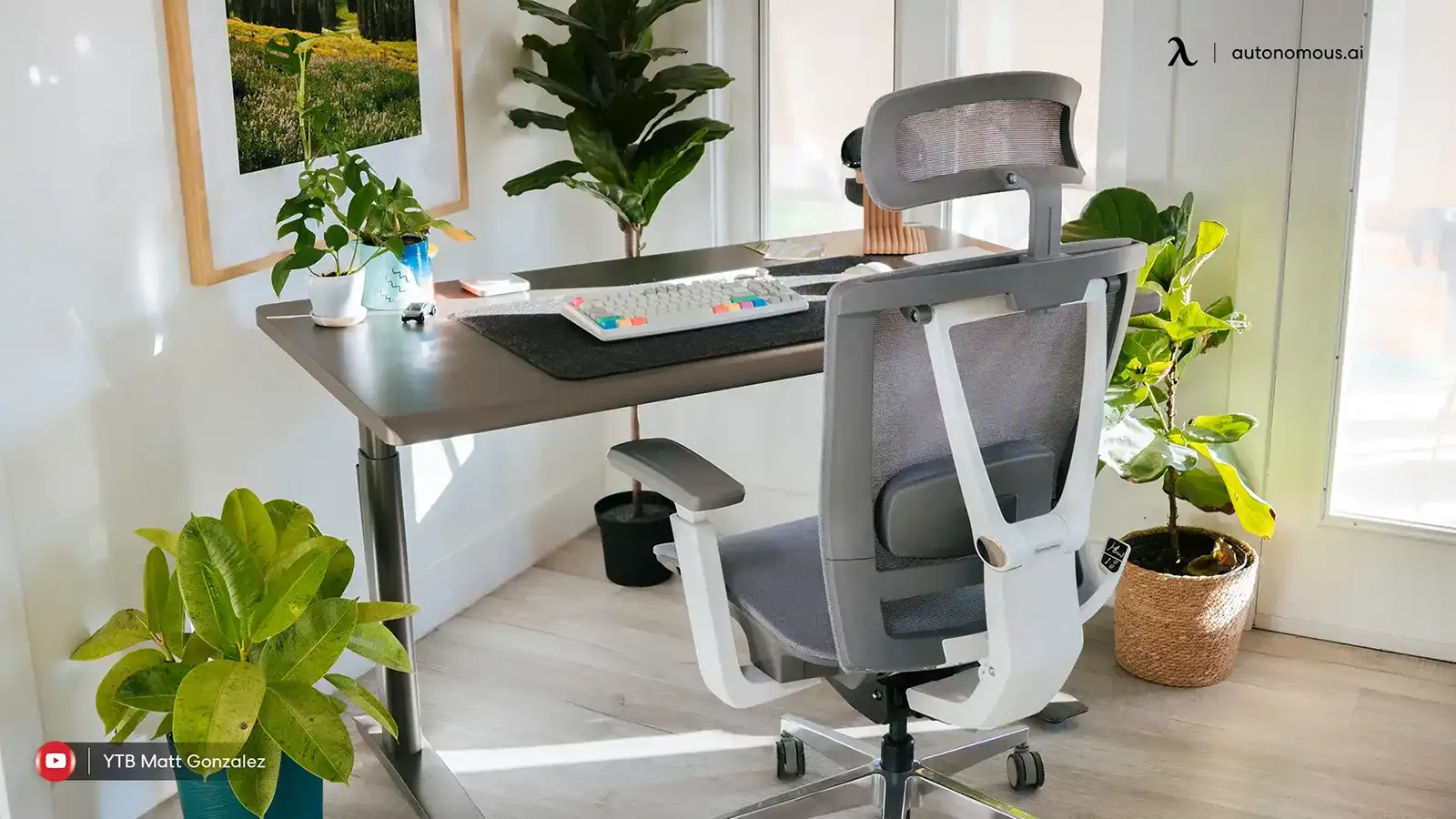
The ErgoChair Pro follows modern ergonomic office chair design language. Mesh back, open frame structure, and a silhouette that reads as professional rather than recreational.
Visually, the chair stays light. The mesh allows you to see through parts of the backrest, which prevents it from dominating smaller rooms or shared spaces. The nylon frame is visible rather than hidden, giving it an industrial-functional look rather than a plush furniture appearance.
This design approach works well in spaces that serve multiple purposes. If your desk shares a room with a living area, bedroom, or kitchen, an office-style chair blends more naturally than a gaming throne. It also reads better on video calls where you want a professional backdrop without the chair becoming a distraction.
2. TITAN Evo: Gaming-Inspired, Room Presence
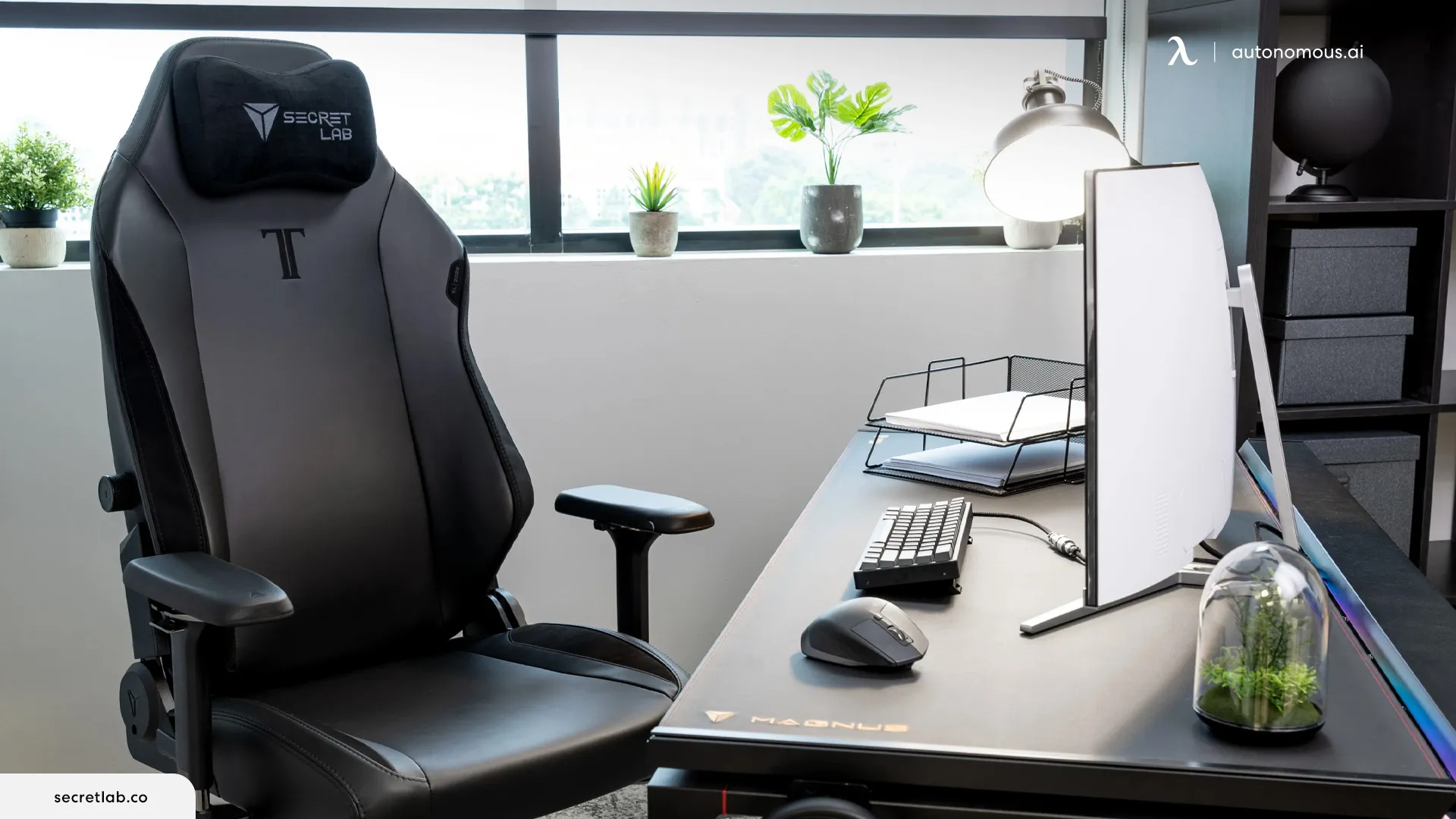
The TITAN Evo follows gaming chair design language with refinements that push it toward broader appeal. Full upholstery, shaped bolsters, visible stitching, and a silhouette that announces itself.
The upholstered surfaces, hidden frame, and structured shape create a piece of furniture that draws attention. This is intentional, gaming chairs are often designed to be seen, whether in a streaming setup, a dedicated gaming room, or a styled desk space.
The tradeoff is that the TITAN Evo is harder to hide. In shared spaces, multi-purpose rooms, or professional video call backgrounds, a gaming-style chair can feel out of place. Even the more subdued colorways (black, dark gray) still read as gaming furniture due to the shape and proportions.
The choice is simple: do you want the chair to blend into a workspace, or announce a setup? Neither is “better.” It’s about whether you want your room to feel calm and multipurpose, or more styled and intentional around the desk.
Who Should Buy Each Chair?
Choose the ErgoChair Pro if:
- You want mesh breathability to stay cool during long sessions
- You prefer synchro-tilt that keeps you in an upright working posture
- You need adjustable seat depth to fine-tune fit for your proportions
- You want an office-style chair that looks professional on video calls
- You like setting each adjustment independently for precise control
- You prefer a lighter chair that's easy to move around
Go for the TITAN Evo if:
- You want structured, cushioned comfort from cold-cure foam
- You recline frequently and need a deeper range (up to 165°)
- You prefer integrated lumbar support with 4-way dial adjustment
- You want size options (Small/Regular/XL) matched to your frame
- You need higher weight capacity (up to 395 lbs on XL)
- You prefer a substantial, planted feel with heavier construction

FAQs
Which is better, Autonomous ErgoChair Pro or Secretlab TITAN Evo?
Neither is universally better, they suit different needs. The ErgoChair Pro fits users who prioritize mesh breathability, adjustable seat depth, and office-style aesthetics. The Secretlab TITAN Evo fits users who want deep recline, size options, and structured foam cushioning.
Are Secretlab chairs worth it?
Secretlab chairs can be ergonomic if they fit your body and you set them up correctly, since models like the TITAN Evo include adjustable lumbar (4-way), 4D armrests, recline/tilt controls, and multiple size options.
Are Secretlab chairs ergonomic?
They’re usually “worth it” for buyers who specifically want a structured, upholstered gaming-chair feel, multiple sizes, and features like adjustable lumbar plus the option of an extended warranty.
Is the Secretlab TITAN a good office chair?
The Secretlab TITAN can work as an office chair, though it's designed with gaming in mind. It offers 4-way lumbar adjustment, 4D armrests, and size options that support all-day sitting. However, its racing-inspired aesthetics may feel out of place in traditional office settings.
Is the Autonomous ErgoChair Pro good for gaming?
The ErgoChair Pro works for gaming sessions, particularly if you prefer upright posture and mesh cooling. Its synchro-tilt mechanism supports active sitting but limits deep recline to 22°. If you game in shorter sessions or prefer a cooler seat, it handles gaming fine.
Which is better for working 8 hours a day?
For 8-hour desk sessions, both chairs support extended sitting when properly adjusted. The ErgoChair Pro's mesh breathability helps in warm environments and prevents heat buildup over long hours. Its adjustable seat depth also helps users maintain proper posture. The TITAN Evo's structured foam and deeper recline offer more posture variety but may run warmer.
Which is better for back pain?
Neither chair fixes back pain on its own, proper fit and adjustment matter most. The ErgoChair Pro's repositionable lumbar cushion lets you target exactly where you need support. The TITAN Evo's integrated lumbar adapts as you move but has a fixed adjustment range.
Final Verdict
The Autonomous ErgoChair Pro vs Secretlab TITAN decision isn't about which chair is objectively better. It's about which approach matches your body, your work style, and your environment.
The ErgoChair Pro fits users who prioritize breathability, granular adjustments, and an office-style aesthetic. If you work mostly upright, run warm, or need adjustable seat depth to dial in proper fit, this chair addresses those needs directly. It's the safer choice if you're between standard sizes, have shorter legs, or want a chair that blends into a home office setup without looking like gaming gear.
The TITAN Evo makes more sense if you spend a lot of time switching positions, reclining, or mixing work and gaming in the same chair, and if choosing between multiple sizes feels like a benefit rather than a hassle. It's the stronger choice if you value a planted, substantial feel, prefer cushioned foam over mesh tension. If the TITAN Evo exceeds your budget, the GTRACING gaming chair review offers similar gaming-style comfort at a lower price point.
Neither is a universal upgrade. The better choice is the one that fits your routine: steady desk posture and airflow, or posture switching and a more structured, upholstered experience. If you're still exploring other specialized options for back pain, the Anthros chair review offers yet another take on ergonomic seating.