HSA Eligible Office Chair: What Qualifies & How to Buy
Table of Contents
- What Makes an Office Chair HSA/FSA Eligible
- How Much You Actually Save
- How to Buy an Ergonomic Chair Using HSA or FSA Funds
- Autonomous Ergonomic Office Chairs That Meet the Standard
- Medical Conditions That May Support an LMN for an Ergonomic Chair
- FAQs
- Conclusion: Using Your HSA or FSA for an Ergonomic Chair
Back pain from prolonged sitting is a documented medical issue — yet most people don't consider their office chair a medical expense. The result: HSA balances go unspent while the problem continues.
An HSA office chair purchase can qualify as a legitimate medical expense under IRS guidelines, provided the chair meets specific eligibility criteria and the purchase is backed by proper documentation. This guide explains exactly what qualifies, what documentation you need, and how to complete the purchase using pre-tax funds.
What Makes an Office Chair HSA/FSA Eligible
Eligibility under IRS Publication 502 comes down to one question: does the chair's design directly support the treatment or management of a diagnosed medical condition?
For seating, plan administrators evaluate this through a chair's adjustability features — specifically whether those features can be configured to address a documented physical condition rather than simply providing general comfort. The following criteria are consistently referenced in that assessment.
- Independently Adjustable Lumbar Support
A qualifying HSA ergonomic chair requires lumbar support that can be repositioned by the user — vertically at minimum — rather than a fixed insert or static curve. Spinal support needs vary by diagnosis, body geometry, and sitting duration; a fixed position cannot accommodate that variation.
- Seat Height and Depth Adjustment
Seat height adjustment supports neutral hip positioning — a 90-degree hip angle with feet flat on the floor, the standard reference posture in occupational health assessments. This adjustment prevents compression at the back of the knee, affecting circulation and lower limb comfort during extended sitting. Both are generally expected in a chair assessed for HSA or FSA eligibility.
- Adjustable Armrests
Armrest adjustability is relevant to conditions involving the cervical spine, shoulders, and wrists. Fixed armrests cannot accommodate the range of desk heights, body proportions, and task types a diagnosed user may encounter. Height adjustability is the baseline; additional axes increase the range of conditions the chair can practically address.
- Swivel Base
A swivel base reduces the need to rotate the torso when reaching or redirecting attention during work. For individuals with lumbar or sacroiliac conditions, repeated twisting from a fixed-base chair can aggravate symptoms and is generally treated as a baseline requirement.
The principle is consistent: an HSA computer chair or FSA office chair must be configurable to the user's specific medical need — not merely comfortable by general standards. This distinction matters when building an ergonomic workspace around a documented health condition.
What May Disqualify a Chair
A chair is less likely to be approved as an HSA desk chair or FSA eligible chair if it lacks the adjustability features above — particularly independent lumbar adjustment and seat height control. Chairs with fixed backs, non-adjustable armrests, or limited range of motion may not meet the documentation requirements a plan administrator uses to assess medical necessity.
It is worth noting that eligibility determinations are made at the plan administrator level and can vary. The criteria above reflect what is commonly cited in LMN documentation and reimbursement guidance — they are not a guaranteed approval standard. Verifying with your specific HSA or FSA administrator before purchase is advisable.
How Much You Actually Save
HSA and FSA funds are contributed before income tax is applied. When you spend those dollars on a qualifying purchase, you are buying at a discount equal to your marginal tax rate. The savings are a straightforward tax benefit built into how these accounts are structured.
For a chair priced between $400 and $900 — a range that covers most qualifying ergonomic options — the savings are material. A $500 chair purchased with HSA or FSA funds by someone in the 22% federal bracket paying 5% state income tax effectively costs $365 out of pocket. At a 32% federal bracket with the same state rate, the same chair costs $315.
Put differently: if you leave HSA or FSA funds unspent and buy the chair with taxable earnings, you pay income tax first, then spend what remains. For any purchase that qualifies under IRS Publication 502, that sequence is unnecessary.
Actual savings depend on your federal bracket, state of residence, and filing status. Residents of states with no income tax save only the federal portion. Those in higher-tax states save more. These figures are estimates. Consult a tax professional for a calculation specific to your situation.
Which Account to Use — and When
HSA funds roll over indefinitely. There is no spending deadline — the money stays available regardless of when you need it. For 2026, contribution limits are $4,400 for individual coverage and $8,750 for family coverage. These limits adjust annually.
FSA funds operate on a different timeline. Most plans follow a calendar-year cycle ending December 31, with unspent funds forfeited unless your employer has elected either a grace period of up to 2.5 months or a rollover allowance of up to $680 — under IRS rules, not both. An ergonomic chair is one of the higher-value qualifying expenses available, making it a practical use of funds that would otherwise be lost. For 2026, the FSA contribution limit is $3,400.
How to Buy an Ergonomic Chair Using HSA or FSA Funds
For anyone asking whether they can use HSA for an office chair purchase, eligibility is only part of the answer. The more practical question is how the transaction actually works — and there are two distinct paths depending on your situation.
1. Path A — Through Truemed (Direct Purchase)
Truemed is a platform that connects consumers with licensed physicians who review health surveys and, where appropriate, issue a Letter of Medical Necessity. For qualifying customers, this removes the need to schedule a separate doctor's appointment before completing a purchase.
The process for buying an HSA eligible office chair through this route:
- Add the chair to your cart
- At checkout, ensure you are not signed into ShopPay — Truemed requires guest checkout to appear as a payment option
- Select Truemed as your payment method
- Complete a clinical intake form — a health survey covering your medical history and condition
- An independent licensed practitioner reviews your responses and, if your condition qualifies, issues an LMN
- Pay with your HSA or FSA card directly, or with a personal card and submit for reimbursement using the documentation Truemed provides
Approval is not guaranteed at the point of purchase — eligibility depends on your individual health information and is determined by the reviewing practitioner. Final reimbursement decisions remain with your HSA or FSA plan administrator. The same eligibility framework applies to qualifying standing desks through the standing desk FSA HSA process at Autonomous.
2. Path B — Traditional LMN and Reimbursement
For those whose HSA administrator requires a physician-issued LMN, or who prefer to obtain one through a treating provider, the reimbursement route remains a fully valid path to an FSA eligible chair or HSA ergonomic chair purchase.
- Schedule an appointment with your primary care physician, chiropractor, or physiatrist
- Bring documentation of your condition — diagnosis, symptom history, any relevant imaging or prior treatment records
- Request an LMN that includes your diagnosis, a description of how ergonomic seating addresses or mitigates your condition, and the expected duration of use
- Purchase the chair using a personal credit or debit card
- Submit the LMN and itemized receipt to your HSA or FSA administrator for reimbursement
- Processing times vary by administrator — typically 3 to 10 business days for online submissions, longer for paper claims or check-based reimbursement
If your claim is denied: request the specific reason in writing. Common grounds for denial include insufficient clinical detail in the LMN or a plan that excludes durable ergonomic equipment. A denial is often appealable with supplementary documentation — contact your plan administrator for the appeals process specific to your account.
Both paths result in the same outcome: an FSA office chair or HSA desk chair purchase funded with pre-tax dollars. The right path depends on whether your administrator accepts Truemed-issued documentation and how quickly you need the purchase processed.
Autonomous Ergonomic Office Chairs That Meet the Standard
Knowing what qualifies is one thing. Finding a chair that meets the standard — with confirmed specs and HSA/FSA payment integrated directly into checkout — is where most buyers stall.
Autonomous has partnered with Truemed so qualifying customers may be eligible to use HSA or FSA funds on Autonomous HSA/FSA eligible products. Eligibility is not guaranteed and depends on individual health information and plan rules.
The two chairs below meet the adjustability criteria relevant to HSA/FSA eligible ergonomic chair purchases and are both available through that integration.
1. Autonomous ErgoChair Pro
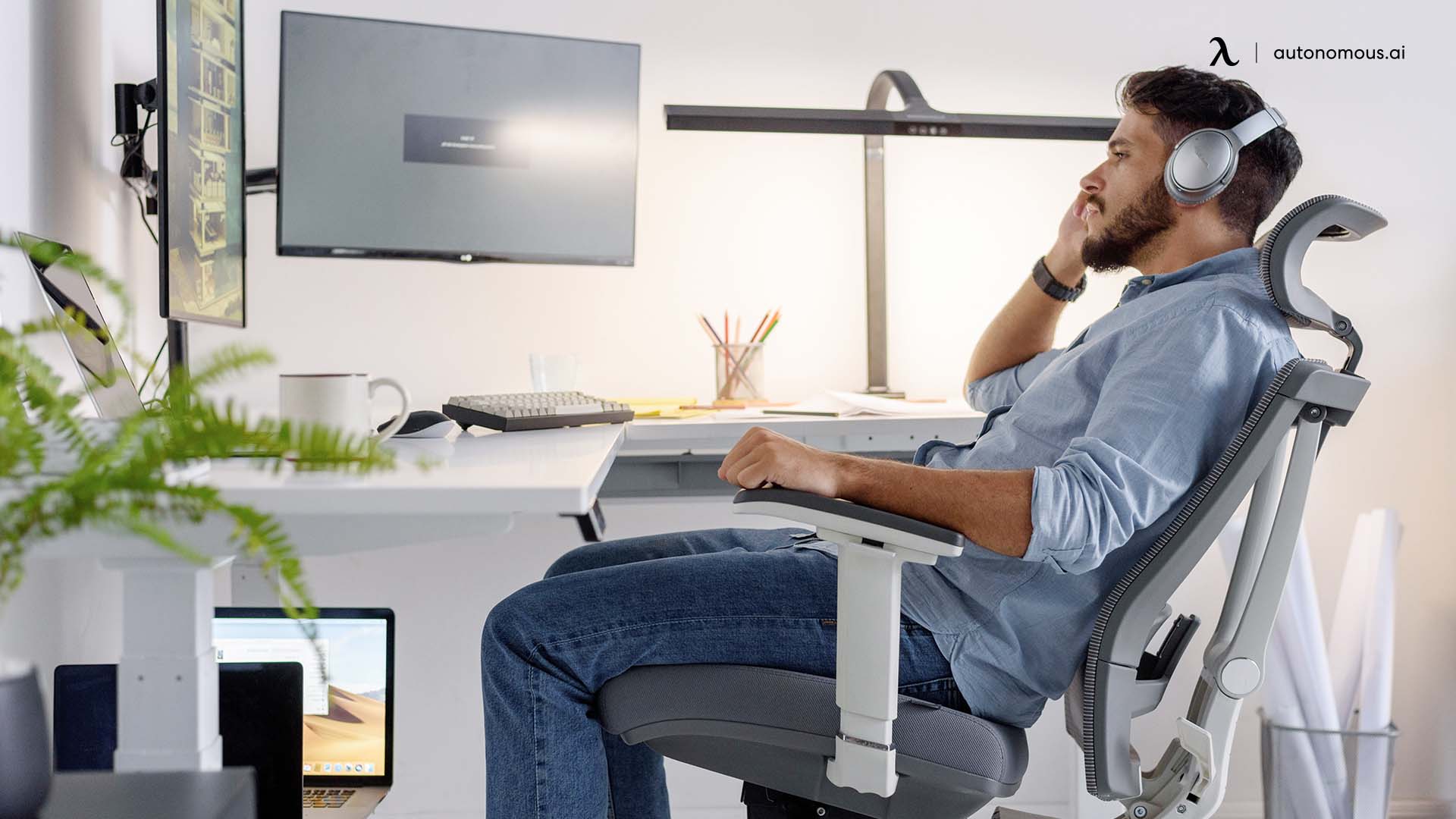
The ErgoChair Pro covers the full range of adjustability criteria relevant to an HSA or FSA eligible office chair purchase — lumbar, seat geometry, armrests, and headrest — making it the stronger candidate for users whose condition involves multiple points of postural correction.
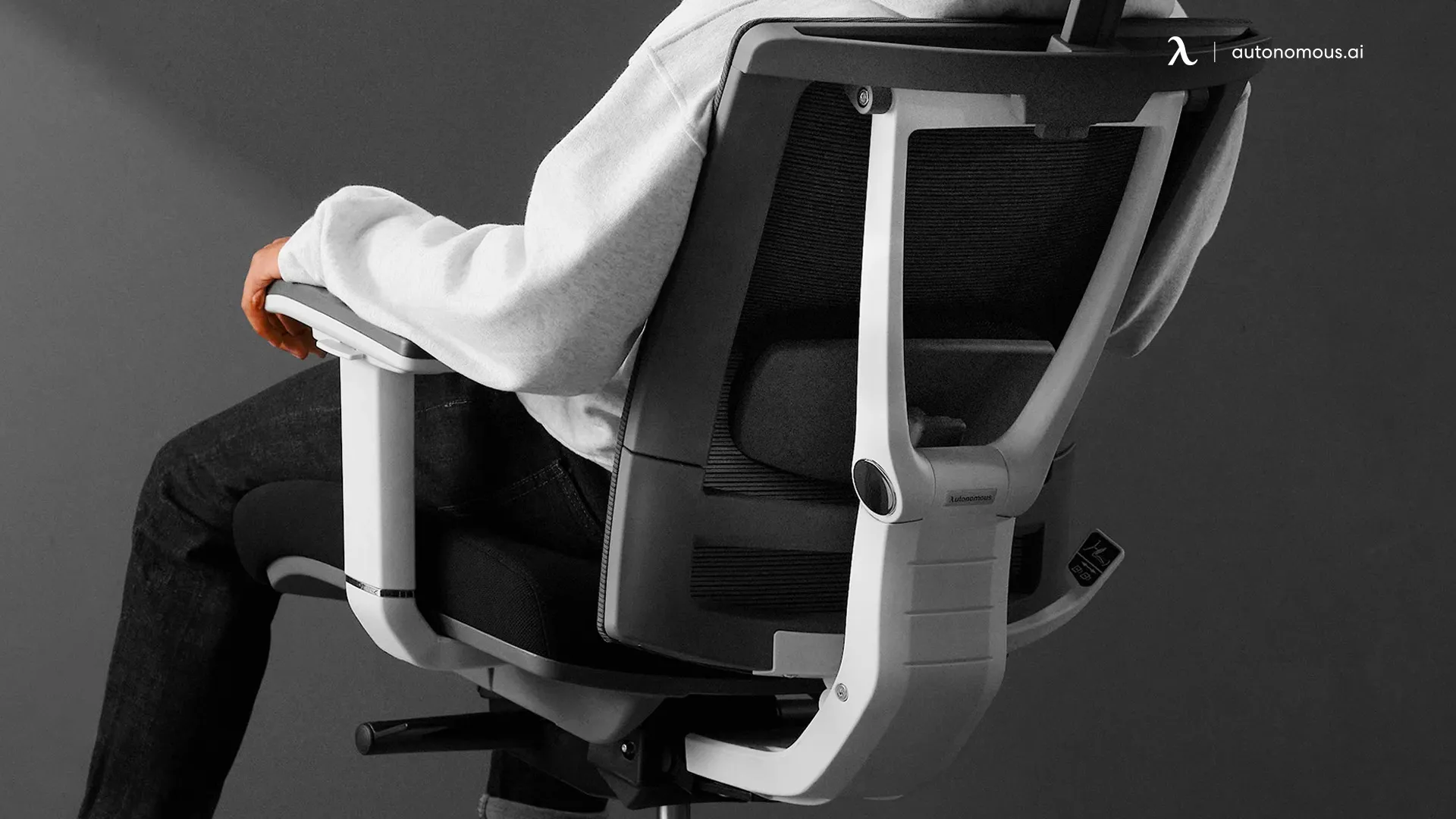
- Lumbar support: The lumbar cushion is independently adjustable along the lower back, operating as a separate mechanism from the upper backrest. Users can reposition it to match individual spinal curvature without affecting upper back positioning.
- Seat height and depth: Height adjusts from 18.5 to 22 inches; depth from 19 to 21.5 inches. Both adjustments support neutral hip and knee positioning across a wide range of body proportions.
- Armrests: Adjustable in height, depth, and angle across three axes — accommodating variation in desk height, task type, and upper limb positioning.
- Headrest: Independently adjustable in height and tilt, providing cervical and upper back support for users who require it as part of their documented condition.
- Weight capacity: 300 lbs. BIFMA certified.

2. Autonomous ErgoChair Core
The ErgoChair Core meets the baseline adjustability criteria for an HSA eligible desk chair at a lower price point. It is suited to users who need ergonomic support across the back and require standard seat and armrest adjustability without the extended feature set of the Pro.
- Back support: A dual backrest structure uses two independent panels — one for the lower back, one for the upper — each following the spine's natural S-curve. The lower panel functions as the primary lumbar support mechanism; the upper provides thoracic support. The two panels move independently rather than as a single fixed unit.
- Seat height and depth: Height adjusts from 20 to 23.8 inches; seat depth is adjustable. Tilt reclines up to 130°.
- Armrests: 3D adjustable in height and angle. Depth adjustment is not available on the Core — one functional distinction from the Pro for users requiring precise forearm positioning as part of their documented condition.
- Weight capacity: 242.5 lbs.
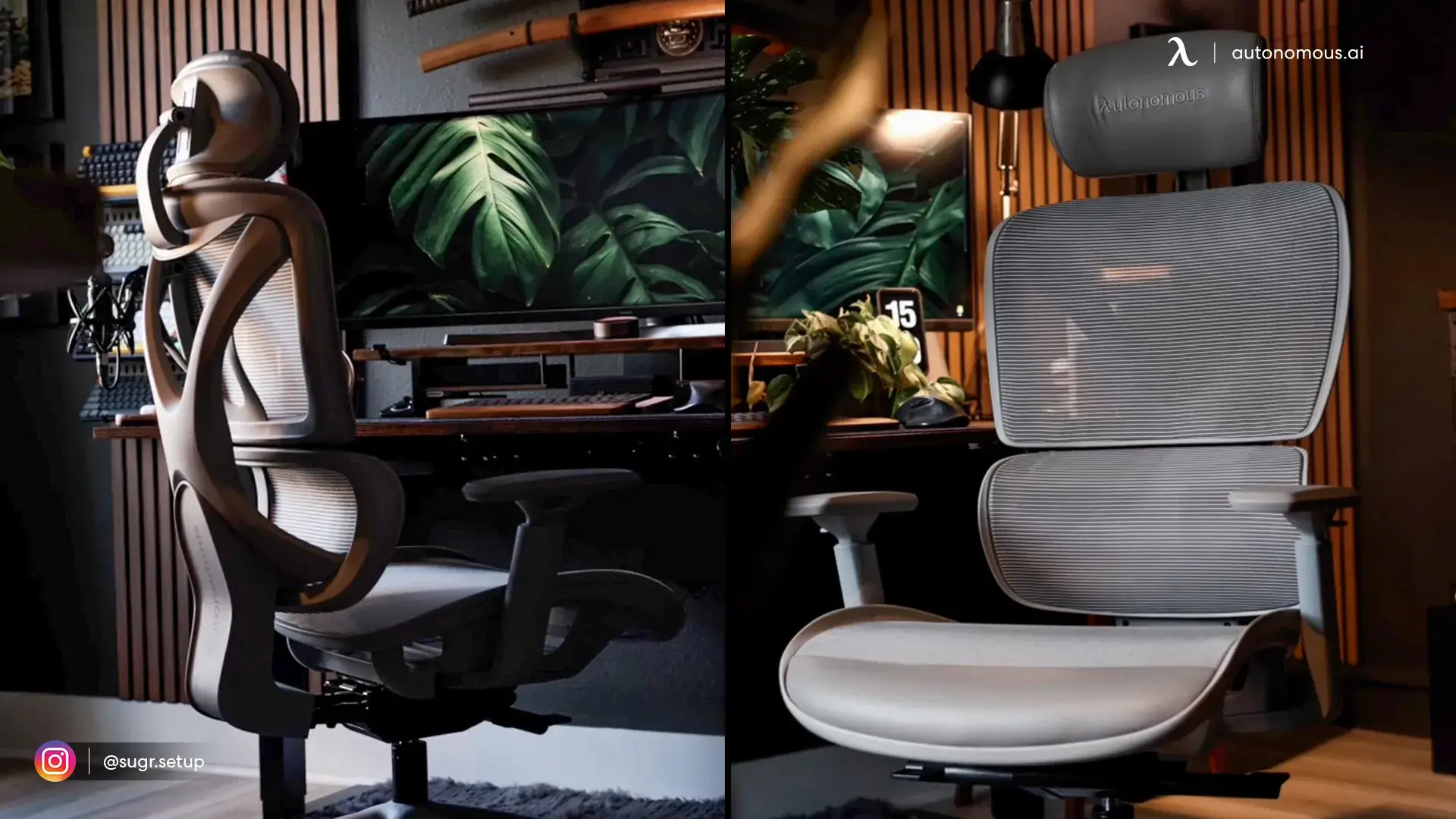
Truemed is for qualified customers. HSA/FSA tax savings vary. Learn more at truemed.com/disclosures.
Medical Conditions That May Support an LMN for an Ergonomic Chair
A Letter of Medical Necessity requires a diagnosed condition — not general discomfort or a preference for better seating. For many people, the barrier is not whether they have a qualifying condition but whether they recognize it as one. The conditions below are among those most commonly associated with ergonomic seating recommendations in clinical practice. Each entry describes what the condition involves, how seated posture relates to it, and how an adjustable ergonomic chair addresses it as a functional intervention.
Eligibility for HSA or FSA reimbursement is determined by an independent licensed practitioner based on individual health information — not by this list. These descriptions are informational only.
- Chronic Low Back Pain (ICD-10: M54.50):
One of the most prevalent conditions in working-age adults, chronic low back pain refers to persistent pain in the lumbar region lasting more than 12 weeks. Prolonged sitting in a chair that does not support the lumbar spine's natural inward curve places sustained load on the intervertebral discs and surrounding musculature. An ergonomic chair with independently adjustable lumbar support allows the user to maintain a supported lordotic curve throughout the workday, reducing mechanical loading on the affected structures.
- Lumbar Disc Herniation (ICD-10: M51.16 / M51.17):
A herniated lumbar disc occurs when the inner material of an intervertebral disc pushes through its outer layer, often compressing adjacent nerve roots. Seated posture is a significant aggravating factor — particularly when the chair does not allow the pelvis to remain in a neutral position. Seat depth adjustment that keeps the thighs parallel to the floor and lumbar support that maintains the curve of the lower spine are both directly relevant to managing disc-related symptoms during desk work.
- Sciatica (ICD-10: M54.3 / M54.4):
Sciatica describes pain that radiates along the path of the sciatic nerve — typically from the lower back through the hip and down one leg — most commonly caused by lumbar disc compression or piriformis involvement. Seated pressure on the posterior thigh and inadequate lumbar support are known aggravating factors. Seat depth adjustment that prevents compression at the back of the knee, combined with lumbar repositioning, is the primary ergonomic intervention relevant to this condition.
- Scoliosis (ICD-10: M41):
Scoliosis is a lateral curvature of the spine that causes asymmetric loading across the vertebrae, surrounding musculature, and connective tissue. Standard seating that applies symmetric lumbar support often fails to address the asymmetric support needs of someone with scoliosis. An ergonomic chair with independently adjustable lumbar positioning allows the user to bias support toward the side that requires it, reducing compensatory muscle tension during extended sitting.
- Cervical Spondylosis (ICD-10: M47.812 / M47.813):
Cervical spondylosis refers to age-related degeneration of the cervical spine — discs, facet joints, and vertebrae — that can cause neck pain, stiffness, and referred pain into the shoulders and arms. Poor sitting posture, particularly forward head positioning, accelerates the mechanical load on the cervical spine. An adjustable headrest that supports neutral cervical alignment, combined with armrests that prevent shoulder elevation, is clinically relevant to managing this condition in a desk-based work context.
- Sacroiliac Joint Dysfunction (ICD-10: M53.3)
The sacroiliac joint connects the spine to the pelvis. Dysfunction at this joint — often presenting as unilateral lower back or hip pain — is aggravated by prolonged sitting, particularly in chairs that place the pelvis in a posteriorly tilted position. Seat height adjustment that allows neutral pelvic positioning, combined with the ability to vary sitting posture through tilt adjustment, is directly relevant to reducing SI joint load during extended desk work.
- Post-Surgical Recovery (ICD-10: varies by procedure)
Following spinal, hip, or lower extremity surgery, physicians and physical therapists frequently specify seating requirements as part of the recovery protocol — seat height minimums, lumbar support requirements, or restrictions on certain postural positions. In these cases, the treating surgeon or physical therapist is well-positioned to issue an LMN that references the specific surgical procedure and postoperative seating needs. The clinical basis is already documented in the medical record.
- Carpal Tunnel Syndrome / Repetitive Strain Injury (ICD-10: G56.00 / M70:
Carpal tunnel syndrome involves compression of the median nerve at the wrist, often aggravated by sustained forearm and wrist positioning during keyboard work. Armrest height and angle directly affect forearm positioning — armrests set too high or too low force compensatory shoulder and wrist adjustments that increase median nerve load.
An ergonomic chair with multi-axis armrest adjustability is relevant to managing this condition in a desk work context, typically as part of a broader workstation modification recommendation.
If your condition is not listed here, that does not mean it falls outside the scope of what an independent licensed practitioner may consider when reviewing a clinical intake form. The qualifying question is whether your diagnosed condition is plausibly addressed by ergonomic seating — a determination made by the practitioner based on your individual health information. Ergonomic seating is one component of a broader productive work environment that supports long-term physical health during desk-based work.
FAQs
Are office chairs HSA eligible?
An ergonomic office chair may be eligible for HSA or FSA reimbursement when it is used to treat, manage, or prevent a diagnosed medical condition and is supported by a Letter of Medical Necessity from a licensed healthcare provider. Standard office chairs without a documented medical basis do not qualify. Eligibility is determined at the plan administrator level and is not guaranteed.
Do I need a diagnosed condition to use my HSA for an ergonomic chair?
Yes. Under IRS Publication 502, a purchase qualifies as a medical expense when it is primarily used to treat, mitigate, or prevent a specific diagnosed condition — not for general comfort or preference. General back discomfort without a clinical diagnosis is typically insufficient; a formal diagnosis documented by a licensed healthcare provider is the qualifying basis for an LMN.
What is a Letter of Medical Necessity, and how do I get one for an ergonomic chair?
A Letter of Medical Necessity (LMN) is documentation from a licensed healthcare provider confirming that a product is medically necessary to treat, manage, or prevent a specific condition. For an HSA eligible office chair purchase, the LMN should include your diagnosis, how ergonomic seating addresses that condition, and the expected duration of use.
Is an FSA eligible office chair purchase handled the same way as an HSA purchase?
The eligibility criteria and LMN requirements are the same for both FSA and HSA purchases. The main practical difference is timing: FSA funds typically expire on December 31 of the plan year and are forfeited if unused, while HSA funds roll over indefinitely. If you have remaining FSA funds approaching year-end, an ergonomic chair is among the higher-value qualifying purchases available before funds are lost.
Can I use my HSA for an office chair if I work from home?
Yes — the IRS does not restrict HSA or FSA eligible ergonomic chair purchases to employer-provided office settings. The qualifying criteria are the same regardless of where the chair is used: a diagnosed medical condition, an LMN from a licensed healthcare provider, and a chair that meets the adjustability criteria for medical necessity. Home office use does not disqualify the purchase.
What happens if my HSA or FSA claim for an ergonomic chair is denied?
Request the specific reason for denial in writing from your plan administrator — common grounds include insufficient clinical detail in the LMN or a plan that excludes durable ergonomic equipment. Most administrators have a formal appeals process that allows you to submit supplementary documentation. If you purchased through the Truemed path at Autonomous, contact your plan administrator directly for the appeals procedure specific to your account.
How long is a Letter of Medical Necessity valid for an HSA or FSA chair purchase?
LMNs are typically valid for 12 months from the date of issue. If your treatment plan extends beyond the current plan year, your plan administrator may require a renewed LMN to continue covering the expense. Confirm the validity period with your specific HSA or FSA administrator, as requirements vary by plan.
Can I split payment between my HSA card and a credit card for an ergonomic chair?
Yes. If your HSA balance does not cover the full purchase price, Autonomous's Truemed checkout supports split payment between an HSA or FSA card and a personal credit card. Alternatively, you can pay the full amount with a personal card through the Truemed checkout and submit for reimbursement using the documentation Truemed provides after your LMN is issued.
Does the ergonomic chair need to be medical-grade to qualify for HSA reimbursement?
No — there is no IRS requirement that a qualifying HSA office chair be formally designated as medical-grade. The qualifying standard is functional: the chair must have the adjustability features necessary to address a diagnosed medical condition, and the purchase must be supported by an LMN. A commercially available ergonomic chair that meets the relevant adjustability criteria — independent lumbar adjustment, seat height and depth control, adjustable armrests, and swivel base — can qualify.
Conclusion: Using Your HSA or FSA for an Ergonomic Chair
The case for using HSA or FSA funds on a qualifying ergonomic chair is straightforward — a diagnosed condition, a chair that meets the adjustability criteria, and the right documentation path. What has historically made this purchase complicated is the process gap between having a qualifying condition and completing a compliant, reimbursable transaction. The Autonomous and Truemed integration addresses that gap directly — the clinical intake form, LMN review by an independent licensed practitioner, and HSA or FSA payment options are all part of the checkout process at autonomous.ai.
If you have remaining FSA funds before your plan year ends, an ergonomic chair is among the higher-value qualifying purchases available — and one that directly addresses the condition of your LMN documents. For HSA holders, there is no deadline pressure — the funds are available when the purchase makes sense for your situation.