10 Simple Chair Leg Exercises for Sitting All Day
Table of Contents
Prolonged sitting sessions can leave your legs feeling stiff, heavy, or restless, especially by the end of the day. Chair leg exercises offer a simple way to keep your legs moving without standing up or needing special equipment.
These seated movements help improve circulation, ease tension, and gently activate leg muscles while you remain supported. They’re easy to fit into everyday routines and can be done almost anywhere, making them a practical option for maintaining leg comfort and mobility during extended sitting.
Benefits of Doing Leg Exercises While Sitting
Sitting for hours does exactly what you'd expect — it shuts your legs down. Blood pools. Muscles go dormant. Joints stiffen into whatever position you've abandoned them in.
Seated leg exercises in a chair interrupt that decay loop. Even small, deliberate movements performed from your chair can:
- Restore circulation to the lower legs, reducing swelling and that heavy, stagnant feeling that builds after a few hours at your desk.
- Keep joints moving through their natural range of motion, preventing the stiffness that makes standing up feel like rebooting an old machine.
- Maintain baseline muscle engagement in the thighs, calves, and hips — without loading the knees or compressing the lower back. Pair these with chair exercises for upper body and you've covered the full chain without ever leaving your seat.
- Protect long-term mobility by preserving the movement patterns your body needs for everyday tasks like walking, climbing stairs, or simply getting out of a chair without wincing.
The key distinction: these aren't workouts. They're maintenance. The kind your body requires when your job asks it to do the one thing it was never designed for — sit still for eight hours straight.
10 Easy Chair Leg Exercises You Can Do Anywhere
The leg exercises sitting in a chair below are designed to move your legs gradually, starting with gentle joint motion and building toward light muscle engagement. They focus on improving circulation, easing stiffness, and keeping your legs active while seated — the same principle behind most desk chair exercises, just focused below the waist.
Each movement can be done at your own pace, making it easy to adjust based on comfort and how your body feels that day.
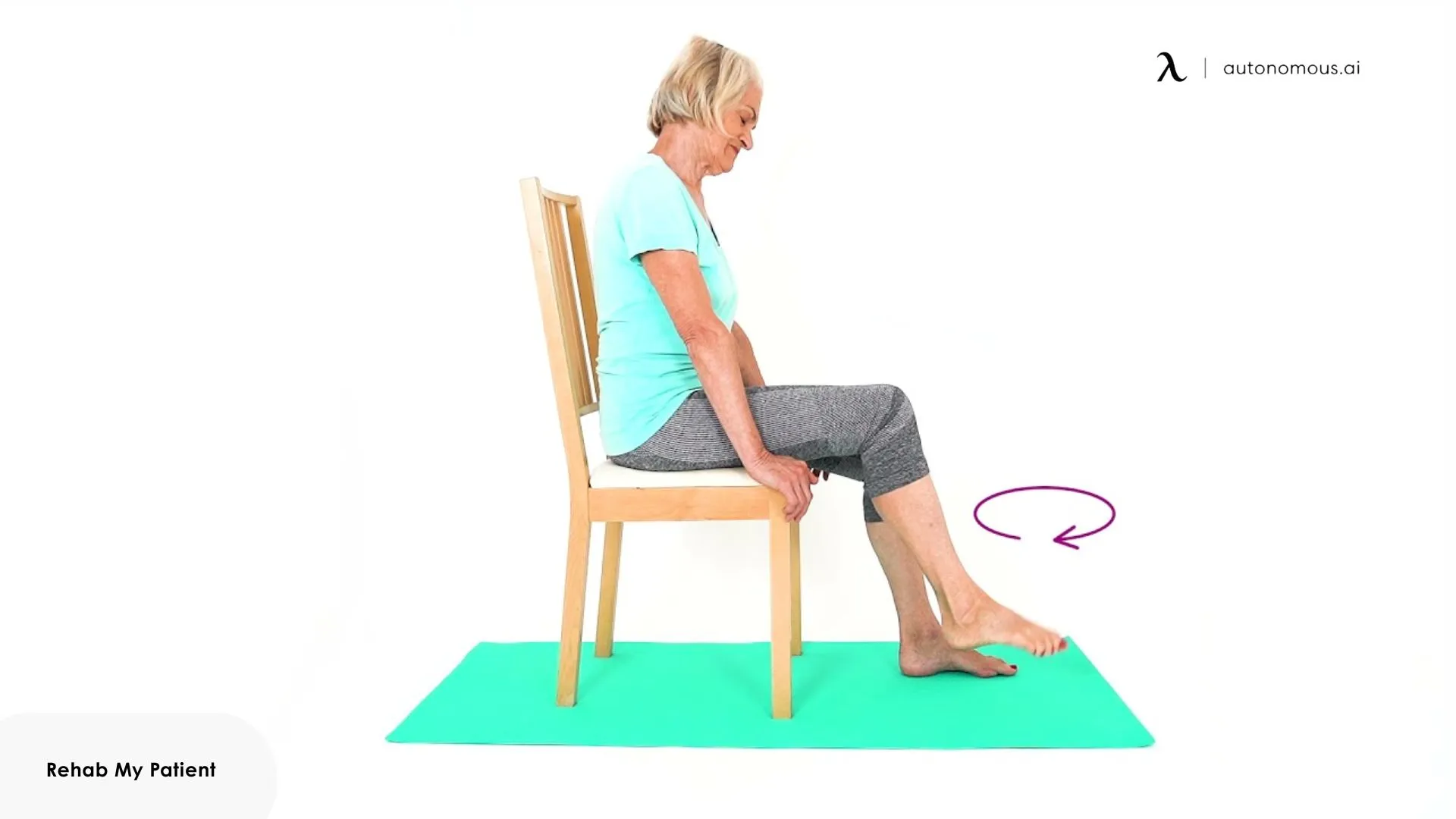
1. Ankle Circles While Sitting
Your ankles do more work than you'd think — they're the hinge point between your body and the ground, supported by a web of small stabilizers in the calves and lower leg that also play a direct role in pushing blood back up from your feet. When you sit for hours without moving them, that system idles. Ankle circles wake it back up.
How to do it
- Sit with both feet flat on the floor, back supported against your office chair.
- Lift your right foot an inch or two off the ground — just enough to free the ankle.
- Slowly rotate your ankle clockwise, drawing a smooth circle with your toes.
- Complete your reps, then reverse direction and go counterclockwise.
- Place your foot down. Repeat on the left side.
Keep your knee and thigh still throughout. The rotation happens at the ankle joint only.
Reps: 10–20 circles per direction, each ankle
Muscles worked: Ankles, calves, lower leg stabilizers
Form cue: If your knee is bobbing or your thigh is shifting, you've made the circle too big. Shrink it down until the ankle is the only thing moving.
2. Seated Toe Taps
When your feet stay planted for long stretches, the muscles along the front of the lower leg tend to switch off first. Seated toe taps bring that area back into play, helping restore light muscle activity and circulation without demanding much effort. As part of chair leg exercises, this movement is especially useful for easing restlessness and keeping the lower legs responsive during prolonged sitting.
How to do it:
- Sit upright with both feet flat on the floor, back against the chair.
- Keep your heels planted and lift just your toes upward.
- Lower them back down in a steady, controlled rhythm.
- Both feet work together. Keep the movement small and repeatable.
Reps: 15–25 controlled taps.
Muscles worked: Front of the lower legs (tibialis anterior) and foot stabilizers
Form cue: Lift through the toes, not by rocking the whole foot. Your heels stay glued to the floor the entire time.
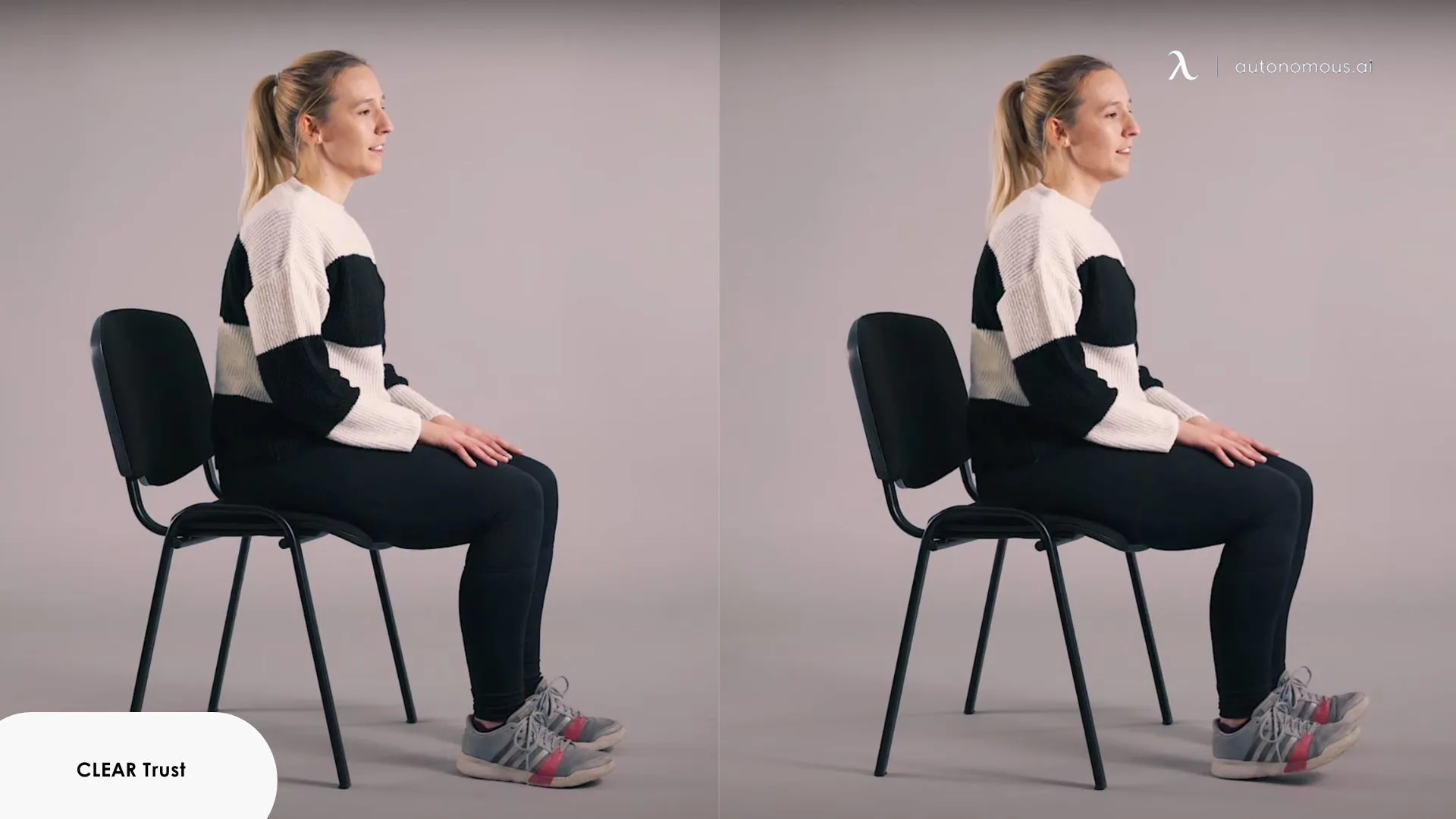
3. Seated Heel Raises (Chair Calf Raises)
Your calves act as a pump for your circulatory system — contracting to push blood back up from the lower legs toward the heart. That's why they're sometimes called your "second heart." When you sit still for hours, that pump stalls. Seated heel raises restart it with a simple, repeatable motion that adds light strength work on top of the circulation benefit. For anyone building a routine around chair exercises for leg strength, this is a foundational move.
How to do it
- Start with both feet flat on the floor.
- Press through the balls of your feet and lift your heels as high as feels comfortable.
- Pause briefly at the top.
- Lower your heels back down slowly and with control.
- Repeat without bouncing at the bottom.
Reps: 12–20 repetitions.
Muscles worked: Calves and muscles supporting the ankles.
Form cue: Each rep should be smooth — lift, pause, lower. If you're bouncing off the floor at the bottom, you've lost the contraction. Slow it down. This is also a staple in chair exercises for seniors routines because it's joint-friendly and easy to scale.
4. Seated Ankle Pumps
Toe taps and heel raises isolate the lower leg. Seated leg pumps connect more of the chain — combining knee extension with ankle flexion into one flowing movement. This creates a pumping action that actively drives fluid through the lower legs. Think of it as a seated leg extension exercise with a circulation focus, rather than a pure strength move.
How to do it:
- Sit tall with both feet flat on the floor.
- Slowly extend one leg forward, straightening the knee while gently flexing the ankle (toes pulling back toward you).
- Hold for a beat at full extension.
- Return the foot to the floor with control.
- Complete your reps, then switch to the other leg.
Reps: 10–15 repetitions per leg.
Muscles worked: Quadriceps, calves, and muscles around the knee and ankle.
Form cue: Don't lock your knee hard at the top. Move through a comfortable range — the goal is circulation, not max extension.
5. Seated Heel Slides
When sitting for long periods, the knees often stay in a fixed angle, which can contribute to stiffness over time. Seated heel slides gently take the knee through its natural bending and straightening motion while keeping the body supported.
As part of chair leg exercises, this movement emphasizes mobility and control rather than effort, making it well suited for maintaining comfort during extended sitting.
How to do it
- Sit with both feet flat on the floor.
- Slowly slide one heel forward, allowing the leg to extend while keeping the foot in light contact with the ground.
- Once you reach a comfortable position, draw the heel back toward the chair and return to the starting posture.
- Alternate sides after completing your repetitions.
Reps: 10–15 controlled slides per leg.
Muscles worked: Hamstrings, quadriceps, and muscles supporting the knee joint.
Form cue: Keep the motion smooth and level; the heel should glide rather than lift or drag sharply.
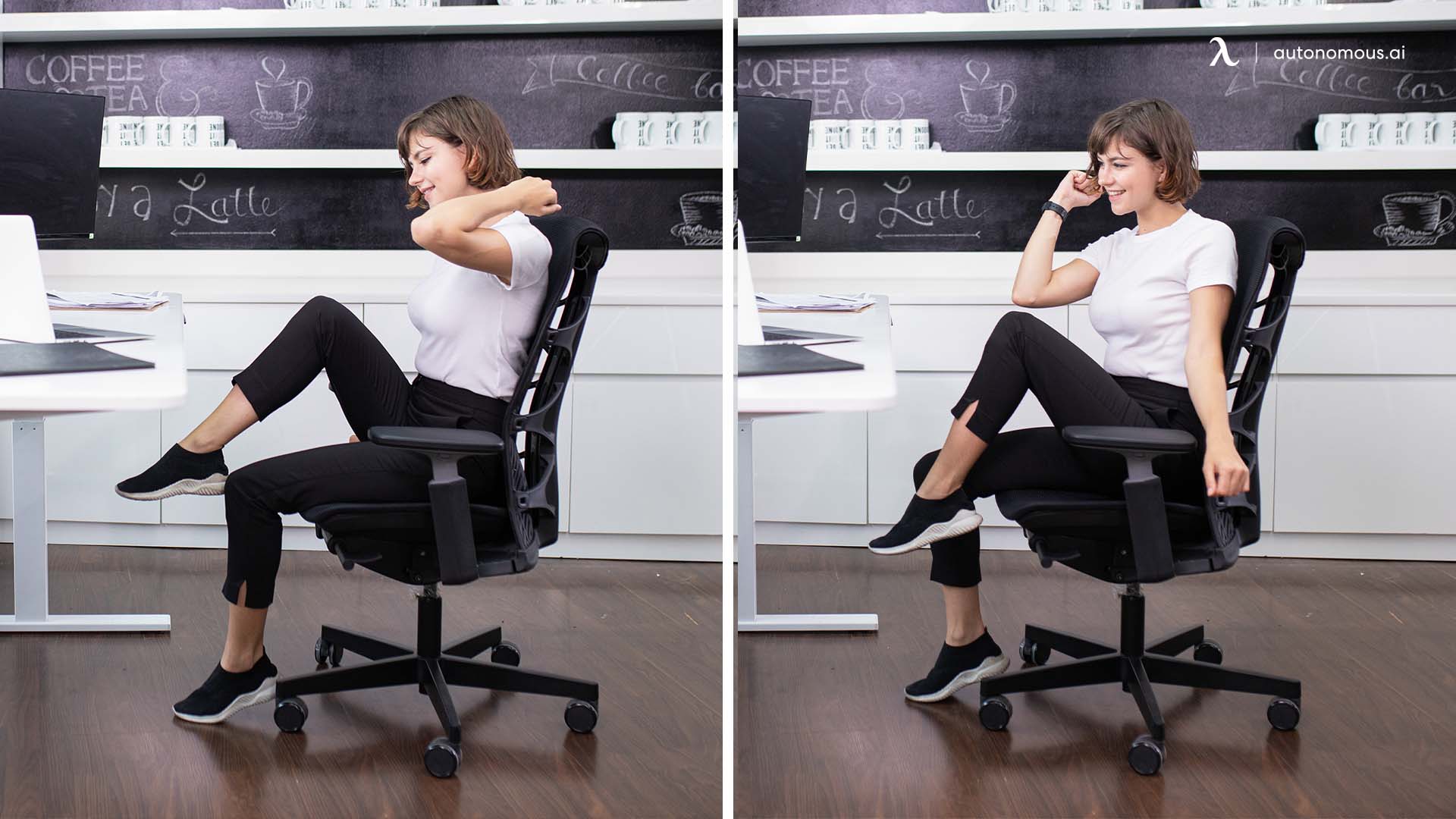
6. Seated Marching Leg Exercise
The exercises up to this point keep your feet close to the floor. Seated marching changes that — it lifts the entire leg against gravity, bringing the hip flexors and thighs into the picture. It's a bigger movement, but still controlled enough to qualify as one of the more accessible chair leg exercises for people at any level.
The alternating rhythm also adds a coordination element that smaller isolation moves don't offer. It's also a common feature in chair exercises for men over 50 routines, where the priority is maintaining functional movement without overloading the joints.
How to do it
- Sit upright with both feet flat on the floor, hands resting on your thighs or the armrests.
- Lift your right knee upward a few inches — like you're marching in slow motion.
- Lower it back down with control.
- Repeat on the left side.
- Continue alternating in a steady, even rhythm.
Reps: 10–20 lifts per leg, alternating sides.
Muscles worked: Hip flexors, quadriceps, and supporting core muscles.
Form cue: Your torso stays still. If your shoulders are rocking side to side or you're leaning back to get the knee higher, you've gone too far. Reduce the height until your upper body is quiet. This is a practical form of seated leg lifts in chair routines — the value comes from controlled repetition, not range of motion.
7. Seated Leg Extensions
This is where chair exercises for leg strength start to get more direct. Seated leg extensions isolate the quadriceps — the muscle group at the front of the thigh responsible for standing up, walking, and climbing stairs. If those movements are getting harder or less stable, this is the exercise to prioritize.
How to do it
- Sit with both feet flat on the floor, back fully supported.
- Slowly extend one leg forward until it's nearly straight.
- Hold for a beat at the top.
- Lower it back down with control — don't let gravity do the work.
- Complete your reps, then switch legs.
Reps: 8–15 repetitions per leg
Muscles worked: Quadriceps and knee stabilizers
Form cue: Stop just short of locking the knee at full extension. That last bit of straightening shifts the load from muscle to joint — which is exactly what you don't want. Keep a slight bend at the top and you'll feel the tension stay in the thigh where it belongs. For anyone progressing through seated leg raises as part of a strength-building routine, this is the movement that delivers the most direct quad engagement.
8. Isometric Seated Leg Hold
Some leg muscles benefit from staying active without constant movement. The isometric seated leg hold does exactly that by asking the thigh muscles to maintain tension for a short period of time. That static contraction builds a different kind of strength — the kind that matters when you need to stabilize a knee going downstairs or hold your footing on uneven ground.
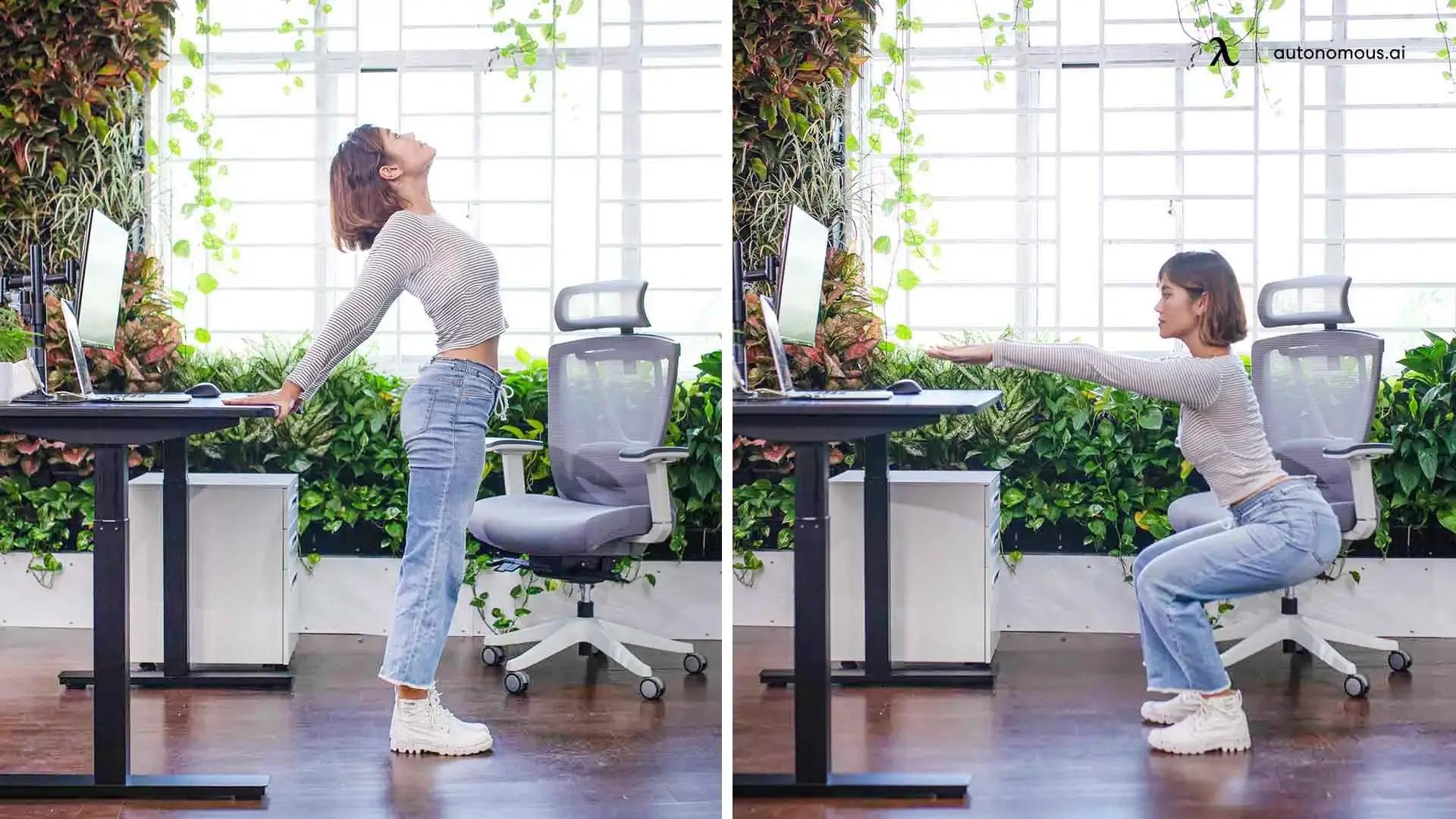
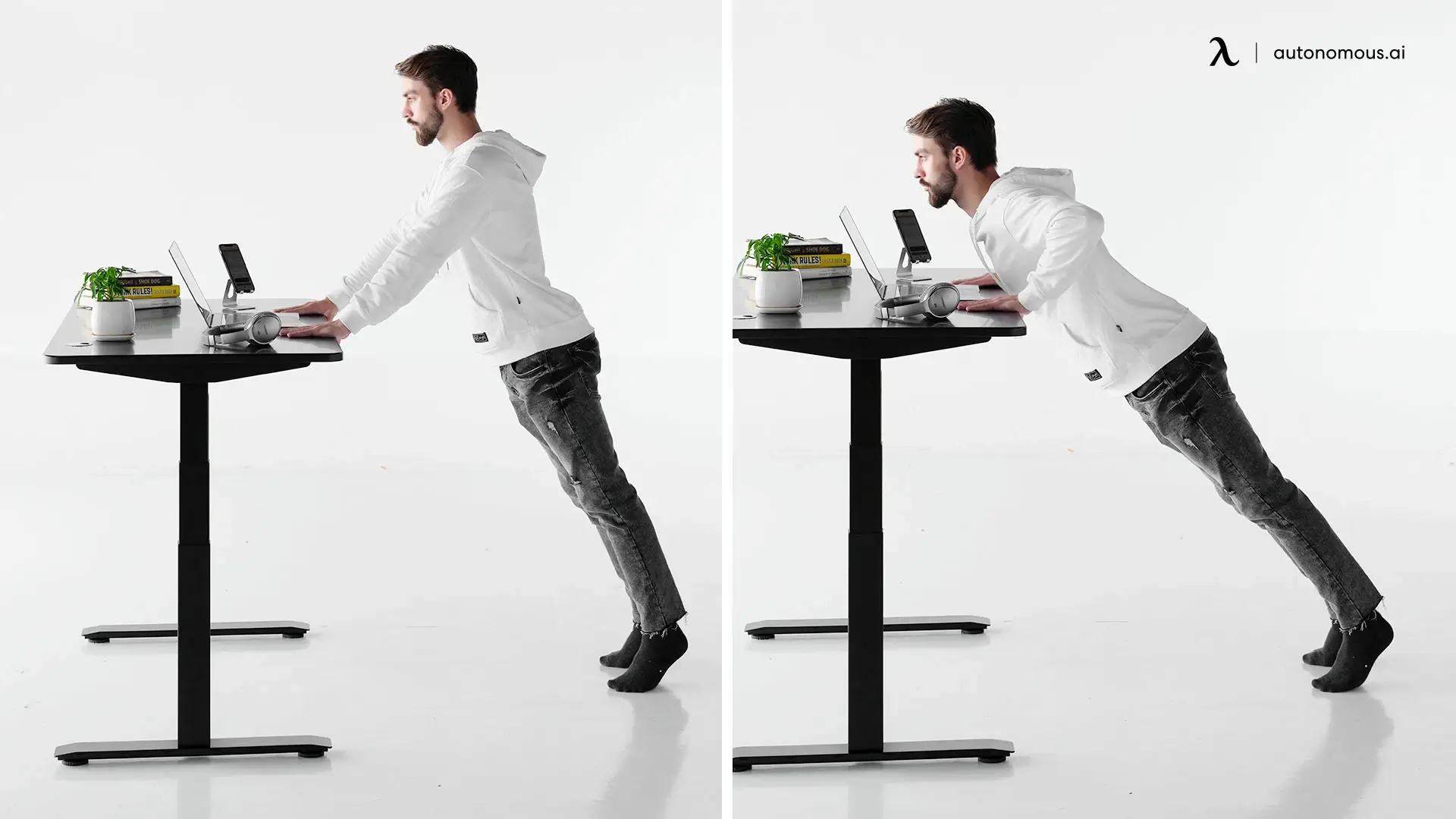
It's also one of the most joint-friendly leg exercises sitting in a chair, since nothing is actually moving. If you alternate between sitting and standing during the day, pairing this with standing desk exercises covers both positions.
How to do it
- Sit with your back supported and both feet flat on the floor.
- Extend one leg forward until it's almost straight — slight bend at the knee.
- Hold that position. Don't let the leg drift downward.
- After your hold time, lower the leg slowly back to the floor.
- Complete all reps on one side, then switch.
Reps: Hold for 5–10 seconds per repetition, 5–8 times per leg.
Muscles worked: Quadriceps and stabilizing muscles around the knee.
Form cue: Focus on keeping the leg steady rather than lifting it higher; a small, controlled hold is more effective than forcing the position.
9. Seated Inner Thigh Squeeze
The inner thighs are often overlooked during seated movement, yet they contribute to stability and balance. This exercise targets that area without requiring large motions, making it a useful addition to leg exercises in a chair. It’s commonly included in chair leg exercises for elderly routines because the movement stays contained and easy to control.
How to do it
- Sit upright with your feet flat and knees hip-width apart.
- Place your hands, a folded towel, or a small ball between your knees.
- Press your knees inward with steady, even pressure.
- Hold the squeeze for 2–3 seconds.
- Release slowly back to the starting position.
Reps: 10–15 slow squeezes.
Muscles worked: Inner thigh muscles (adductors) and hip stabilizers.
Form cue: Apply gradual pressure, hold it, then release with the same control. If you're snapping your knees together, you've lost the contraction. Think compression, not collision. For anyone building a well-rounded set of chair leg exercises for elderly or limited-mobility routines, this fills a gap that most other seated movements miss.
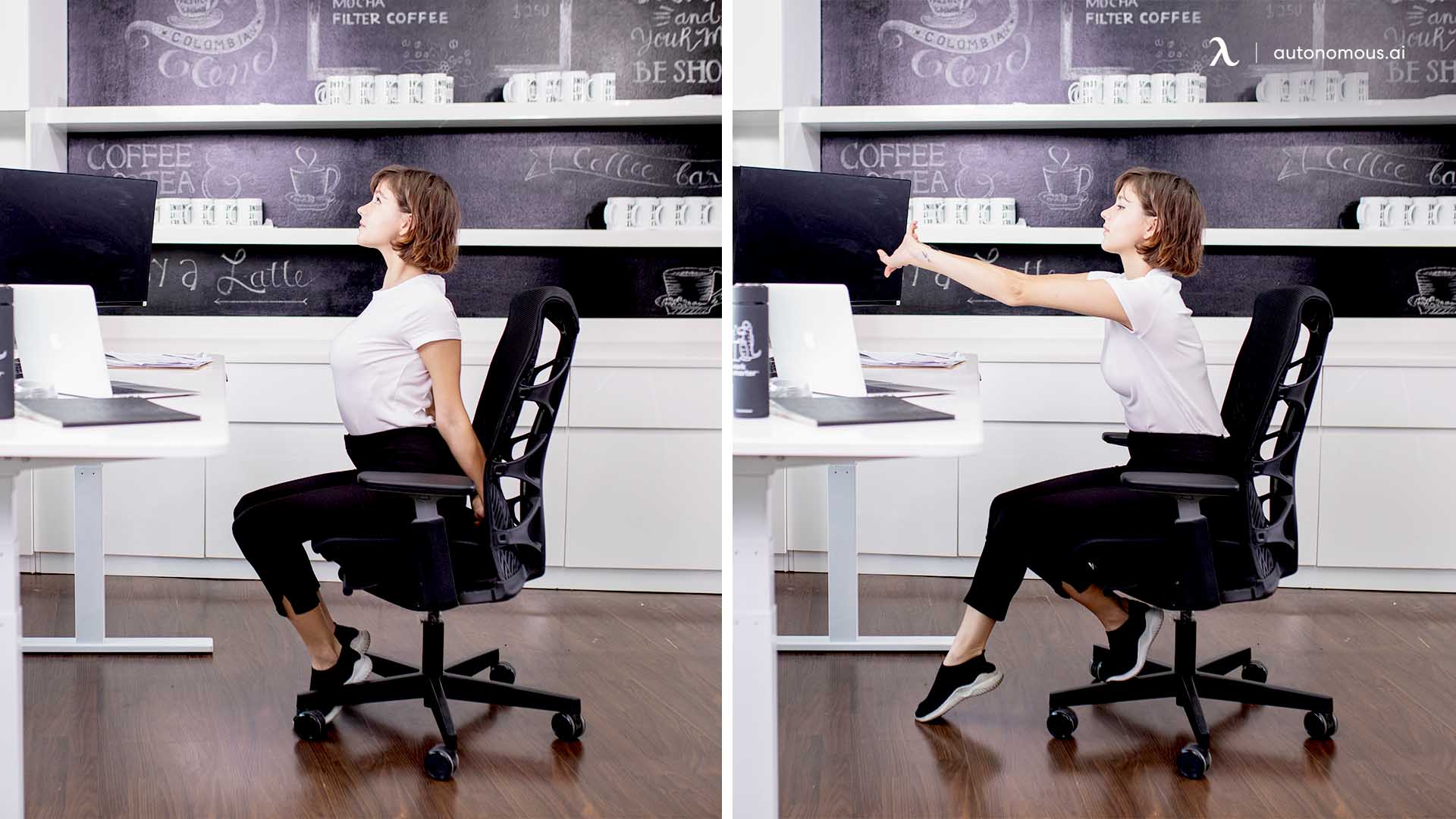
10. Seated Hamstring Stretch
The previous nine exercises all involve contraction — muscles shortening, firing, holding. This one does the opposite. The seated hamstring stretch lengthens the muscles at the back of the thigh, releasing the tension that accumulates from both prolonged sitting and the exercises themselves. It's the natural endpoint for any chair leg exercises routine, balancing activation with recovery.
How to do it
- Sit toward the front edge of your chair with your back straight.
- Extend one leg forward, heel on the floor, toes pointing up.
- Keeping your spine long, hinge forward gently from the hips — not the lower back.
- Stop when you feel a mild stretch along the back of your thigh.
- Hold, then return upright. Switch legs.
Reps: Hold each stretch for 15–30 seconds, once or twice per leg.
Muscles worked: Hamstrings and muscles supporting the hips.
Form cue: Reach with your chest, not your hands. Rounding your back to touch your toes shifts the stretch away from the hamstring and into the lower spine — the opposite of what you want. A small, controlled hinge with a flat back will hit the right spot every time. After a full session of seated leg lifts, extensions, and holds, this is how you bring the legs back to neutral.
Common Mistakes to Avoid with Chair Leg Exercises
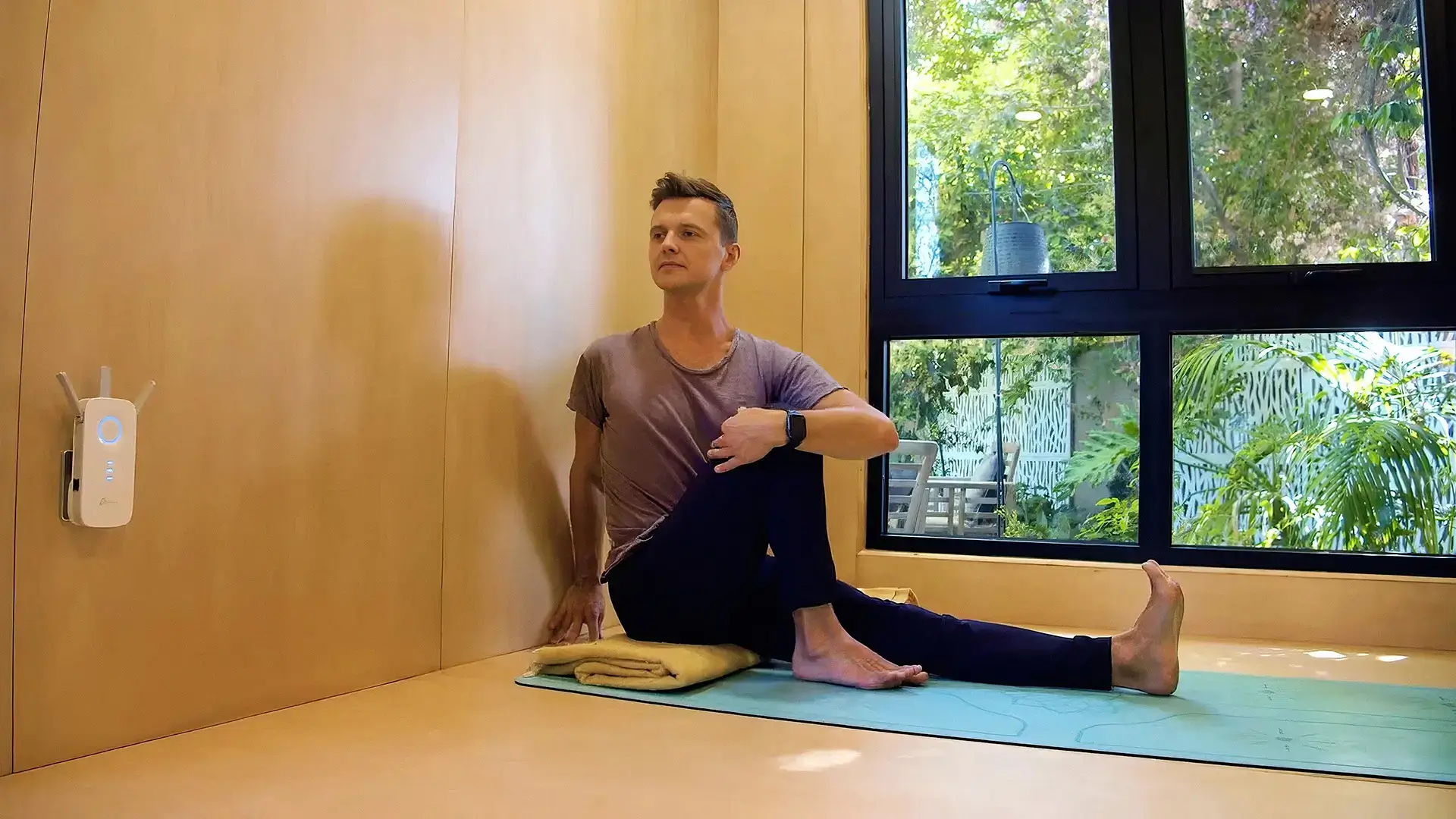
These seated leg lifts in a chair are simple — but simple doesn't mean you can't undermine them. A few common habits quietly strip away most of the benefit:
- Rushing through reps: Speed kills the value here. Fast movements bypass the sustained muscle engagement and steady blood flow that make these exercises work in the first place.
- Riding momentum instead of muscle: If your leg is swinging forward during seated leg extensions or dropping under gravity on the way down, you're not doing the exercise — physics is. Control both directions.
- Locking the knees at full extension: That final click of straightening shifts load from muscle to joint. Stop just short of straight and you keep tension where it belongs.
- Slouching into the chair: The moment your posture collapses, your core disengages and the effort transfers away from the legs. You don't need rigid posture — just enough upright structure to let the lower body do its job. Practicing active sitting helps build that baseline posture so it stops being something you have to think about.
The through-line across all of these: slow down, stay upright, and own every inch of the movement. That's what separates a habit that builds something from one that's just motion.
FAQs
What leg exercises can I do while sitting?
Common chair leg exercises include ankle circles, seated toe taps, seated leg extensions, seated marching, and heel raises. These leg exercises sitting in a chair focus on circulation, mobility, and light strength without standing or equipment.
How to strengthen legs sitting in a chair?
Do seated leg exercises really work?
Yes, seated leg exercises can be effective when done consistently and with controlled movement. They help improve circulation, reduce stiffness from prolonged sitting, and maintain basic leg muscle activation, especially during long sedentary periods.
How to strengthen legs sitting in a chair?
To strengthen legs sitting in a chair, focus on chair exercises for leg strength such as seated leg extensions, isometric leg holds, and seated marching. Using slow, controlled repetitions and regular practice helps build and maintain strength over time without joint strain.
Are chair leg exercises good for circulation?
Yes, chair leg exercises help stimulate blood flow by activating the calves, ankles, and thighs while sitting. Rhythmic movements like ankle circles and seated leg lifts support circulation during long periods of inactivity.
How often should I do chair leg exercises?
Chair leg exercises can be done daily, especially if you sit for extended hours. Short sessions every 30 to 60 minutes are often more effective than one long workout.
Can chair leg exercises replace standing workouts?
Chair leg exercises are not a full replacement for standing workouts, but they help maintain movement, circulation, and basic leg strength. They work best as a supplement when standing or walking isn’t possible.
Are chair leg exercises effective for long sitting?
Yes, leg exercises sitting in a chair are effective for reducing stiffness and discomfort caused by prolonged sitting. They keep the legs active and help prevent the heavy, tight feeling that builds up over time.
Are chair leg exercises good for elderly adults?
Chair leg exercises for elderly adults are commonly used because they are low-impact and easy to control. They support mobility, circulation, and leg strength without putting stress on the joints.
Can chair leg exercises help with leg stiffness?
Chair leg exercises help ease leg stiffness by moving the joints through a gentle range of motion. Regular seated movements prevent the legs from staying in one position for too long.
Do chair leg exercises build muscle?
Chair exercises for leg strength can help maintain and slightly improve muscle tone, especially in the thighs and calves. While they don’t build muscle like heavy resistance training, they support everyday strength.
Are seated leg lifts safe for beginners?
Seated leg lifts in a chair are generally safe for beginners when done slowly and within a comfortable range. Starting with small movements helps build control before increasing repetitions.
Can chair leg exercises be done after injury?
Chair leg exercises are often used during recovery because they allow controlled movement without standing. It’s important to stay within pain-free ranges and follow professional guidance if recovering from injury.
Do chair leg exercises help with mobility?
Yes, chair leg exercises support mobility by keeping the hips, knees, and ankles moving regularly. Consistent practice helps maintain joint flexibility and coordination over time.
Conclusion
Chair leg exercises offer a practical, low-impact way to keep your legs active during long periods of sitting. When performed with controlled movement and regularity, they support circulation, joint mobility, and everyday leg strength without placing unnecessary stress on the body.
If you're dealing with lower back tightness from prolonged sitting, seated sciatica stretches pair well with these movements. And if you're looking to expand your seated routine beyond the legs, chair exercises for belly fat and chair exercises for weight loss cover the broader picture.
The exercises outlined here reflect commonly recommended seated movements used in wellness and mobility-focused routines. As with any physical activity, listening to your body and staying within comfortable ranges is key. Consistent, mindful movement remains one of the simplest ways to support long-term leg health while seated.