10 Best Chair Exercises for Men Over 50

Table of Contents
- Why a Chair? (It’s Your New Power Tool)
- The Top 10 Chair Exercises for Men Over 50
- 1. The Sit-to-Stand (The Foundation)
- 2. Incline Chair Push-Ups (Chest & Shoulders)
- 3. Seated Rows (Back & Posture)
- 4. Seated Leg Extensions (Knee Health)
- 5. Seated Knee Tucks (Lower Core)
- 6. Chair Dips (Arm Definition)
- 7. Seated Calf Raises (Balance & Circulation)
- 8. Seated Overhead Press (Shoulder Mobility)
- 9. Seated Oblique Twists (Midsection)
- 10. Seated Hip Abductions (Hip Stability)
- The "I’m Busy" Solution: 7 Minute Chair Workout for Men Over 50
- The 28-Day Chair Workouts for Men Over 50 (The "Habit Builder")
- The 30-Day Chair Workout for Men Over 50 (The "Full Reboot")
- FAQs
- Conclusion
By 50, heavy squats often cause more joint inflammation than muscle gains. Aging doesn’t mean slowing down - it means training smarter. A chair workout for men over 50 offers a low-impact way to build strength, 8 hour desk chair, and support heart health without unnecessary strain.
Compared with traditional gym routines, chair workouts for men emphasize controlled movement and joint stability, making them easier to recover from. They also share key principles with chair exercises for seniors, while still allowing enough intensity to maintain muscle and functional strength.
Whether you’re returning from injury or building a sustainable home routine, a chair-based approach lets you train consistently without sacrificing long-term joint health.
Why a Chair? (It’s Your New Power Tool)
For a man in his prime - yes, 50+ absolutely counts - the chair becomes a stabilizer, not a crutch. It lets you train legs, core, and upper body with control, without dumping unnecessary stress into your knees or lower back. Movements that feel risky standing up become repeatable and effective when seated.
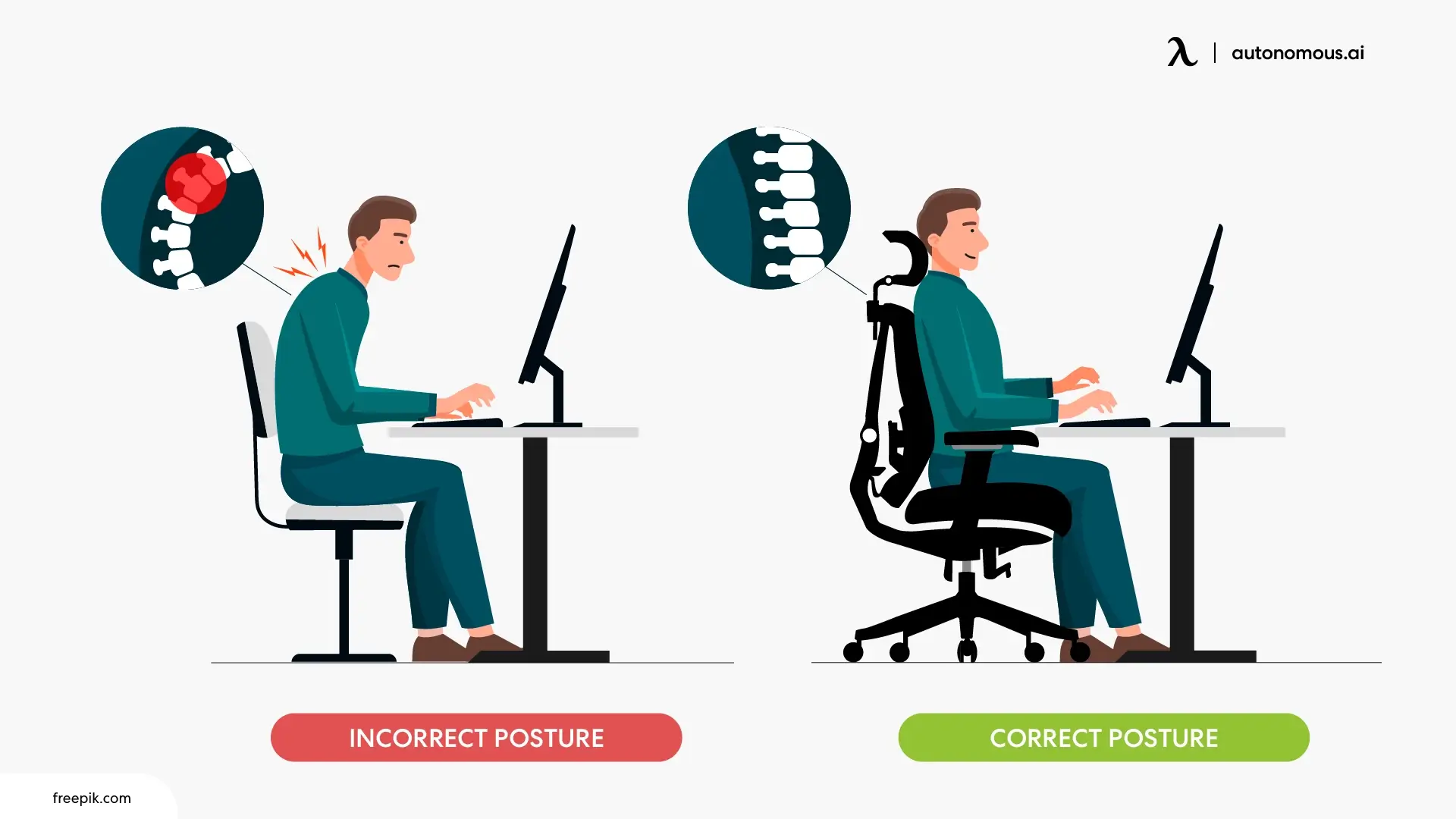
This is why office chair exercises work so well for strength and mobility: the chair creates a fixed base, allowing muscles to do the work instead of joints absorbing the load. Proper support matters too. An office chair for posture helps keep the spine stacked, while designs that encourage engagement - often highlighted in guides to office chairs for core strength - make seated training more effective.
Stability also makes chair training adaptable across ages and needs. Many principles overlap with selecting a chair for the elderly: firm base, proper height, and back support. Even seating habits - covered in discussions around a cross-legged office chair - influence hip mobility and comfort during longer sessions.
Bottom line: the chair turns “can’t do that anymore” into “I can train this safely.” That’s not regression - it’s smart progression.
The Top 10 Chair Exercises for Men Over 50
1. The Sit-to-Stand (The Foundation)
- Target: Glutes, hamstrings, and quads.
- The Move: Sit on the edge of the chair, feet shoulder-width apart. Stand up using only your legs (don't use the armrests!). Lower yourself back down slowly until your glutes just graze the seat, then stand again.
- Why: This is the most important chair workout for men over 50 because it trains a daily movement pattern - getting out of a car, rising from a sofa, or transitioning between sitting and standing during long workdays.
Pairing seated strength work with regular posture changes, including time at a standing desk, helps reduce stiffness and supports long-term joint health. Choose a stable office chair with firm support and the right seat height so your knees stay close to hip level at the bottom of the movement.
2. Incline Chair Push-Ups (Chest & Shoulders)
- Target: Chest, front deltoids, and triceps.
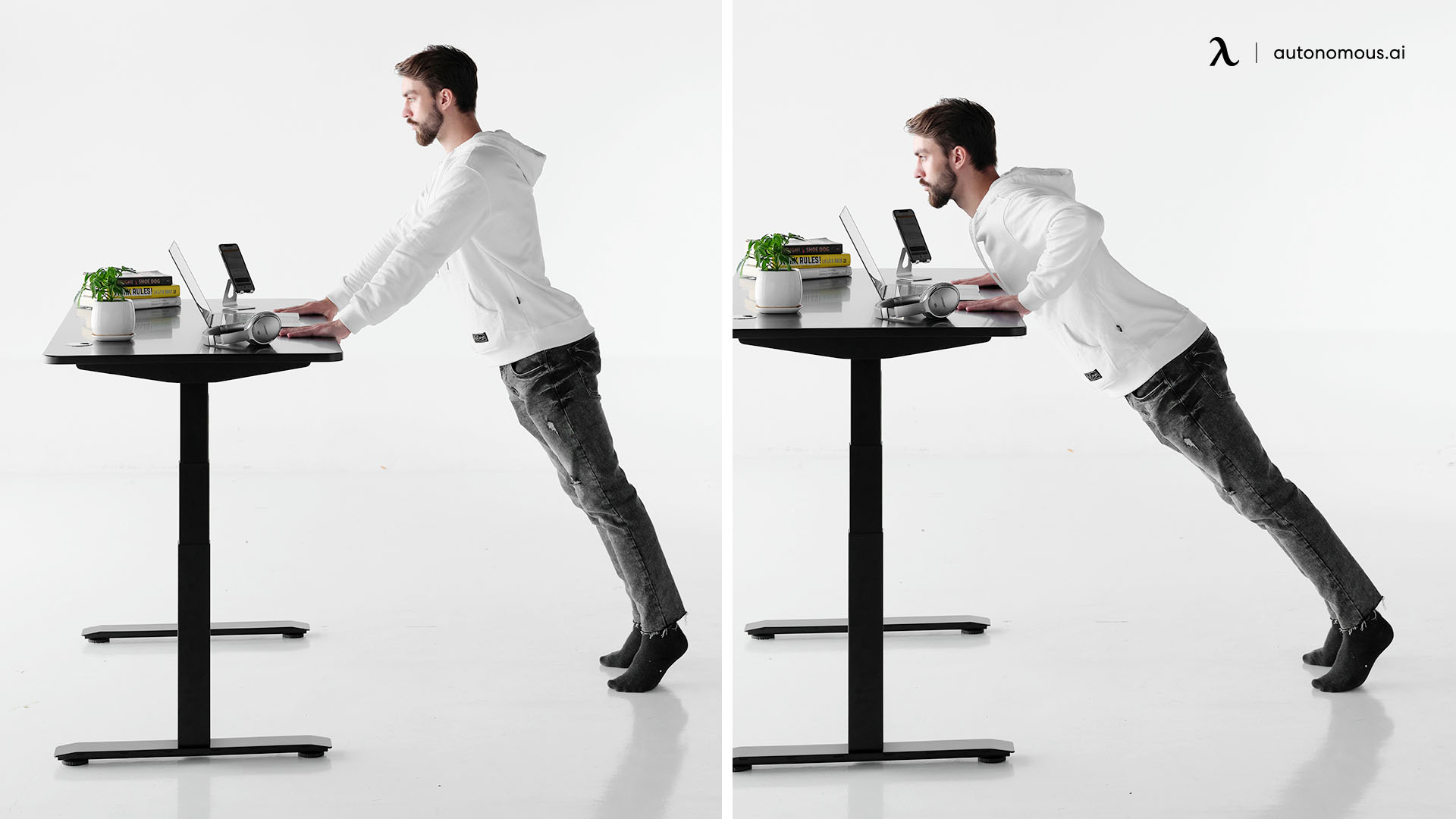
- The Move: Place your hands on the seat of a sturdy chair (against a wall). Step your feet back into a plank. Lower your chest toward the chair and push back up.
- Why: It builds upper-body pushing strength while reducing shoulder strain compared to floor push-ups. This makes it a reliable option within upper body chair exercises for maintaining strength without joint overload.
3. Seated Rows (Back & Posture)
- Target: Rhomboids, traps, and lats.
- The Move: Sit on the edge of the chair with a neutral spine and a slight forward hinge at the hips. Reach your arms toward the floor, then pull your elbows back and up, squeezing your shoulder blades together as if rowing. Control the movement on the way back down.
- Why: It directly strengthens the muscles that pull the shoulders back, helping correct the slouch that commonly develops in our 50s. Guidance on fixing being slouched in a chair supports better carryover into daily posture.
4. Seated Leg Extensions (Knee Health)
- Target: Quadriceps.
- The Move: Sit tall with your back against the chair. Straighten one leg out in front of you, locking the knee briefly and squeezing the thigh muscle. Lower slowly.
- Why: This is a staple among free chair exercises for men over 50 because it strengthens the muscles that stabilize and protect the knee joint. Variations of leg exercises while sitting are especially useful for maintaining knee strength without impact.
For men managing knee sensitivity, seated leg work offers a safer alternative to positions that place pressure on the joint. Understanding the trade-offs between kneeling and sitting - and when tools like a kneeling office chair make sense - can help tailor lower-body training to long-term joint health.
5. Seated Knee Tucks (Lower Core)
- Target: Rectus abdominis (abs).
- The Move: Grip the sides of the chair seat. Lean back slightly, keep your back straight, and lift both knees toward your chest. Lower them back down without letting your feet rest on the floor.
- Why: This movement builds deep core stability, which plays a major role in protecting the lower back as we age. Stronger core control reduces strain during daily tasks and pairs well with choosing a chair for lower back and hip pain.
Core strength works best alongside proper sitting mechanics. Learning how to sit with lower back pain helps prevent irritation, while understanding lower right back pain causes explains why stability-focused training matters. For many men over 50, this exercise supports the same goal as the single best exercise for lower back pain - building resilience without excessive load.
6. Chair Dips (Arm Definition)
- Target: Triceps.
- The Move: Place your hands on the front edge of the seat. Scoot your hips off the chair, supported by your arms. Bend your elbows to lower your hips, then push back up.
- Why: Keeps the back of the arms firm and improves "pushing" power.
7. Seated Calf Raises (Balance & Circulation)
- Target: Gastrocnemius and soleus.
- The Move: Sit tall with feet flat. Lift your heels as high as possible while pushing into the balls of your feet. Hold for a second and lower.
- Why: Strong calves improve your balance and help pump blood back up to the heart.
8. Seated Overhead Press (Shoulder Mobility)
- Target: Deltoids and upper traps.
- The Move: Start with your hands at shoulder height, palms facing forward. Extend your arms straight up toward the ceiling, then bring them back down to shoulder level.
- Why: This movement preserves shoulder strength and mobility needed for everyday reaching tasks. It also helps counter tight, forward-positioned shoulders, especially when paired with rounded shoulder exercises that restore proper joint alignment.
9. Seated Oblique Twists (Midsection)
- Target: Obliques and spinal rotation.
- The Move: Sit tall with your feet planted. Hold your hands behind your head or across your chest. Rotate your torso to the right as far as comfortable, then to the left.
- Why: Essential for a better golf swing and keeping the spine "supple."
10. Seated Hip Abductions (Hip Stability)
- Target: Gluteus medius (outer hip).
- The Move: Sit at the edge of the chair with feet together. Push your knees outward against imaginary resistance (or use a band), hold for two seconds, and return.
- Why: Strong outer hips stabilize your pelvis during walking and standing, reducing side-to-side sway and lowering fall risk. Hip stability becomes even more important if you’ve dealt with hip pain from sitting in an office chair.
Seating choice affects hip comfort and alignment. Options like a saddle chair for hip pain or guidance on selecting an office chair after hip replacement can complement strength work and improve daily movement quality.
The "I’m Busy" Solution: 7 Minute Chair Workout for Men Over 50
Sometimes life gets in the way. If you’re short on time, use this high-intensity interval circuit. Perform each move for 45 seconds, then rest for 15 seconds.
- Seated Marches (Warm-up/Cardio)
- Sit-to-Stands (Lower Body)
- Chair Push-Ups (Upper Body)
- Seated Leg Extensions (Knee Health)
- Seated Overhead Reach (Shoulder Mobility)
- Knee Tucks (Core)
- Seated Twists (Spine Health)
Pro Tip: If you want a free chair workout plan for men over 50, try doing this 7-minute circuit three times a week. It’s the perfect "entry-level" consistency builder.

The 28-Day Chair Workouts for Men Over 50 (The "Habit Builder")
A 28 day chair workout for men over 50 is designed around a perfect four-week cycle. This is ideal for men who want a "reset" and prefer to see their progress in weekly blocks.
- Week 1: The Foundation. Focus purely on form. Learn how to engage your core and keep your spine neutral while seated.
- Week 2: Increasing Volume. Add two more repetitions to every set.
- Week 3: Time Under Tension. Slow down the movements. Take 3 seconds to lower yourself during the sit-to-stands.
- Week 4: The Mastery Phase. Reduce rest time between exercises to keep your heart rate elevated.
This approach respects recovery. Instead of high-impact programs that often aggravate knees or the lower back, this plan builds strength gradually. Simple additions - using basic office exercise equipment or fitting sessions into a work from home workout - make consistency easier.
On days when you want more movement variety, short standing desk exercises can complement seated training. By the end of the cycle, most men notice everyday tasks feel easier - not because they trained harder, but because they trained smarter and allowed recovery to do its job.
The 30-Day Chair Workout for Men Over 50 (The "Full Reboot")
For men who like aligning fitness goals with a calendar month, a 30-day chair workout for men over 50 adds two intentional days for assessment and recovery. The structure stays simple while giving your body time to adapt.
Days 1–28: Progressive Training
Follow the same four-week progression used in the 28-day plan. Focus on controlled movement, steady volume increases, and joint-friendly pacing.
Day 29: Endurance Test
Perform as many sit-to-stands as possible in 60 seconds using perfect form. This test reflects real-world strength, not just gym capacity.
Day 30: Mobility Check and Recovery
Dedicate the final day to restoring range of motion and easing tension. A short sequence of seated stretches helps reset tight hips, hamstrings, and the lower back. If nerve tension is an issue, seated sciatica stretches can reduce discomfort.
For men who alternate sitting and standing during the day, gentle standing lower back stretches and back stretches while sitting support recovery without overloading joints.
This cadence balances effort and recovery - an essential factor for joint health and consistency after 50. You stay active enough to see results while avoiding the wear-and-tear that often derails long-term progress.
Week | Frequency | Daily Goal | Focus Area |
Week 1 | 3 Days / Week | 1 set of 10 reps | Correct Posture |
Week 2 | 4 Days / Week | 2 sets of 10 reps | Muscle Engagement |
Week 3 | 4 Days / Week | 2 sets of 15 reps | Building Stamina |
Week 4 | 5 Days / Week | 3 sets of 12 reps | Maximum Strength |
Pro Tip: In any 30-day chair workout for men over 50, the biggest gains rarely show up in the mirror first. Pay attention to quieter wins - less stiffness in the morning, easier stair climbing, steadier balance, and more energy throughout the day. Those changes signal that the program is doing its job.
FAQs
Can you really build muscle with a chair workout if you’re over 50?
Yes, you can build significant functional muscle by using "time under tension" and progressive resistance. Focusing on slow, controlled movements like the sit-to-stand or seated leg extension triggers muscle hypertrophy while protecting your joints from the heavy impact of traditional lifting.
Is a 7 minute chair workout for men over 50 actually effective?
A 7 minute chair workout for men over 50 is highly effective for boosting circulation, improving mobility, and maintaining metabolic health on busy days. While shorter than a full session, performing high-intensity seated movements for seven minutes daily can significantly reduce stiffness and improve heart health.
How often should a man over 50 perform chair exercises?
For the best results, aim to perform chair exercises for men over 50 three to four times per week. This frequency allows your muscles to recover and grow while ensuring you hit the 150 minutes of weekly activity recommended by health experts for men in this age group.
What is the best chair to use for these exercises?
The best chair workout for men over 50 requires a sturdy, armless dining chair or a dedicated fitness chair without wheels. Ensure the seat is on a non-slip surface and the backrest is upright to provide the stability needed for power moves like chair push-ups.
Can chair workouts help lose belly fat after 50?
Yes. Chair workouts support belly fat loss by building lean muscle and improving insulin sensitivity, which helps raise daily calorie burn over time. Consistency matters most - pairing a routine with targeted chair exercises for belly fat and broader chair exercises to lose weight improves results.
Are chair exercises safe for men with knee or back pain?
Seated exercises are often safer for men with joint issues because they eliminate the high-impact stress of standing or jumping. A free chair workout for men over 50 focuses on stabilizing the core and strengthening the muscles around the knees, which actually helps alleviate chronic pain over time.
What are the best chair exercises for functional strength?
The "big three" for functional strength are sit-to-stands, chair push-ups, and seated rows. These movements directly mimic real-life tasks like standing up from a car, pushing open heavy doors, and maintaining upright posture while sitting or walking.
Can I see results from a 30 day chair workout plan for men over 50?
Most men report feeling stronger and more mobile within the first two weeks of a 30 day chair workout for men over 50. By the end of the month, you can expect improved balance, firmer muscles in the legs and core, and a noticeable increase in daily energy levels.
Do I need weights or equipment for a free chair workout?
While you can get great results with just body weight, adding resistance can speed up progress. You can easily upgrade any free chair exercises for men over 50 by using household items like water bottles, soup cans, or affordable resistance bands to increase the challenge.
How do I make chair exercises harder as I get stronger?
To continue seeing gains, you should apply "progressive overload" by increasing your repetitions, shortening your rest periods, or slowing down each movement. Adding a 28 day chair workout for men over 50 challenge with slightly more difficult variations each week is the best way to avoid a fitness plateau.
Can chair workouts improve balance and prevent falls?
Yes, by strengthening the core, glutes, and ankle stabilizers, chair workouts directly improve your center of gravity. Exercises like seated marches and heel-to-toe taps build the muscle memory and coordination necessary to prevent trips and falls in everyday life.
Is it better to do chair exercises or stand-up exercises?
Both have benefits, but a chair workout for men over 50 is superior for those who need to isolate muscles without risking a fall or straining the lower back. It serves as a perfect "bridge" for beginners or an effective low-impact alternative for experienced lifters looking to stay active during recovery.
Conclusion
Staying active after 50 isn't about chasing the heavy plates at the gym or trying to outrun your 20-year-old self. It’s about consistency, mobility, and resilience. As we’ve seen, the best chair workout for men over 50 isn't just a "modified" routine - it’s a highly effective way to build functional muscle, protect your joints, and keep your metabolism firing.
Whether you commit to a full 30 day chair workout for men over 50 or just squeeze in a 7 minute chair workout for men over 50 during your lunch break, the most important step is the one you take today. By using a chair as your primary tool, you remove the excuses of joint pain or lack of equipment, leaving only the path to a stronger, more capable version of yourself.
Key Takeaways for Your Journey:
- Focus on Form: A slow, controlled rep is worth ten rushed ones.
- Listen to Your Body: Respect the "good" burn, but stop if you feel sharp pain.
- Make it a Habit: A free chair workout plan for men over 50 only works if you actually do it.
Don't let your favorite chair be the place where your fitness goes to retire. Turn it into your training ground and reclaim the "throne of power" that is your health.