10 Best Chair Exercises to Boost Energy & Reduce Pain
Table of Contents
Your body wasn't designed to stay still for eight hours. Even if you exercise regularly, prolonged sitting creates its own set of problems — reduced circulation, muscle imbalances, and energy dips that no morning workout can fully offset.
The solution isn't complicated: small movements break throughout your day. These 14 chair exercises work because they target the specific issues that come from sitting, tight hip flexors, weakened glutes, stiff shoulders, using nothing but your workspace. Think of them as maintenance, not a workout. A few minutes here and there can genuinely change how you feel by the end of the day.
Why Chair Exercises Matter More Than You Think
The science is clear: sitting for prolonged periods triggers a cascade of physiological changes that exercise at other times can't fully reverse. Within 30 minutes of sitting, electrical activity in your leg muscles drops to near zero. Blood flow slows, and your body's ability to regulate blood sugar and break down fat diminishes, regardless of how fit you are.
This is why basic chair exercises during your workday are fundamentally different from going to the gym. They're not about fitness; they're about interrupting these metabolic slowdowns before they compound. Simple movements—even exercises sitting in a chair for just 30 seconds—restore muscle activation, improve circulation, and help your body process glucose more efficiently. Combined with active sitting techniques that keep your core engaged throughout the day, these brief exercise breaks create a comprehensive movement strategy.
The effects are immediate and measurable. A 2022 meta-analysis published in Sports Medicine found that breaking up prolonged sitting with light-intensity walking significantly improved postprandial glucose and insulin levels compared to continuous sitting. Another study demonstrated that brief stretching exercises performed every few minutes reduced musculoskeletal pain by up to 72% among computer workers, without any changes to ergonomic workstations beyond maintaining proper sitting posture between exercise breaks.
The mechanism is straightforward: movement reactivates dormant muscle fibers, restores circulation, and signals your metabolism to stay alert. You're not training for fitness. You're preventing your body from entering a low-energy state that persists for hours after you finally stand up.
10 Best Chair Exercises
These chair exercises are grouped by what they target, not by difficulty. Start with whichever addresses your immediate discomfort, tight hips, stiff shoulders, or low energy. Pick three or four, rotate them throughout your day, and pay attention to what works. The goal is sustainable habit formation, not routines you'll abandon by next week.
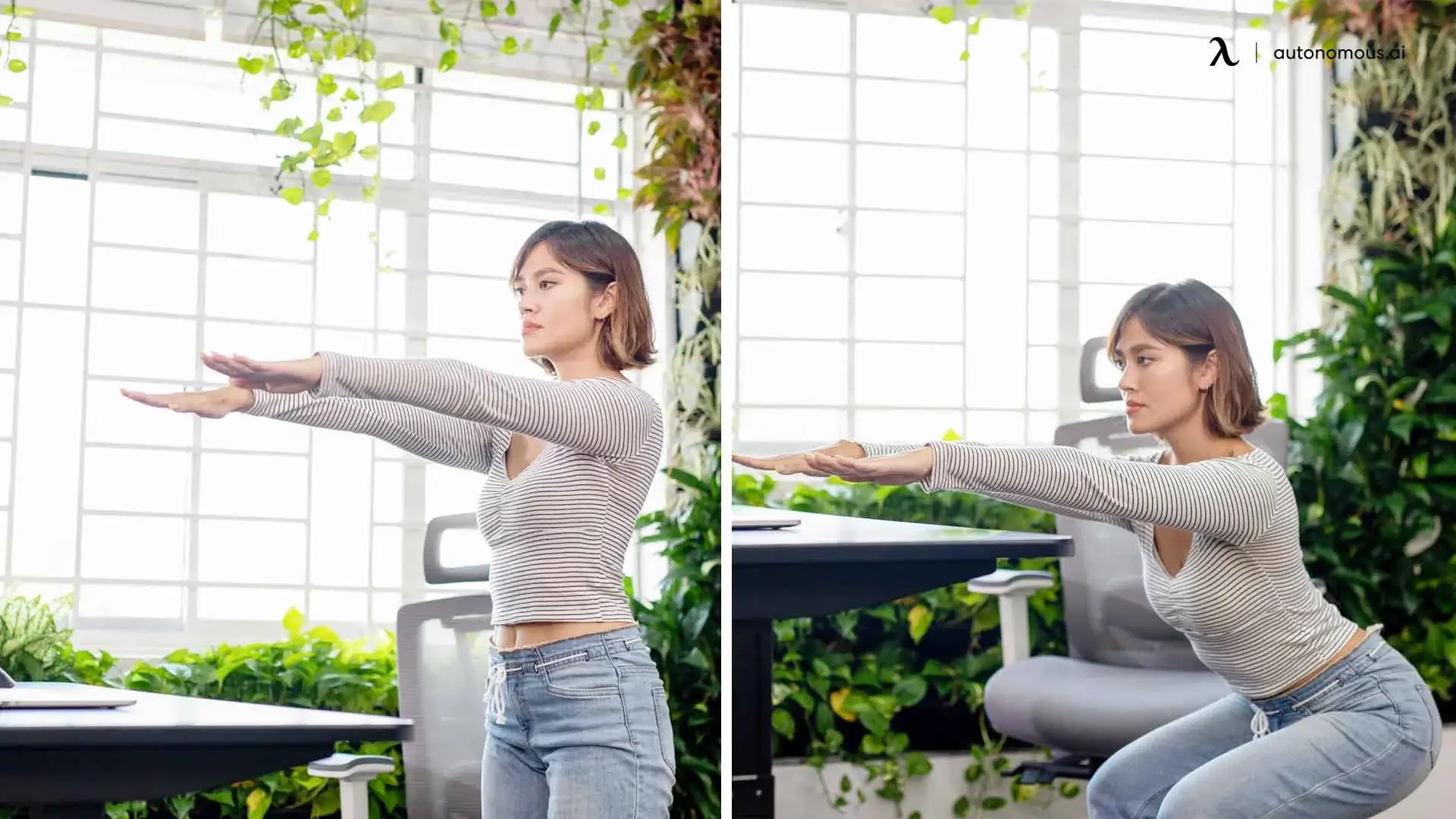
1. Chair Squats
Weak glutes and tight hip flexors, the primary cause of lower back pain in desk workers. When you sit for hours, your hip flexors shorten and your glutes essentially "forget" how to activate. This creates an imbalance that forces your lower back to compensate during any standing or walking movement.
Step-by-step:
- Stand facing away from your chair with feet hip-width apart, toes pointing straight ahead or slightly outward. A high-back office chair provides a good height reference point, and helps you gauge how low to descend.
- Position yourself so the chair seat is 2-3 inches behind you (not touching)
- Extend your arms straight in front of you at shoulder height for counterbalance
- Initiate the movement by pushing your hips back, imagine you're reaching for something behind you, not just bending your knees
- Lower until your glutes are 1-2 inches above the seat, you should feel tension in your thighs, not your knees
- Pause for one full second in this bottom position
- Drive through your heels to stand, push the floor away rather than pulling yourself up
- Fully extend your hips at the top — squeeze your glutes deliberately for one second. Repeat 10-15 reps, every 90 minutes
Common mistakes to avoid:
- Knees caving inward (push them outward in line with your toes)
- Weight shifting to your toes (you should be able to wiggle your toes throughout)
- Rounding your lower back (chest stays lifted, imagine a string pulling your sternum up)
Modification: If balance is an issue, lightly touch the edge of your desk with your fingertips. If 10 reps is too many, do 5 with perfect form, quality over quantity.
2. Seated Marching
Sitting compresses the major blood vessels in your legs, reducing circulation to your lower extremities. This contributes to that heavy, restless feeling in your legs by mid-afternoon. Seated marching is one of the easiest chair exercises to do discreetly, it looks like fidgeting, which means you can do it during calls or while reading.
Unlike static leg extensions, marching creates a pumping action that actively moves blood through your legs. Each time you lift your knee, you compress and release the veins in your legs, forcing pooled blood back toward your heart.
Step-by-step:
- Sit upright with your back straight and feet flat on the floor
- Keep your core engaged, pull your navel slightly toward your spine
- Lift your right knee up as high as comfortable, ideally bringing your thigh parallel to the floor
- Lower your right foot back down with control until it touches the ground
- Immediately lift your left knee in the same manner
- Continue alternating legs in a rhythmic marching motion
- Maintain steady breathing, don't hold your breath
- Keep your upper body still, only your legs should move. Repeat 30-60 seconds continuously
Common mistakes to avoid:
- Slouching or leaning back (this disengages your core and reduces effectiveness)
- Marching too fast without control (slow, deliberate lifts are more effective)
- Holding tension in your shoulders (keep them relaxed and down)
Modification: If lifting your knees high feels difficult, start with smaller knee lifts, even 2-3 inches off the floor improves circulation. For an easier variation, simply alternate lifting your heels off the ground while keeping your toes planted. This gentle version of in chair exercises for seniors maintains circulation without requiring much hip mobility.
3. Calf Raises
Your calves act as a secondary heart, pumping blood back up from your feet. When they're inactive during prolonged sitting, fluid accumulates in your ankles and feet, that's why your shoes feel tighter by the end of the day. The calf muscle pump is biomechanically designed to push blood upward against gravity. Each contraction compresses the deep veins in your lower leg, preventing the fluid buildup that causes swelling and that "heavy legs" sensation.
Step-by-step:
- Stand behind your chair and lightly rest your fingertips on the backrest for balance
- Position your feet hip-width apart with toes pointing forward
- Distribute your weight evenly across both feet
- Rise up onto the balls of your feet as high as you can—imagine trying to look over a tall fence
- Hold at the top position for 2 seconds while squeezing your calf muscles
- Lower your heels slowly until they touch the floor—this controlled descent is crucial
- Pause briefly with heels on the ground before starting the next rep. Repeat 15-20 reps, 2-3 times daily, especially after long periods seated
Modification: If you have balance issues, perform this seated. Lift your heels off the ground while keeping your toes planted, then press down through the balls of your feet. This seated version is perfect as one of the easy chair exercises that won't draw attention during video calls.
4. Seated Leg Extensions
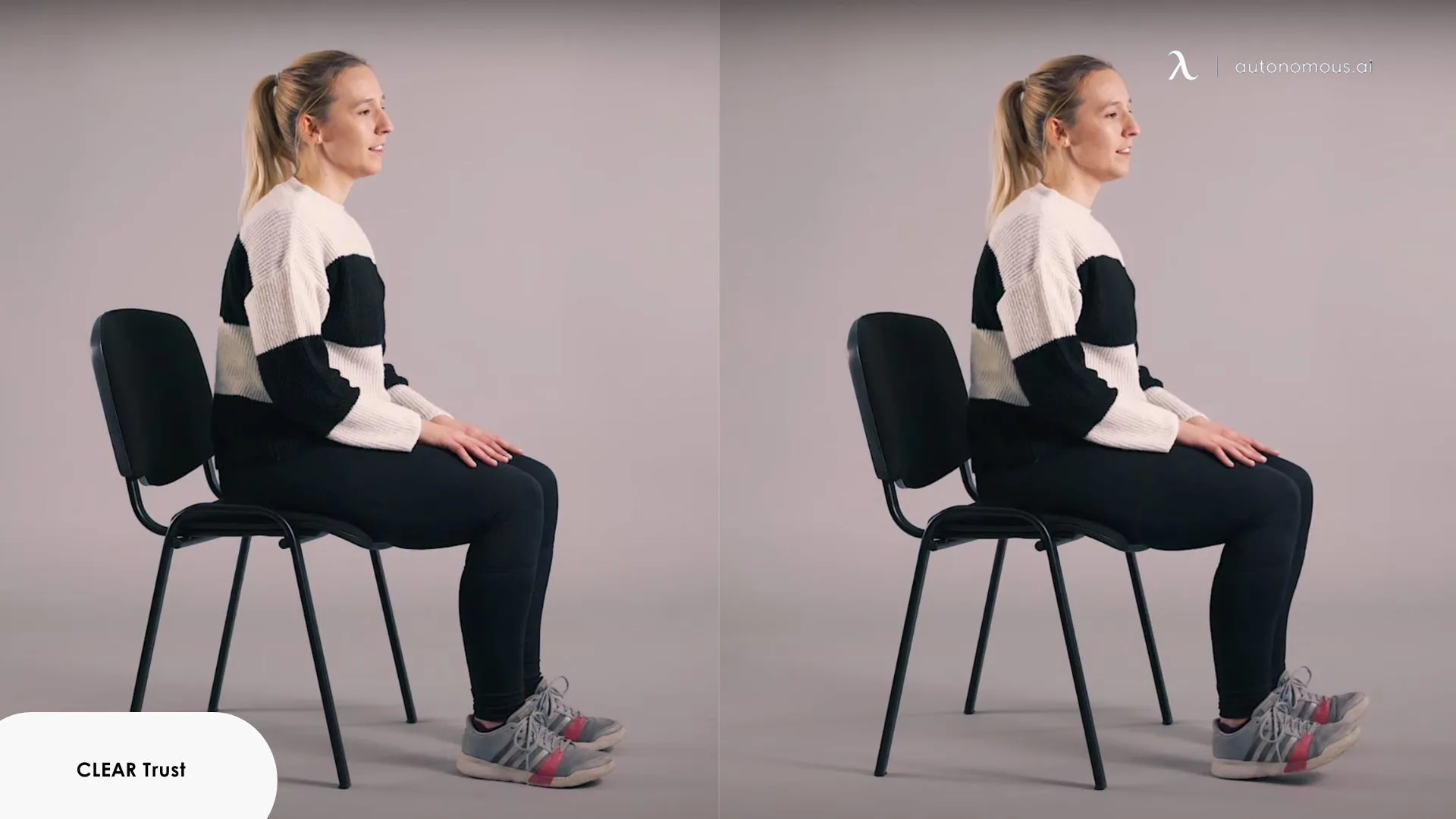
When you sit all day, your quads barely activate — they're in a shortened, passive state. This weakens the muscles that support your knees and makes activities like climbing stairs progressively harder.
This simple exercise sitting in a chair directly counters the quad weakness that develops from prolonged sitting. The isometric hold (keeping your leg extended) builds endurance in the muscle fibers responsible for maintaining knee stability during standing and walking.
Target muscles: Quadriceps (front of thigh), hip flexors, shin muscles
Step-by-step:
- Sit upright in your chair with your back away from the backrest, don't lean back
- Plant your feet flat on the floor with knees bent at 90 degrees
- Grip the sides of your seat with your hands for stability
- Slowly straighten your right leg until it's parallel to the floor (or as high as comfortable)
- Flex your foot—pull your toes toward your shin so you feel tension in your calf and shin
- Hold this position for 3-5 seconds while keeping your thigh muscle tight
- Lower your leg with control, don't just drop it
- Repeat with your left leg, 10-12 per leg
Common mistakes to avoid:
- Leaning back (this disengages your core, stay upright)
- Rushing the movement (the hold is where the strengthening happens)
- Pointed toes (flexing your foot engages more muscle groups)
Modification: If you can't extend your leg fully parallel, lift it as high as you can without pain. Progress gradually, even 45 degrees of extension is beneficial. For a more advanced variation of this exercise on an office chair, add ankle weights or loop a resistance band under your chair. Other chair leg exercises like calf raises and ankle rotations work complementary muscle groups in your lower legs.
5. Seated Knee Tucks
Lower abdominal weakness and hip flexor imbalances are common from sitting. While most ab exercises focus on the upper abs, your lower abs control pelvic stability and play a key role in preventing lower back pain. This is one of the most effective chair exercises for building core strength without getting on the floor.
Knee tucks create resistance through your entire core. Unlike crunches that work in one plane, this movement engages your deep stabilizers (transverse abdominis) to keep your torso steady as your legs move. This improves posture and spinal support in daily activities. The core engagement here also supports your spine during seated back stretches, which address different muscle groups along your posterior chain.
Step-by-step:
- Sit on the front third of your seat—don't let your back touch the backrest
- Grip the sides of your chair with your hands positioned near your hips
- Engage your core by drawing your navel toward your spine
- Lean back slightly, about 15-20 degrees, keeping your chest lifted
- Lift both knees toward your chest simultaneously—bring them as high as comfortable
- Pause at the top for 1-2 seconds while maintaining tension in your abs
- Slowly extend your legs forward—stop just before your feet touch the floor
- Immediately pull your knees back in for the next rep. Repeat 12-15 reps, 2-3 times daily, ideally not immediately after eating
Common mistakes to avoid:
- Rounding your lower back excessively (some rounding is natural, but maintain core tension)
- Using momentum to swing your legs (each rep should be controlled)
- Letting your feet touch the floor between reps (keeping them hovering maintains constant tension)
Modification: If this feels too intense, perform single-leg tucks, bring one knee to your chest while keeping the other foot on the floor, then alternate. This modification makes it accessible as one of the easier exercises sitting in a chair while still building core strength.
6. Seated Russian Twist
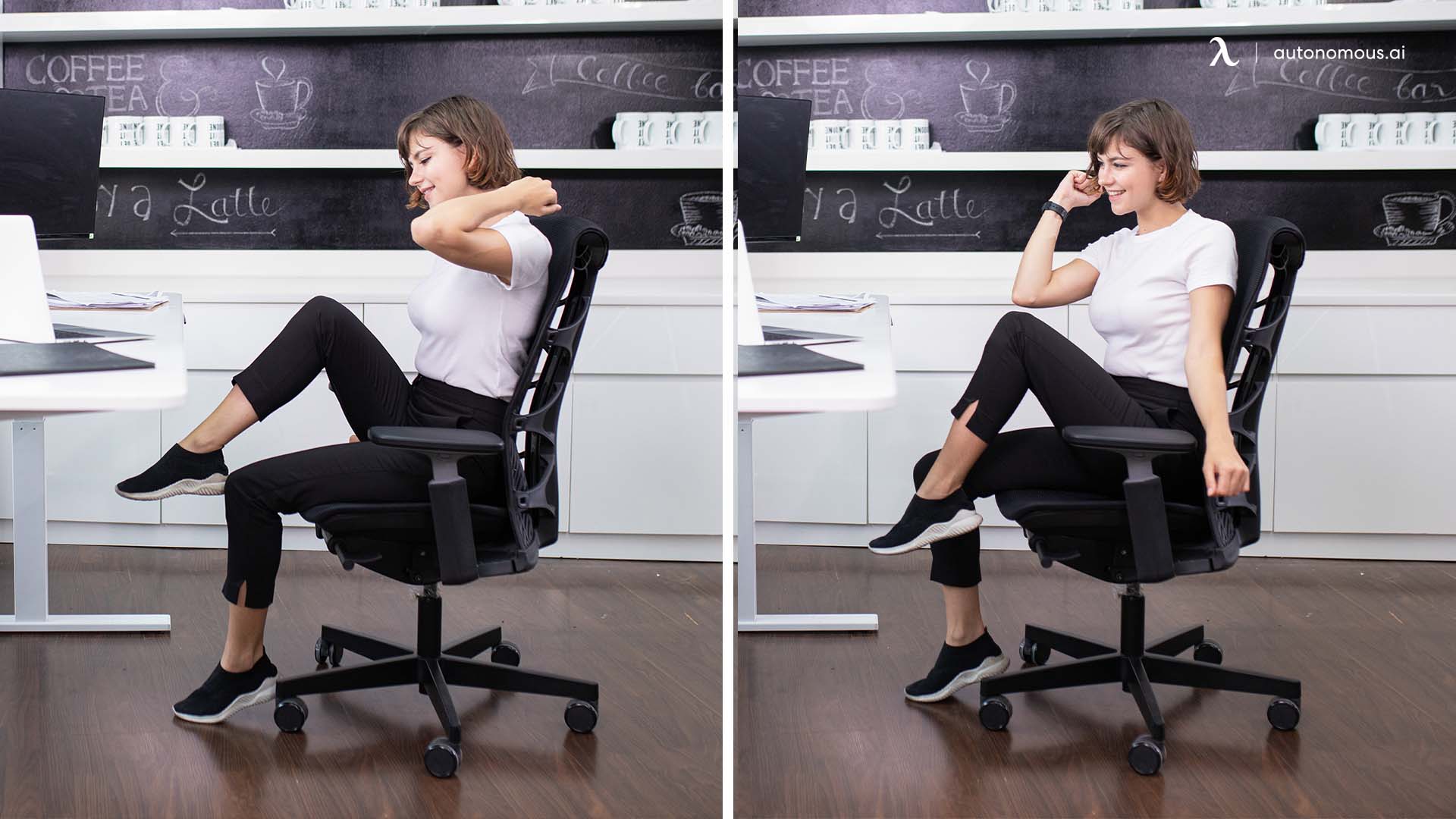
Oblique weakness and rotational stiffness are common with desk work. Sitting keeps your torso facing forward for hours, which limits rotation and makes simple movements — like reaching behind you or checking your blind spot, feel uncomfortable over time.
Rotational strength plays a key role in keeping your spine stable and pain-free, but it’s often overlooked. When the oblique muscles are weak, the spine depends more on passive tissues like ligaments and discs, increasing strain and injury risk. This exercise gently restores upper-back mobility that naturally declines with prolonged sitting.
Step-by-step:
- Sit toward the edge of your seat with your back unsupported
- Plant your feet firmly on the floor about hip-width apart
- Lean back slightly, approximately 20 degrees from vertical
- Bring your hands together at chest height, you can clasp them or hold a water bottle for added resistance
- Engage your core before you begin rotating
- Rotate your torso to the right, twist from your ribcage, not your hips (your knees should stay facing forward)
- Pause for 1 second at the end of your range of motion
- Return to center with control.
- Immediately rotate to the left using the same controlled motion
- Continue alternating sides in a smooth rhythm. Repeat 20-30 total (10-15 per side), 2-3 times daily
Common mistakes to avoid:
- Rotating from your hips instead of your torso (your lower body should remain stable)
- Moving too quickly (this becomes momentum-driven rather than muscle-driven)
- Hunching forward (maintain that slight backward lean throughout)
Modification: If the lean-back position strains your lower back, sit upright instead. The rotation is what matters, the lean just adds difficulty. For those looking for exercise on chair variations that are gentler, keep your hands on your chest rather than extended forward.
7. Desk Push-Ups
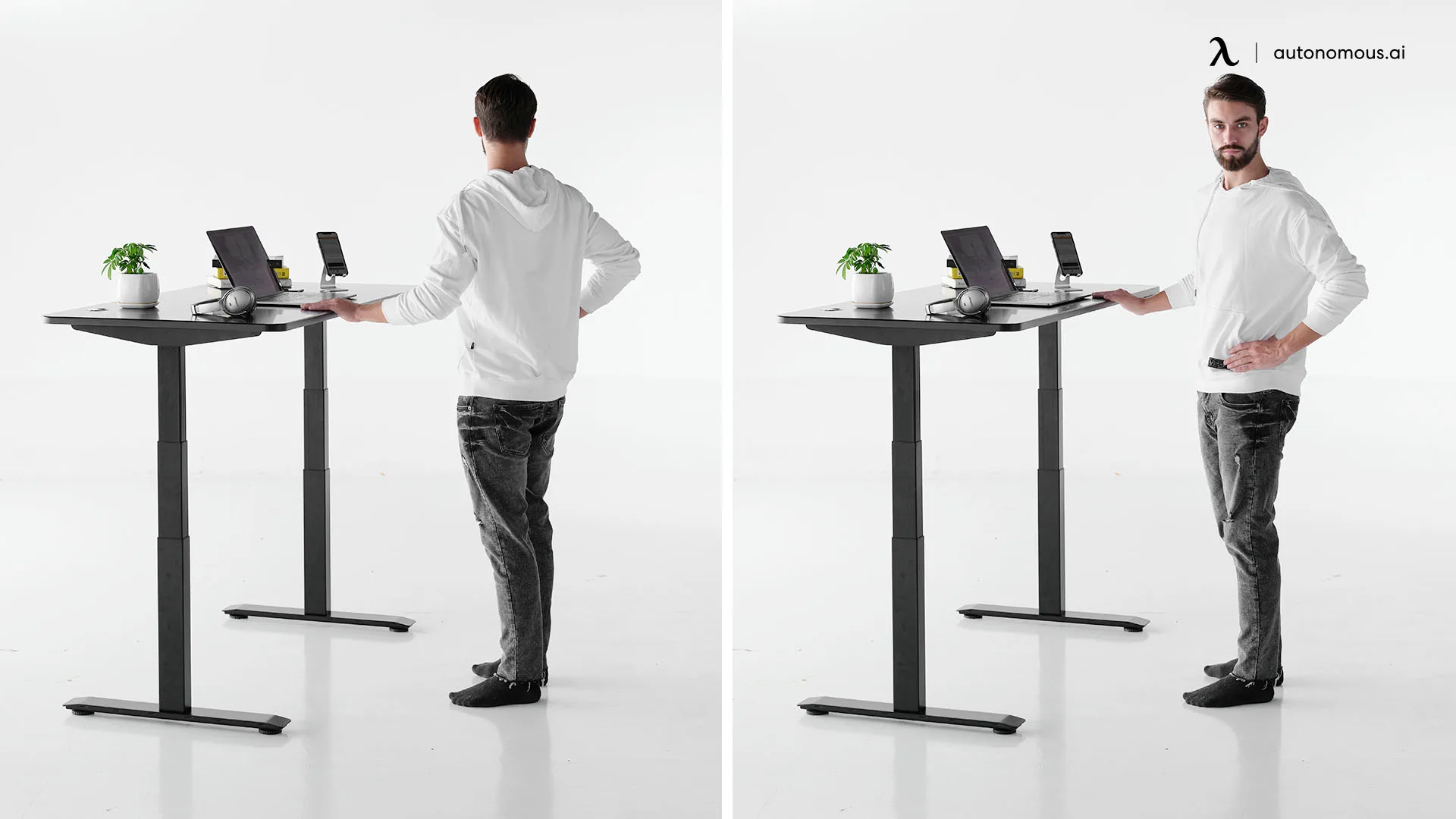
Sitting with your arms forward on a keyboard all day shortens your chest muscles and weakens your back, creating the classic "rounded shoulders" posture. Desk push-ups work in reverse, they strengthen your chest, shoulders, and triceps while opening up your anterior shoulder capsule.
The incline makes them easier than floor push-ups while still building strength. Pushing at an angle reduces shoulder impingement risk, making the movement safer for sensitive shoulders. It also activates your scapular stabilizers, counteracting the forward-rounded posture caused by sitting. Even 8–10 reps provide enough stimulus to maintain strength and improve posture when done consistently.
Step-by-step:
- Stand facing your desk at arm's length distance
- Place your hands on the edge of your desk slightly wider than shoulder-width apart
- Walk your feet back until your body forms a straight line from head to heels at roughly a 45-degree angle to the floor
- Engage your core, don't let your hips sag or pike upward
- Keep your elbows at about a 45-degree angle from your body (not flared out to 90 degrees)
- Lower your chest toward the desk by bending your elbows, go as low as your strength allows
- Pause briefly when your chest is 2-3 inches from the desk
- Push through your palms to straighten your arms and return to the starting position
- Maintain that rigid body line throughout the entire movement. Repeat 8-12 reps, 2-3 times daily, or during any break
Common mistakes to avoid:
- Letting your hips drop (this puts strain on your lower back—think plank position)
- Flaring your elbows out wide (this stresses your shoulder joints)
- Only lowering halfway (full range of motion is where the benefit comes from)
- Speeding through reps (2 seconds down, 1 second up is ideal tempo)
Modification: If you don't have desk access or need something easier, perform these against a wall instead. Stand arm's length from a wall and do the same movement, this reduces the resistance significantly. For a more challenging version, use a lower surface like a sturdy chair seat (make sure it won't slip).
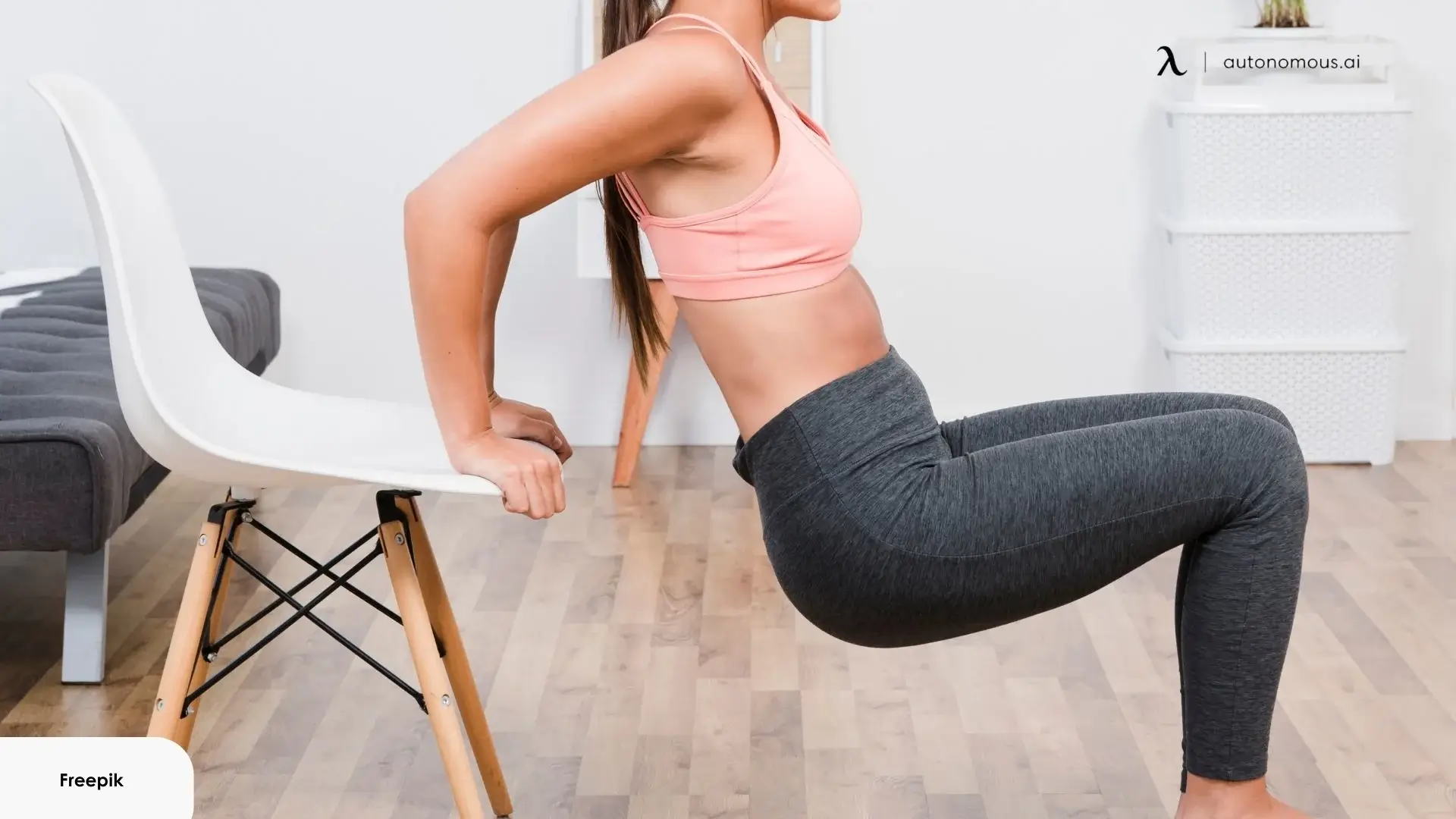
8. Triceps Dips
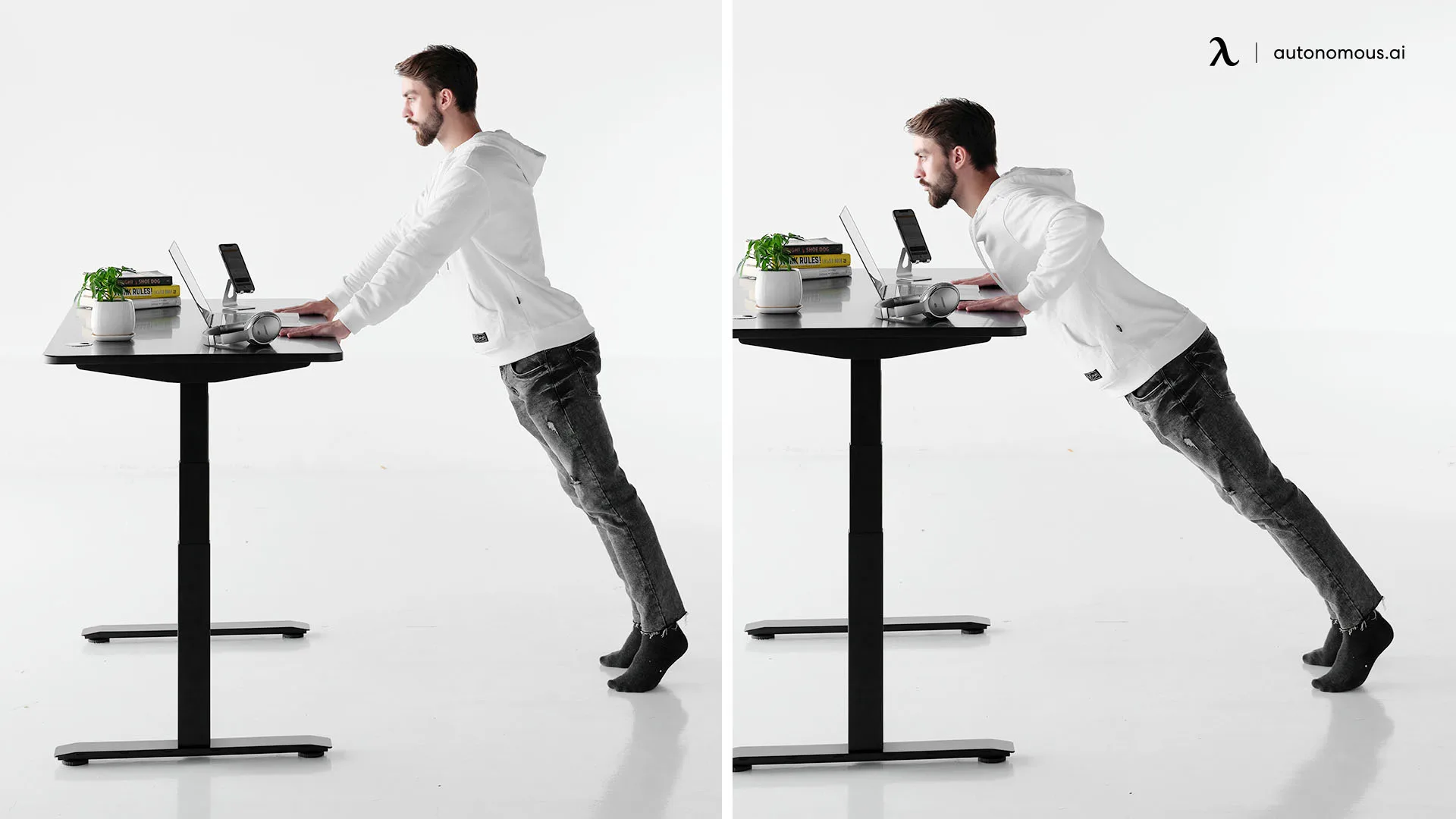
Your triceps stabilize your elbow and shoulder during any pushing movement. When they're weak, you unconsciously compensate by shrugging your shoulders forward, which exacerbates neck and upper back tension.
Triceps dips are a closed-chain exercise that builds functional strength as your body moves while your hands stay fixed. They also activate posterior shoulder muscles that are often underused at the desk. Stronger triceps reduce elbow strain from typing and improve your ability to push up from low surfaces, and together with other chair exercises for the upper body like shoulder presses, they create balanced arm development.
Step-by-step:
- Sit on the front edge of your chair with hands gripping the seat beside your hips
- Place your feet flat on the floor with knees bent at 90 degrees
- Slide your hips forward off the seat—your body weight should be supported by your arms
- Keep your back close to the chair throughout the movement
- Bend your elbows to lower your body—aim to create 90-degree angles at your elbows
- Stop when your upper arms are parallel to the floor or as low as comfortable
- Press through your palms to straighten your arms and lift back up. Repeat 10-15 reps, 2 times daily
Common mistakes to avoid:
- Drifting too far from the chair (this shifts work to your shoulders instead of triceps)
- Bending elbows only slightly (you need at least 90 degrees for effective strengthening)
- Using leg drive to push up (this is an arm exercise, minimize leg involvement)
Modification: If this strains your shoulders, reduce the range, only lower a few inches at first. Straighten your legs to make it harder (increases the load). This is one of the most effective on chair exercises for building arm strength without weights.
9. Chest Opener Stretch
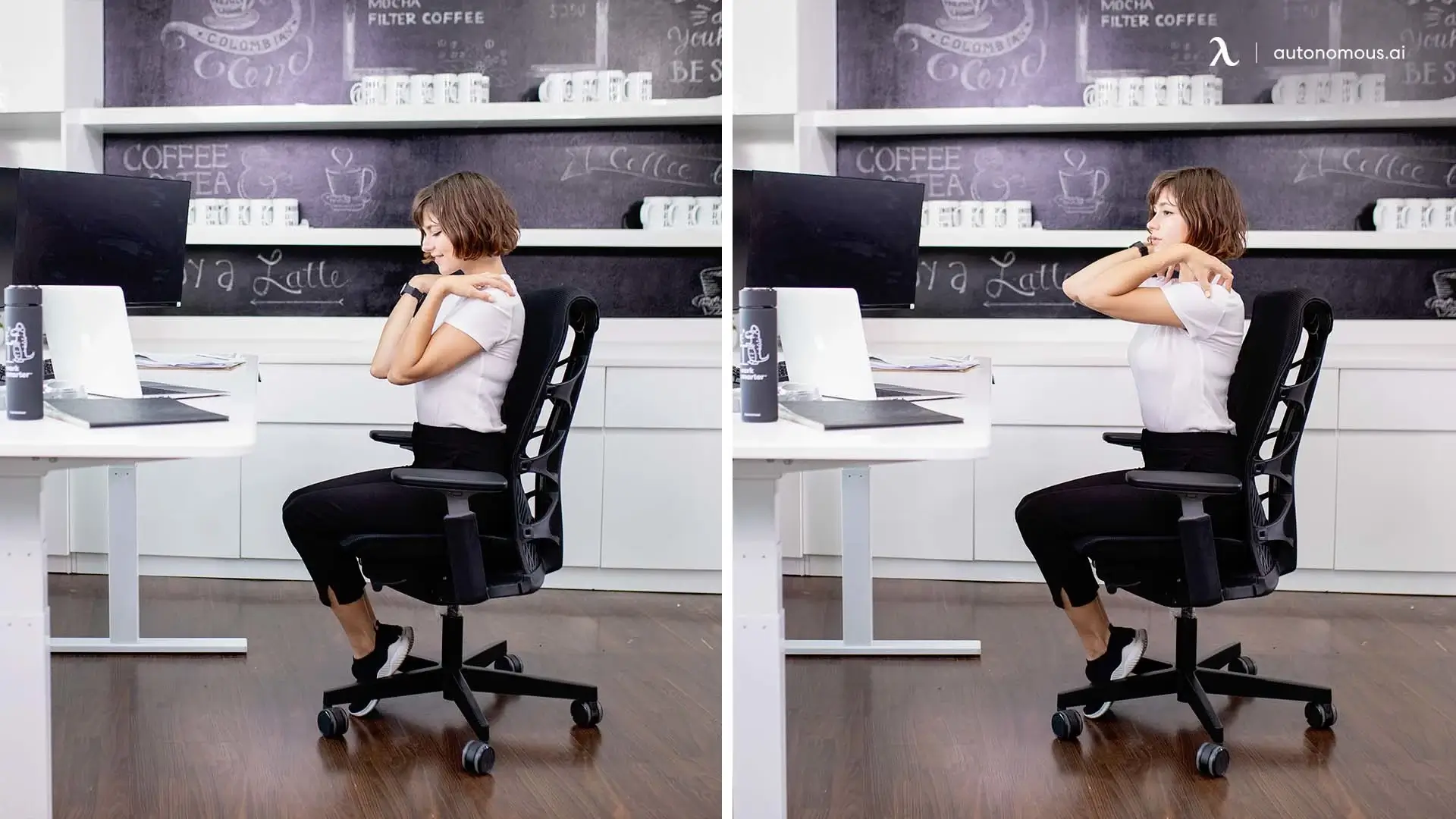
When your arms stay in front of you all day typing, your shoulders lose their overhead range of motion, and your ribcage can't fully expand, leading to that tight, compressed feeling in your chest.
Overhead reaching reverses the chronically forward arm position from desk work, restoring shoulder joint mobility that naturally decreases from disuse. The coordinated breathing expands your ribcage and diaphragm, counteracting the shallow chest breathing that develops from hunching.
Step-by-step:
- Sit upright in your chair with feet flat on the floor
- Start with arms relaxed at your sides or resting on your lap
- Slowly raise both arms out to the sides at shoulder height, like a "T" position
- Continue lifting your arms overhead, reach toward the ceiling until your biceps are near your ears
- Fully extend your arms at the top, stretch as high as you can
- Take a deep breath in while your arms are overhead, feel your ribcage expand
- Slowly lower your arms back down the same path (out to sides, then down)
- Exhale as you lower. Repeat 10-12 reps, every 2 hours, or whenever you feel restricted breathing
Common mistakes to avoid:
- Arching your lower back excessively (keep your core engaged—the stretch should be in your shoulders, not your spine)
- Rushing the movement (slow and controlled allows for better shoulder mobility gains)
Modification: If you can't raise your arms fully overhead without pain, lift them as high as comfortable, even to shoulder height provides benefit. For an easier variation, raise one arm at a time. This makes it one of the basic chair exercises that's accessible even with shoulder limitations.
10. Shoulder Blade Squeezes (W Exercise)
Your shoulder blades (scapulae) barely move when typing, they stay protracted (spread apart) and rotated forward. This weakens the muscles between your shoulder blades, making it progressively harder to maintain upright posture even when you try. The forward head position that results requires specific neck posture exercises to correct, since the shoulder and neck positions are biomechanically connected.
Step-by-step:
- Sit upright with your back away from the backrest
- Raise both arms to shoulder height with elbows bent at 90 degrees
- Position your hands near head level, palms facing forward, creating a "W" shape with your arms
- Keep your elbows at shoulder height throughout the movement (don't let them drop)
- Squeeze your shoulder blades together—imagine pinching a pencil between them
- Pull your elbows slightly back as you squeeze, feeling tension between your shoulder blades
- Hold this squeezed position for 5 seconds while breathing normally
- Release slowly and return to the starting position. Repeat 8-10 reps, 3-4 times daily, especially after extended typing sessions
Common mistakes to avoid:
- Letting elbows drop below shoulder height (this disengages the middle back muscles, keep them lifted)
- Arching your lower back to compensate (the movement should be isolated to your shoulder blades)
- Shrugging shoulders up toward ears (keep them down and back)
Modification: If holding your arms at shoulder height is too challenging, rest your forearms on your desk and simply squeeze your shoulder blades together without the arm lift. This seated version is perfect as one of the simple chair exercises that still activates the right muscles.
FAQs
Are chair exercises effective?
Yes, chair exercises are highly effective for building strength, improving flexibility, and boosting circulation. Research shows they can reduce musculoskeletal pain by up to 72% and significantly improve postprandial glucose metabolism when done consistently throughout the day.
What are the best chair exercises to do at work?
The best chair exercises for work include seated marching, leg extensions, shoulder blade squeezes, desk push-ups, and chest openers. These movements improve circulation, posture, and muscle activation without interrupting your workflow.
How often should you do chair exercises during the workday?
You should do exercises sitting in a chair every 60 to 90 minutes. Short sessions of 1–5 minutes help prevent muscle shutdown, improve circulation, and reduce stiffness from prolonged sitting.
Do chair exercises really help with back pain from sitting?
Yes. Chair exercises strengthen core and hip muscles while restoring spinal movement, which reduces pressure on the lower back. They’re especially effective for preventing posture-related back pain in desk workers.
Can chair exercises improve circulation in the legs?
Yes. Chair exercises activate the calf and thigh muscle pumps that move blood back toward the heart. This reduces leg swelling, numbness, and the heavy feeling caused by sitting for long periods.
Are chair exercises effective for office workers who sit all day?
Easy chair exercises are highly effective for office workers because they counteract the exact muscle inactivity and circulation slowdown caused by desk work. Regular movement breaks improve energy, posture, and long-term joint health.
Can chair exercises help reduce stiffness in hips and shoulders?
Yes. Simple chair exercises restore joint range of motion in the hips and shoulders, which become tight from prolonged sitting. This helps reduce tension, improve posture, and make everyday movements feel easier.
Are chair exercises safe for seniors and people with joint pain?
Chair exercises are low-impact and generally safe for seniors and people with joint issues. Movements can be modified easily, making them one of the safest ways to maintain strength and mobility. Structured chair workout for men over 50 routines are specifically designed to support joint health while reducing strain on knees, hips, and the lower back.
Can chair exercises help you lose weight?
Chair exercises can support weight loss by burning 100-250 calories per 30-minute session and increasing your resting metabolic rate. However, they work best as part of an overall activity plan combined with proper nutrition rather than as a standalone weight loss solution.
Final Thoughts: Start Where You Are
You don't need to master all 10 exercises by tomorrow. Pick three that address your most immediate discomfort—tight hips, stiff shoulders, low energy—and do them a few times this week. That's it.
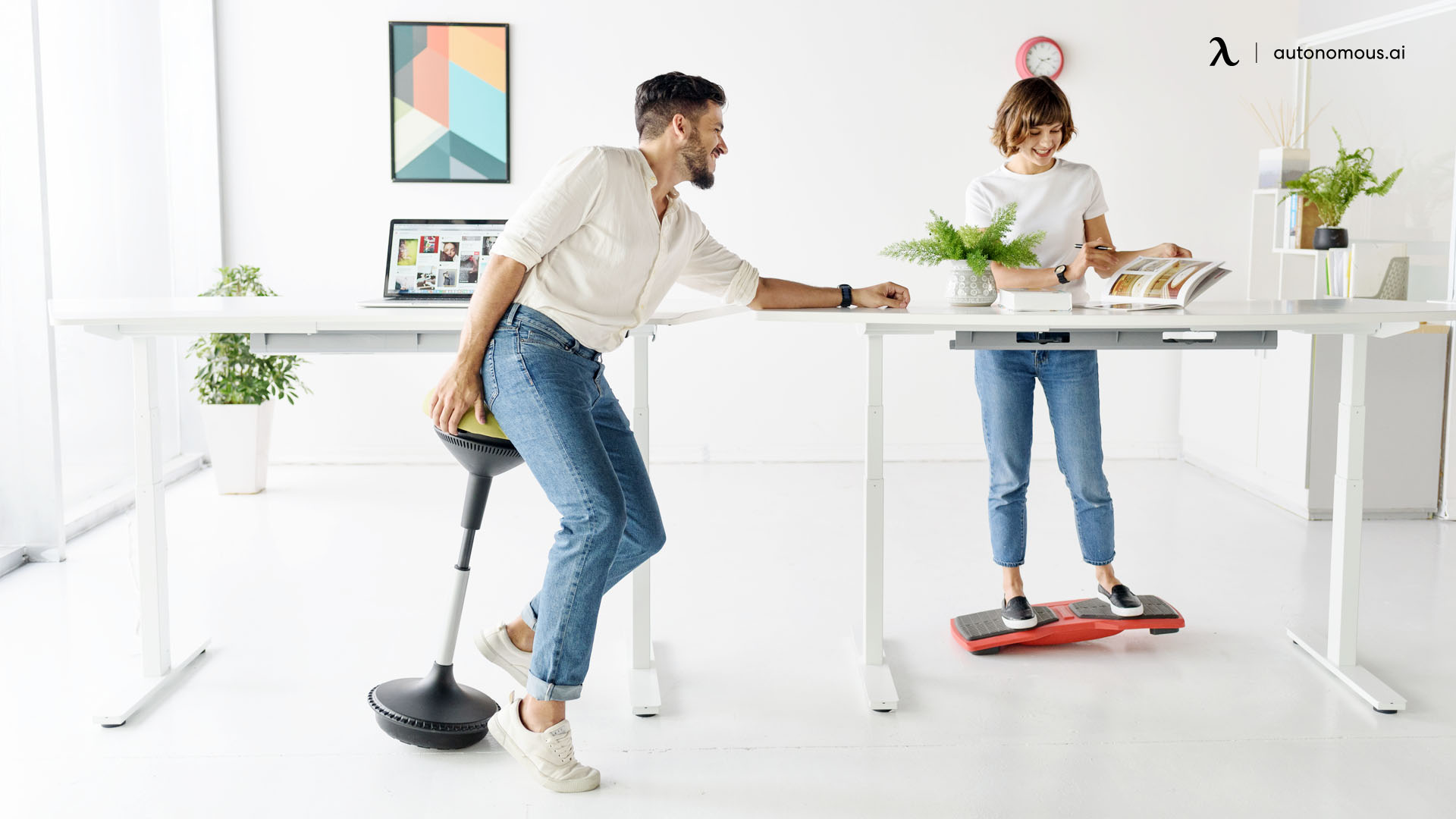
The point isn't to add another demanding routine to your day. It's to interrupt the stillness that's causing the problem in the first place. Thirty seconds of movement every couple of hours does more for your body than suffering through eight hours of sitting and then trying to compensate at the gym. If you use a standing desk, alternating between seated and standing desk exercises throughout the day provides even more metabolic variety.
These chair exercises work because they're timed right, not because they're intense. Your body responds to frequency and consistency, not heroic effort. Different people benefit from different approaches, a chair workout for men often emphasizes more resistance-based movements, while chair exercises for seniors prioritize stability and balance modifications. Start small, stay consistent, and adjust based on what actually makes you feel better.