Does a Vibration Plate Burn Calories? Is It Worth Adding to a Home Gym?
Table of Contents
- 1. What Is a Vibration Plate?
- 2. Does a Vibration Plate Burn Calories?
- 3. How Many Calories Does a Vibration Plate Burn?
- 4. How Vibration Plates Fit Into a Standing Desk Routine
- 5. What Affects Calories Burned on a Vibration Plate?
- 6. Vibration Plate vs Traditional Exercise
- 7. Can a Vibration Plate Help With Weight Loss?
- 8. Limitations and Safety Considerations
- 9. FAQs
- 10. Are Vibration Plates Worth It for Calories?
Vibration plates are often marketed as a shortcut to fitness - stand still, let the machine shake, and burn calories with minimal effort. That promise raises a common question: does a vibration plate burn calories, and if so, how many?
The short answer is yes, a vibration plate does burn calories - but far fewer than most people expect. The amount depends heavily on how you use it, your body weight, and whether you’re actively exercising or simply standing. This article breaks down what the research and real-world use show, how many calories you actually burn on a vibration plate, and whether it makes sense for weight loss or general health.
1. What Is a Vibration Plate?
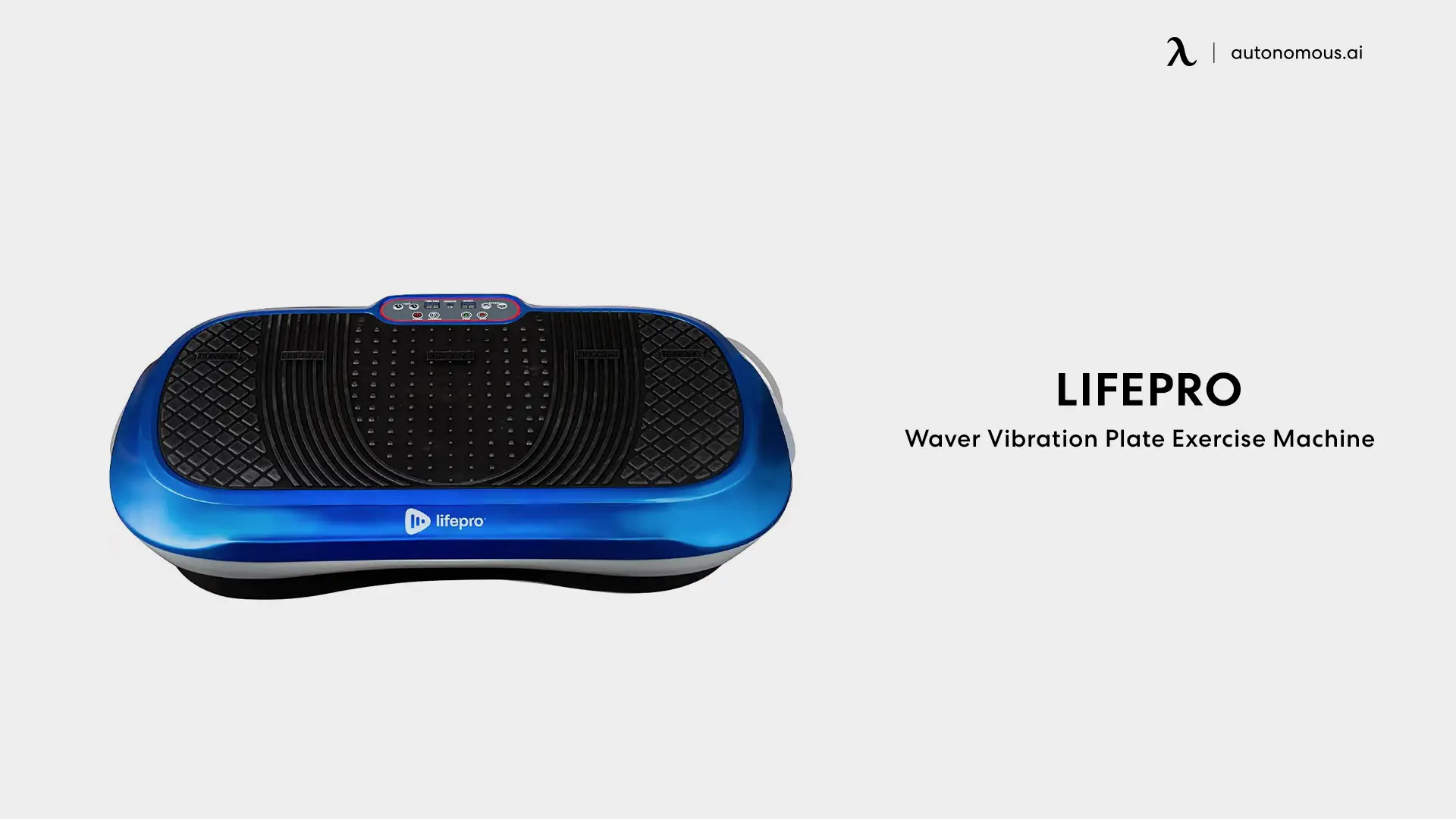
A vibration plate (also called a shake plate) is a platform that oscillates at a set frequency and amplitude. When you stand or exercise on it, the vibrations cause rapid muscle contractions as your body tries to stabilize itself.
There are two main styles:
- Vertical vibration plates, which move straight up and down
- Oscillating plates, which tilt side to side around a central axis
Both stimulate muscles, but neither creates energy expenditure comparable to traditional cardio.
2. Does a Vibration Plate Burn Calories?
Yes - but modestly.
A vibration plate increases calorie burn compared to standing still on the floor, because your muscles are constantly contracting to maintain balance. However, the calorie cost is relatively low, especially if you’re passive.
In most cases, standing on a vibration plate burns roughly 2–3 times more calories than standing normally, but far fewer than walking, cycling, or resistance training.
This is why the answer to “does a vibration plate burn calories” is technically yes, but practically limited.
3. How Many Calories Does a Vibration Plate Burn?
The number of calories burned on a vibration plate depends far more on how you use it than on the machine itself. Standing still produces very different results than performing controlled exercises on the platform.
Activity on Vibration Plate | Calories Burned per Minute (Approx.) | Calories Burned in 10 Minutes |
Standing still | 5–10 | 50–100 |
Light knee bends or partial squats | 8–12 | 80–120 |
Active exercises (squats, lunges, push-ups) | 10–20 | 100–200 |
High-frequency, full-body circuits | 15–25* | 150–250* |
*Upper ranges assume higher body weight and continuous movement. These values are estimates, not guarantees.
This table explains why answers to questions like “how many calories does a vibration plate burn” or “how many calories does 10 minutes on a vibration plate burn” vary so widely online. Passive standing and active movement are often grouped together, even though they create very different energy demands and are tracked differently as active calories vs total calories.
4. How Vibration Plates Fit Into a Standing Desk Routine
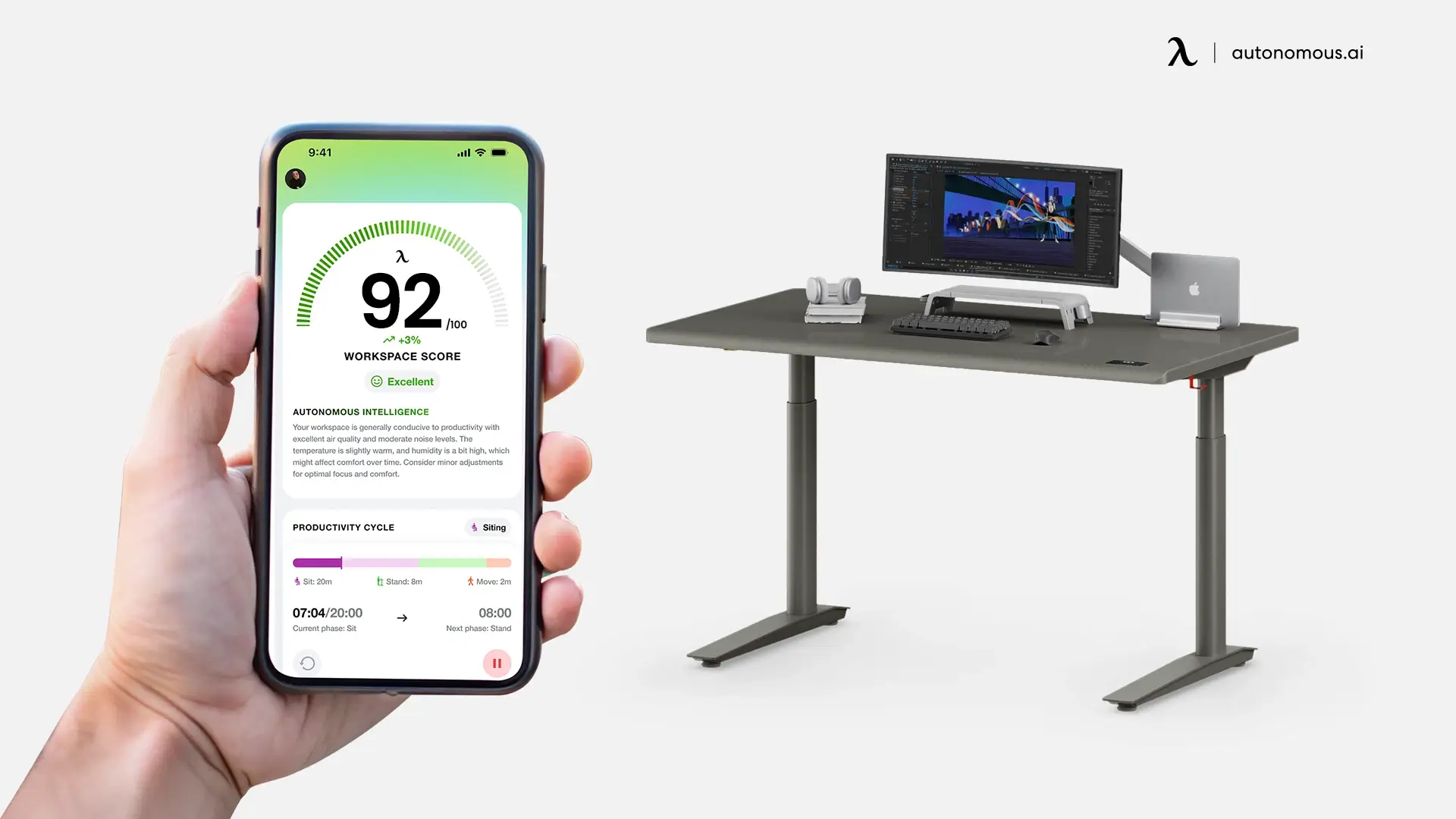
Vibration plates work best in a standing desk setup as short movement breaks, not as a replacement for walking or structured exercise. The goal is to interrupt long periods of static sitting or standing with brief bouts of muscle activation while working at a standing desk.
Most people place a vibration plate near their desk and use it for 1–5 minute sessions, a few times per day. During these breaks, you step onto the plate, stand upright or in a light athletic stance, and allow the vibration to activate the legs and core. Precision tasks - typing, mouse work, reading - are best paused during vibration, since fine motor control is reduced. This approach aligns with the broader benefits of a standing desk, which emphasize movement variation rather than constant intensity.
In this context, the benefits are subtle but practical:
- Increased muscle engagement compared to standing still
- Reduced stiffness in the legs and hips during long workdays
- More frequent movement without leaving the workspace
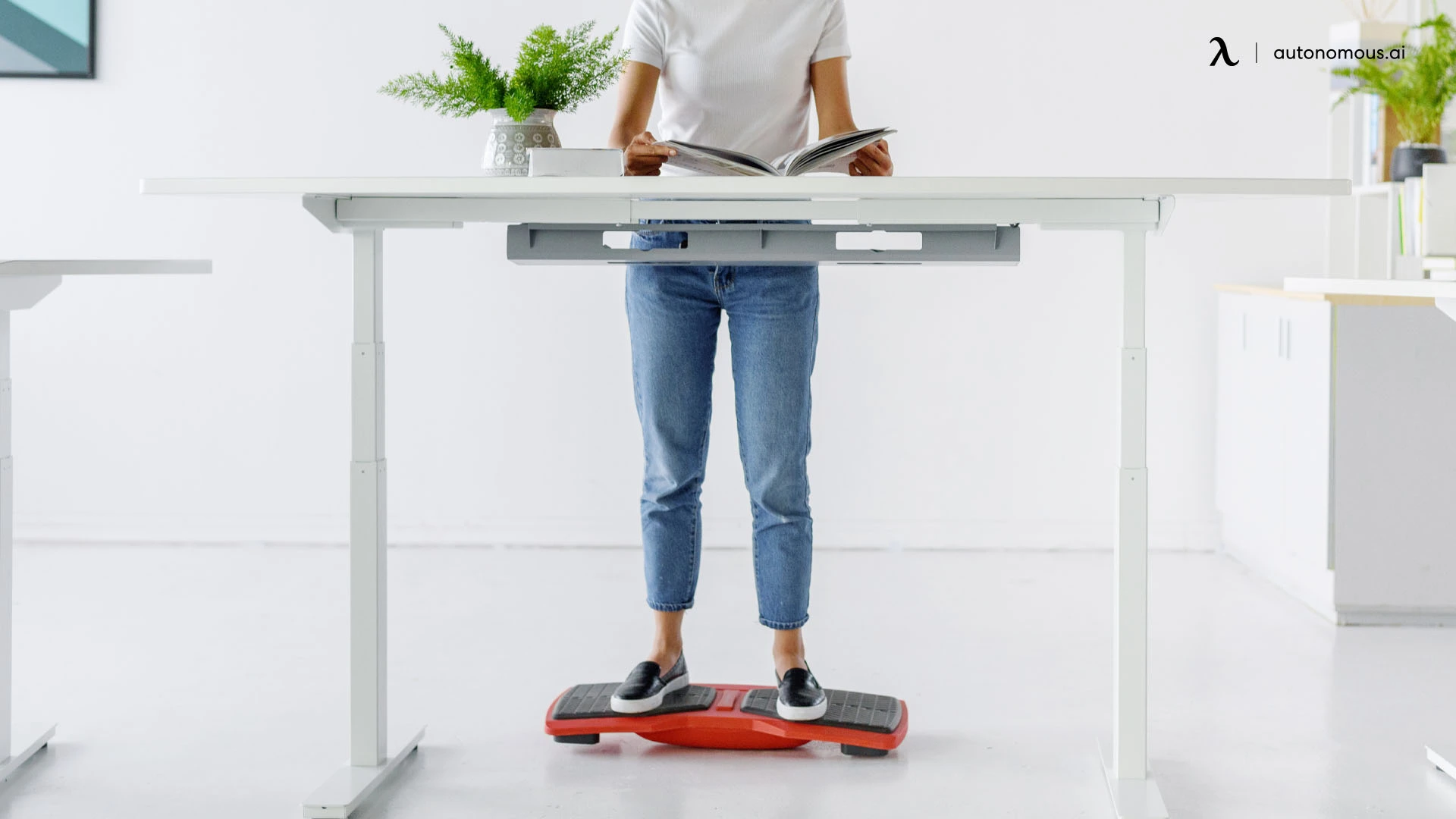
Accessories can support this routine. Some standing desk accessories or simple standing desk workouts serve a similar purpose - encouraging regular movement. Some people alternate vibration sessions with a balance board for a standing desk or even light walking using a standing desk with treadmill.
What this setup does not do is significantly increase daily calorie burn on its own. Research on whether standing burns calories shows the increase is modest, and the same applies to vibration plates. They help with movement and comfort more than fat loss. For broader strategies on activity during the workday, resources on how to burn calories while sitting and whether a standing desk helps weight loss provide realistic expectations.
Used appropriately, a vibration plate complements a standing desk by adding variety to posture and movement. Think of it as a movement reset - useful for circulation and muscle activation, and most effective when paired with regular walking and structured exercise outside the desk.
5. What Affects Calories Burned on a Vibration Plate?
If you’re trying to estimate how many calories you burn on a vibration plate, these variables matter most:
- Body weight: Heavier individuals burn more calories because stabilizing greater mass requires more energy.
- Frequency and amplitude: Higher vibration settings increase muscle activation, but also increase fatigue and joint stress.
- Duration: Longer sessions raise total calorie burn, but returns diminish after about 15–20 minutes.
- Activity level: This is the biggest factor. Static standing burns far fewer calories than performing controlled exercises on the plate.
Because of these variables, a true vibration plate calories burned calculator can only provide estimates, not precise numbers.
6. Vibration Plate vs Traditional Exercise
Activity | Calories Burned (10 min, approx.) | Cardiovascular Benefit | Muscle-Building Potential | Best Use Case |
Vibration plate (standing) | 50–100 | Very low | Minimal | Light activation, circulation |
Vibration plate (active exercises) | 100–200 | Low–moderate | Low–moderate | Supplement to workouts |
Walking (moderate pace) | 80–120 | Moderate | Low | Daily activity, fat loss |
Brisk walking | 120–160 | Moderate–high | Low | Weight loss, endurance |
Bodyweight strength training | 120–180 | Low–moderate | Moderate | Muscle maintenance |
Resistance training (weights) | 150–250 | Moderate | High | Muscle gain, metabolism |
Cycling (moderate) | 150–200 | High | Low–moderate | Cardio conditioning |
Running | 180–300+ | Very high | Moderate | Max calorie burn |
7. Can a Vibration Plate Help With Weight Loss?
A vibration plate alone is unlikely to drive meaningful weight loss. Fat loss requires maintaining a calorie deficit to lose 1 lb, and vibration plates burn relatively few calories compared to walking, cardio, or resistance training.
They contribute only a small portion of that calorie deficit unless paired with:
- Active exercise performed on the plate
- Regular daily movement that supports calories in vs calories out
- Dietary adjustments that reduce intake
Where vibration plates can help is adherence. For people dealing with joint pain, balance limitations, or low motivation, they may slightly increase overall activity. That small increase can complement structured routines or apps to help lose weight - useful, but not a shortcut to fat loss.
8. Limitations and Safety Considerations
Vibration plates are not suitable for everyone.
Avoid or consult a professional if you have:
- Joint replacements
- Severe osteoporosis
- Cardiovascular conditions
- Pregnancy
- Neurological disorders
Excessive frequency or long sessions can increase joint stress rather than reduce it.
9. FAQs
How many calories do you burn on a vibration plate?
Most people burn 5–20 calories per minute, depending on body weight and whether they’re actively exercising or just standing.
How many calories does 10 minutes on a vibration plate burn?
Typically 50–150 calories. Claims higher than this usually assume intense movement or exaggeration.
How many calories can you burn on a vibration plate compared to walking?
Walking generally burns the same or more calories and provides better cardiovascular benefits.
Does standing on a vibration plate burn fat?
Standing alone burns very few calories. Fat loss requires a calorie deficit created through overall activity and diet.
Is a vibration plate better than no exercise?
Yes. It increases muscle activation and calorie burn compared to doing nothing, but it is not a substitute for regular movement.
Can older adults use vibration plates safely?
Often yes, at low settings and short durations, but medical clearance is recommended.
Do vibration plates build muscle?
They activate muscles but do not provide sufficient resistance for significant muscle growth.
Are vibration plate calorie calculators accurate?
They provide rough estimates only. Actual calorie burn varies widely by person and intensity.
10. Are Vibration Plates Worth It for Calories?
A vibration plate does burn calories - but far fewer than most people expect. Passive use produces minimal energy expenditure, while active use can modestly increase calorie burn. As a primary weight loss tool, vibration plates fall short. As a supplemental tool for mobility, balance, or light activation, they can play a role.
If your goal is fat loss, think of a vibration plate as an add-on - not the engine - of your fitness plan.