Pilates Chairs: What They Do & How to Choose One
Table of Contents
A Pilates chair may look compact, but it represents a powerful shift in how people approach strength, balance, and movement in limited space. Designed to deliver high-resistance, full-body training without the footprint of larger home gym equipment, it has become a quiet favorite for home users and studios alike.
More than a fitness trend, it reflects a growing desire for intentional, efficient workouts that build control as much as strength. Understanding its purpose is the first step toward deciding if it belongs in your routine.
What Is a Pilates Chair?
A Pilates chair is a compact piece of resistance-based equipment designed to support strength, balance, and controlled movement. It uses a small platform with one or two pedals connected to springs or hydraulic resistance, allowing users to work their entire body in a vertical or seated position.
Originally inspired by Joseph Pilates' Wunda Chair, modern versions range from split-pedal designs to a pilates chair with handles for added stability. You may also see terms like high chair Pilates or Pilates ergonomic office chair, which refer to taller or multi-function designs blending seated and standing works, distinct from office chair exercises, though both prioritize movement in seated positions.
What Does a Pilates Chair Do?
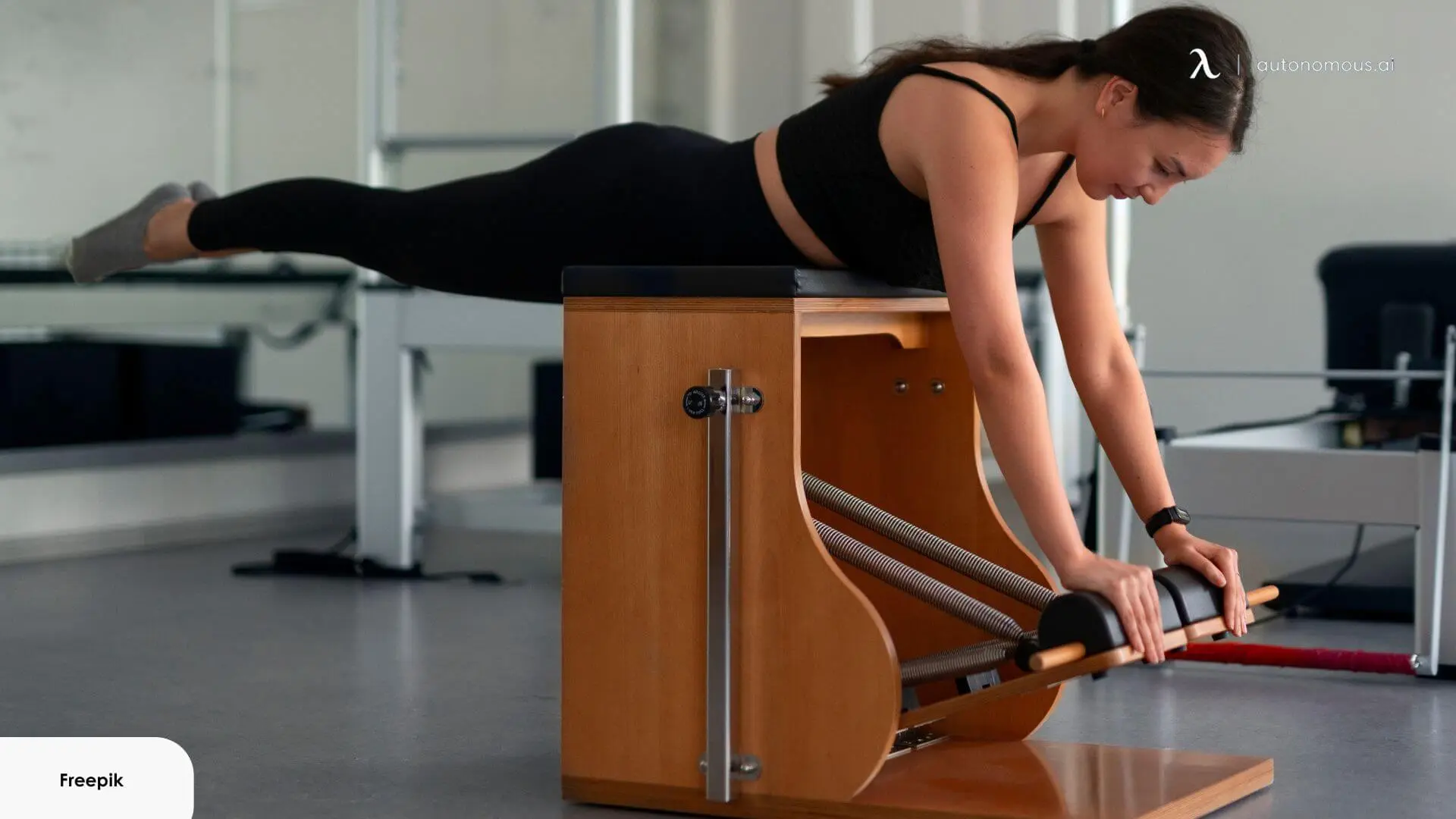
A Pilates chair creates resistance through a pedal system connected to springs or hydraulics, requiring the body to generate force while staying stable. Every press, lift, or controlled return demands coordination between the core, hips, shoulders, and spine.
The chair loads movement through both concentric and eccentric phases, pushing builds strength, while controlling the return train’s deceleration and joint stability. Because the body often works off a narrow base, stabilizing muscles engage continuously to prevent tipping or collapsing out of alignment.
This structure turns simple actions into complex movement tasks. Squats become balance drills, presses become posture training, and rotational exercises become tests of control. Instead of isolating muscles, the chair teaches the body to organize strength across the whole kinetic chain.
The Benefits of Pilates Chairs
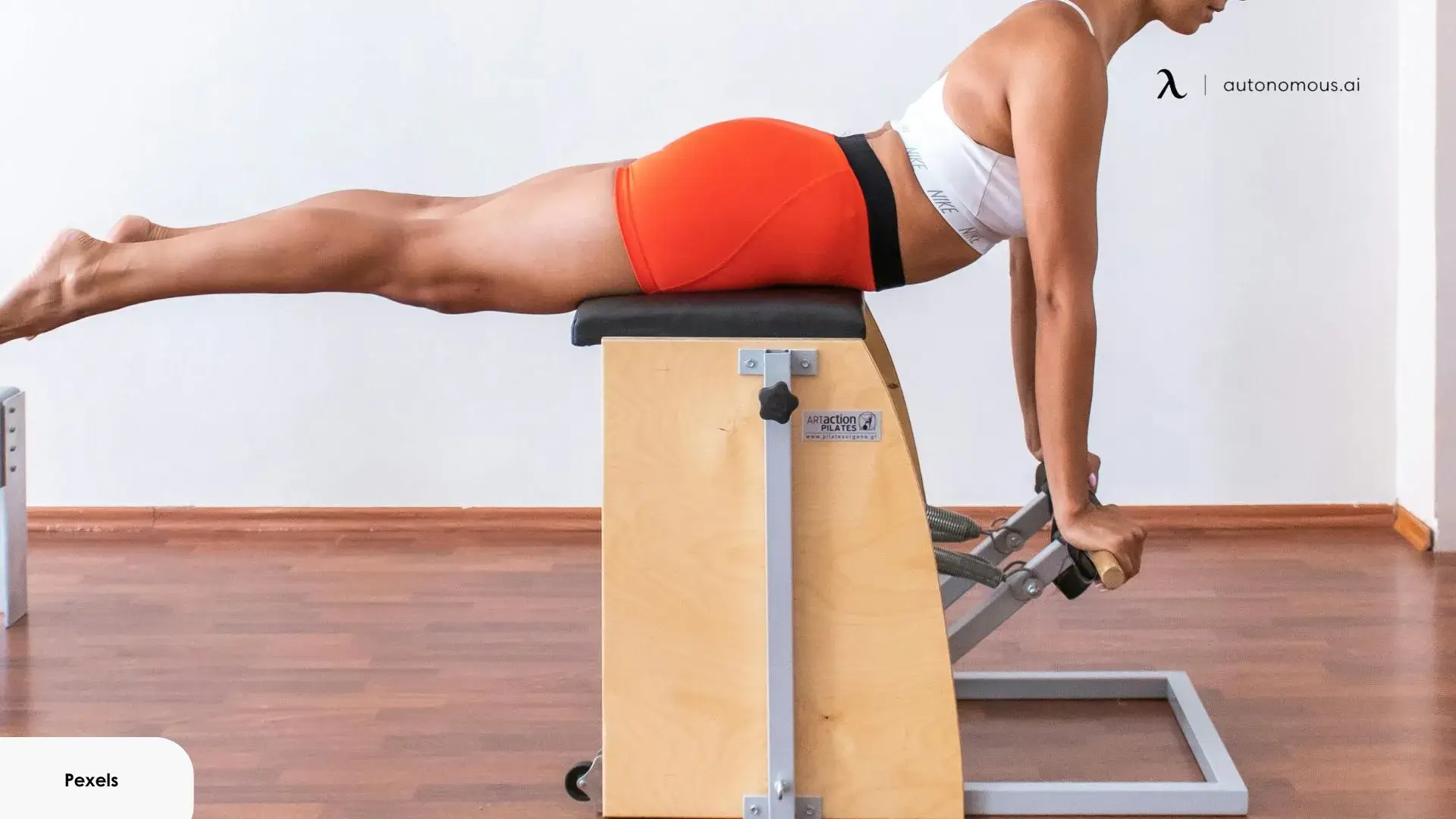
What makes Pilates chairs effective isn't complexity — it's constraint. The design strips away momentum and forces you to work through resistance, balance, and alignment simultaneously. That combination creates a training stimulus you simply can't replicate on a mat or most gym machines.
- Deeper core activation:
The upright, unstable seating position means your stabilizers never get a break. Every press, lift, or rotation requires your trunk to anchor the movement first. Over time, this builds reflexive core strength, the same foundation that makes chair exercises for belly fat effective for midsection work.
- Joint-friendly strength training:
Spring or hydraulic resistance loads muscles progressively rather than dumping force into your spine, hips, or knees. That's why Pilates chairs show up in physical therapy clinics as often as fitness studios. You can train hard without accumulating the micro-damage that sidelines people from other modalities.
- Full-body efficiency:
Most Pilates chair exercises don't isolate, they integrate. A single leg press engages glutes, quads, calves, and core in the same pattern you'd use climbing stairs or standing from a low seat. This makes workouts time-efficient and directly transferable to real movement. Chair exercises for the upper body follow the same logic, connecting arms, shoulders, and trunk in coordinated patterns.
- Posture and movement quality:
Bad form on a pilates desk chair feels wrong immediately. You'll wobble, lose resistance, or struggle to complete the rep. That built-in correction mechanism trains better movement habits faster than exercises where you can muscle through with compensations.
Together, these benefits make the Pilates chair less about isolated muscle work and more about building resilient, functional strength that carries into everyday movement.
Different Types of Pilates Chairs
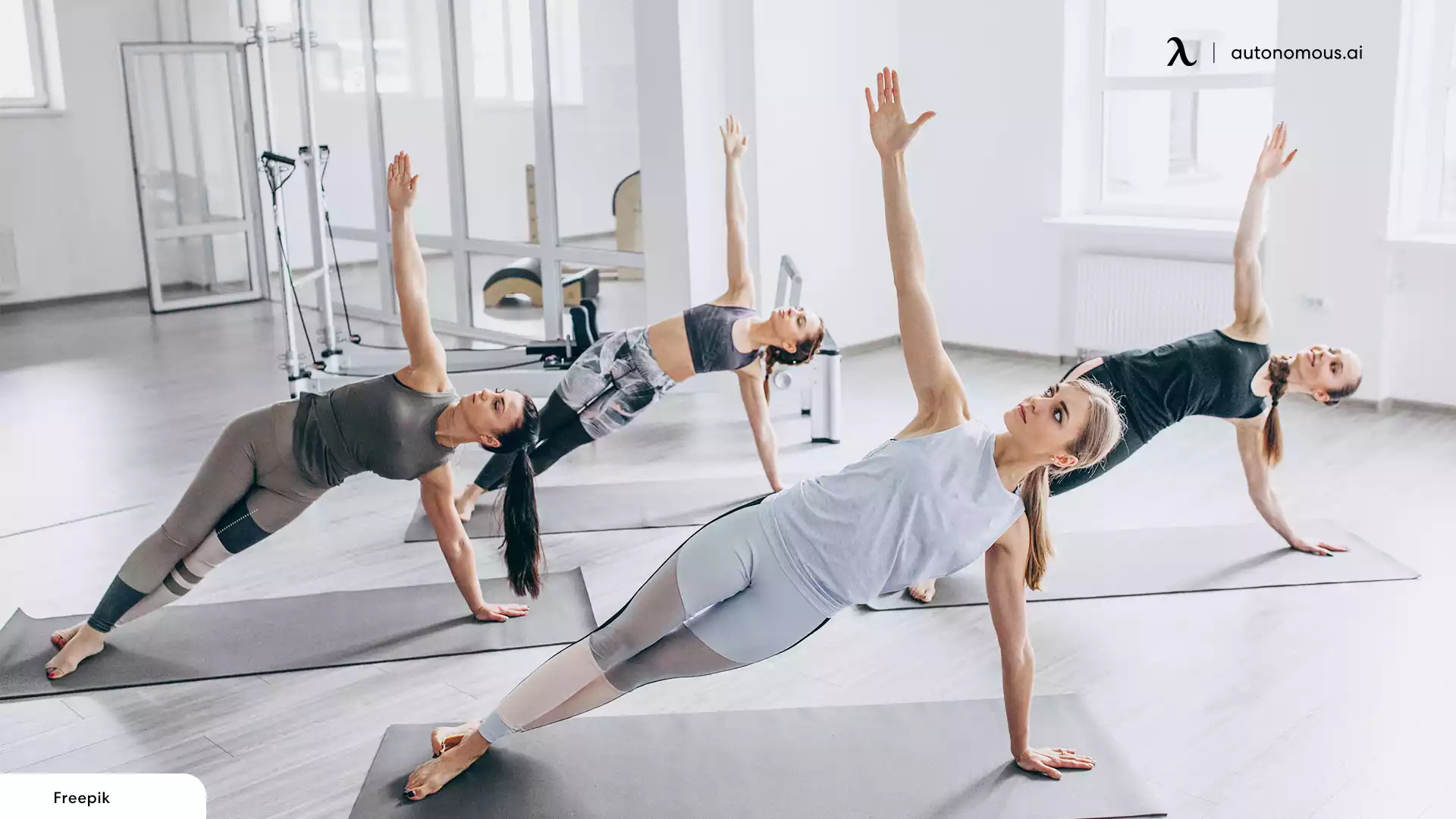
Not all Pilates chairs are built the same. While they share a common purpose, different designs change how resistance feels, how exercises are performed, and how the chair fits into a home Pilates studio or commercial setting. Understanding these variations makes it easier to choose a model that matches your training style and space.
- Wunda Chair:
This is the classic design inspired by Joseph Pilates’ original concept. It features a single pedal and a compact, box-like frame. Wunda chairs are known for their simplicity, durability, and versatility across strength, balance, and rehabilitation work.
- Split Pedal Chair:
Instead of one solid pedal, this version uses two independently moving pedals. This allows each leg or arm to work separately, making it ideal for correcting imbalances and adding asymmetrical challenge to exercises.
- Combo Chair:
A combo chair adds adjustable handles or a support frame to the basic design. These handles increase stability and expand the range of upper-body exercises, making the format more approachable for beginners and more versatile for studios.
- High Chair Pilates Models:
These taller chairs elevate the pedal height, changing leverage and movement mechanics. The upright format shares some benefits with standing desk exercises—training balance and engagement while vertical. They are often used to increase challenge or accommodate specific training needs, especially in professional or therapeutic settings.
- Folding vs Fixed Chairs:
Folding models prioritize storage and portability, making them practical for home users with limited space. Fixed-frame chairs emphasize maximum stability and long-term durability, which is often preferred in studio environments.
Each type of Pilates chair offers a slightly different training experience. The right choice depends less on brand and more on how much support, adjustability, and movement variety you want from your equipment.
Who Is a Pilates Chair For?
Pilates chairs are built to serve a broad range of users, not just experienced practitioners. Their adjustable resistance, compact footprint, and upright training format allow the same piece of equipment to adapt to very different goals, spaces, and experience levels.
- Beginners benefit from a pilates chair for beginners that builds foundational strength and body awareness. Lighter resistance settings and supportive features like a Pilates chair with handles make early sessions feel controlled rather than overwhelming.
- Home users often prioritize the best Pilates chair for home use for its efficiency, meaningful resistance training without the footprint of a reformer, practical for apartments or small workout spaces.
- Rehab and physical therapy clients benefit from finely adjustable resistance and low-impact movement, allowing them to rebuild strength while protecting joints. This also makes Pilates desk chairs a natural complement to chair exercises for seniors focused on mobility and stability.
- Athletes use the chair to load balance, power, and coordination simultaneously, useful for sport-specific conditioning and injury prevention.
Pilates Chair vs Reformer
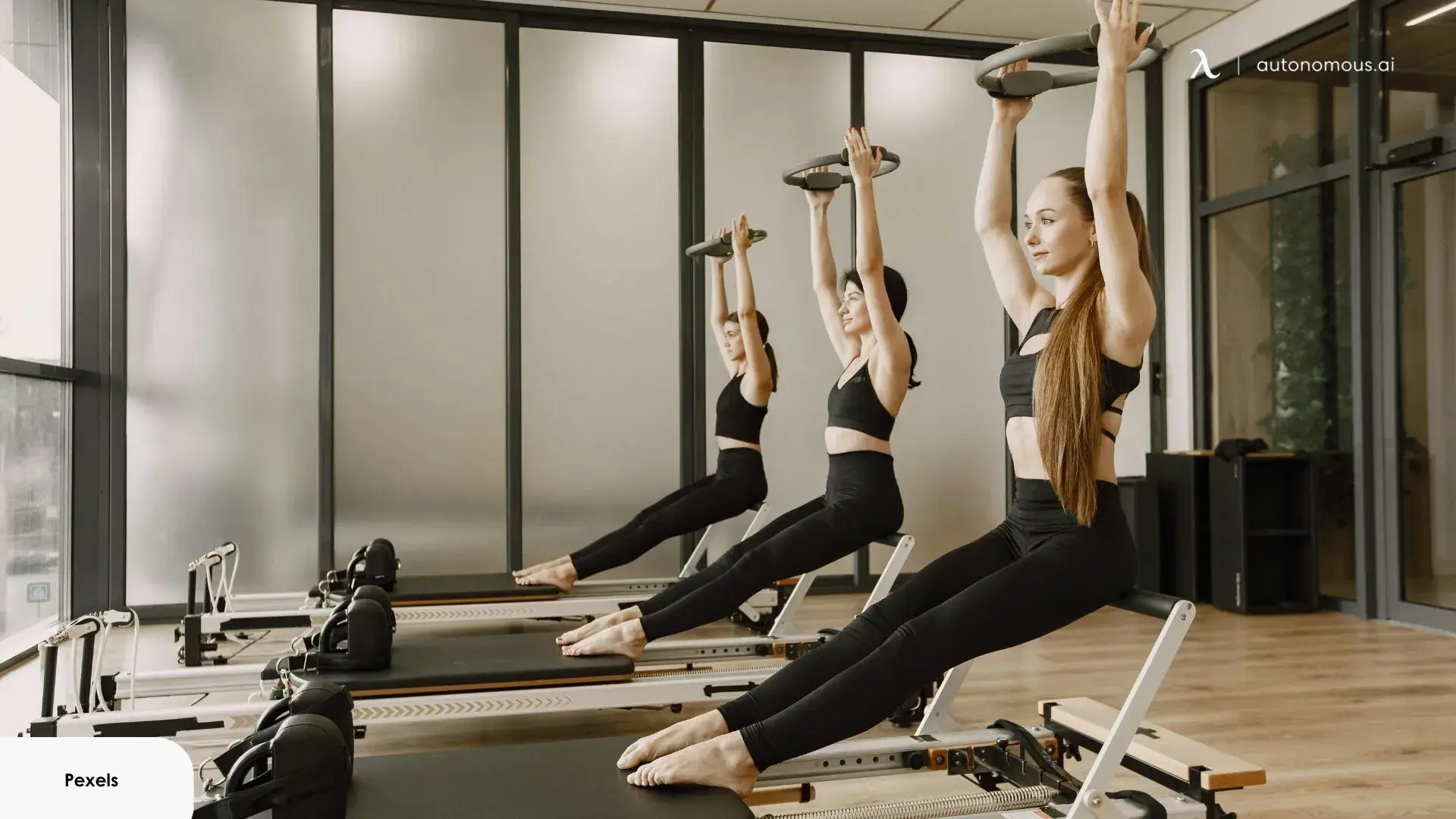
When choosing between a Pilates chair and a reformer, the decision often comes down to space, training style, and how much structure you want in your workouts. Both offer resistance-based Pilates training, but they do so in very different ways.
Feature | Pilates Chair | Reformer |
Footprint and space | Compact and easy to place in small rooms, apartments, or studio corners | Requires a dedicated area and more permanent floor space |
Movement format | Upright and vertical positions that demand balance and active stabilization | Horizontal, guided movement along rails for added support and consistency |
Resistance experience | Direct and demanding, with greater emphasis on body control and alignment | Smooth and guided, with resistance distributed along the carriage |
Exercise style | Strength-focused, controlled movements that load the legs, core, and upper body | Flowing sequences with a wider range of long-form exercises |
Stability and support | Less guided, requiring more coordination and postural awareness | More guided, making it feel more approachable for beginners |
Cost and practicality | Typically more affordable and practical for home use | Usually more expensive and less space-efficient |
Best use case | Users who want compact, upright strength and balance training | Users who want guided, full-length Pilates sessions |
In short, reformers excel at smooth, guided movement, while Pilates chairs emphasize upright strength, balance, and control. For many planning a home gym setup, the chair offers a more space-efficient way to achieve serious resistance training without committing to a full studio-style machine.
How to Choose the Right Pilates Chair
Choosing a Pilates chair isn’t about finding the most expensive model. It’s about matching the equipment to your space, experience level, and training goals. The right chair should feel supportive, stable, and scalable as your strength and control improve over time.
- Resistance System
Most chairs use spring-based resistance, while some rely on hydraulics. Springs tend to offer smoother, more progressive loading and are easier to fine-tune for different exercises. Hydraulic systems can feel more linear and compact but may offer less precision in resistance adjustment.
- Build Quality
A stable frame matters more than aesthetics. Solid wood or reinforced steel construction improves durability and prevents wobbling during upright or balance-based exercises. Weight capacity and overall rigidity directly affect how confident the chair feels in use.
- Footprint and Storage
For home setups, space efficiency is often a deciding factor. Folding chairs or compact fixed models make it easier to integrate Pilates training into shared living spaces without permanent floor commitments. If you're exploring garage gym ideas, a Pilates chair is one of the more practical additions, minimal footprint, no permanent floor commitment.
- Price Range
Entry-level chairs work well for casual use and light training. Mid-range models balance durability and adjustability. Professional-grade chairs are built for heavy use, advanced programming, and long-term reliability.
A well-chosen Pilates chair should grow with your practice, not limit it. Prioritizing stability, adjustability, and resistance quality will matter far more over time than surface-level features.
Top 5 Pilates Chairs Worth Considering
If you're shopping for a Pilates chair, these five options represent a range of price points, build styles, and intended use cases, from studio-grade equipment to home-friendly setups.
1. Merrithew Pilates Split-Pedal Stability Chair
This model features a split-pedal configuration that allows each leg to work independently, supporting unilateral training and rotational movement patterns. It is often available as a pilates chair with handles, which adds stability for upright exercises and balance-based work. Commonly used in studios and rehabilitation settings, it is built for frequent use and higher resistance demands.

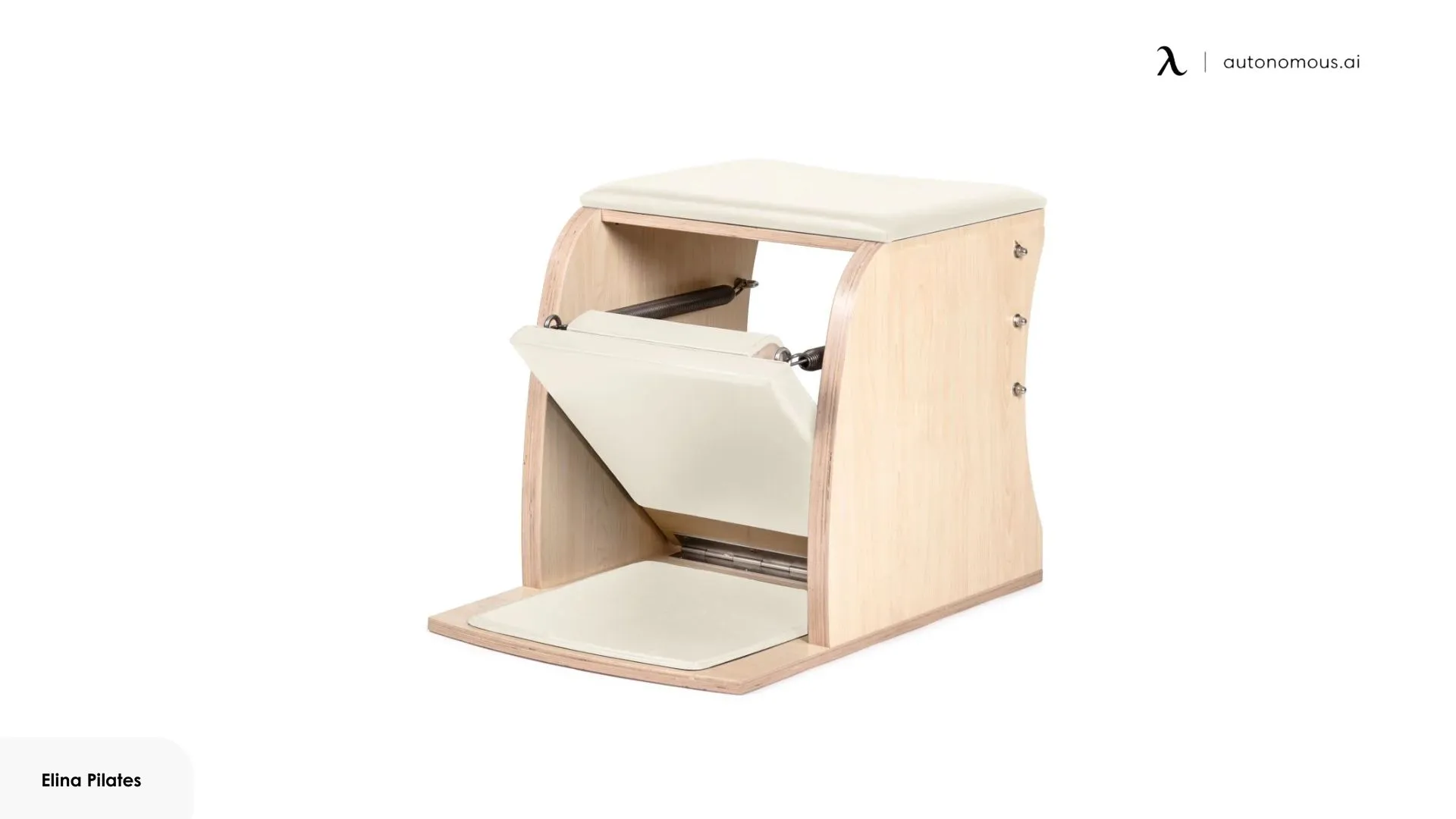
2. Elina Pilates Wunda Chair
Elina’s version of the classic Wunda Chair follows a traditional wooden frame design paired with a spring-based resistance system. It offers a moderate resistance range that suits both pilates chairs for beginners and more experienced users. The construction and finish make it appropriate for studio environments while remaining practical for home setups that prioritize durability and controlled movement.
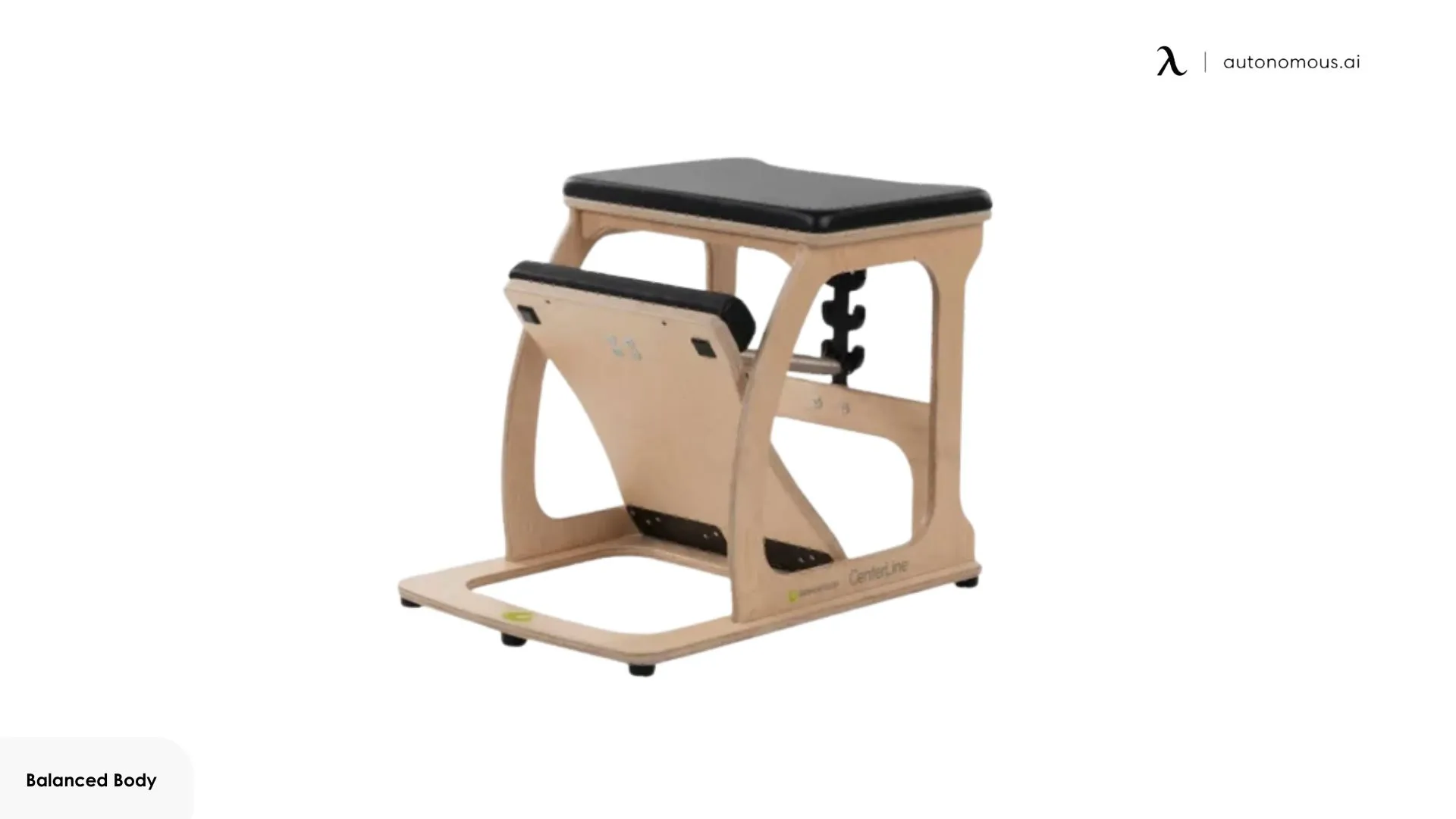
3. Balanced Body CenterLine Chair
Compact frame, single pedal, minimal extras. It is intended for users who already have a defined exercise routine and do not require extensive adjustability or additional attachments. Its smaller footprint makes it suitable for limited spaces, and its resistance system reflects the brand’s emphasis on consistent spring calibration.
4. Onemax Pilates Chair
Positioned as a more accessible entry into pilates chair equipment, this model includes split pedals and adjustable resistance at a lower price point than many studio-oriented brands. It is commonly chosen by home users who want to explore chair-based Pilates training before committing to higher-end equipment.

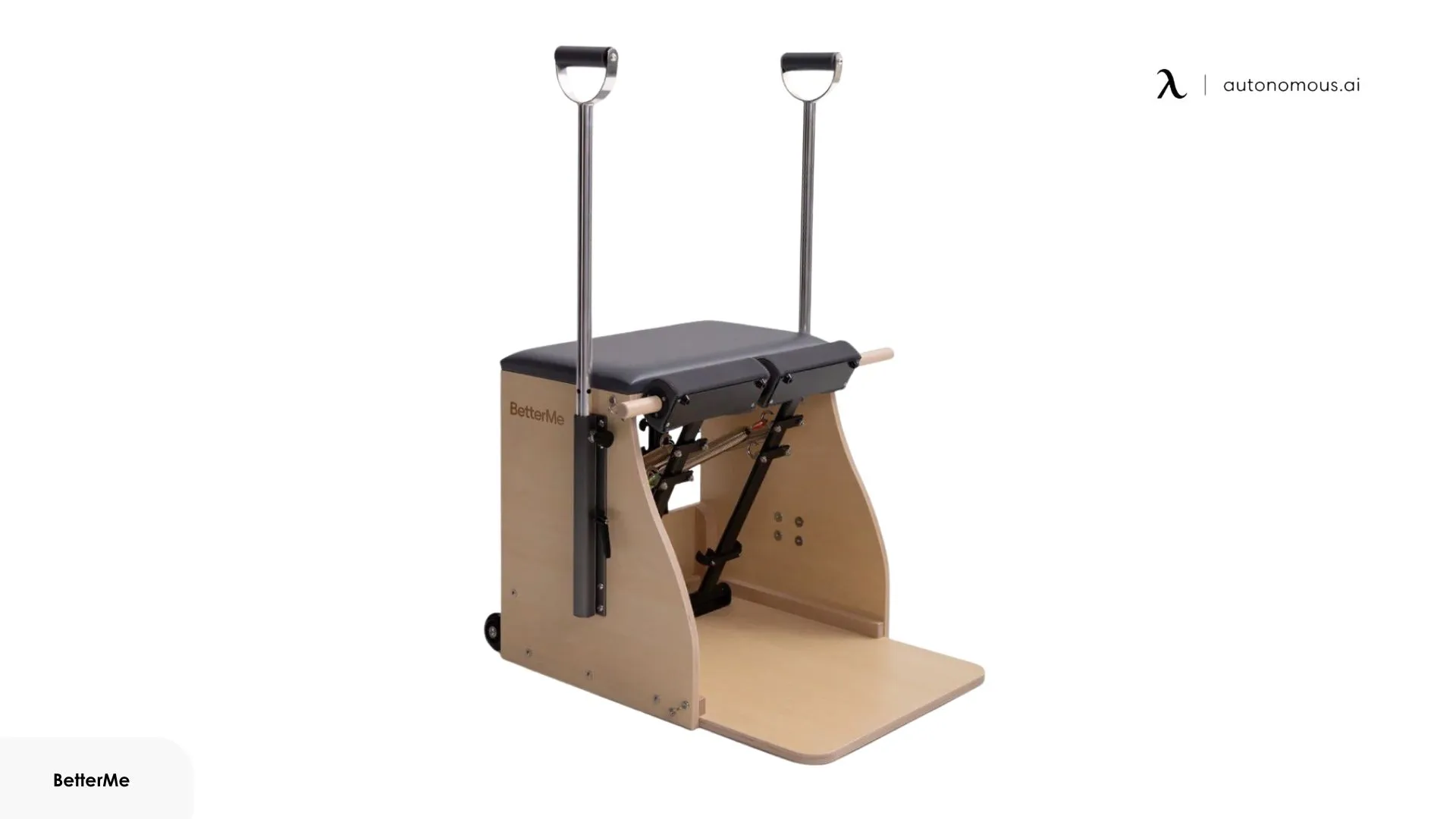
5. BetterMe Pilates Chair
Designed with home use in mind, the BetterMe chair emphasizes portability and ease of setup. Its lighter frame makes it easier to store and move, which can be practical in small living spaces. It is typically used by casual practitioners who want to add spring-based resistance training without integrating larger Pilates machines into their home.
Taken together, these examples reflect the range of designs available across the pilates chairs category. The most suitable option depends less on brand name and more on how the chair aligns with your space, resistance needs, and long-term training goals.
FAQs
What is a Pilates chair used for?
A Pilates chair is used for resistance training that builds core strength, balance, coordination, and posture. It supports seated, standing, and upright exercises that engage multiple muscle groups at once.
Does the pilates chair really work?
Yes, the Pilates chair works by using adjustable resistance to build strength, balance, and coordination. Its upright format forces deeper core engagement and controlled movement, which makes exercises mechanically demanding despite the chair’s compact size.
Is a Pilates chair good for beginners?
A Pilates chair for beginners can be introduced gradually using lighter resistance and supported exercises. Models with stability features, such as a pilates chair with handles, make early training more accessible.
What muscles does a Pilates chair work?
A Pilates chair works the core, legs, glutes, arms, shoulders, and back. Most exercises involve coordinated, full-body movement rather than isolated muscle training.
What is the difference between a pilates chair and a reformer chair?
A Pilates chair is a compact, upright piece of equipment that emphasizes balance, vertical loading, and controlled resistance. A reformer chair, more commonly referred to as a reformer, uses a horizontal carriage system that guides movement and supports longer, flowing exercise sequences.
How much does a Pilates chair cost?
Pilates chairs typically range from a few hundred dollars for entry-level home models to several thousand for studio-grade equipment. Pricing depends on build quality, resistance system, and adjustability.
How much space do I need for a Pilates chair?
Most pilates chairs require only a small footprint, often less than the space of a standard chair. This makes them suitable for apartments, home gyms, and shared living spaces.
What is the best Pilates chair for home use?
The best pilates chair for home use depends on space, resistance needs, and stability features. Home users often prioritize compact design, adjustable resistance, and optional handles for support.
Are pilates chairs safe to use at home?
Pilates chairs are generally safe when used with proper resistance settings and controlled movement. Beginners may benefit from guided instruction or supported models during early training.
Conclusion
A Pilates chair offers a compact, resistance-based approach to building strength, balance, and controlled movement without the footprint of larger equipment. It delivers upright, full-body training that challenges coordination and posture in ways mat work and guided machines often don’t.
For home users with limited space, it can be a practical alternative to a reformer, providing serious training depth in a smaller format. It is especially worth considering for people who value progressive resistance, functional movement, and long-term versatility.
Ultimately, the chair makes the most sense when chosen intentionally. Matching the model to your space, resistance needs, and training goals matters far more than brand or aesthetics. When used consistently, a well-built Pilates chair becomes not just a piece of equipment, but a scalable tool for stronger, more resilient movement over time.