Shed Size Without a Permit in NJ: What State Code Allows

Table of Contents
- New Jersey Shed Permit Rules: The State Baseline
- When Shed Size Doesn't Govern the Permit Requirement
- Common Shed Sizes: Do They Require a Permit in New Jersey?
- NJ Shed Permit Rules by Municipality
- Shed Setback Requirements in NJ
- How to Verify the Shed Size for Your Specific Address
- What Happens If You Skip Required Approvals
- If Your Goal Is a Backyard Workspace, Not Storage
- FAQs
- Conclusion
New Jersey allows certain sheds to be built without a construction permit. The state baseline is 200 square feet, measured by footprint — sheds at or below that size typically do not require a construction permit. That number, however, is the starting point, not the final answer. Your municipality's rules may set a lower threshold. Some New Jersey towns exempt only sheds 100 square feet or smaller. Others require permits for any shed sizes.
The number on the books and the number that applies to your address are not always the same thing. This guide covers the state baseline, how municipal rules differ, what triggers permits beyond size alone, and how to verify the rules that apply to your specific property.
New Jersey Shed Permit Rules: The State Baseline
Understanding the shed size without permit New Jersey threshold starts with the governing document: the New Jersey Uniform Construction Code (UCC), codified under N.J.A.C. 5:23. This is the statewide construction framework administered by the New Jersey Department of Community Affairs (DCA), Division of Codes and Standards.
Under N.J.A.C. 5:23-3.1, garden-type utility sheds are exempt from construction permit requirements when all of the following conditions are met:
- The structure is 200 square feet or less in footprint area
- The height does not exceed 10 feet
- The shed has no utility connections — no water, gas, oil, sewer, or electrical wiring
- The structure is dimensionally stable without a foundation system, meaning it has a floor tied to the walls and sufficient weight to remain in place, or is anchored to the ground
All four conditions must be satisfied. A shed that meets the size limit but has electrical wiring does not qualify for the exemption.
- "No Construction Permit" Does Not Mean No Approvals
This is where many homeowners — and some New Jersey shed builders — misread the rule. Exemption from a construction permit is not the same as exemption from all municipal approvals.
In New Jersey, two separate permit tracks govern shed installation:
- Construction permit — issued under the New Jersey Uniform Construction Code, enforced by the local Building Department. This is what the 200 sq ft rule addresses.
- Zoning permit — issued under the Municipal Land Use Law (MLUL), enforced by the local Zoning Department. This governs where the shed is placed on the property: setbacks from property lines, lot coverage limits, and permitted yard locations.
The Zoning Department enforces ordinances adopted by the municipality under the authority granted by the Municipal Land Use Law, which allows municipalities to regulate the use of property — including the size and height of structures, distance from property lines, and allowed uses within a zone.
In practice: for a shed or detached garage project of any size, a zoning permit is required. A construction permit is additionally required if the area exceeds 200 square feet, the structure exceeds 10 feet in height, or the structure has any utilities. The zoning permit step applies regardless of shed size. A 10×10 shed still requires zoning approval in virtually all New Jersey municipalities before installation.
When Shed Size Doesn't Govern the Permit Requirement
The construction permit exemption under N.J.A.C. 5:23-2.14 applies to the shed structure itself. It does not extend to the work done inside or connected to it. A shed utility that qualifies for the size exemption can still require one or more separate permits the moment utilities are introduced — and each utility type is governed by its own subcode under the NJ Uniform Construction Code.
- Electrical
Running power to a shed requires a separate electrical subcode permit in New Jersey — a requirement that applies to any shed with electricity, regardless of its size or whether the structure itself requires a construction permit. This applies to any new circuit extended from the house, a sub-panel installation, and — in most municipalities — a plug-in connection that involves new wiring work on the house side. The electrical permit triggers an inspection by the local electrical subcode official. Homeowners on owner-occupied single-family properties may pull their own electrical permits in New Jersey, though the work must still pass inspection. Confirm this with your local building department, as municipal interpretation varies.
- Plumbing
Adding any water supply line, drain, or plumbing fixture to a shed requires a plumbing subcode permit regardless of the shed's footprint. This also triggers a construction permit for the shed itself — plumbing connections are one of the conditions that void the size exemption under state code entirely, not just a parallel permit requirement.
- Gas and Mechanical
A gas connection to a shed requires a construction permit for the structure regardless of size, under the same logic as plumbing. Mechanical work — including a ductless mini-split, forced-air unit, or any HVAC installation involving ductwork — typically requires a mechanical permit. A basic plug-in air conditioner that involves no new wiring or structural penetration beyond a standard outlet generally does not, but this is worth confirming with your local building department given the variation in municipal interpretation.
- The Battery and Solar Grey Area
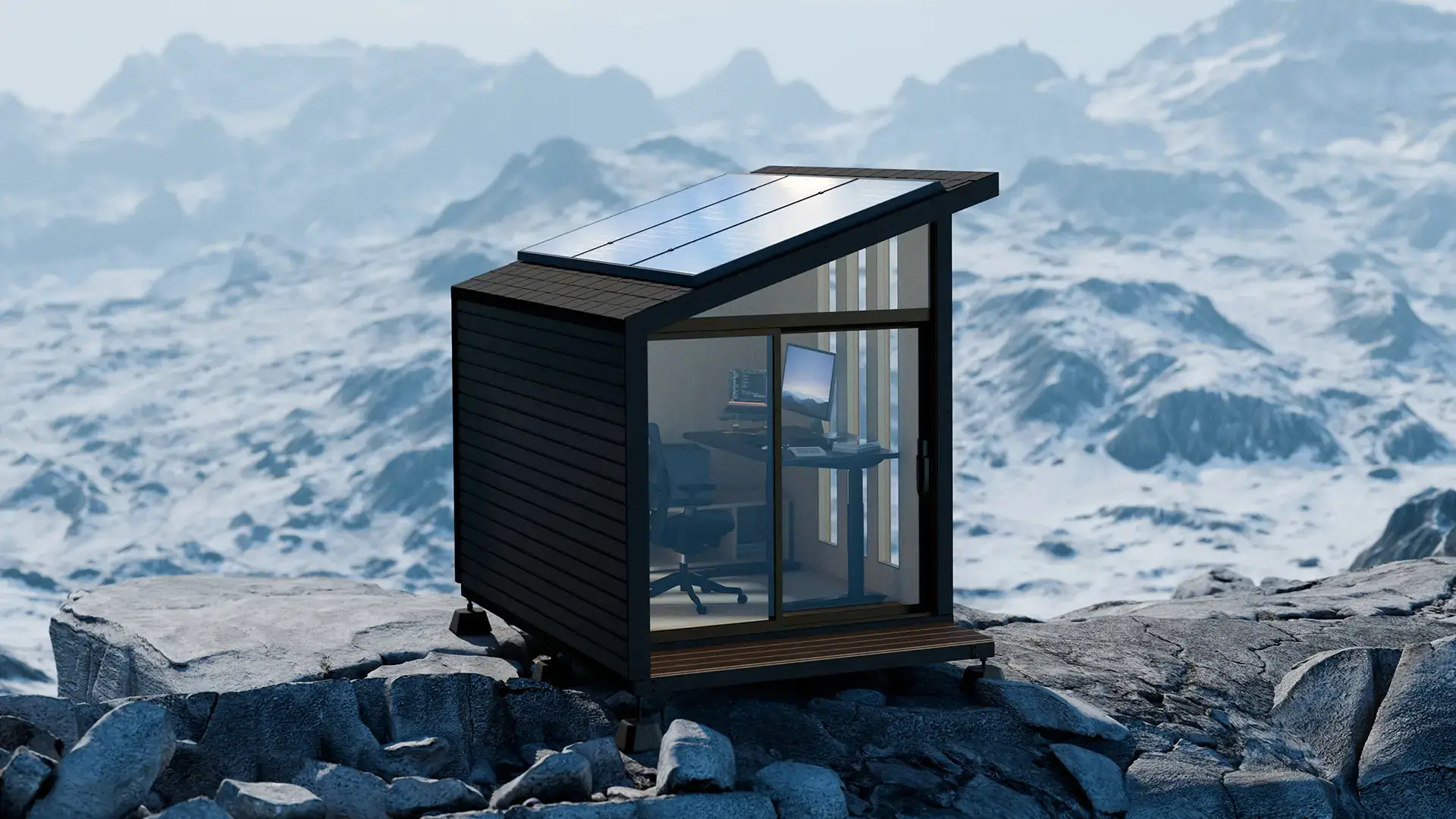
Prefabricated structures with self-contained battery or solar systems — no grid connection, no new wiring extended from the house — occupy an unsettled position in NJ's permit framework. Some municipalities treat any electrical system, including standalone solar power for shed installations, as triggering the electrical subcode permit requirement. Others have exemptions for low-voltage or off-grid installations. This is one area where calling your local electrical inspector directly — not the general building department line — will get the most accurate answer for your specific setup.
Common Shed Sizes: Do They Require a Permit in New Jersey?
Most homeowners planning a new jersey shed think in dimensions — a 10×12, a 12×16 — not square footage. The table below translates the most common shed sizes into area and maps them against the NJ state construction permit threshold under N.J.A.C. 5:23-2.14.
The column below reflects the NJ state baseline only. Your municipality may set a lower threshold — some NJ towns cap the exemption at 100 sq ft. A zoning permit is required in virtually all NJ municipalities regardless of shed size. Verify both requirements with your local building and zoning offices before purchasing or breaking ground.
Shed Dimensions | Square Footage | Construction Permit Required? |
6×8 | 48 sq ft | No |
8×10 | 80 sq ft | No |
10×10 | 100 sq ft | No |
10×12 | 120 sq ft | No |
10×16 | 160 sq ft | No |
12×16 | 192 sq ft | No |
10×20 | 200 sq ft | No |
12×20 | 240 sq ft | Yes |
14×20 | 280 sq ft | Yes |
16×20 | 320 sq ft | Yes |
NJ Shed Permit Rules by Municipality
The state baseline covered in the previous sections establishes the floor — 200 sq ft, 10 feet in height, no utility connections — but it does not set a ceiling on how strictly a municipality can regulate new jersey sheds. Under the New Jersey Municipal Land Use Law, each of the state's 564 municipalities has the authority to adopt and enforce zoning ordinances that are more restrictive than state code. The result is a patchwork: the same 12×16 shed that requires only a zoning permit in one town may require a full construction permit one township over.
This is the single most common source of confusion — and cost — for New Jersey homeowners planning a shed installation.
1. Towns That Apply the 200 Sq Ft State Baseline
Several municipalities align with the state threshold, though each adds its own conditions:
Jersey City — A zoning permit is required for all shed installations, but a construction permit is only required if the accessory building exceeds 200 sq ft.
West Milford — Sheds 200 sq ft and under do not require a building permit; they do require a zoning permit. West Milford is also located entirely within the New Jersey Highlands Preservation Area, which may impose additional environmental review requirements depending on the property. Homeowners in West Milford should confirm Highlands compliance separately through the New Jersey Highlands Council before installation.
Wall Township — Sheds 200 sq ft and under and 10 ft or less in height do not require a building permit; all sheds require a zoning permit regardless of size.
South Orange — Sheds less than 200 sq ft and less than 10 feet in height require a zoning permit only; sheds greater than 200 sq ft or 10 feet in height require a construction permit. Sheds cannot exceed 15 feet in height and may not be used as a dwelling.
East Brunswick — Sheds 200 sq ft or less require a zoning permit. Sheds greater than 200 sq ft are classified as accessory structures subject to construction permit requirements and additional setback rules.
Somerville (Somerset County) — A zoning permit is required for any shed or detached garage project regardless of size. A construction permit is additionally required if the structure exceeds 200 square feet, exceeds 10 feet in height, or includes any utility connections. Somerville's guidance also notes that how many sheds you can have on your property is regulated at the local level — no more than two detached accessory buildings are permitted on a one or two family dwelling lot.
2. Towns That Set a Lower Local Threshold
Sparta Township (Sussex County) — No permits are required for sheds up to 100 square feet; a permit is required for all sheds larger than 100 square feet; sheds 200 square feet and larger also require a foundation; all sheds regardless of size require a zoning permit to determine setbacks. This is a meaningful departure from the state baseline — a 10×12 shed that would require only a zoning permit in most New Jersey towns requires a construction permit in Sparta.
Emerson (Bergen County) — For sheds measuring 100 sq ft or less, a zoning permit is issued; sheds over 100 sq ft require a building permit; sheds 200 sq ft or more require footings. Emerson operates on a three-tier structure that the state baseline does not replicate.
3. Towns That Require Zoning Approval for All Sheds
Some municipalities require formal zoning approval for every shed installation, including structures well under 100 sq ft. This does not automatically mean a construction permit is required for smaller sheds — but it does mean nothing goes up without at least one municipal approval, regardless of the shed size without permit New Jersey threshold the homeowner may have read elsewhere.
Ringwood (Passaic County) and Evesham Township (Burlington County) are two documented examples where all sheds require prior zoning approval before installation, regardless of footprint.
4. Additional Layers That May Apply to Your Property
Municipal building and zoning permits are the primary regulatory track, but three additional frameworks operate independently and can affect shed installation regardless of size or permit status.
- HOA rules:
Homeowners' associations are governed by private documents — declarations, bylaws, and architectural guidelines — not by municipal zoning law. These two frameworks operate independently of each other. A municipality issuing a zoning permit does not override HOA restrictions, and HOA approval does not substitute for a municipal permit.
Review your HOA's governing documents and contact the association directly for any restrictions on shed placement, materials, or appearance before committing to a design or purchase.
- Historic districts:
Properties within a locally or state-designated historic district may require review and approval from a historic preservation commission before any exterior structure is added, including sheds. This process runs parallel to — and separate from — standard zoning and building permit applications. Contact your municipal clerk to confirm whether your property falls within a historic district boundary.
- Flood zones:
Properties in FEMA-designated flood hazard areas are subject to state and federal overlay requirements that apply regardless of shed size or local permit status. The New Jersey Department of Environmental Protection maintains jurisdiction over certain installations in flood hazard areas under the Flood Hazard Area Control Act. Homeowners in flood-prone areas should verify requirements with both their municipality and the NJDEP Flood Hazard Area program before proceeding.
Shed Setback Requirements in NJ
Clearing the size threshold is only part of the compliance picture for any new jersey shed installation. Setbacks — the minimum distances a structure must maintain from property lines, other buildings, and certain boundaries — are enforced through the zoning permit process and apply regardless of whether a construction permit is required. A shed that is 150 sq ft, fully exempt from the construction permit requirement under state code, can still be non-compliant if it is placed in the wrong location on the lot.
Setback rules in New Jersey are set at the municipal level, vary by zoning district within each municipality, and in some cases vary further depending on the size of the shed itself. The figures below reflect documented requirements from official municipal sources. They are illustrative of the range homeowners will encounter — not a substitute for confirming the specific rules that apply to your address and zone.
1. The Front Yard
Across New Jersey, sheds are consistently prohibited from front yard placement — a rule that holds regardless of shed size, permit status, or distance from the street. Accessory structures including sheds are not permitted within the front yard setback. This applies whether the shed is a 6×8 tool storage unit or a 10×20 structure sitting just below the construction permit threshold.
The practical implication: the rear building line of the principal structure is the forward boundary for shed placement in virtually all New Jersey residential zones. Sheds must be sited in the side or rear yard, behind the main dwelling.
2. Corner Lots
Corner lots introduce a complication that catches many homeowners off guard. A property that faces two streets has two front yards from a zoning perspective — which means two sides of the lot where shed placement is prohibited or subject to front yard setback requirements.
In the case of a corner lot abutting two or more streets, accessory buildings or uses shall not be located nearer the street line of the street forming the side yard boundary than the required front yard setback on such street.
What appears to be a usable side yard on a corner lot may be treated as a second front yard under local ordinance. Homeowners on corner lots should request a zoning review that addresses both street frontages before finalizing any shed placement decision.
3. Rear and Side Yard Setbacks
Five feet from the rear and side property lines is the most commonly documented minimum for smaller sheds across NJ municipalities, but this figure rises with shed size and varies by zone district. The range in practice is meaningful — from three feet in some towns to 25 feet in others for larger structures — which is why confirming the specific requirement for your zone before purchasing is more reliable than working from any general figure.
Municipal examples drawn from official sources illustrate how these rules play out:
In Cranford, all sheds must be located three feet from the rear lot line, five feet from side lot lines, and a minimum of 10 feet from any principal structure on the lot. South Orange applies a similar pattern but with a wider clearance from the main dwelling: a minimum three-foot setback is required from the side and rear yard property lines, a minimum of 10 feet from any other accessory structures, and a minimum of 20 feet from the primary structure.
East Brunswick follows a more flexible model tied to lot size: in most cases, sheds are required to be set back five feet from the rear and side lot lines, but on undersized lots smaller than one acre, a shed can be set back two feet if its height does not exceed 10 feet. Ringwood applies its minimum setback conditionally by size: residential sheds under 120 square feet and less than 10 feet high can be placed as close as five feet from the side or rear property line, as long as they are behind the rear building wall of the residence.
4. How Shed Size Affects Setback Distance
Several municipalities apply a sliding scale where the required setback distance increases with the shed's footprint — even when the shed remains below the construction permit threshold. In Wayne Township, accessory structures 100 square feet or less have a minimum side and rear yard setback of 5 feet, while structures over 100 square feet require a 10-foot minimum side and rear yard setback. In Montville Township, sheds must be located at least 10 feet from a principal building on the same lot, with setback distances increasing for structures exceeding 150 square feet.
The practical consequence: choosing a shed size just below a local size threshold affects not only permit requirements but also how close to the property line the structure can legally sit. Both variables — size and placement — are worth resolving with the zoning office before finalizing any purchase or site plan.
5. Easements
No shed may be placed within an easement regardless of size or permit status. Utility, drainage, and access easements that run across a portion of the property are not buildable areas under any NJ municipal framework. If a property survey shows an easement along the rear or side of the lot, the effective placement area for the shed is reduced accordingly. Confirm easement locations from your property survey before staking any placement.
How to Verify the Shed Size for Your Specific Address
Every section of this guide has pointed back to the same step: confirm with your municipality before proceeding. This section covers how to do that efficiently, and what specifically to ask.
- Start with Zoning, Not the Building Department
In New Jersey, zoning approval must precede any construction permit application. The zoning office — sometimes called the Land Use office or Planning and Zoning Department — is the correct first contact. They govern where a shed can be placed on your property, what size is permitted in your zone district, and whether your lot has any overlay conditions such as a flood hazard area or historic designation that apply independently of standard zoning rules.
Bring or have ready when you call: your property address, the proposed shed dimensions (exterior, not interior), and the intended placement location relative to your property lines. If you have a copy of your property survey, have it available — some zoning offices will ask you to mark the proposed location on it as part of the approval submission.
- What to Ask
The most efficient call to a zoning office covers four things: the construction permit threshold for your zone district — whether your municipality applies the 200 sq ft state baseline or a stricter local limit; the setback distances that apply to your proposed shed size, from both property lines and the principal structure; whether a zoning permit is required regardless of size and what the application involves; and whether your property carries any overlay condition — flood hazard area, historic district, or Highlands Preservation Area — that requires a separate review before standard zoning approval can proceed.
Having your property address, proposed exterior shed dimensions, and intended placement location ready before the call will get you specific answers rather than general ones. If you have a property survey, keep it on hand — some zoning offices will ask you to indicate the proposed shed location on it as part of the submission.
- Permit Validity and Timelines
Once issued, NJ shed permits are typically valid for one year from the date of issue, though this varies by municipality. If construction is not completed within that window, a renewal or extension may be required — potentially involving additional fees. The NJ Uniform Construction Code gives local building departments up to 20 business days to act on a complete permit application, though straightforward shed applications are generally processed faster.
The NJ Department of Community Affairs maintains a Local Code of Ordinances Directory at nj.gov/dca/codes, which links to municipal code databases across all 564 NJ municipalities — a practical starting point for reviewing your town's ordinances before contacting the office directly.
What Happens If You Skip Required Approvals
Most permit violations involving New Jersey sheds are not discovered the day the shed goes up. They surface months or years later — during a neighbor complaint, a routine code enforcement sweep, or most consequentially, when the property is listed for sale. Understanding the enforcement sequence and the downstream effects on a real estate transaction is more useful than a general warning to "get your permits."
- Immediate Enforcement: Stop-Work Orders and Fines
When a municipal code enforcement officer identifies a shed installed without required approvals, the standard sequence begins with a stop-work order if construction is ongoing, followed by a notice of violation. From that point, the property owner is required to either obtain retroactive approval or remove the structure.
Fines for unpermitted work are set at the municipal level and vary considerably. Some municipalities fine as low as $500 while others — such as Ocean City and Camden — charge up to $2,000, with additional fees if the violation is left unresolved. Somerville's published shed guidance states that a fine of up to $2,000 may be issued to any person performing work without the necessary permits. These figures reflect the fine for the violation itself — retroactive permit fees, inspection costs, and any required remediation work add to the total.
- Removal at the Owner's Expense
Where retroactive approval cannot be obtained — because the shed's size, placement, or utility connections would not have qualified for a permit under current code — the municipality can require demolition and removal of the structure. This outcome is not hypothetical: it is the documented enforcement position of NJ municipal building departments when a structure cannot be legalized after the fact.
The practical risk is compounded by the fact that code requirements change over time. At the time the work was done, it most likely conformed to code and a certificate of occupancy would have been easy to obtain. However, since the work was not recorded, in order to obtain approval today, the structure has to conform to today's code — and additional requirements may have been added since. A shed installed a decade ago without a zoning permit may now sit in a setback distance that has since been tightened, making retroactive legalization impossible without a variance.
- The Home Sale Problem
This is where the shed size without permit NJ question moves beyond inconvenience into material financial consequence. In New Jersey, many municipalities require a Certificate of Continued Occupancy (CCO) or equivalent compliance certificate as a condition of a residential property sale. During that inspection process, unpermitted structures — including sheds — are identified and must be resolved before closing can proceed.
Unpermitted work can raise red flags for buyers and lenders. Leaving open permits unresolved can cause delays in the sale, as buyers and their lenders typically require a clear property record. The resolution options at that stage are limited: obtain retroactive approval if possible, remove the structure, or negotiate a price reduction or escrow holdback with the buyer to account for the cost of remediation. None of these outcomes are preferable to handling approvals correctly at the time of installation.
New Jersey seller disclosure law requires sellers to disclose additions, structural changes, or alterations, and whether property building permits and approvals were obtained. A shed installed without required approvals is a disclosable condition. Failure to disclose known defects — including unpermitted structures — exposes the seller to potential liability after closing.
If Your Goal Is a Backyard Workspace, Not Storage
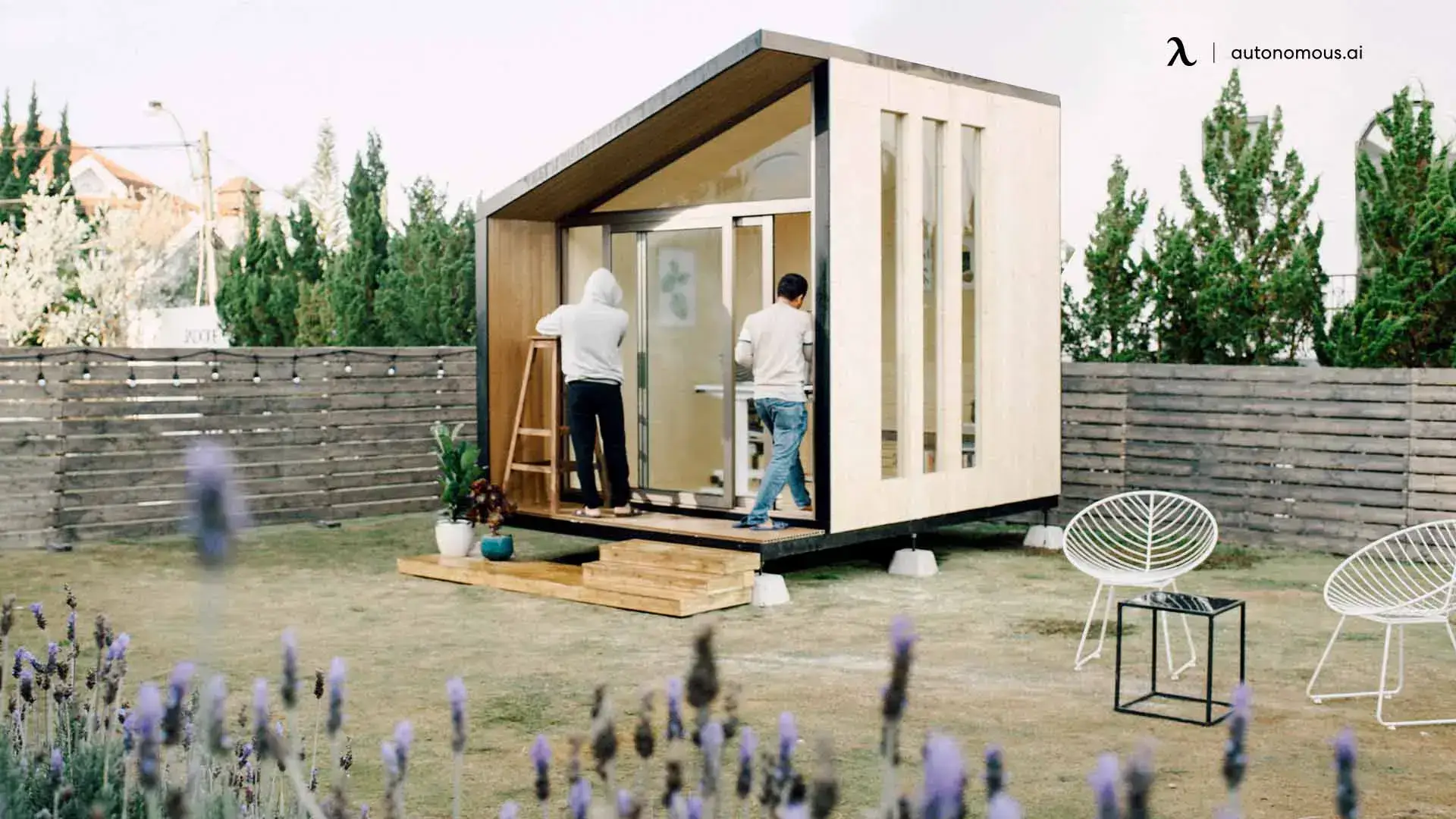
Not every homeowner searching for shed size without permit NJ information is planning a storage structure. For those whose goal is a dedicated backyard workspace — an outdoor office shed, a quiet backyard studio shed, a focused environment separate from the main dwelling — a prefabricated office pod occupies a different position in the regulatory picture than a traditional utility shed.
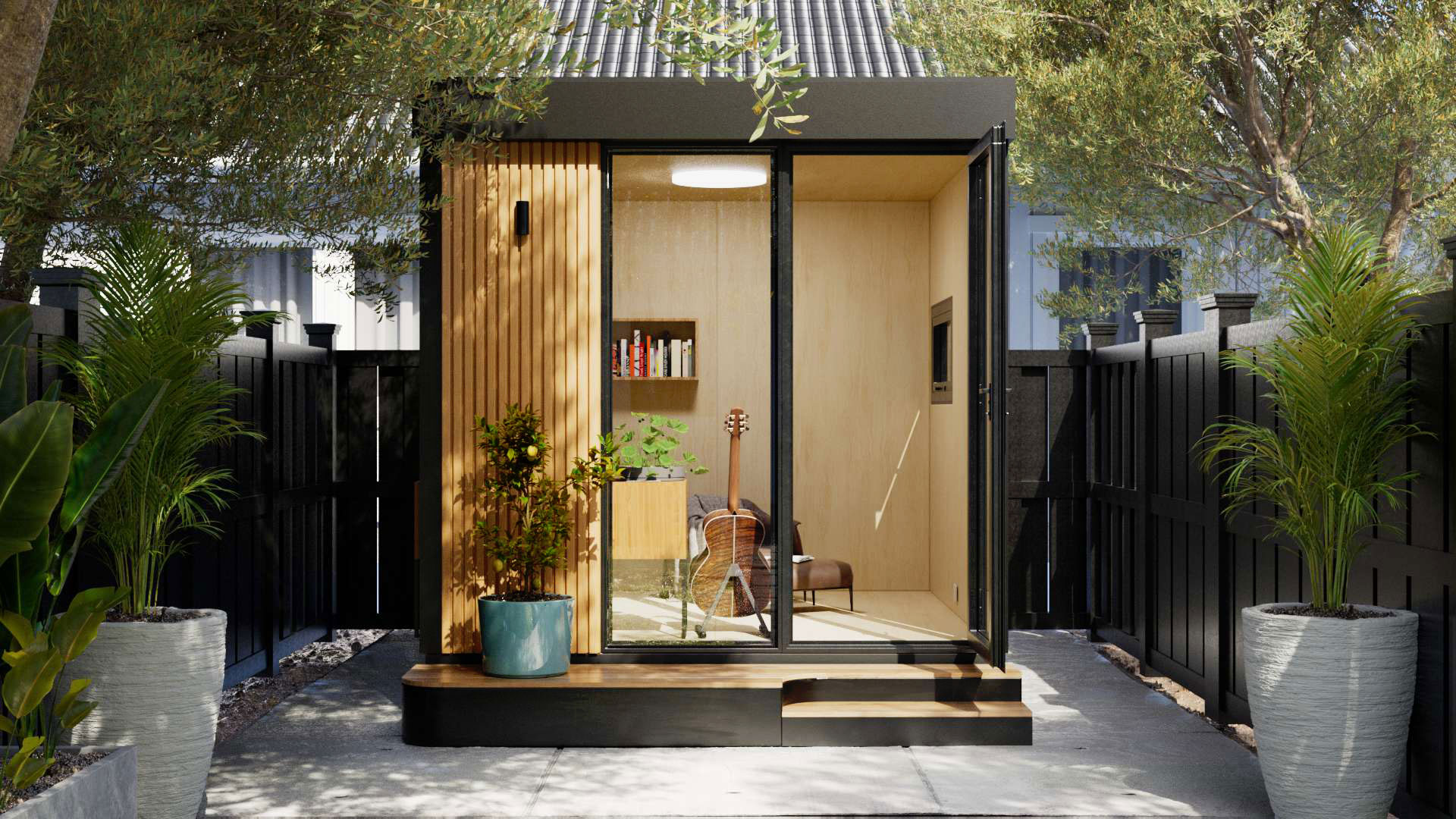
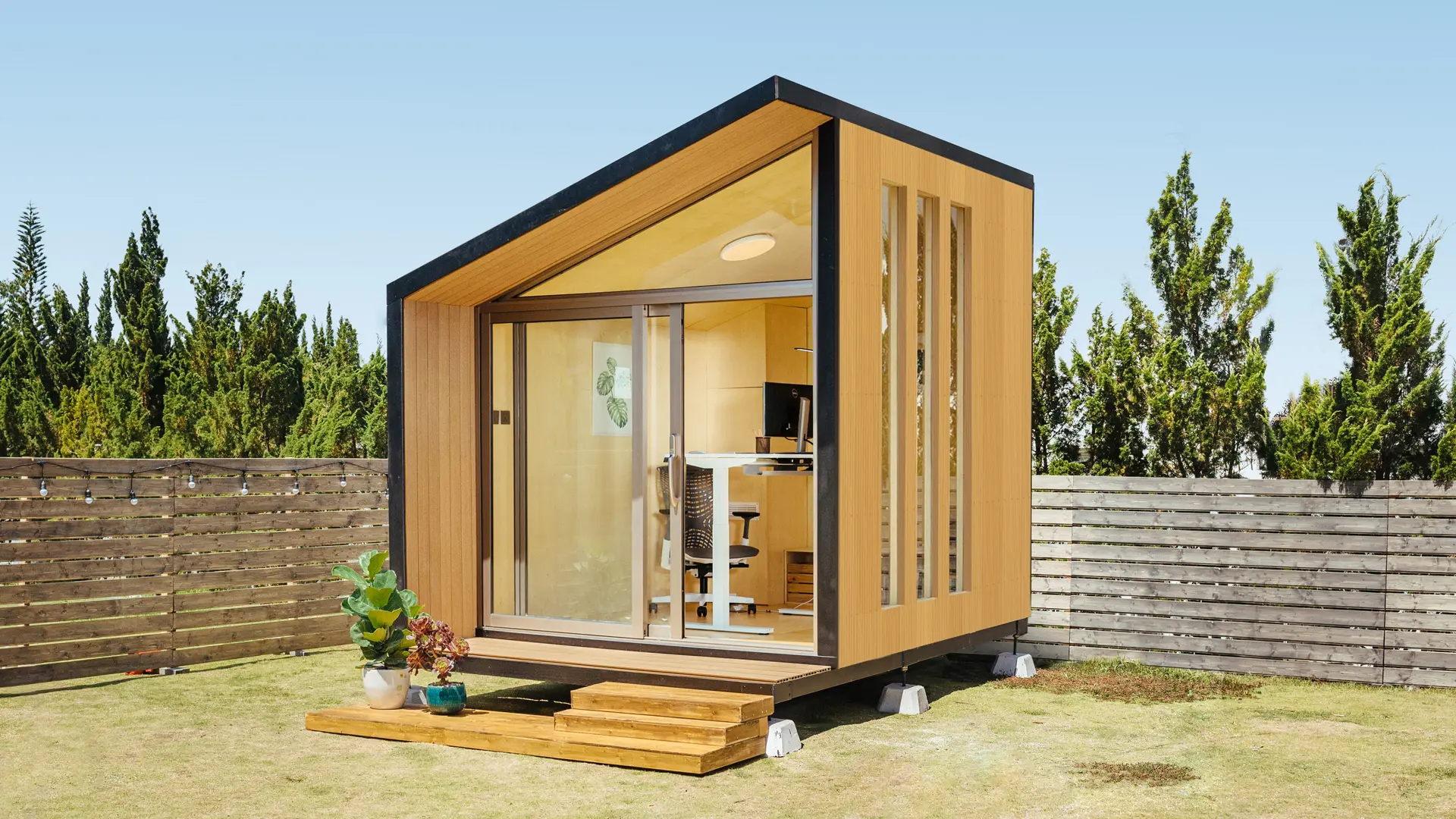
Autonomous WorkPods are designed around this use case. The MetroPod has an 80 sq ft footprint; the standard WorkPod sits at approximately 102 sq ft. Neither requires a permanent foundation or plumbing connections — two conditions that most reliably trigger construction permit requirements under NJ code. Their electrical setup connects to an exterior outlet rather than requiring hardwired installation, though as covered in Section 2, an electrical subcode permit is still required in New Jersey whenever electrical connections are involved, regardless of structure size.
The WorkPod is typically viewed as an insulated she shed rather than a permanent structure, since it is not built on a permanent foundation, does not require hardwiring, and is less than 120 square feet — because of these factors, a permit is typically not required, though customers should always comply with regulations specific to their area.
The same local verification process applies as with any accessory structure: zoning approval, setback compliance, and any HOA or flood zone requirements are independent of how a structure is built or what it is used for. What changes is that a prefabricated pod in this size range is less likely to trigger the construction permit layer of that process.
FAQs
How big of a shed can I build without a permit in NJ?
Under New Jersey state code (N.J.A.C. 5:23-2.14), a garden-type utility shed of 200 square feet or less and 10 feet or less in height does not require a construction permit, provided it has no water, gas, oil, or sewer connections. However, some municipalities set a lower local threshold — as low as 100 sq ft — and a zoning permit is required in virtually all NJ towns regardless of shed size.
Do I need a permit for a 10×12 shed in NJ?
A 10×12 shed (120 square feet) does not require a construction permit under New Jersey state law, as it is under the 200 square feet exemption. However, you will likely still need a zoning permit, as most municipalities require them for sheds regardless of size. Additionally, towns with stricter local regulations, such as Sparta Township, may require a permit for this size.
Do I still need a zoning permit if my shed is under 200 sq ft in NJ?
Yes, in nearly all municipalities in New Jersey, you will need a zoning permit for a shed, even if it is under 200 square feet. The 200 square feet exemption under N.J.A.C. 5:23-2.14 applies only to the construction permit, not to zoning approval. Zoning approval ensures the shed meets placement requirements, such as setbacks from property lines and whether it is in a prohibited area of your yard.
Do I need a permit for a shed with electricity in NJ?
While adding electricity to a shed does not void the construction permit exemption, you will still need to obtain a separate electrical subcode permit. This applies to all electrical work, including wiring, outlets, and lighting, regardless of the shed's size. The electrical permit is required in every municipality, even if the shed itself is exempt from a construction permit.
Can I put a shed in my front yard in NJ?
In New Jersey, sheds are generally prohibited from being placed in the front yard. They must be installed in the side or rear yard, behind the primary structure's building line. For corner lots, both sides of the property facing streets are considered front yards, which means shed placement is restricted on two sides of the property.
How close to the property line can I put a shed in NJ?
The setback distance for sheds is determined at the municipal level and can vary by zone district. The most common minimum setback requirement is five feet from the rear and side property lines for smaller sheds. Some towns may allow as little as three feet, while others may require ten feet or more, especially for larger sheds. Always confirm your setback requirements with your local zoning office before placing your shed.
What happens if I build a shed without a permit in NJ?
Building a shed without the proper permits in New Jersey can result in penalties, including a stop-work order, violation notice, and fines ranging from $500 to $2,000, depending on the municipality. Additionally, if the shed cannot meet current code requirements for size, setbacks, or utility connections, you may be required to remove the structure. Unpermitted sheds can also cause issues during the Certificate of Continued Occupancy process when selling your home, potentially delaying the sale or leading to price negotiations.
Can I get a permit for a shed after it's already built in NJ?
In some cases, you may be able to apply for a retroactive permit (also known as an after-the-fact permit). However, the shed must meet current code requirements, including size, setbacks, construction standards, and utility connections. A physical inspection of the shed will be required. If it does not comply with the current standards, you may need to modify or remove the shed. Retroactive permit fees are typically higher than standard permits, so it is advisable to address permit issues before construction begins.
Conclusion
The shed size without permit NJ question has a clear state-level answer — 200 sq ft, 10 feet in height, no utility connections — but that answer is the starting point, not the finish line. Municipal thresholds vary, zoning approval is required in virtually all towns regardless of size, setbacks depend on your zone district, and utility connections trigger separate permit requirements independent of footprint.
The right place to resolve all of these variables is your local zoning and building office, reached directly with your property address, proposed shed dimensions, and intended placement location — before purchasing materials or accepting delivery of any structure. Municipal rules change, and the gap between what a general guide covers and what applies to a specific address is exactly where most permit problems begin.