10 Best Herman Miller Alternatives That Feel Premium
Table of Contents
If you're hunting for the best Herman Miller alternative, you’re not alone. Herman Miller chairs—especially the Aeron and Embody—are known for their iconic design, unmatched ergonomics, and serious status in the office world. But let’s be real: not everyone’s ready to spend over $1,000 on an expensive office chair.
If you're looking for a similar experience without the investment, this guide explores the best Herman Miller alternatives available. Whether you're setting up a home office or furnishing a team workspace, these office chairs are worth a serious look.
What To Look For In The Best Herman Miller Alternatives
Not all office chairs marketed as alternatives to Herman Miller live up to the reputation. While the term "dupe" might suggest a direct copy, a good Herman Miller chair dupe should do more than look the part—it should support your body properly throughout the day.
Here are the key features to evaluate when shopping for the best Herman Miller alternative:
1. Ergonomic Adjustability
Herman Miller chairs are known for precise customization. The best alternatives don't need to match every adjustment point—they need the ones that accommodate different body types and work styles.
Must-have adjustments (even in budget tiers):
- Armrest height adjustment – Fixed arms force shoulders into unnatural positions
- Tilt tension control – Sets recline resistance based on your weight; without it, you're either fighting to lean back or feeling unstable
- Seat height range – Should accommodate users from 5'2" to 6'2"
These features help tailor the chair to different body types and working styles, improving comfort and reducing strain during long hours at a desk. Ensuring that the chair fits your body properly also depends on having the right office chair dimensions—from seat width to back height, every measurement plays a role in long-term support.

2. Lumbar Support
Static lumbar padding isn't enough for all-day comfort. Herman Miller Embody dupe options and quality alternatives use support systems that stay effective as you shift between upright focus and relaxed recline.
What a good lumbar support looks like:
- Height adjustability – Positions support at your natural spinal curve (belt line to bottom of shoulder blades)
- Responsive flex – Backrest gives slightly as you recline rather than forcing one position
- Even pressure distribution – Support feels present without creating a pressure point
Trade-off at budget tiers: Chairs under $400 often use fixed lumbar curves rather than adjustable systems. This works fine if the curve matches your back, but there's no way to customize. If you've had back issues with previous chairs, spend the extra $100-200 for adjustability.

3. Breathable Materials
Breathability affects comfort during hours 4-6 of sitting, when heat buildup becomes noticeable. Herman Miller popularized tensioned mesh with the Aeron; alternatives approach this differently based on price point.
When assessing breathable chair materials, consider how they perform over time rather than how they feel initially. Key factors include:
Mesh (found in $400+ alternatives):
- Stays cooler than foam during long sessions
- Reduces sweat buildup on back and seat
- Feels less "plush" initially but many users prefer it after the first week
- Quality varies widely — premium mesh maintains tension for 5+ years; budget mesh can sag within 2-3 years
Foam seat with mesh back ($300-$500 range):
- Most common compromise in Herman Miller dupe models
- Combines cushioned seat comfort with breathable back support
- Good middle ground for home offices with climate control

4. Build Quality
Build quality determines how a chair feels in year three, not day one. Test how the Herman Miller dupe behaves during movement rather than checking material labels.
Test for solid construction:
- Recline stability – Lean back fully; should feel controlled, not tippy
- Base firmness – Rock side to side while seated; excessive wobble indicates weakness
- Armrest rigidity – Push down and sideways; loose rotation or flex suggests poor attachment
- Quiet operation – Squeaks during recline often worsen over time
Red flags even in budget options:
- Hydraulic cylinder drops slowly during the first month (indicates poor quality gas lift)
- Armrests rotate or wobble out of the box (will only get worse)
- Base feels unstable when reclining (structural weakness)
If you're 200+ pounds or work 8+ hour days, spending $600-$800 on alternatives to Herman Miller office chairs with better structural ratings pays off through extended lifespan and maintained comfort.

5. Aesthetic And Workspace Compatibility
Herman Miller chairs have a distinct aesthetic—minimal, technical, workspace-focused. Many seeking a Herman Miller Aeron dupe want that clean design language, but preferences vary.
- Neutral or adaptable color options that work across different interiors
- Proportions that suit both compact and open workspaces
- Clean lines and restrained detailing that complement modern desks and accessories
The key is finding a chair where design and ergonomics both meet your needs. A beautiful chair that doesn't fit under your desk creates daily friction. Perfect ergonomics in a style that makes you avoid video calls isn't ideal for remote work. Other office chair accessories such as headrests, footrests, or lumbar attachments can further personalize the setup, allowing users to refine both comfort and appearance based on individual needs.
.webp)
The 10 Best Herman Miller Alternatives
These best Herman Miller Aeron alternatives have been selected for their ability to deliver ergonomic performance, thoughtful design, and long-term comfort—key elements that define the Herman Miller experience.
Each model offers a different balance of adjustability, build quality, and aesthetic appeal to suit a variety of needs and budgets.
- A Quick Look
Chair | Key Ergonomic Features | Material | Best For |
Steelcase Series 1 | LiveBack™ flexing backrest, 4D armrests, weight-activated recline | Mesh back, foam seat | Compact spaces, apartments |
Branch Ergonomic Chair | 7-point adjustability, lumbar depth control, seat depth adjustment | Double-woven mesh back, high-density foam seat | Budget-conscious, clean aesthetics |
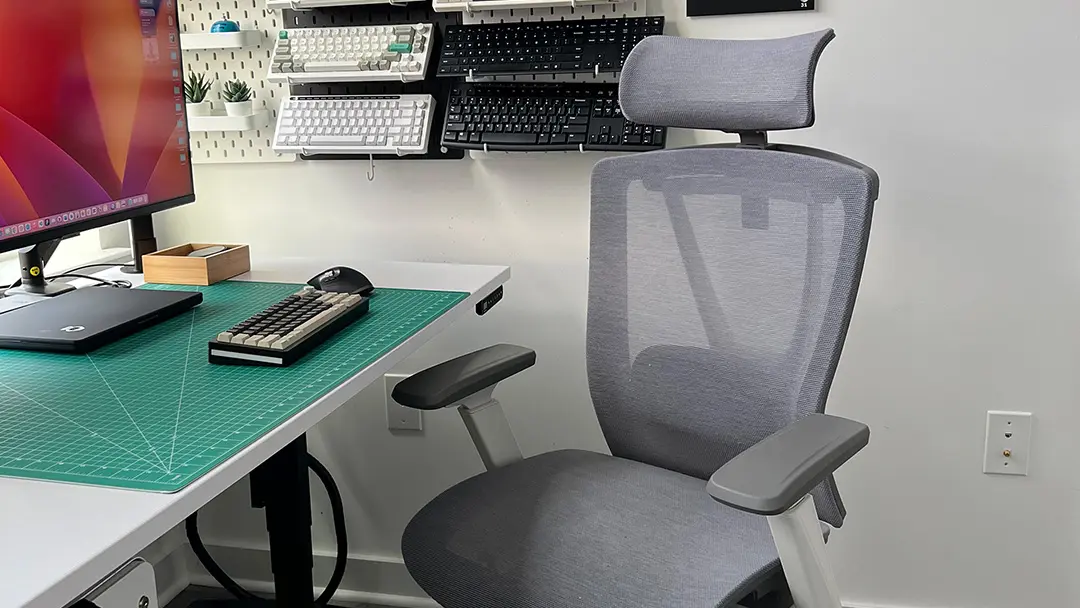
ErgoChair Ultra 2 | Dual-section backrest, 4D armrests, synchronized tilt | Full mesh (seat & back) | Back pain, posture variation |
Haworth Soji | PostureFit Live, suspension mesh, synchronized seat slide | Suspension mesh | Sensitive to lumbar pressure, compact spaces |
HINOMI H2 Pro Premium | Memory foam lumbar, upper back contouring, extended recline (135-140°) | Mesh back, memory foam elements | Neck support, extended recline |
HON Ignition 2.0 | Wide lumbar range (5'2"-6'3"), seat depth adjustment, intuitive controls | Mesh or fabric options | Multi-chair setups, shared workspaces |
X-Chair X2 K-Sport | 3D lumbar (height/depth/firmness), heat & massage, thick padding | Foam padding throughout | Heavy users (220+ lbs), heat/massage features |
Techni Mobili | Flip-up armrests, mesh back | Mesh back, standard foam seat | Budget/temporary, multi-chair purchasing |
Humanscale Diffrient World | Form-sensing mesh, auto recline, friction armrests, no levers | Tri-panel mesh | Minimal adjustment complexity, design-focused |
Ergohuman ME7ERG GEN2 | Independent lumbar controls, retractable leg rest, full mesh | Full mesh (seat & back) | Full-body adjustability, posture variation |
1. Steelcase Series 1
Best for: Remote workers in apartments or compact spaces who need full ergonomic support but find the Aeron's wide base overwhelming in smaller rooms
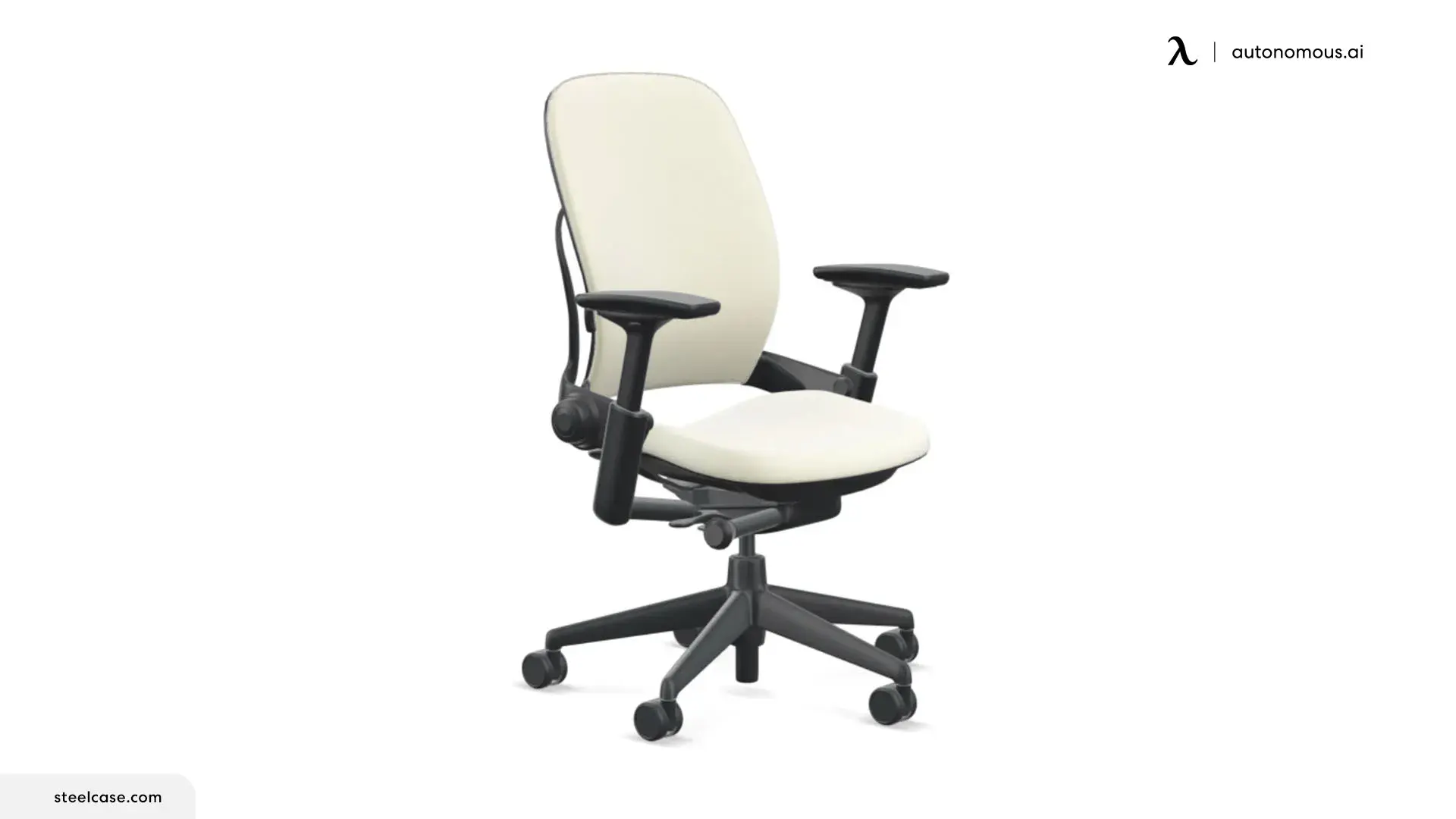
Built by one of Herman Miller's closest competitors, the Series 1 offers dependable ergonomics in a compact form factor. Its LiveBack™ technology mimics spinal movement for continuous support, making it suitable option for those want an office chairs for long hours without the spatial demands of larger alternatives.
What it does well:
- LiveBack™ flexing backrest adapts to posture changes automatically—no manual lumbar adjustments needed
- 4D adjustable armrests (rare at this price point)
- Weight-activated recline eliminates manual tension adjustment guesswork
- Compact footprint fits under smaller desks and in tight spaces
Where it compromises:
- Seat cushion uses standard foam rather than premium density
- No headrest option available
- Smaller proportions less suitable for users over 6'2" or 250+ pounds
Why it’s a strong Herman Miller alternative:
Delivers advanced ergonomic features, responsive back support, comprehensive adjustability, intuitive recline, in a form factor suited for smaller workspaces where the Aeron feels oversized. A smart Herman Miller Aeron alternative for users wanting caliber support with an apartment-friendly footprint and mid-tier pricing.
2. Branch Ergonomic Chair
Best for: Budget-conscious professionals who want clean aesthetics and solid ergonomic fundamentals without excessive adjustments
With a streamlined frame and focused adjustability, this Herman Miller dupe prioritizes essential adjustments while keeping the design uncluttered. Greater adjustability allows the chair to accommodate shorter users more effectively, which is a key consideration when evaluating an office chair for short people.
What it does well:
- Seven-point adjustability covers essentials: seat height/depth, backrest height/recline, recline tension, lumbar depth, armrest height
- Double-woven mesh balances structural support with breathability
- High-density molded foam prevents uneven settling over time
- Polished aluminum base elevates visual presentation beyond typical budget chairs
Where it compromises:
- Armrests adjust only in height (no width, depth, or pivot)
- Moderate recline range—not designed for deep leaning positions
- Mesh engineered for 4-6 year lifespan vs. 10+ years in premium alternatives
Why it's a strong Herman Miller alternative:
This Herman Miller chair dupe works well for upright work styles in visually conscious spaces where the chair needs to look intentional without dominating the room.
3. Autonomous ErgoChair Ultra 2
Best for: Users who shift between focused upright work and active recline, particularly those managing lower back discomfort who benefit from dynamic lumbar support
The Autonomous ErgoChair Ultra 2's dual-section backrest responds independently to upper and lower spine movement, positioning it as a practical ergonomic chair for back pain through dynamic lumbar support that maintains contact across posture changes.
What it does well:
- Dual-section backrest adapts to spinal movement independently—reduces lumbar support gaps when shifting positions
- Weight-responsive recline calibrates automatically to body weight
- 4D armrests provide comprehensive positioning control (height, depth, width, pivot)
- Synchronized recline and seat tilt maintain ergonomic hip angles
- Full mesh construction for maximum breathability
Where it compromises:
- Full-mesh seat may feel less cushioned than foam preferences
- Dual-backrest design adds visual complexity—less minimalist aesthetic
- Auto-adjustment limits manual recline fine-tuning beyond automatic calibration
Why it's a strong Herman Miller alternative:
The dual-backrest system and automatic recline address the same adaptive support philosophy as Herman Miller's higher-end models. A practical Herman Miller Embody alternative for users prioritizing functional ergonomics over visual minimalism.
4. Haworth Soji Office Chair
Best for: Users who prioritize spinal health and natural posture over maximum adjustability, particularly those sensitive to lower back pressure from aggressive lumbar systems.
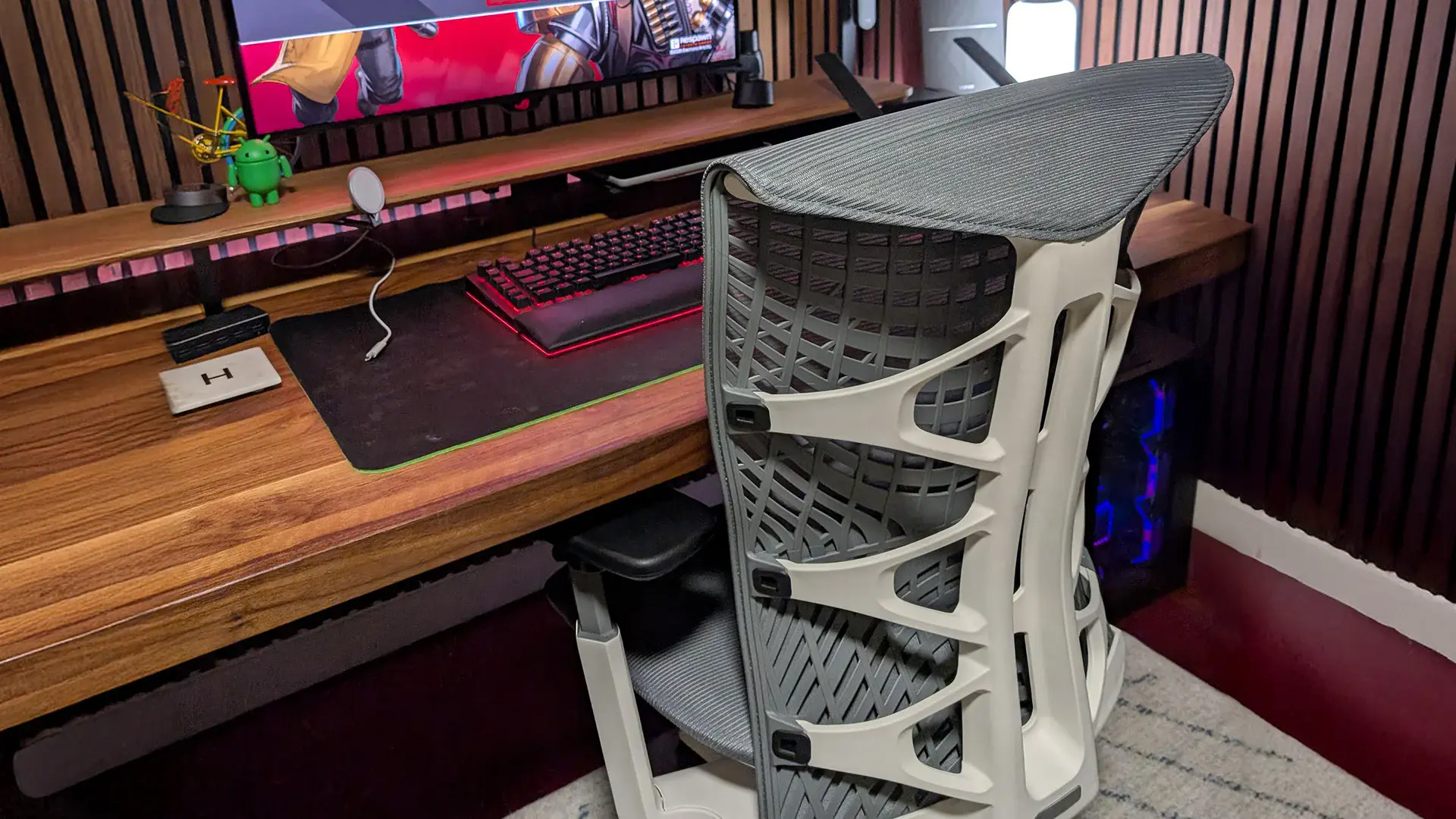
The Soji takes a biomechanical approach to seating, built around the principle that the chair should encourage healthy sitting patterns rather than relying on users to constantly adjust their position.
What it does well:
- PostureFit Live backrest responds to micro-movements — encourages active sitting without effort
- Suspension mesh distributes pressure broadly rather than focal lumbar points
- Synchronized seat slide maintains hip angle during recline automatically
- Compact profile fits tighter workspaces without overwhelming small rooms
Where it compromises:
- Fixed seat depth won't accommodate users under 5'3" or over 6'1"
- Firmer recline requires intentional engagement rather than casual leaning
- Preset mesh tension doesn't adapt to weight extremes (under 130 lbs or over 220 lbs)—for heavier users, heavy-duty office chairs with reinforced construction may be worth considering
Why it's a strong Herman Miller alternative:
Distributed back support and responsive flex suit users who want ergonomic benefits from chair design rather than extensive manual adjustment. Works as a Herman Miller dupe for those particularly sensitive to aggressive lumbar pressure in compact workspaces.
5. HINOMI H2 Pro Premium
Best for: Users needing comprehensive head and neck support, or those whose work involves extended reclined periods during calls
This Herman Miller office chair dupe addresses the full spine from lumbar through cervical regions with an integrated adjustable headrest and upper back contouring. It treats head and neck support as equally important to lower back ergonomics.
What it does well:
- Integrated headrest adjusts independently in height and angle for cervical support
- Upper back contouring supports thoracic spine—prevents rounded-shoulder posture
- Memory foam lumbar conforms to individual spinal curvature over first few uses
- Extended recline range (135-140 degrees) accommodates varied postures throughout workday
Where it compromises:
- Memory foam lumbar may feel soft for users preferring firm, defined pressure
- Headrest adds vertical height—may not fit under desks with lower clearances
Why it's a strong Herman Miller alternative:
Comprehensive cervical-through-lumbar support with integrated headrest and upper back contouring that Herman Miller's mid-tier models lack. A suitable Herman Miller Aeron chair dupe for users managing neck and upper back tension or whose work involves extended reclined periods.
6. HON Ignition 2.0
Best for: Multi-chair setups or shared workspaces where straightforward functionality and proven reliability matter more than design refinement
It is engineered for commercial environments where chairs accommodate rotating users with varying body types. Component selection prioritizes consistent performance and durability over premium materials or aesthetic refinement.
What it does well:
- Wide lumbar height adjustment accommodates torso heights from 5'2" to 6'3"
- Seat depth adjustment prevents fit issues across different leg lengths
- Intuitive adjustment controls require no learning curve—clearly labeled levers
- Multiple upholstery options (mesh, fabric, combinations) match specific contexts
Where it compromises:
- Height-only armrest adjustment (no width, depth, or pivot control)
- Utilitarian design clearly signals institutional equipment rather than refined furniture
- Standard mesh won't maintain tautness beyond 3-4 years of daily use
- Recline mechanism functions reliably but without refined smoothness
Why it's a strong Herman Miller alternative:
Designed with durability and essential ergonomics in mind, this model performs well in environments where reliability is prioritized over extensive customization. It’s a practical option among the best Herman Miller alternatives for corporate environments, shared workspaces, or users prioritizing proven longevity and straightforward functionality.
7. X-Chair X2 K-Sport Management Chair
Best for: Users over 220 pounds or those who've experienced structural issues with standard-capacity chairs
The X2 is built around higher weight capacity and reinforced construction. The frame, gas cylinder, and base are rated for heavier loads than standard ergonomic chairs, addressing durability concerns for larger builds. For users needing office chairs for 300 lbs, this reinforced construction addresses specific durability requirements that standard ergonomic chairs don't accommodate.
What it does well:
- Reinforced frame rated to 350 pounds vs. standard 250-275 pound limits
- Dynamic variable lumbar adjusts independently in height, depth, and firmness
- Heat and massage functions address muscle tension during long sessions
- Thick cushioning provides substantial padding for users preferring enveloping feel
Where it compromises:
- Substantial build makes chair heavier and harder to move between rooms
- Powered features (heat/massage) introduce potential electrical failure points over time
- Bold styling borrowed from gaming chairs conflicts with minimalist environments
- Price reflects specialized features rather than premium base material quality
Why it's a strong Herman Miller alternative:
Higher weight capacity and reinforced construction address needs that standard ergonomic chairs don't accommodate. Best for users over 220 pounds who've experienced durability issues with standard-capacity chairs, or those who value active comfort features like heat and massage.
8. Techni Mobili Executive Mesh Chair
Best for: Budget-limited setups needing basic ergonomic function, or temporary workspaces not requiring long-term durability
The Techni Mobili delivers fundamental ergonomic features at entry-level pricing—mesh back for breathability, adjustable height, tilt function—without premium materials or extensive adjustability.
What it does well:
- Mesh back provides breathability at budget price point
- Padded seat cushion offers immediate soft comfort
- Flip-up armrests create clearance to slide completely under desks
- Low price enables multi-chair purchasing for small businesses or households
Where it compromises:
- Foam compresses and develops unevenness within 12-18 months of daily use
- Minimal ergonomic adjustability—only seat height and tilt
- Build quality reflects budget constraints—increased play in joints, louder operation
- Budget mesh stretches and loses support faster than premium alternatives
Why it's a strong Herman Miller alternative:
Best for budget-limited situations requiring basic function, temporary workspaces, or scenarios where low cost enables multi-chair purchasing. Works adequately for 1-2 years of moderate use.
9. Humanscale Diffrient World Chair
Best for: Users who want automatic ergonomic support without manual adjustment complexity, or those frustrated by chairs with numerous controls requiring constant fine-tuning
This chair eliminates traditional adjustment levers in favor of automatic, weight-responsive mechanisms. The chair adapts to your body and movements without requiring you to locate, understand, and operate multiple controls. For users seeking a reclining office chair experience with minimal setup, the automatic systems handle ergonomic configuration passively.
What it does well:
- Form-sensing mesh back auto-adjusts to spinal contours without manual positioning
- Weight-activated recline calibrates passively—no tension knobs or levers
- Armrests pivot and adjust through friction-based positioning (no visible controls)
- Minimal visual profile with hidden mechanisms suits design-focused environments
Where it compromises:
- Automatic systems limit personal preference tuning beyond default calibration
- Mesh firmness may feel taut initially—less immediately comfortable than softer alternatives
- Price delivers automatic function rather than exotic materials or maximum durability
- Fixed seat depth creates fit issues for users under 5'4" or over 6'0"
Why it's a strong Herman Miller alternative:
One of the best Herman Miller alternatives for users frustrated by chairs with numerous controls requiring constant tuning, or those who want ergonomics that work invisibly rather than through active management.
10. Ergohuman Eurotech ME7ERG GEN2
Best for: Users who need full-body adjustability including head and neck support, particularly those alternating between intense focus sessions and relaxed review work
The ME7ERG GEN2 delivers comprehensive ergonomic coverage from headrest through seat with independently adjustable components. It's designed around the premise that different work tasks require different postures, providing the control to dial in support for each.
What it does well:
- Adjustable headrest provides cervical support during varied tasks—accommodates heights 5'6" to 6'2"
- Full mesh construction throughout seat and back for complete breathability
- Independent lumbar depth and height control for precise positioning
- Retractable leg rest extends for alternative sitting positions during reading or breaks
Where it compromises:
- Assembly requires 30-45 minutes with multiple bolt types and careful alignment
- Visible mechanisms and leg rest create busy, equipment-forward appearance
- Full mesh seat lacks immediate cushioned comfort of foam alternatives
- Leg rest mechanism limits how far chair slides under desks with lower clearance
Why it's a strong Herman Miller alternative:
Works well as a chair similar to Herman Miller option for users who regularly shift between different work postures and want the ability to optimize support for each position rather than accepting a single compromise configuration.

FAQs
Are Herman Miller alternatives worth buying?
Yes, Herman Miller alternatives can be worth buying if they meet your ergonomic needs and budget. Many options offer strong adjustability, durable construction, and all-day comfort, even though they operate at different price and design tiers than Herman Miller.
What makes the best Herman Miller alternatives different from cheaper office chairs?
The best Herman Miller alternatives focus on ergonomic fundamentals such as adjustable lumbar support, seat depth, and stable recline mechanisms. Cheaper office chairs often lack these features or lose support over time, especially during long workdays.
What’s the closest match to the Herman Miller Aeron?
Chairs often compared as Herman Miller Aeron alternatives typically share breathable mesh construction, flexible back support, and posture-responsive recline. The key similarity is airflow and adaptive support rather than identical design or materials.
How long do Herman Miller alternatives typically last?
The lifespan of Herman Miller alternatives depends on build quality and daily use. Well-constructed mid-range models often last 3–5 years with consistent use, especially those with reinforced frames and durable upholstery or mesh.
Are chairs similar to Herman Miller good for long hours of work?
Yes, many chairs similar to Herman Miller are designed for extended sitting when they provide consistent support and allow subtle movement. Chairs that distribute pressure evenly and maintain airflow tend to perform better during 8-hour or longer work sessions.
Do Herman Miller alternatives work well for back pain?
Herman Miller alternatives can help with back pain if they offer proper lumbar alignment and adjustable support. The most effective models maintain spinal support across different sitting positions rather than relying on soft cushioning alone.
How do I choose the right Herman Miller alternative for my needs?
Choosing the right Herman Miller alternative depends on how long you sit, your posture habits, and your workspace setup. Focus on ergonomic fit and daily comfort first, then consider design, materials, and budget as secondary factors.

Conclusion
Choosing among the best Herman Miller alternatives comes down to understanding what you value most in an office chair. Herman Miller chairs set a well-known benchmark for ergonomics, durability, and long-term comfort, but they are not the only options capable of supporting focused, all-day work.
Across different price tiers and design approaches, many chairs deliver strong ergonomic fundamentals—such as adjustable support, breathable materials, and stable construction—while prioritizing different trade-offs. Some emphasize flexibility and movement, others are built for durability in shared or demanding environments, similar to what you’d expect from heavy-duty office chairs designed to handle higher daily loads.
Rather than looking for a direct substitute, it’s more useful to evaluate how each chair aligns with your body type, sitting habits, and workspace needs. Factors such as fit, posture support, and proportional adjustability—often found ino ffice chairs with adjustable seat depth—can have a greater impact on long-term comfort than brand comparisons alone.
With a clear understanding of ergonomic priorities and realistic expectations around use and longevity, it’s entirely possible to find a chair that fits your workday just as effectively—while staying within a budget and style that make sense for your setup.
Spread the word