The Best Office Chairs for Guitar Players
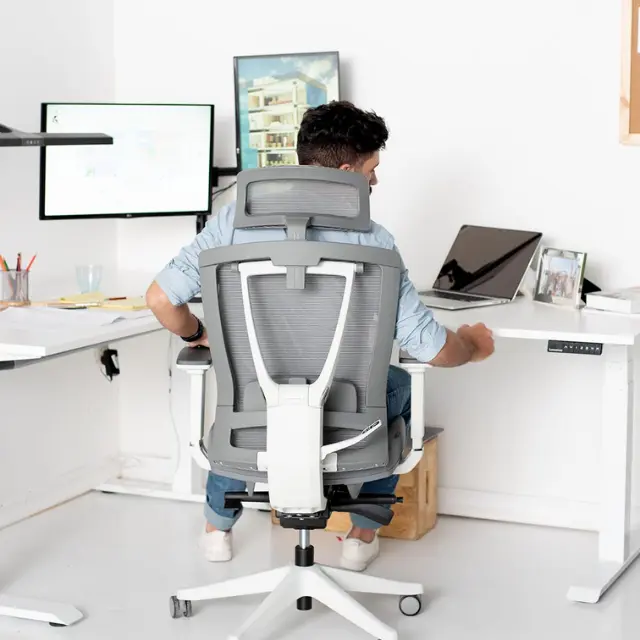
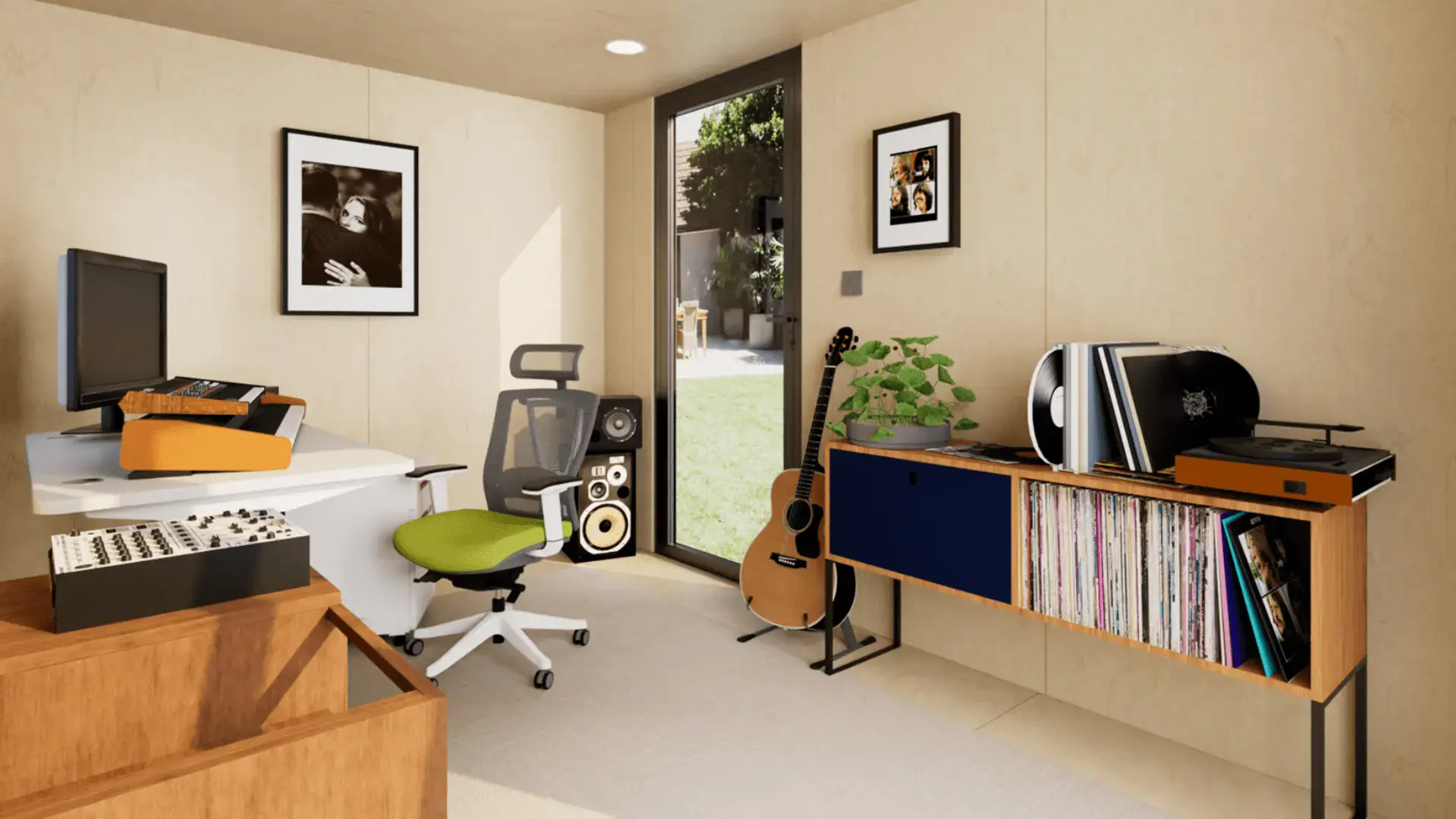
Playing guitar in an office chair sounds simple until you try it for an hour.
The armrests bump into the guitar body. Your shoulders start compensating. Your wrist angle changes. Eventually, you're thinking more about getting comfortable than actually playing.
That's why many guitarists end up searching for the best office chair for guitar players. The challenge isn't finding a comfortable office chair. It's finding one that supports your posture without interfering with the instrument itself.
For musicians who split time between desk work, recording, practice sessions, and production, the ideal setup needs to balance two things: ergonomic support and playing freedom. A chair that excels at computer work can still be frustrating for guitar practice if its armrests, seat shape, or backrest restrict movement.
This guide explains what actually matters when choosing an office chair for guitar playing, why some ergonomic chairs work better than others, and which features deserve the most attention before you compare specific models.
Can You Play Guitar Comfortably in an Office Chair?
Yes, you can play guitar comfortably in an office chair if the chair allows natural arm movement and supports a neutral sitting posture.
Many professional musicians, home producers, and hobbyists spend hours moving between a computer workstation and a guitar. The problem is that most office chairs are designed around keyboard and mouse use rather than instrument handling.
According to the CDC's National Institute for Occupational Safety and Health (NIOSH), ergonomics aims to reduce discomfort and musculoskeletal strain by adapting equipment to the user rather than forcing the user to adapt to the equipment. Poor seated positioning can contribute to discomfort in the back, shoulders, neck, and upper limbs.
For guitar players, this becomes more complicated because the instrument changes how the body sits. One arm moves repeatedly during strumming or picking, while the guitar itself occupies space where many chair armrests are positioned.
A chair may be excellent for office work but still create problems for guitar practice if it restricts movement around the instrument.
Common complaints from guitarists include:
- Armrests colliding with the guitar body
- Seat edges pressing into the leg supporting the guitar
- Limited elbow movement while strumming
- Forward hunching during longer sessions
- Lower-back fatigue during recording or practice
The goal isn't simply comfort. The goal is maintaining a posture that supports both playing technique and long-term physical health.
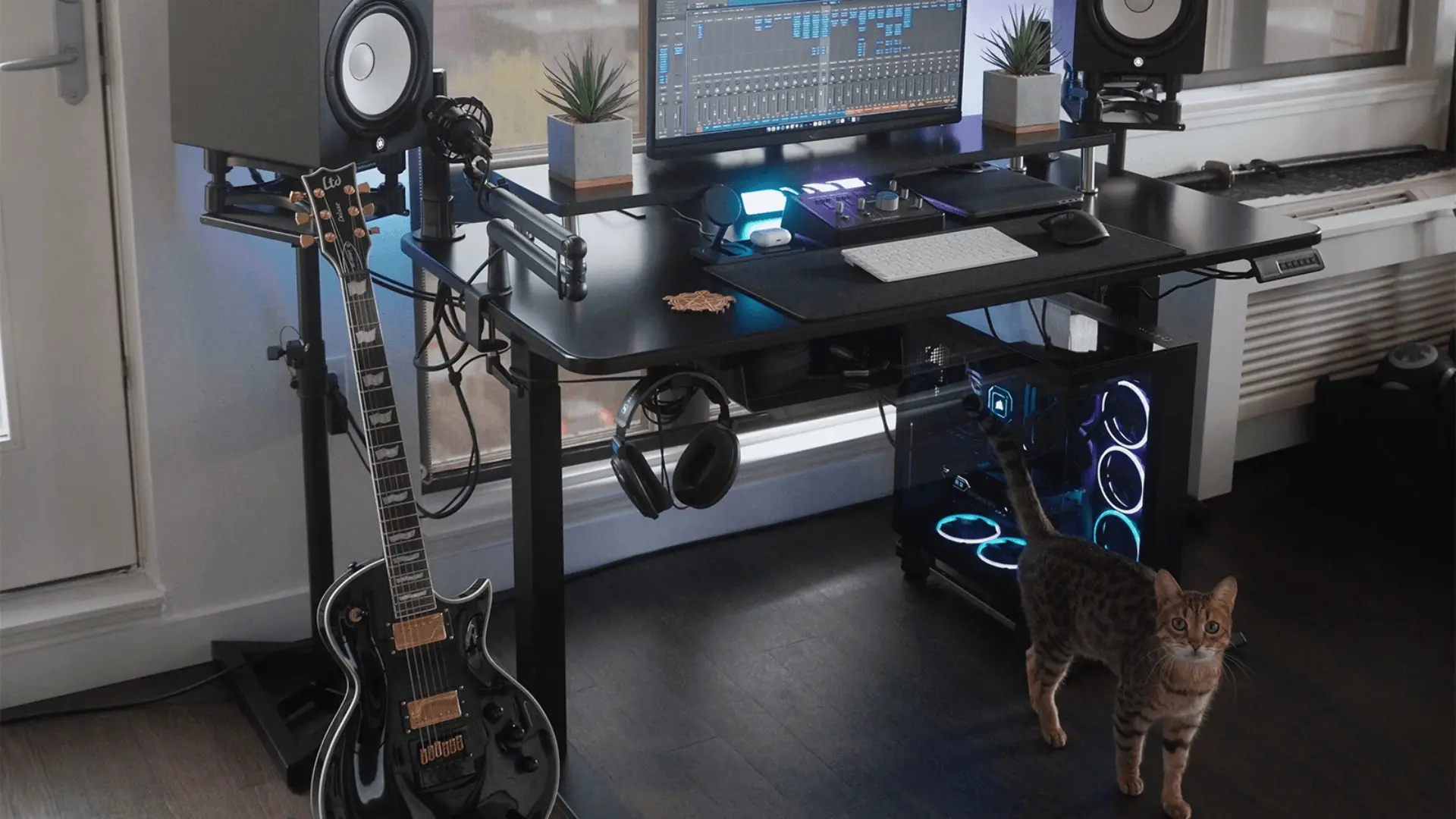
The Biggest Problem: Armrest Interference
For most guitarists, armrest interference is the first problem that appears and the hardest one to ignore.
Whether you're holding an acoustic guitar, a Stratocaster-style electric, or a larger semi-hollow body, the instrument occupies space between your torso and elbows. Fixed armrests often sit directly in that movement path.
As a result, players may:
- Raise their shoulders unnaturally
- Rotate their torso
- Shift the guitar position
- Compensate with wrist angles
None of these adjustments improve technique.
Office ergonomics research from UCLA notes that armrests are most useful when their height, width, and position can be adjusted to match the task being performed. Adjustable width and pivot functions are especially valuable because they allow users to create clearance when needed.
This aligns closely with what many guitarists report in real-world use. Discussions among players frequently mention removable, flip-up, or highly adjustable armrests as one of the most important chair features for combining office work with guitar practice.
If a chair forces you to change your playing posture to avoid hitting the armrests, the chair is working against the instrument rather than supporting it.
Armless vs Adjustable Armrest Chairs
Armless chairs provide maximum guitar clearance, while adjustable armrest chairs offer greater versatility for mixed work and playing environments.
The right choice depends on how you use the chair throughout the day.
Armless office chairs remove the most common source of interference entirely.
Advantages include:
- Unlimited guitar-body clearance
- Easier movement while strumming
- Works well for acoustic and classical guitars
- No armrest collisions
However, armless chairs also remove a useful ergonomic feature during non-playing activities.
When typing, reading, or working at a desk, armrests can help support the upper body and reduce fatigue when properly adjusted.
For people who spend eight hours working and one hour practicing guitar, removing armrests entirely may not be the ideal compromise.
For hybrid work-and-music setups, adjustable armrests often provide the best balance.
Look for armrests that allow:
- Height adjustment
- Width adjustment
- Pivot adjustment
- Depth adjustment
These features make it possible to move the armrests out of the guitar's path during practice and return them to a supportive position during desk work.
Many guitarists ultimately prefer adjustable armrests because they preserve ergonomic support without permanently sacrificing instrument clearance.
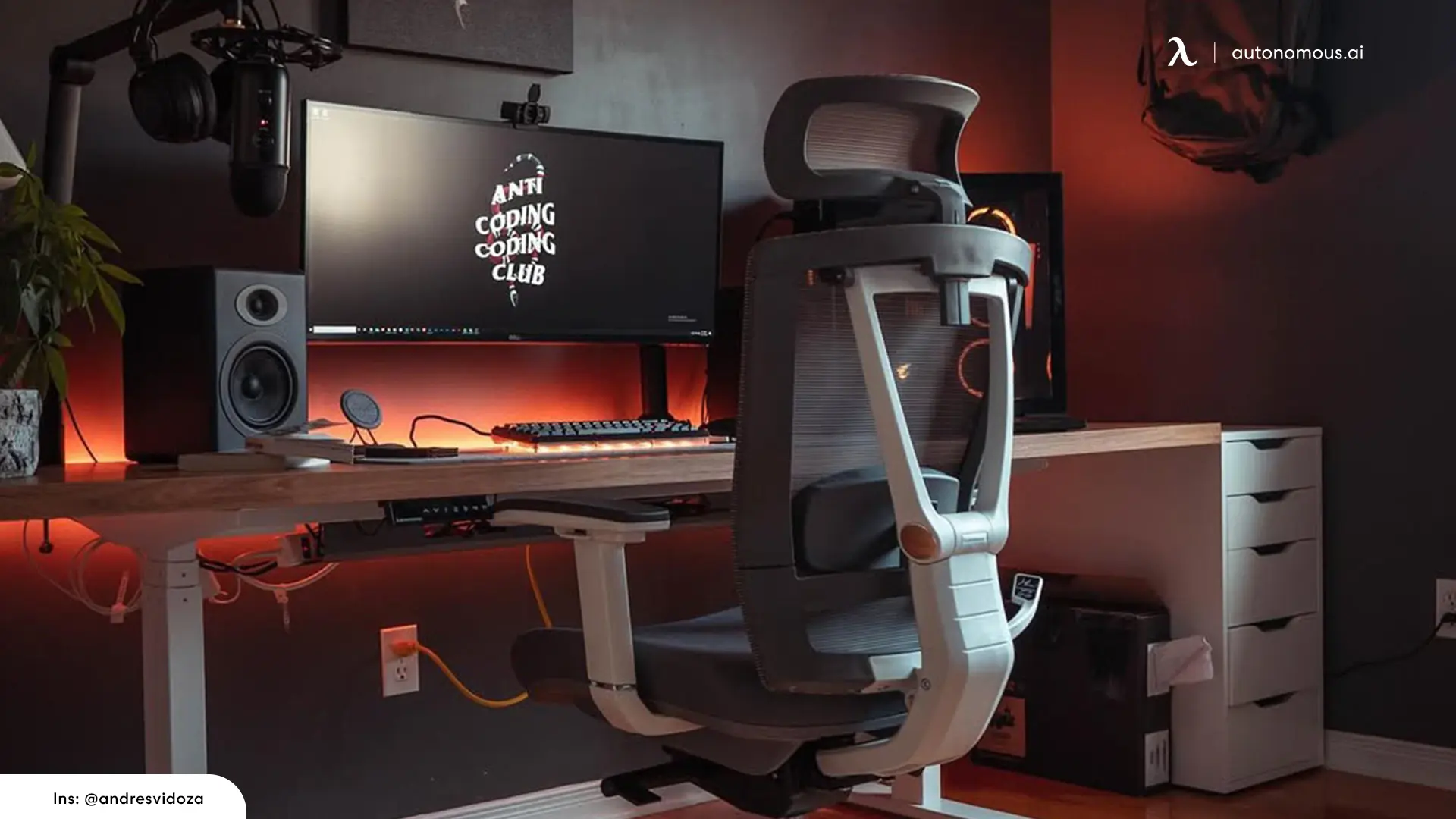
Does Guitar Type Change What Chair You Need?
Yes. Different guitar styles create different clearance and posture requirements.
Acoustic guitars often have larger bodies than solid-body electric guitars. This increases the likelihood of armrest interference and makes clearance more important.
Many electric guitars fit more easily within an office-chair setup. However, players who spend time switching between guitars may still benefit from highly adjustable armrests.
Classical guitar posture is different from standard casual sitting posture. Traditional classical technique places the guitar on the left leg (for right-handed players), with the neck angled upward and the player positioned near the front edge of the seat. Classical instructors generally recommend a firm chair without restrictive armrests.
Because of this, classical players often prioritize unobstructed movement over heavily structured seating systems.
How We Evaluated Chairs for Guitar Players
Before recommending any chair for guitar use, we focus on factors directly related to playing comfort rather than traditional office-chair marketing claims.
Our evaluation framework prioritizes:
Criteria | Why It Matters |
Armrest adjustability | Prevents guitar-body interference |
Playing clearance | Allows natural elbow movement |
Seat-edge comfort | Supports leg positioning |
Postural support | Reduces fatigue during longer sessions |
Breathability | Improves comfort during extended use |
Stability | Helps maintain consistent playing position |
This approach reflects the reality that guitarists are not simply office workers sitting in a chair. They are interacting with an instrument that changes how the body moves, sits, and reaches.
In the next section, we'll evaluate specific office chairs using these criteria and identify which models are best suited for different types of guitar players.
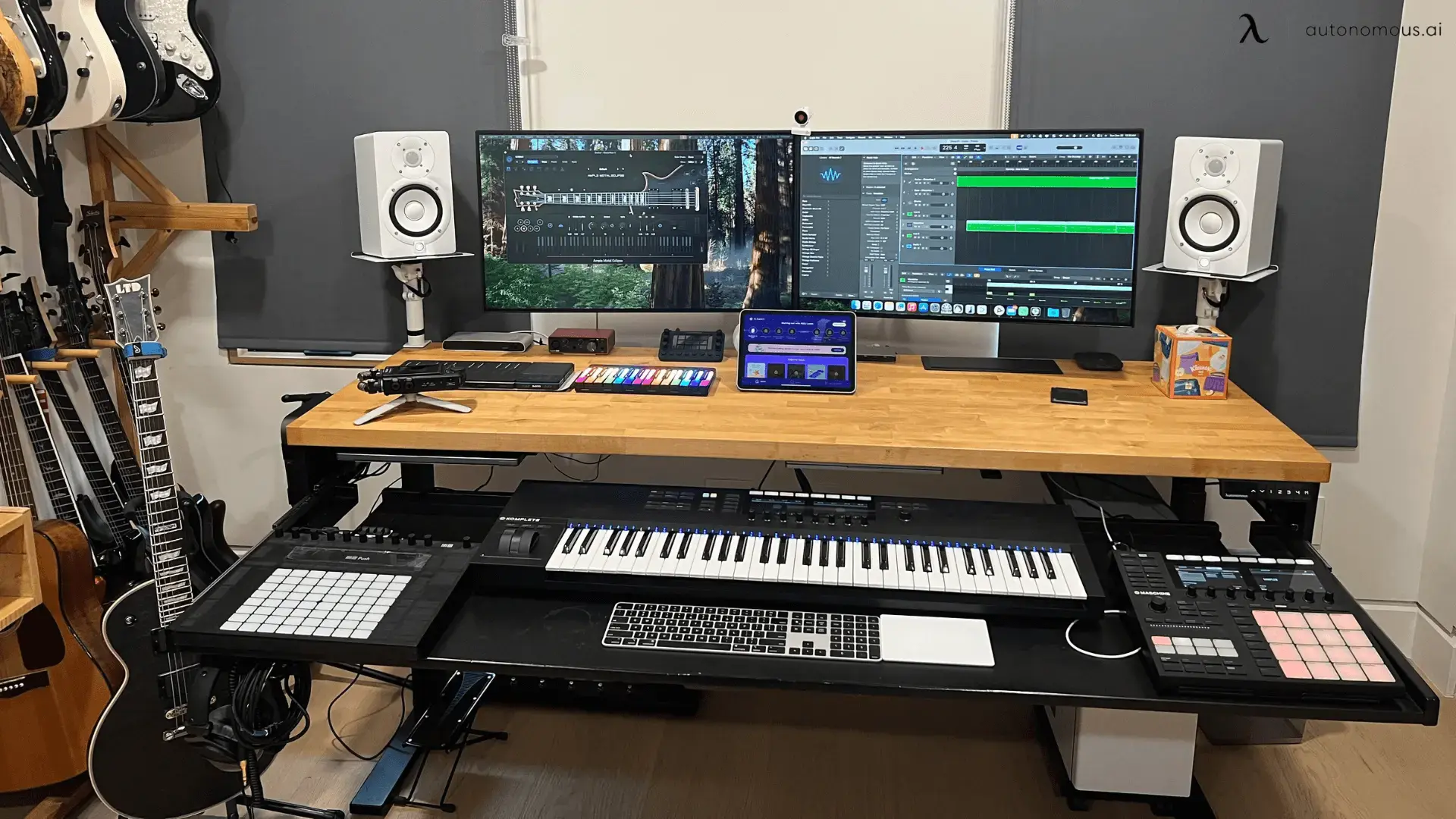
Best Office Chairs for Guitar Players
Model | Armrest Flexibility | Clearance Strategy | Primary Benefit |
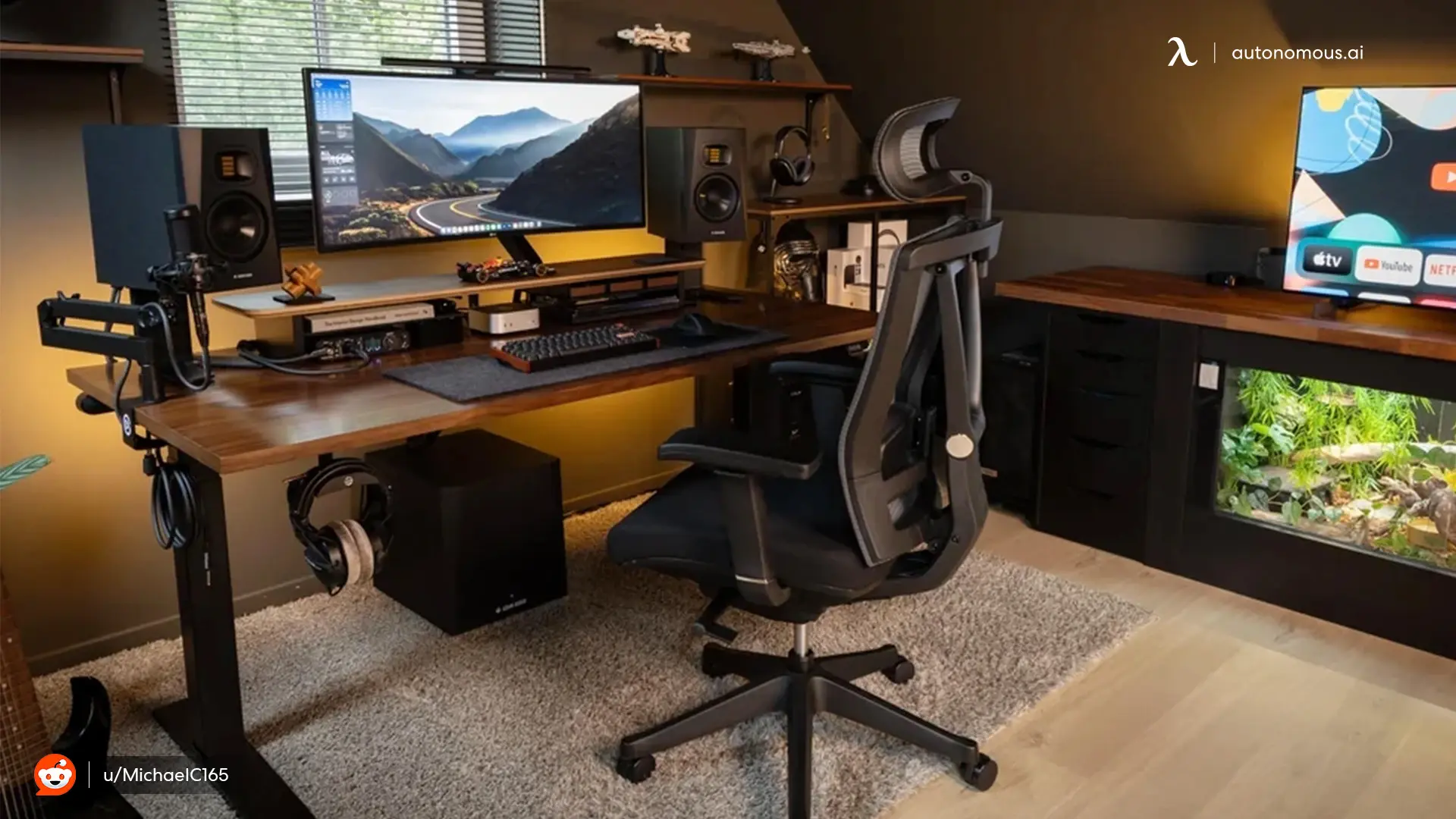
ErgoChair Mesh | High (4-way) | Height, Width, Depth, Pivot | Maximum versatility for all guitar sizes |
ErgoChair Pro | High (4D) | Height, Width, Depth, Pivot | Professional-grade lateral clearance |
ErgoChair Ultra 2 | Moderate | Sliding Width, Height | Superior pressure relief for long sessions |
ErgoChair Core | Moderate | Height, Depth, Rotation | Slim "X" backrest for unobstructed movement |
1. ErgoChair Mesh: Maximum Flexibility
“Nothing is in my way, but I notice the chair less (in a good way)”
.jpg)
This is the one that disappears the most when I’m playing.
The 4-way arms matter more than the spec sheet suggests-because guitar posture isn’t static. When I shift from fingerpicking to strumming, my elbows drift outward, then in again. This chair actually lets me chase my playing position instead of locking me into one.
What I like as a player:
- Armrests can fully clear a Les Paul body without me twisting my shoulder
- Mesh back means I don’t overheat during long takes (huge for recording sessions)
- Tilt stability actually helps keep my left leg consistent when I’m in classical position
What I don’t love:
- It feels “too open” sometimes-like I rely more on my own posture discipline
- Not much physical anchoring, so sloppy posture shows up fast
Verdict: best for long studio sessions where I’m constantly switching between instruments or positions.

2. ErgoChair Pro: Precision Adjustment
“Studio chair that respects precision, but can feel a bit rigid for playing”
.webp)
This one feels like it was designed for someone tracking takes, not necessarily flowing through them.
The 4D armrests are genuinely useful-but more in a set-and-forget engineering way than a “move with your playing” way.
What stands out as a guitarist:
- Once I dial armrest width correctly, it’s very repeatable for recording setups
- Good for consistent mic positioning + seated posture across takes
- Back support keeps me from collapsing forward during complex passages
But:
- Slightly more “locked geometry” than I want when I’m improvising
- Wide guitar bodies (ES-335 style) can still bump armrests unless tuned carefully
Verdict: best for studio musicians doing repeatable takes, not loose jam-style playing.
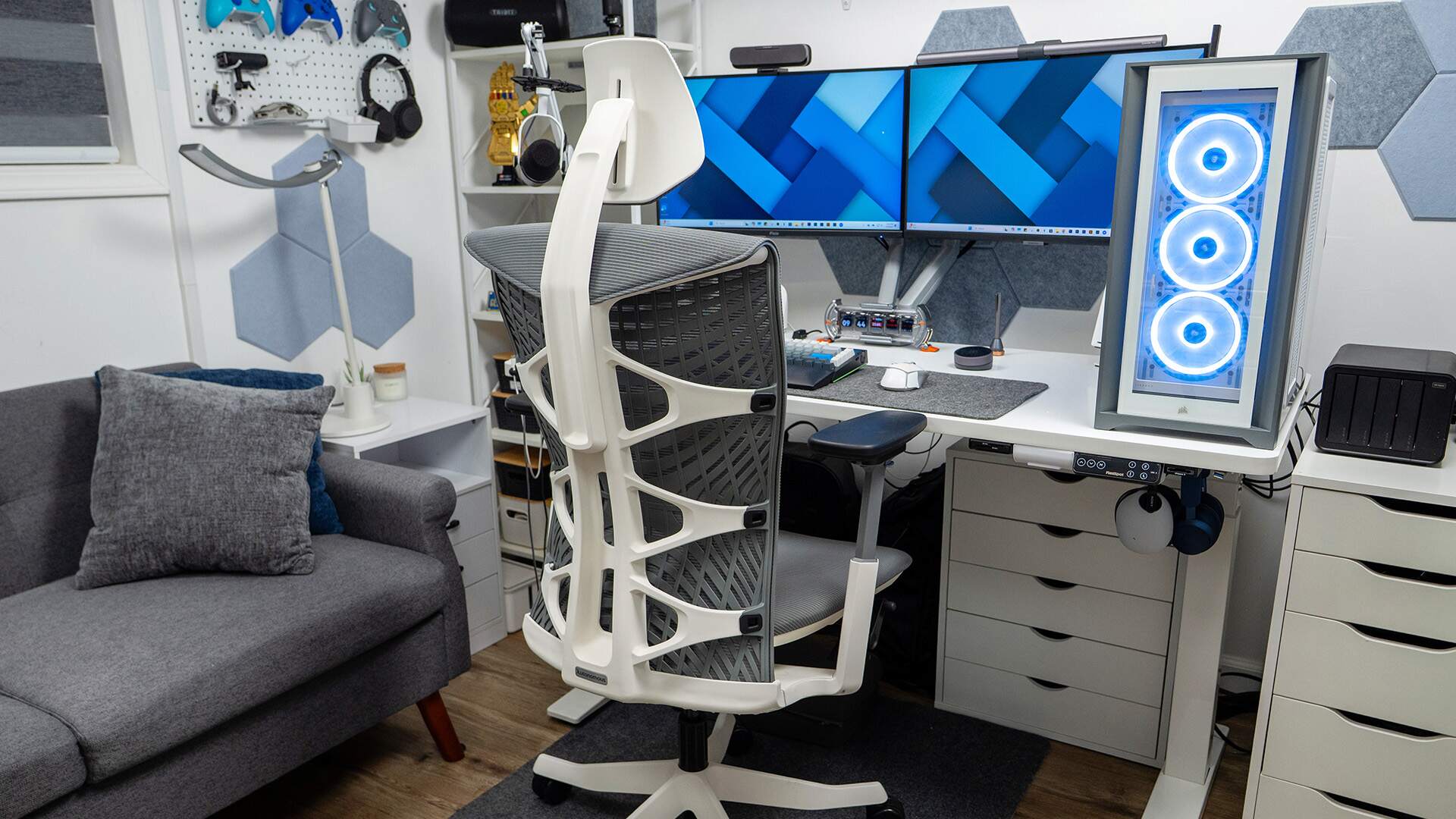
3. ErgoChair Ultra 2: Stability and Endurance
“Endurance chair for marathon sessions, not expressive movement”
.webp)
This is the chair I’d pick if I knew I was about to lose 6 hours straight to production, comping, or arranging.
The sliding width + recline tension combo creates a “held” feeling. That matters when fatigue sets in.
From a guitarist’s perspective:
- Excellent when I’m mostly listening + adjusting + minimal playing
- High back support reduces neck fatigue when I’m staring at DAW timelines
- Recline lock lets me lean back slightly while still holding instrument stability
Trade-off:
- Not as fluid for active playing (fast strumming or posture shifts feel constrained)
- Armrest freedom is “enough,” not expressive
Verdict: best for long production days where guitar is part of the workflow, not the whole activity.
4. ErgoChair Core: Minimalist Setup
“Minimalist, surprisingly good for pure playing flow”
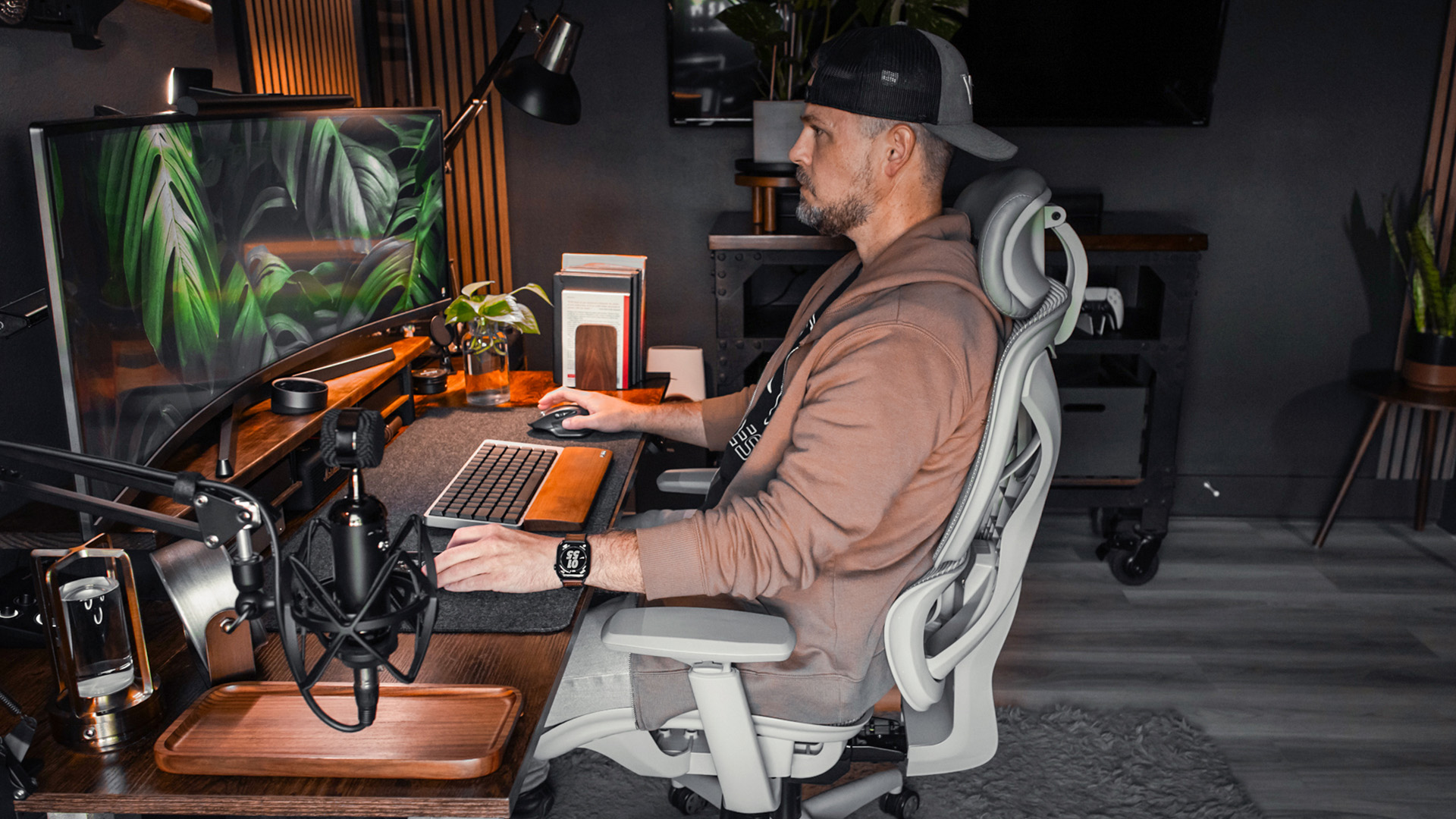
This is the sleeper pick for guitarists.
That X-back design actually matters more than expected: it removes that annoying upper-back obstruction when your shoulders rotate during strumming or hybrid picking.
What feels right:
- Clean back clearance when I lean forward into the guitar
- Less “chair awareness” overall
- Easy to swing arms without bumping structure
What limits it:
- Armrest flexibility is the weakest of the four
- Less ideal for large-body guitars unless I adjust posture more actively
- Not great for long upright recording posture consistency
Verdict: best “pure playing” chair-especially for home practice or songwriter sessions where I just want to stay in flow.
FAQs
What is the best office chair for guitar players?
The best office chair for guitar players provides enough arm clearance to avoid interfering with the instrument while maintaining comfortable posture during long sessions.
Are armrests bad for playing guitar?
Armrests are not inherently bad for guitar playing. Problems usually occur when armrests are fixed or cannot be adjusted to accommodate the guitar body.
Is an armless office chair better for guitar practice?
An armless office chair provides maximum freedom of movement, which many guitarists appreciate. However, adjustable armrest chairs can offer a better balance between work and practice.
Can ergonomic chairs improve guitar posture?
Yes, ergonomic chairs can improve guitar posture by supporting a more neutral spine position and reducing fatigue during long sessions.
Are mesh office chairs good for musicians?
Mesh office chairs are popular among musicians because they promote airflow and remain comfortable during extended practice or recording sessions.
Can you record guitar comfortably in a desk chair?
Yes, many home studio musicians record guitar while seated in desk chairs. The most important factor is ensuring the chair does not interfere with instrument positioning or arm movement.
Conclusion
Selecting the right office chair is a foundational step in building a professional home studio or a sustainable practice space. For guitarists, success lies in the balance between ergonomic spinal support and the ability to eliminate mechanical obstruction. By prioritizing chairs that offer high-level armrest clearance-such as the 4-way adjustability of the ErgoChair Mesh or the precision 4D system of the ErgoChair Pro-musicians can effectively eliminate the physical barriers that often force poor posture or compromised technique.
Ultimately, the choice depends on your specific studio needs: the ErgoChair Mesh and Pro offer the greatest range of motion for diverse setups, the ErgoChair Ultra 2 provides robust stability for prolonged production sessions, and the ErgoChair Core offers a streamlined, non-intrusive footprint for minimalist environments. By choosing a chair engineered for adjustability rather than static comfort, you ensure that your workspace supports your creative output, allowing you to focus on your performance rather than your equipment.
References
- National Institute for Occupational Safety and Health (NIOSH). (2007). Ergonomic Guidelines for Manual Material Handling (DHHS NIOSH Publication No. 2007-131). Centers for Disease Control and Prevention.
- UCLA Ergonomics. (n.b.). Selecting a Chair: Workstation Assessment and Postural Guidelines. University of California, Los Angeles.