8 Best Office Chair Under $400 for Long Workdays

Table of Contents
Cheap chairs fall apart. Overpriced ones don't always justify the markup. Somewhere in between, there's a point where build quality, adjustability, and comfort actually align with what you're paying.
Finding the right office chair under $400 comes down to knowing what separates a solid investment from a dressed-up disappointment. This guide breaks down the top ergonomic chairs — what they get right, where they fall short, and who they're actually built for. Here’s what held up.
Non-Negotiable Features In An Office Chair Under $400
Most ergonomic chair marketing blurs together — breathable mesh, adjustable everything, all-day comfort. But the details that determine whether a chair holds up after a year of daily use are more specific than that. When narrowing down the best office chair under $400, these are the features that tend to separate lasting quality from early regret.
- Lumbar support that adjusts in two directions — height and depth:
Height-only adjustment is common, but it's half the equation. Depth control lets you dial in how much the lumbar presses into your lower back, which varies depending on posture, task, and time of day. This is where proper lumbar support for an office chair becomes more than a comfort feature and starts to determine whether spinal alignment holds throughout a full workday. Chairs with fixed lumbar or single-axis adjustment force you to adapt to them. That's backwards.
- Synchro-tilt mechanism, not just recline
Basic tilt mechanism locks the seat and back at a fixed angle. Synchro-tilt moves them in a coordinated ratio — typically 2:1 — so your feet stay grounded while your back reclines. It's a small mechanical difference that changes how natural the chair feels during movement, and one of the hidden factors that often drives the office chairs cost more than surface materials or branding. At this price, it should be standard.
- Seat foam density above 50 kg/m³:
This rarely appears in spec sheets, but it determines whether the cushion flattens after six months. Low-density foam compresses permanently under regular use. High-density foam maintains shape and support longer. If the listing doesn't mention foam density, check user reviews around the 6-12 month mark — that's when cheap foam shows itself.
- A Class 4 gas cylinder
Class 3 is the baseline for most affordable office chairs. Class 4 handles more weight, cycles more reliably, and typically lasts longer before the slow sink starts. It's one of the clearest indicators of whether the affordable office chair was built to a price or built to last.
- Armrests with at least three axes of adjustment:
Height is standard. Width and depth adjustment — sometimes called 3D arms — let you position the armrests where your elbows naturally fall, not where the manufacturer guessed they would. This reduces shoulder tension during typing and mouse work. 4D adds pivot, which helps if you switch tasks frequently.
For anyone comparing the best ergonomic chair under 400 dollars against cheaper alternatives, these five details tend to explain the price difference, and whether it's justified.
8 Best Ergonomic Office Chairs Under $400
Each chair here was selected based on how well it delivers on the fundamentals — lumbar adjustability, build quality, seat materials, and long-term durability. Some prioritize recline and flexibility. Others focus on posture correction or accommodating larger frames.
The right one depends on how you work, how long you sit, and what your body actually needs from a chair.
- A Quick Glance:
Chair | Price | Weight Capacity | Best For |
Autonomous ErgoChair Core | $349 | 242.5 lbs | Simple setup, lighter users |
Branch Ergonomic | $399 | 275 lbs | Build quality, upright posture |
PatioMage | $399.99 | 440 lbs | Larger frames |
ELABEST X100 | $349.99 | 300 lbs | Max adjustability, footrest |
Sihoo M57 | $319.99 | 330 lbs | Full mesh, cooling |
Logicfox Pro | $343 | 330 lbs | Saddle seat, thigh comfort |
Vert | $399 | 250 lbs | Movement, long-term use |
Staples Dexley | $319.99 | 275 lbs | Budget, in-store testing |
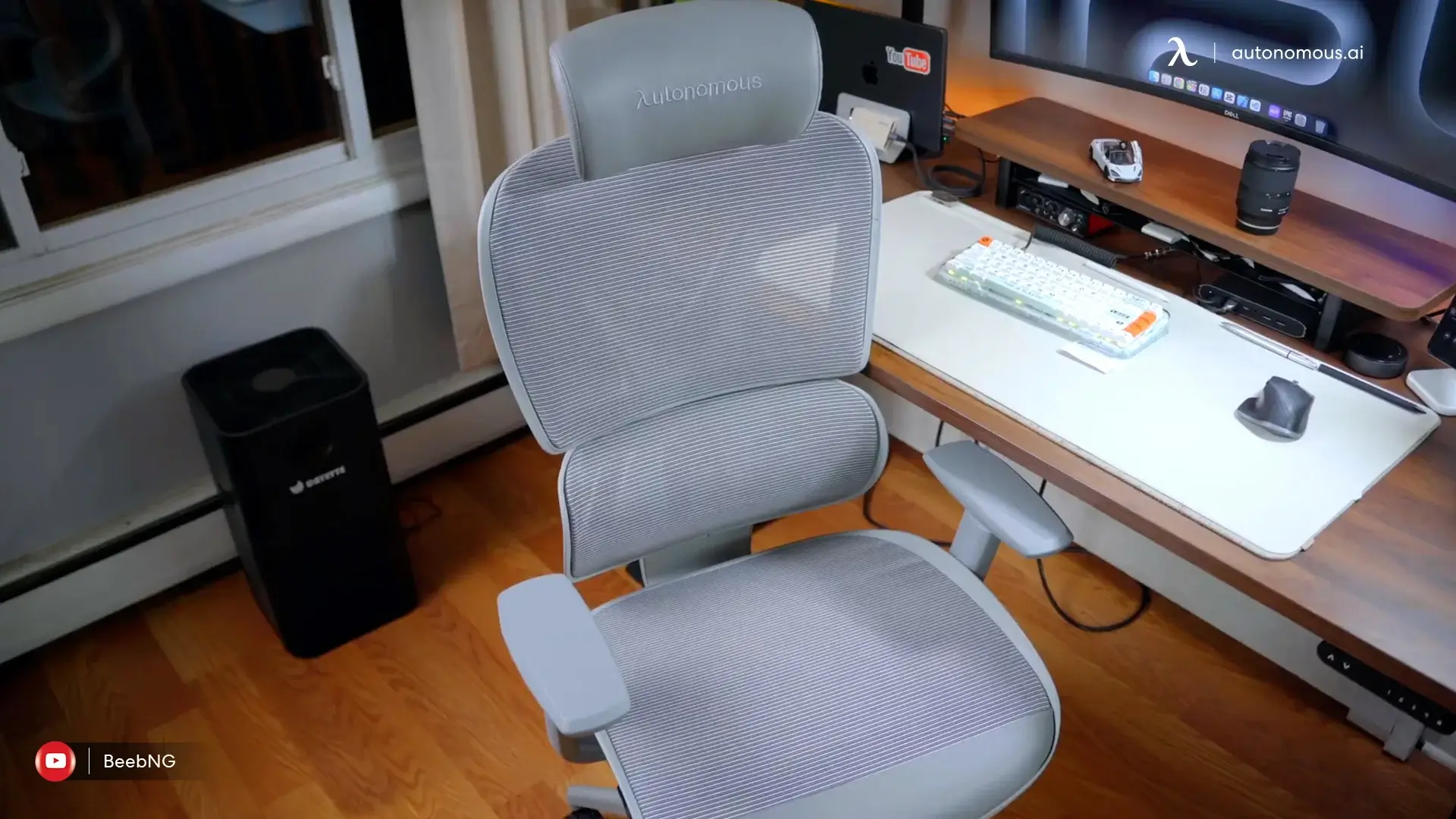
1. Autonomous ErgoChair Core
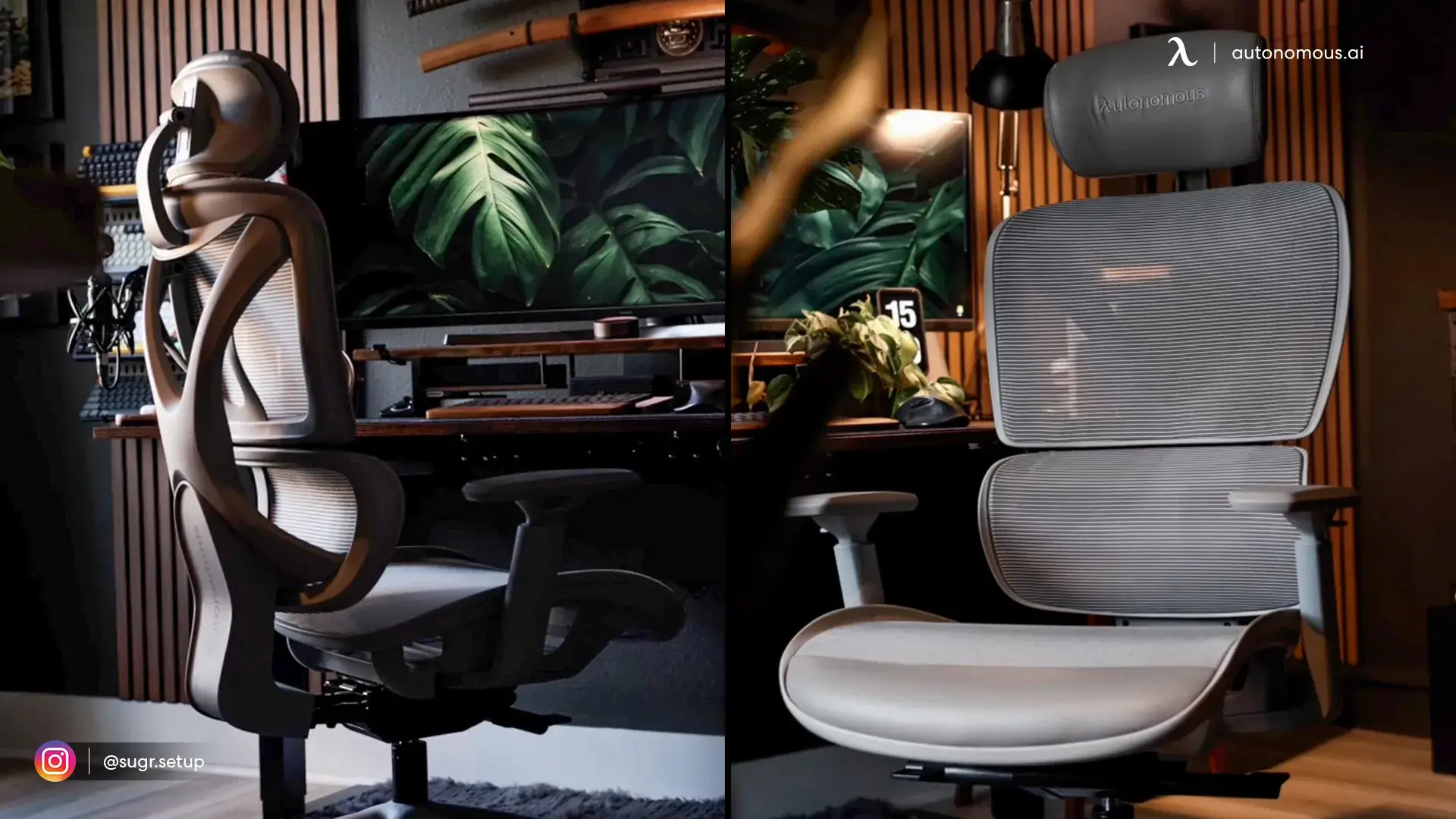
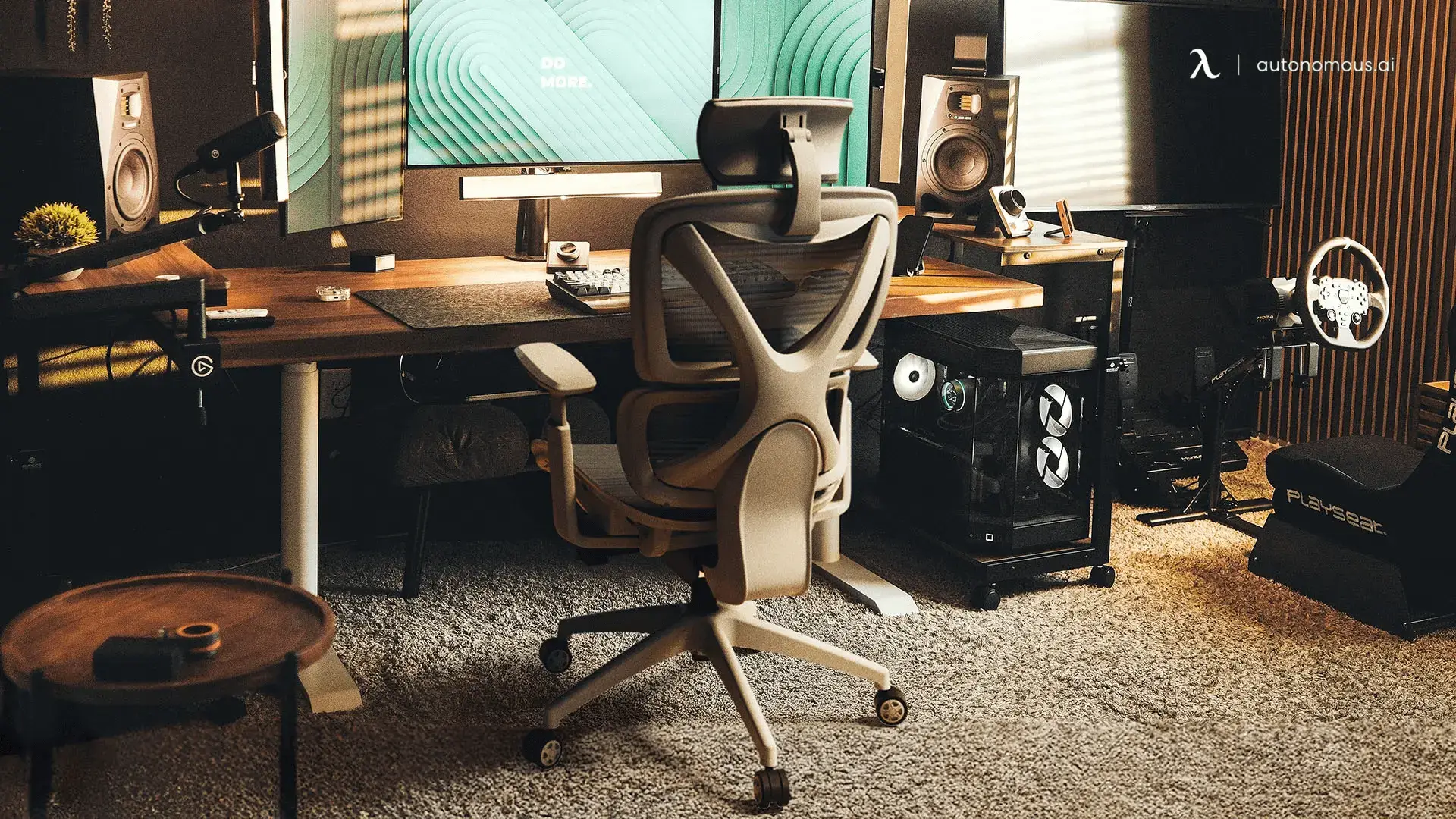
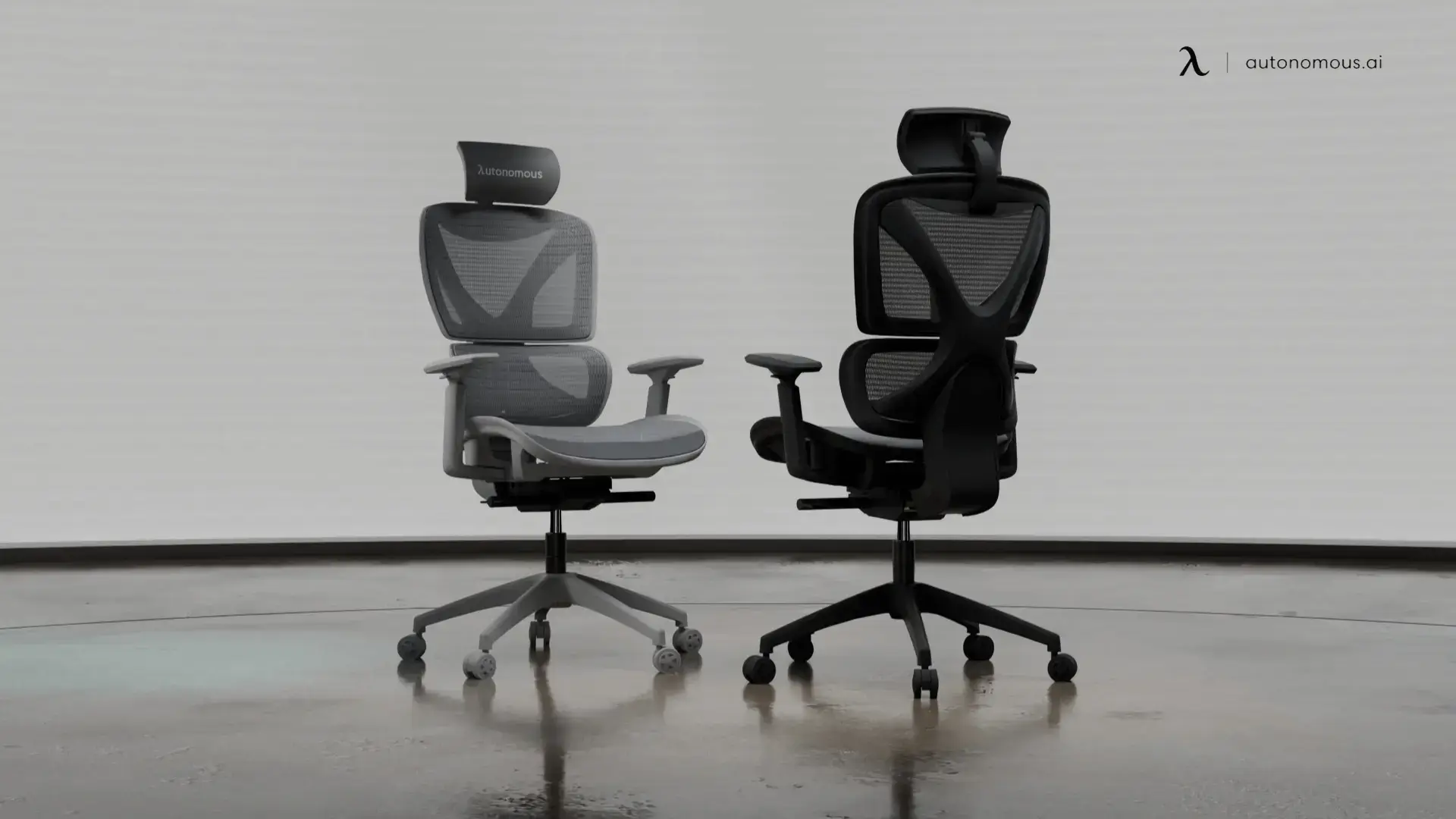
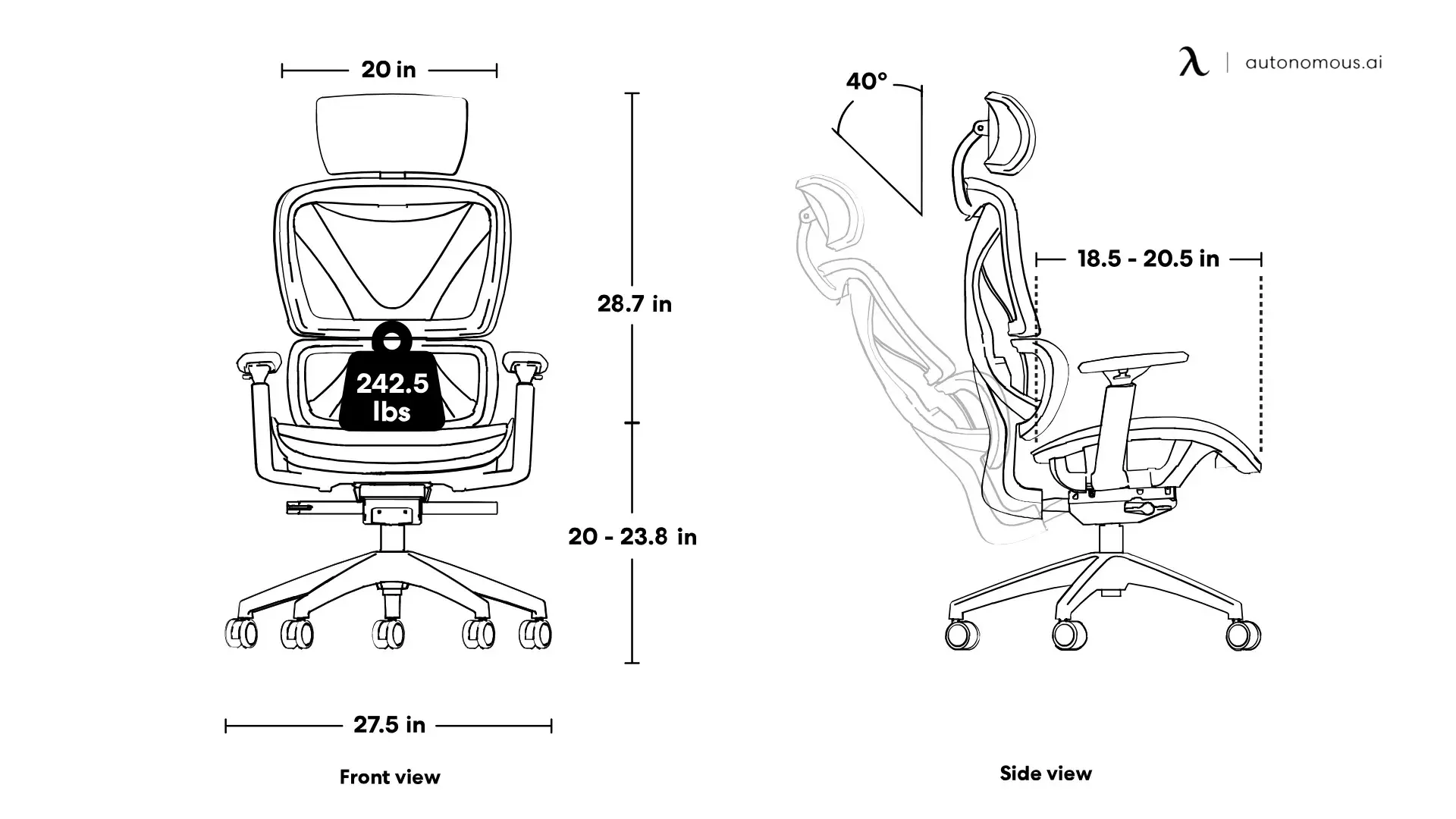
The Autonomous ErgoChair Core covers the essentials without overcomplicating things. It focuses on the basics — lumbar support, seat height, armrest height, and an 18° recline — and executes them cleanly. For users who find overly adjustable chairs fussy or confusing, that simplicity is the point.
This mesh chair breathes well during 2-3 hour stretches, and the lumbar adjustment is easy to reach while seated without hunting for a knob behind your back. It holds position once set. The recline is weight-activated, so leaning back feels natural rather than mechanical, no lever to unlock, no tension dial to calibrate.
The seat is foam with polyester covering, which holds warmth more than mesh and shows compression earlier under heavier users. Armrests adjust only in height, which restricts shoulder positioning during keyboard and mouse work.
Build quality is consistent with its capacity rating. At 242.5 lbs, the gas lift and base are lighter duty than most chairs in this category.
What works:
- Height-adjustable lumbar support
- Weight-activated recline with simple controls
- Mesh back for airflow
Where it falls short:
- Armrests adjust height only
- Lower weight capacity than most competitors
Best for: Users under 200 lbs who prefer a straightforward chair without excessive adjustability. Fits well in climate-controlled home office setups where simplicity matters more than fine-tuning.
2. Branch Ergonomic Chair
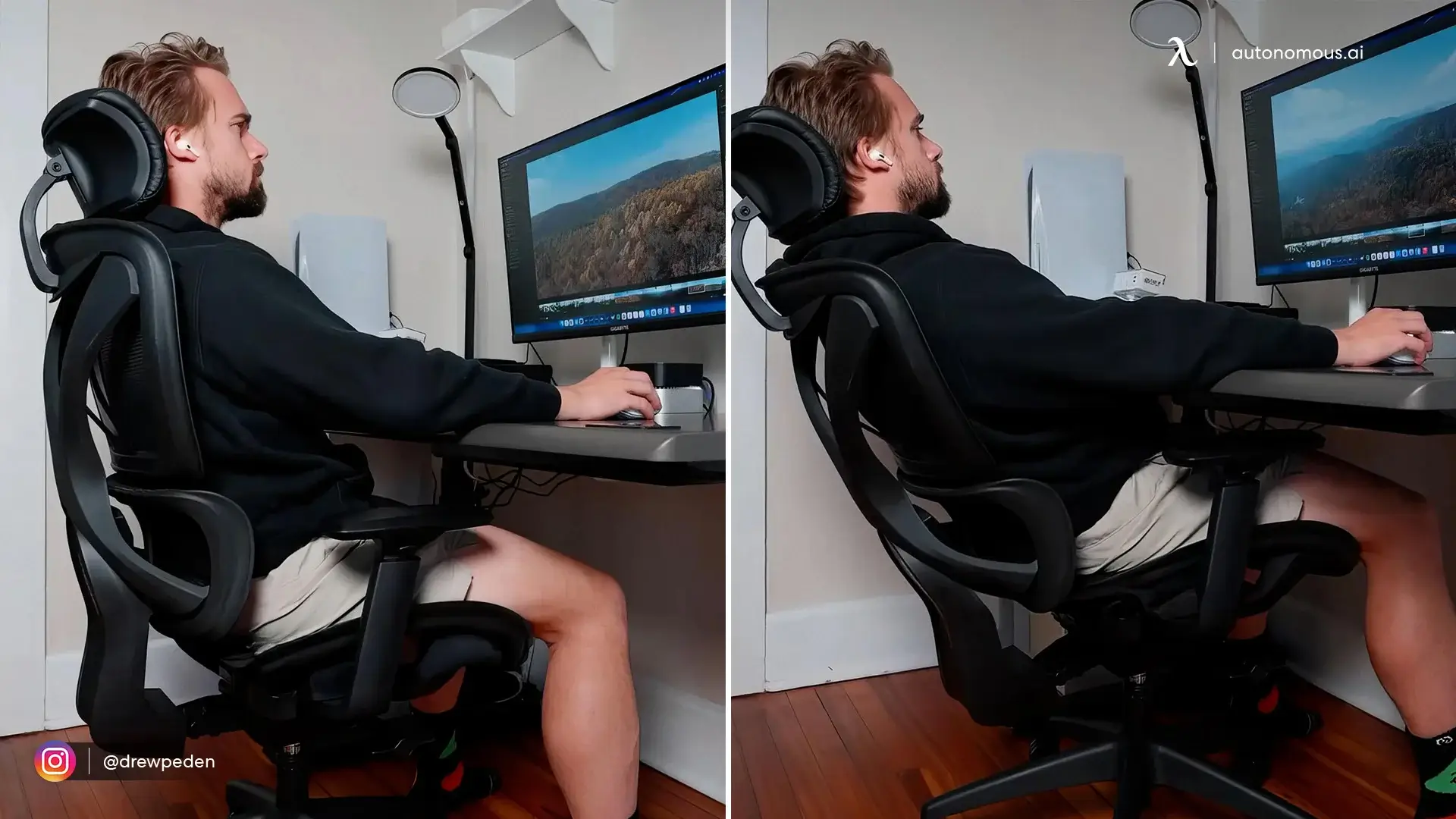
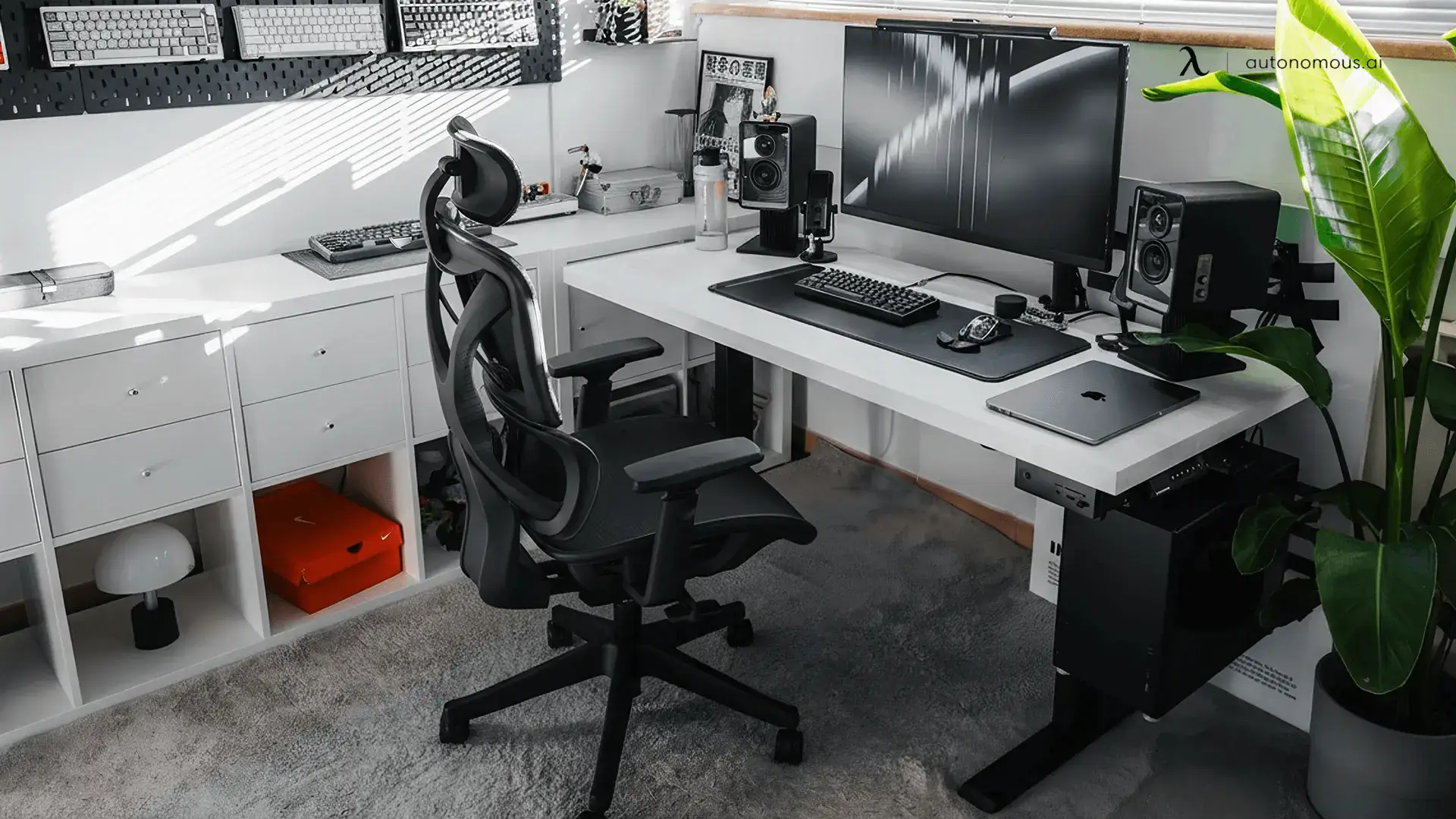
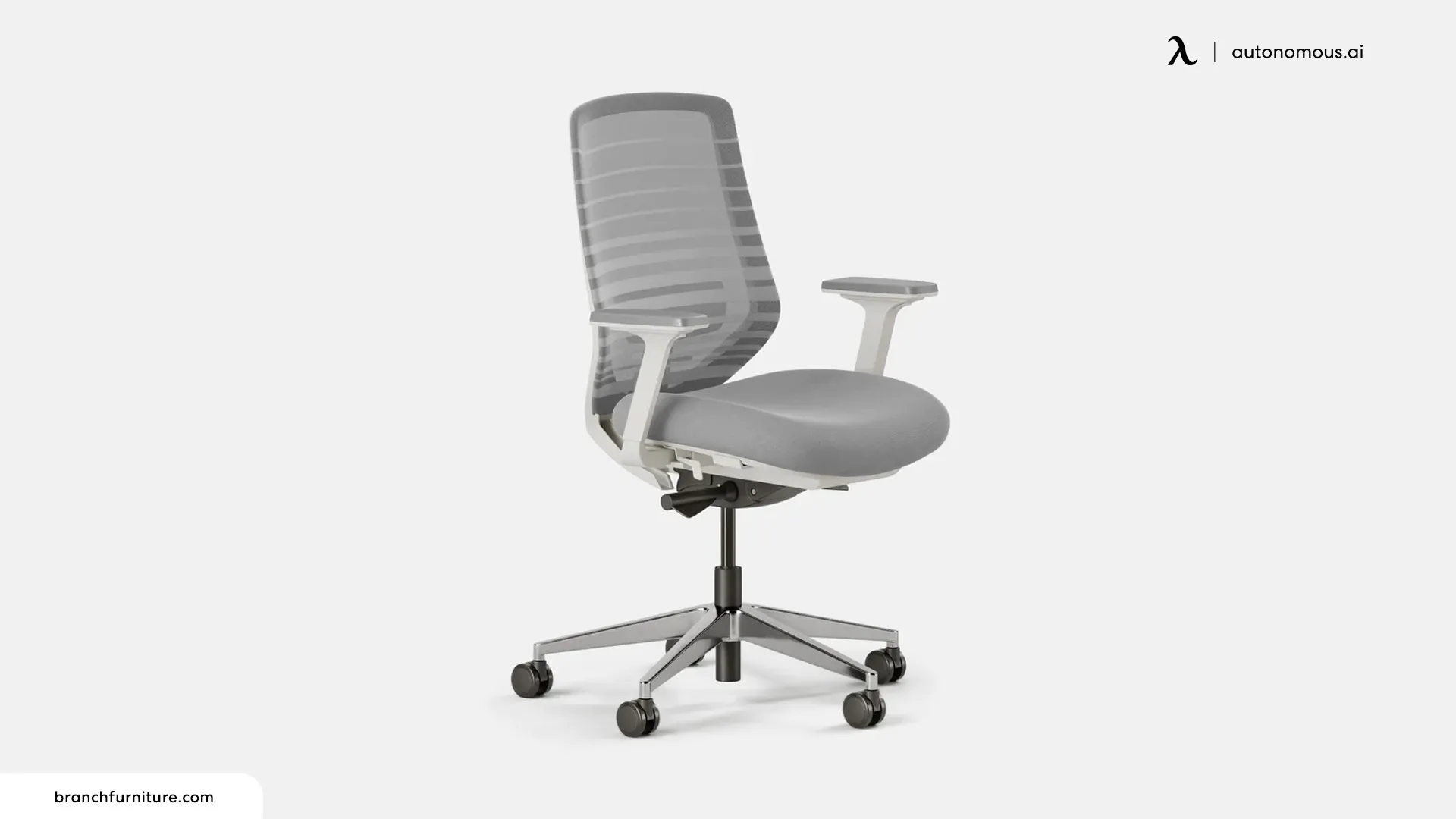
This chair is built around frame stability and posture control rather than flexibility. The aluminum base and dense foam seat resist long-term deformation better than plastic frames or low-density cushions. Synchro-tilt maintains foot contact during recline, which keeps pelvis and lumbar alignment more consistent than basic tilt locks.
Lumbar support adjusts vertically but not in depth. Pressure is firm and positioned to keep the pelvis forward rather than allowing passive recline. This reduces slouching but limits adaptability for users with atypical spine curvature. Armrests adjust height, width, and depth, but lack pivot, which restricts forearm angle for keyboard-heavy tasks.
Seat foam density is higher than most chairs in this range and shows less compression after extended use. For lighter or smaller users, that firmness changes how pressure is distributed across the seat pan, which is why choosing an office chair for a petite woman tends to emphasize sizing before support profile.
What works:
- Synchro-tilt with stable recline geometry
- High-density foam maintains seat shape over time
- Rigid base improves lateral stability
Where it falls short:
- Lumbar depth not adjustable
- Armrests do not pivot
- Firm lumbar profile not tolerant of relaxed postures
Best for: Users who sit upright for long periods and prefer consistent posture enforcement over adaptable comfort.
3. PatioMage Ergonomic Office Chair
This office chair under $400 is designed primarily around load capacity and frame width. At 440 lbs, the base, cylinder, and seat pan are reinforced beyond most chairs in this class. Seat width and armrest spacing reduce lateral compression for broader frames, which improves circulation and shoulder positioning.
Seat depth adjusts about 2.4 inches across five positions — useful for matching thigh length to backrest contact. Lumbar support rotates up to 10 degrees and moves vertically, which allows finer positioning than chairs with fixed or single-axis lumbar. The recline goes to 135° with multiple locking points. The seat itself runs firm with limited surface compliance, which contrasts with an office chair with cushion, where pressure relief comes more from padding than from structural support.
The armrests adjust in three directions but tend to loosen with regular use. It's a common complaint in user feedback, the adjustment holds for a while, then starts slipping. Not a dealbreaker, but something to expect.
What works:
- High load rating with reinforced base and seat
- Adjustable seat depth improves leg alignment
- Rotating lumbar offers directional support
- Deep recline with locking stops
Where it falls short:
- Armrest locks loosen over time
- Firm seating surface limits pressure relief
- Short warranty relative to load rating
Best for: Larger users who need a plus size office chair with structural support and frame width more than surface softness or extended warranty coverage.
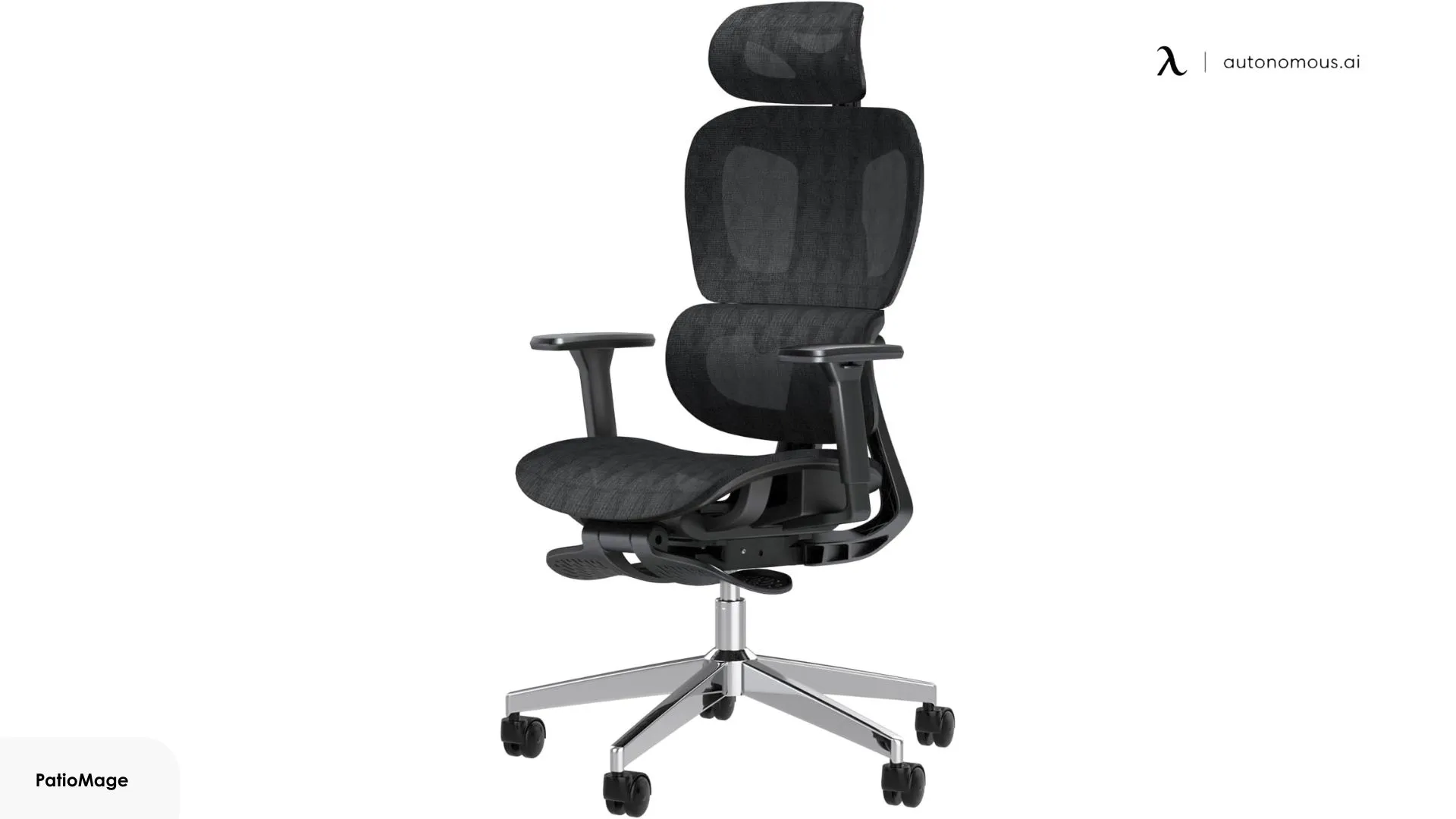
4. ELABEST X100 Ergonomic Mesh Office Chair
This ergonomic chair under 400 dollars offers more adjustment points than most models in this category, but the real question is how much of that range users actually use. Lumbar moves forward/backward, up/down, and rotates — the widest adjustment envelope on this list — but dialing it in correctly requires time and repeated fine-tuning.
The footrest slides out smoothly and locks at two angles, providing reliable support during reclined calls or breaks. In an office chair with footrest, this feature tends to matter more for intermittent rest than for continuous work posture. Armrests flip up and adjust across five axes, which accommodates a wide range of desk heights and task positions. In practice, many users settle into only a few of these settings and leave the rest unused.
Material finish reflects the focus on function. The structure holds position once set, but the seat offers little surface compliance, and recline damping becomes less controlled near full extension.
What works:
- Multi-axis lumbar enables fine contour placement
- 5-direction armrests accommodate varied tasks
- Integrated footrest supports reclined positioning
Where it falls short:
- Setup requires time and experimentation
- Minimal cushioning limits pressure absorption
- Recline stability decreases at full extension
Best for: Users who enjoy tuning their chair and want maximum adjustment range without paying for higher-end frames or materials.
.webp)
5. Sihoo M57 Ergonomic Office Chair
An ergonomic chair under 400 dollars uses mesh for both the backrest and the seat. Full mesh construction allows continuous airflow across both seating surfaces, preventing heat accumulation that typically builds in foam designs during uninterrupted work. Over long sessions, this stabilizes comfort more than cushion softness.
Support comes from mesh tension rather than padding. This produces uniform load distribution but limited micro-relief at pressure points. Back contour follows a fixed S-profile that works best for average spinal curvature, and seat-to-back proportions remain more comfortable for users within standard height ranges, whereas an office chair for tall people typically relies on taller backrests and deeper seat travel to maintain alignment. Recline range supports posture changes but not extended rest.
What works:
- Full mesh minimizes heat retention
- Dual-axis lumbar improves placement accuracy
- Stable back geometry maintains alignment
Where it falls short:
- Limited surface compliance
- Restricted recline range
- Headrest adjustment range is narrow
Best for: Users in warm environments or long continuous sessions who prioritize cooling over plush contact.
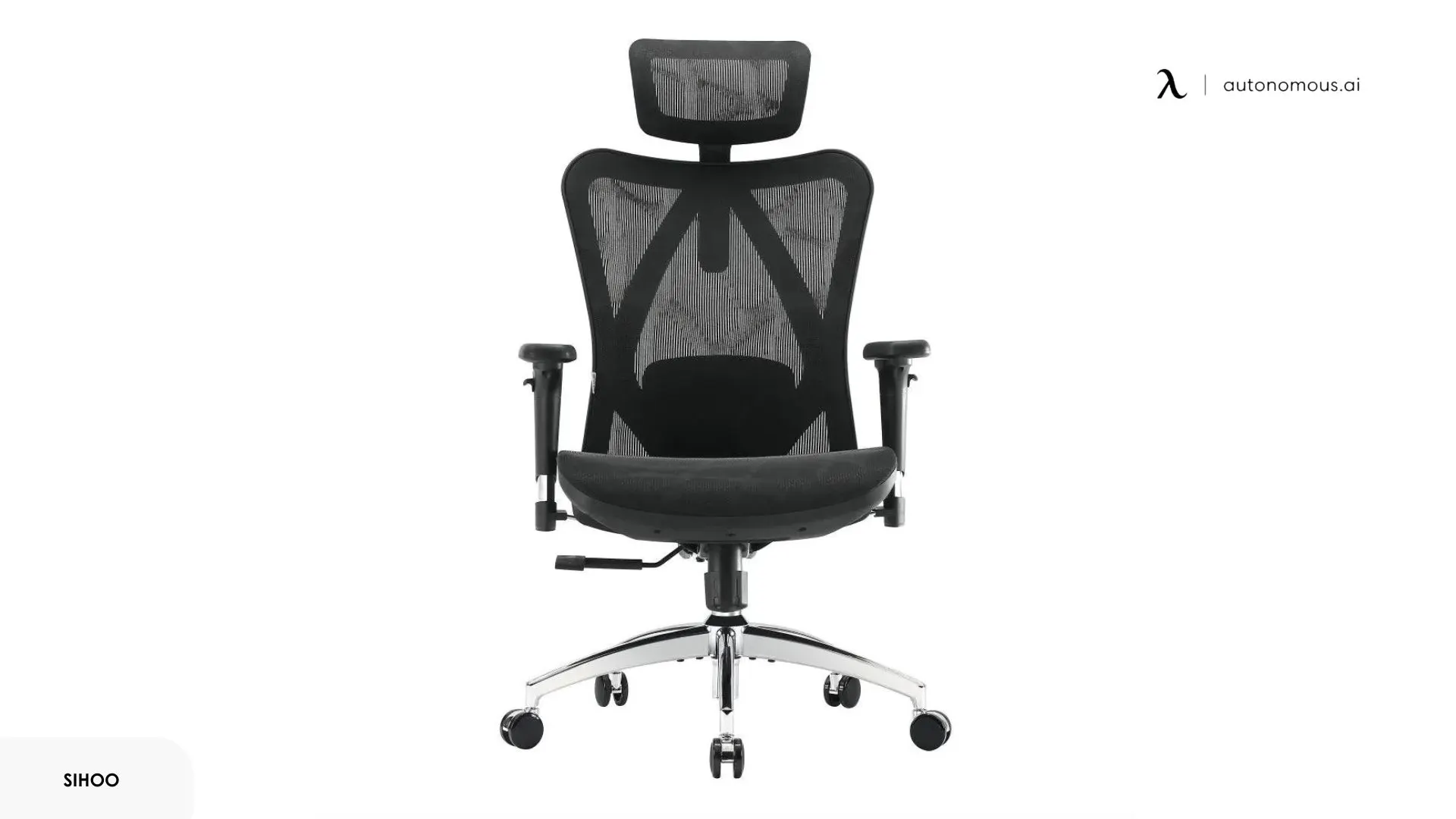
6. Logicfox Ergonomic Office Chair Pro
The Logicfox Pro uses a saddle-shaped mesh seat — curved at the edges to reduce pressure on the thighs. It's a design borrowed from higher-end chairs, and it does make a difference during longer sessions. Blood flow stays more consistent compared to flat seats that press into the back of the legs.
The backrest is S-curved mesh with a cotton lumbar pad for extra lower back contact. It's not adjustable in depth, only height. The support is adequate but not particularly firm — users who want aggressive lumbar pressure will find it lacking. In a mesh office chair with lumbar support, this lighter contact often works better for users who prefer guidance rather than rigid correction.
Armrests flip up completely, which clears space when you need to slide the chair under a desk or sit cross-legged. They adjust in three directions with a 35° pivot. The mechanism holds position reasonably well. Recline locks at three positions with a 40° seat tilt range. The range is moderate — enough to shift posture, not enough to fully recline for breaks. As an office chair under $400, it delivers competent ergonomics without unnecessary complexity. Nothing about it is exceptional, but nothing feels underbuilt either.
What works:
- Flip-up armrests improve desk clearance
- Even load distribution across seat pan
Where it falls short:
- Lumbar depth cannot be adjusted
- Recline range remains moderate
Best for: Users who experience leg fatigue or numbness and want endurance comfort without complex controls.
(2).jpg)
7. Vert Ergonomic Chair with Headrest
The Vert was designed around movement, not static positioning. The backrest uses molded elastomer ribs that flex laterally as you shift — leaning to reach something, turning to talk, twisting during a stretch.
That flexibility comes from the frame, not just the mesh. The structure mimics the spine's natural segmentation, so the chair bends where your back bends. This approach favors motion tolerance over correction, which contrasts with a posture office chair where firmer back shells and stronger lumbar anchoring are used to hold alignment during long, upright work sessions.
Postural correction is intentionally light. Lumbar applies mild pressure, arm positioning is basic, and recline behavior is passive. The fabric seat provides surface softness but retains more heat than mesh and distributes load less efficiently.
What works:
- Flexible back accommodates torso rotation
- Adjustable seat depth improves leg positioning
- Headrest included
Where it falls short:
- Limited arm and lumbar control
- Fabric seat retains heat
- Lower structural capacity
Best for: Restless sitters. If you shift positions often and find rigid chairs uncomfortable, the Vert's flexible frame accommodates that.

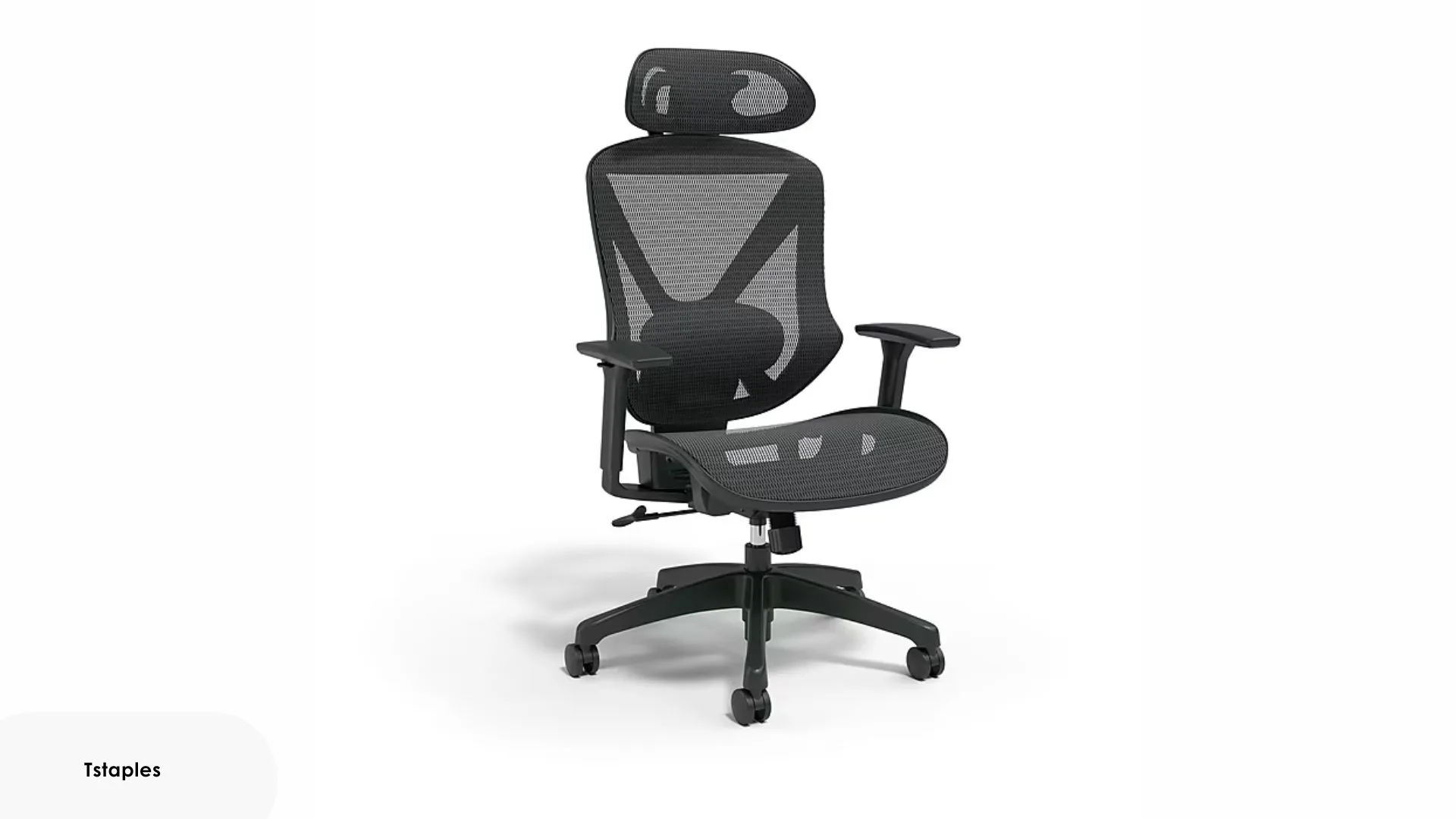
8. Staples Dexley Ergonomic Mesh Task Chair
The Dexley sits in a middle zone — mesh back, mesh seat, adjustable headrest, synchro-tilt — without pushing hard in any direction. It does not specialize in posture correction, deep recline, or aggressive lumbar shaping. Instead, it offers a predictable ergonomic baseline with broad adjustability coverage.
What defines this chair more than its mechanics is purchase behavior. Lumbar slides vertically with light, fixed pressure — enough to notice, not enough to correct posture. Headrest tilts and raises, which helps users who shift between screen work and reading or calls. Armrests adjust height, width, and depth. The seat height range runs 16.6" to 20.3", accommodating a reasonable spread of leg lengths.
The chair holds up well for moderate daily use, but users looking for an 8-hour office chair tend to notice faster mesh wear and loosening adjustments once sessions regularly extend beyond a full workday.
What works:
- Mesh back and seat for breathability
- Synchro-tilt mechanism
- Adjustable headrest (height and angle)
Where it falls short:
- Lumbar pressure is light
- Tilt mechanism feels loose
- Mesh wears faster under heavy daily use
Best for: Users who want in-person fit validation and moderate daily ergonomics with low purchase risk.

FAQs
What is the best office chair under $400?
The best office chair under 400 dollars depends on how you sit and how long you sit each day. Models with adjustable lumbar, synchro-tilt, and durable seat materials tend to outperform feature-heavy chairs with weaker frames.
Are office chairs under $400 actually ergonomic?
Many office chairs under $400 offer true ergonomic features, including adjustable lumbar support, proper recline geometry, and multi-axis armrests. The main limitation is long-term durability, not initial comfort.
Is an office chair under $400 good enough for 8-hour workdays?
Some office chairs under $400 are suitable for 8-hour days if they include depth-adjustable lumbar, stable tilt mechanisms, and high-density seat materials. Chairs without these features usually become uncomfortable after 4–6 hours.
How long should an office chair under $400 last?
A well-built office chair under $400 should last 3 to 5 years with daily use. Frame stiffness, foam density, gas cylinder class, and tilt quality determine lifespan more than brand or appearance.
What is the most durable office chair under $400?
The most durable office chairs under $400 typically use aluminum or reinforced bases, high-density seat foam, and synchro-tilt mechanisms. Chairs with plastic bases and Class 3 cylinders wear out significantly faster.
What features matter most in an office chair under $400?
The most important features in an office chair under $400 are adjustable lumbar depth, synchro-tilt, high-density seat foam, a Class 4 gas cylinder, and at least 3D armrests. Cosmetic features matter far less for comfort and durability.
What weight capacity should I look for in an office chair under $400?
For daily use, the best ergonomic office chair under 400 dollars supports at least 275 lbs, with reinforced bases recommended above 300 lbs. Higher capacity improves frame stability and reduces long-term tilt and cylinder wear.
Conclusion
Buying an office chair under $400 is less about finding the “best” model and more about avoiding the wrong compromises. At this price, most chairs deliver basic ergonomics, but long-term comfort depends on how well the frame, adjustment system, and materials match your body and working habits.
What matters most is alignment between use and design. Upright workers benefit from rigid frames and firmer lumbar profiles. Larger users need proportional seating and higher load ratings, as in a big and tall office chair. Warm environments favor full-mesh construction, while users who prefer surface compliance over tension-based support often gravitate toward a thick cushion office chair.
If you evaluate chairs by how they manage load, movement, temperature, and adjustment behavior rather than marketing claims, the differences become clear quickly. Focus on the mechanics that affect comfort after months of use, not the features that look impressive on a spec sheet.
Under $400, the right choice is the one that fits your posture, your schedule, and your workspace — not the one with the longest feature list.