How Many Calories Do 20,000 Steps Burn?

.webp)
Table of Contents
Walking goals have steadily increased over the years. While 10,000 steps is often cited as a baseline, many people now aim higher - especially those focused on fat loss, endurance, or daily activity challenges. This naturally leads to one common question: how many calories do 20,000 steps burn?
The short answer is that 20,000 steps can burn a significant number of calories - but not a fixed amount. Calories burned depend on body weight, pace, terrain, and overall efficiency. This article breaks down what really determines calorie burn from walking 20,000 steps, how to estimate your own numbers, and whether this goal makes sense for weight loss and health.
What Affects Calories Burned From 20,000 Steps
There is no single number that applies to everyone. When asking how many calories does walking 20k steps burn, these variables matter most:
- Body weight:
Heavier bodies burn more calories per step because moving more mass requires more energy. This is the biggest driver of differences between individuals.
- Walking speed and intensity:
A slow, casual pace burns fewer calories than a brisk or fast walk, even when the step count is the same. Differences in belt speed, stride rhythm, and resistance explain why calorie estimates vary between treadmill vs walking pad setups.
- Terrain and elevation:
Hills, stairs, and uneven surfaces increase calorie burn compared to flat ground by raising muscular demand. This effect is amplified during StairMaster for weight loss routines and incline-focused walking, reflecting the documented incline walking benefits.
- Walking environment and movement pattern:
Different home cardio formats change how force is applied through each step. Variations in resistance and motion mechanics help explain the calorie differences discussed in mini stepper vs walking pad comparisons.
- Stride length and efficiency:
Some people take shorter steps, while others cover more distance per stride. Greater efficiency can slightly reduce calorie burn over long walking sessions, even when steps are accumulated through structured routines on a treadmill for weight loss.
- Fatigue and conditioning:
As fatigue builds during long walking days, form and pace often change, affecting total energy expenditure.
Because of these factors, how many calories is 20k steps should always be viewed as a range, not a guarantee.
20,000 Steps Calories Burned by Body Weight
Below is a general estimate of how many calories do 20,000 steps burn at a moderate walking pace on mostly flat terrain.
Body Weight | Estimated Calories Burned (20,000 steps) |
120 lbs (54 kg) | ~650–750 calories |
140 lbs (64 kg) | ~750–850 calories |
160 lbs (73 kg) | ~850–1,000 calories |
180 lbs (82 kg) | ~950–1,100 calories |
200 lbs (91 kg) | ~1,050–1,250 calories |
220 lbs (100 kg) | ~1,150–1,350 calories |
250 lbs (113 kg) | ~1,300–1,500 calories |
These numbers help answer how many calories for 20000 steps, but they remain estimates. Real-world results may fall outside these ranges depending on pace and terrain.
Walking Speed Matters More Than Step Count
Step count alone does not tell the full story. Two people can reach 20,000 steps and still burn very different amounts of energy.
A slower pace spread across the day typically burns fewer calories than sustained, higher-intensity walking. Increased pace raises heart rate, engages more muscle tissue, and drives higher energy demand. This difference explains why some people see greater results from fewer, focused sessions rather than accumulating steps passively.
This also clarifies the broader comparison between walking vs running. Intensity, not just movement volume, determines calorie output.
When pace increases further, calorie burn rises sharply. Estimates from running calorie consumption highlight how speed shifts energy expenditure even when total time or distance stays similar.
For calorie burn, step quality consistently outweighs step quantity.
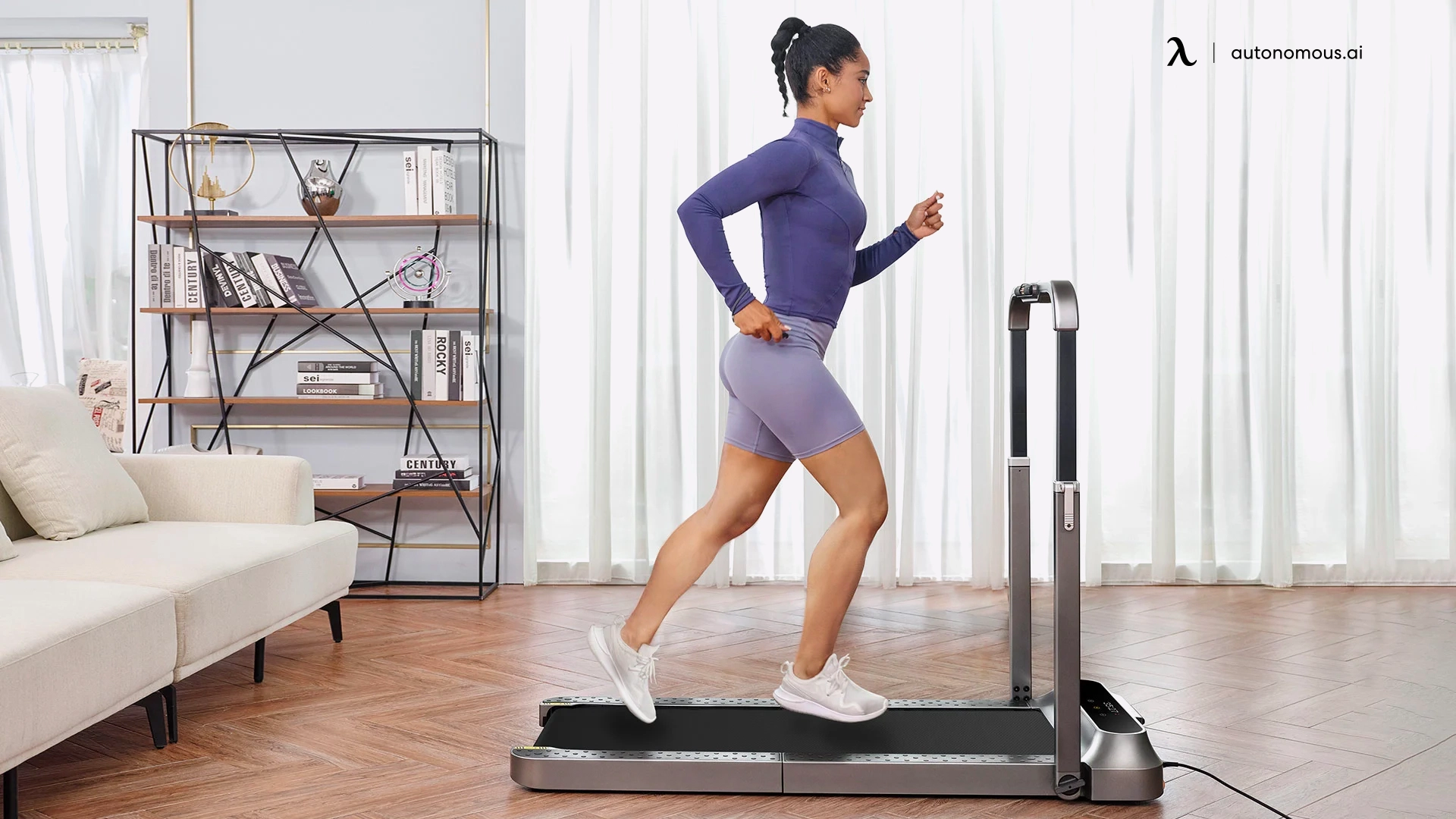
Making 20,000 Steps More Realistic in a Home Office
One of the biggest barriers to hitting high step counts is time, especially for people working from home. In practice, many of my clients don’t “walk for hours” - they accumulate steps in fragments throughout the day.
A home office setup can quietly support this without formal workouts:
- Using a standing desk encourages more frequent movement breaks and light walking between tasks.
- Short walking intervals (5–10 minutes) between meetings add up quickly over a full workday.
- Pairing standing periods with light pacing or stretch walks reduces prolonged sitting fatigue.


From a behavioral psychology perspective, this works because it lowers friction. You’re not relying on motivation after work; you’re embedding movement into the environment you already spend hours in.
For people aiming to increase daily activity without structured exercise blocks, walking-friendly home office habits can be more sustainable than chasing a single long walk every day.
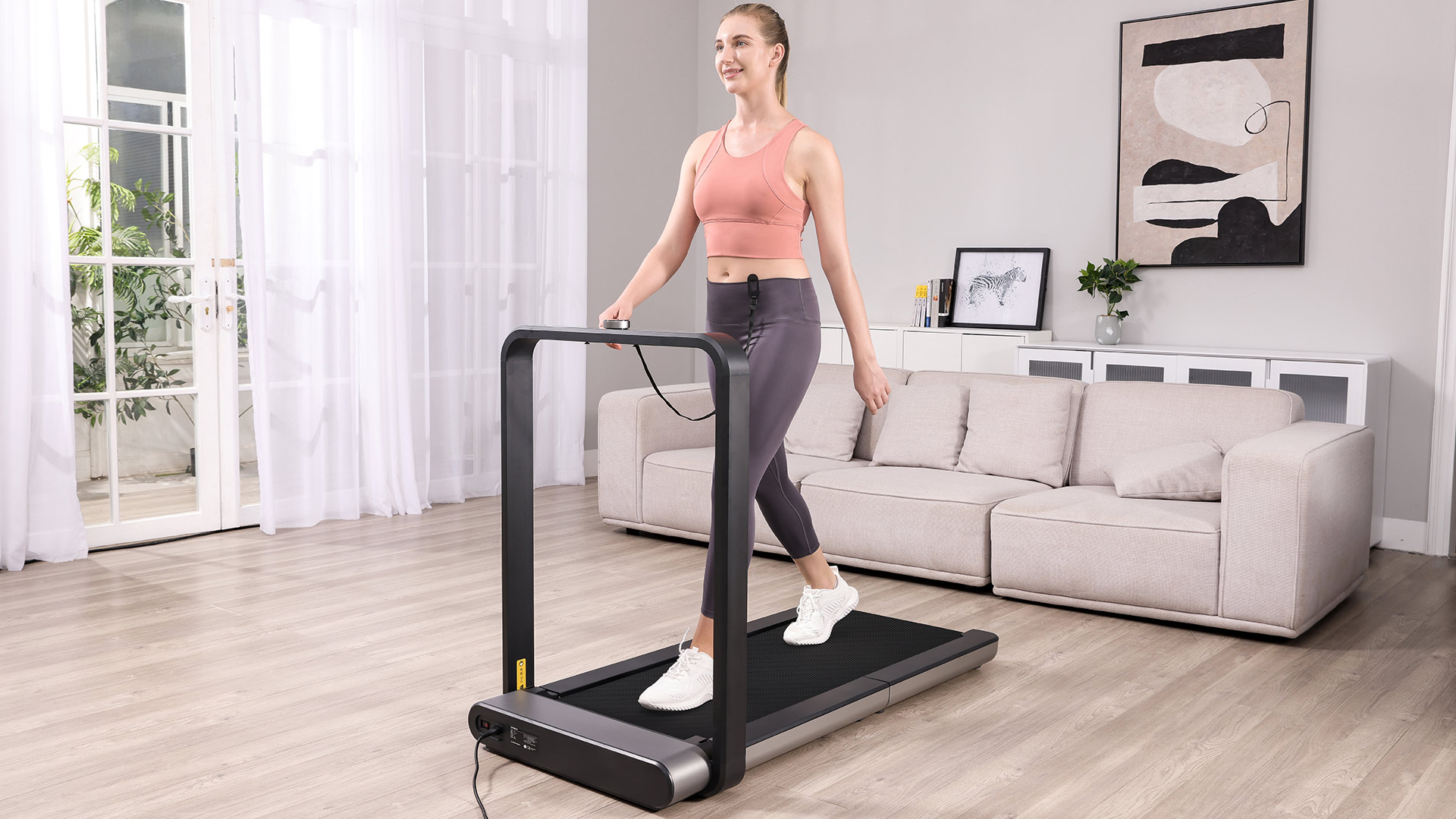

How to Track Calories Burned From Steps Accurately
Most people rely on devices or calculators to estimate calories burned from walking. Each method provides useful information, but accuracy depends on how the data is collected and interpreted.
- Wearables and fitness trackers
Smartwatches estimate calorie burn using motion data, heart rate, and personal metrics like age and weight. These tools are best for spotting trends over time rather than producing exact values. Understanding targets for how many active calories you should burn a day helps put these numbers into context.
- Step-based calculators
Online calculators convert steps into calorie estimates using body weight and distance assumptions. They work well for averages and planning, especially when estimating goals like how many steps to burn 1000 calories, but they cannot account for pace changes or fatigue.
- Active calories vs total calories
Most devices report movement-related energy use rather than full daily expenditure. Knowing the difference between active calories and active calories vs total calories is essential when using step data for weight management.
- Alternative tracking references
Machines that standardize pace and resistance can provide another benchmark. A StairMaster calorie calculator offers insight into how intensity shifts energy demand beyond step count alone.
- Apps and daily benchmarks
Some people prefer logging steps and calories in a centralized system. Choosing from the best free calorie counter app or broader apps to help lose weight can improve consistency.
Pairing this with guidance on how many steps you should walk a day makes step goals easier to apply.

FAQs
How many calories do 20,000 steps burn on average?
For most adults, walking 20,000 steps burns about 700 to 1,200 calories. Body weight, walking speed, terrain, and stride length all influence where you fall within that range, so two people can hit the same step count and burn different amounts.
How many calories does walking 20k steps burn compared to other activities?
Walking 20k steps can burn a similar number of calories to running 6–10 miles, depending on pace and body weight. The key difference is intensity: walking spreads the effort over more time, while running burns calories faster but places more stress on joints.
How long does 20,000 steps take to walk?
At an average pace of 3–4 mph, 20,000 steps usually take 3 to 4 hours. Faster walkers may finish sooner, while slower or interrupted walking can push that time longer.
Is 20,000 steps equal to a certain distance?
For most people, 20,000 steps equals roughly 8 to 10 miles. Step length varies by height, gait, and speed, so distance estimates are always approximate.
Is 20,000 steps good for weight loss?
Yes, 20,000 steps can support weight loss because it significantly increases daily calorie burn. However, fat loss still depends on overall calorie balance - walking alone won’t guarantee results if calorie intake consistently exceeds expenditure.
How many calories is 20k steps compared to 10k steps?
Twenty thousand steps generally burn about twice as many calories as 10,000 steps, though efficiency can drop slightly as fatigue builds. The difference is still substantial and meaningful for daily activity goals.
Do heavier people burn more calories walking 20,000 steps?
Yes. Heavier individuals burn more calories per step because moving more body mass requires more energy. This is why calorie estimates scale upward with body weight.
Is walking 20,000 steps a day safe?
It can be safe for people who are already active and conditioned to high walking volume. For beginners, jumping straight to 20,000 steps may increase the risk of foot, knee, or hip overuse injuries without gradual buildup.
Can you lose fat just by walking 20k steps a day?
Yes - fat loss can happen if walking 20,000 steps creates a consistent calorie deficit. Food choices, portion size, and recovery still determine whether that deficit is sustainable over time. For reference, how many calorie deficit to lose 1 lb explains the energy gap typically required.
Is it okay to walk 20,000 steps every day?
Some people can tolerate it daily, but many do better alternating high-step days with lower-volume or rest days. Sustainable progress usually comes from balancing movement with recovery, not pushing maximum steps every single day.
Conclusion
So, how many calories does 20k steps a day burn? For most people, the answer falls somewhere between 700 and 1,200+ calories, shaped by body weight, pace, and terrain.
While 20,000 steps can meaningfully boost daily activity, it is not a requirement for weight loss or health. Walking is most effective when it is sustainable, paired with adequate recovery, and aligned with overall lifestyle and nutrition. For many people, consistency at a lower step count will outperform short bursts of extreme volume over time.
If 20,000 steps fits your routine and feels manageable, it can be a powerful tool. If not, fewer steps done consistently still deliver real benefits.