GeForce RTX 5080 Review: Gaming, Ray Tracing & Creator Power

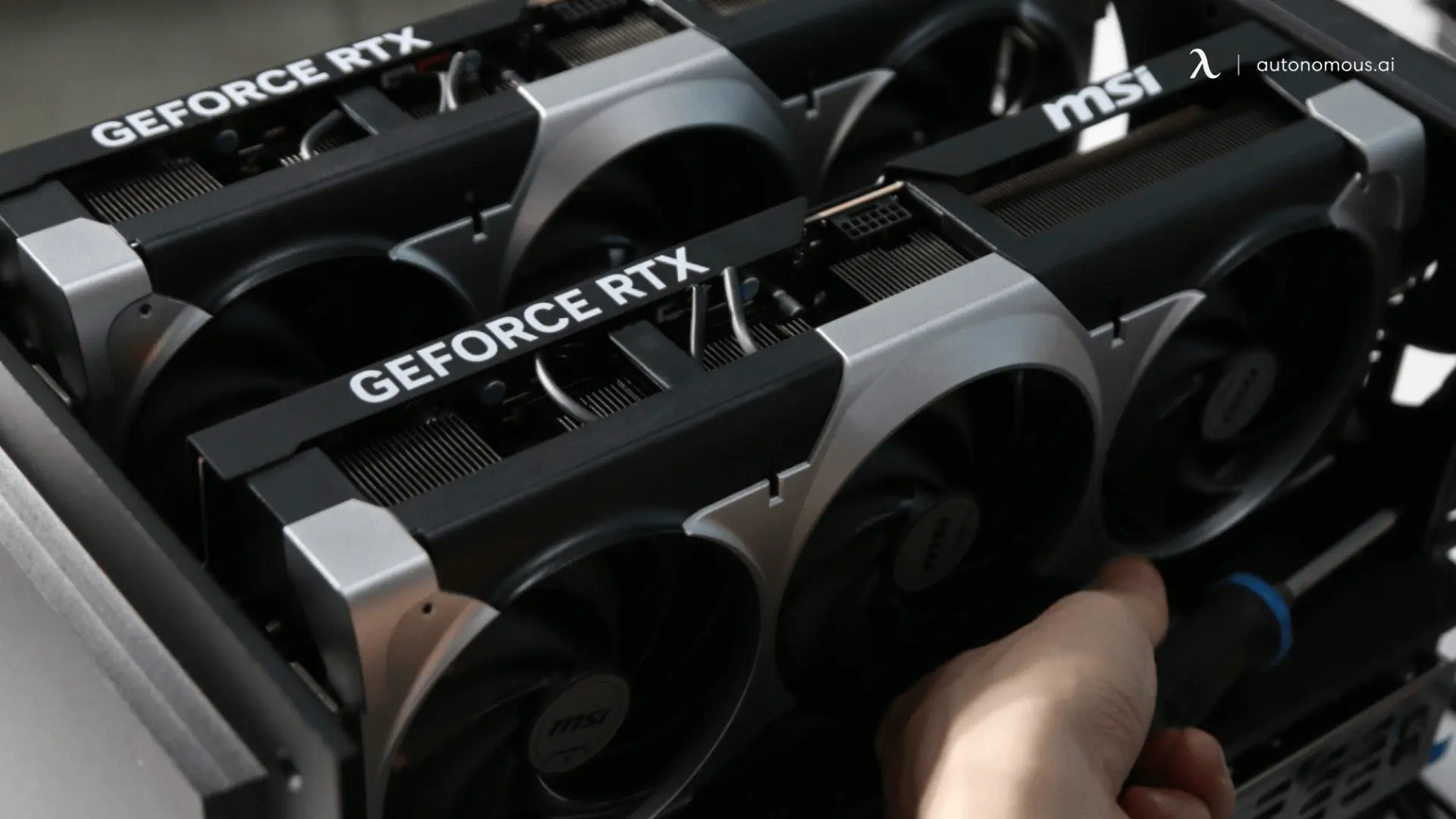
Table of Contents
The NVIDIA GeForce RTX 5080 sits at the center of NVIDIA’s Blackwell lineup, positioned as the high-end GPU most enthusiasts should realistically buy. It’s built for gamers chasing smooth 4K performance with ray tracing, creators handling demanding workloads, and power users who want next-gen AI features without jumping to the ultra-premium RTX 5090. As part of a complete setup of things every gamer needs, the RTX 5080 balances power and practicality.
Built on the Blackwell architecture, it introduces fifth-generation Tensor Cores, fourth-generation Ray Tracing Cores, and DLSS 4 with Multi Frame Generation—delivering higher frame rates, better ray-traced visuals, and more efficient AI rendering. Starting at $999, it’s positioned as NVIDIA’s new go-to flagship and a compelling upgrade choice—or even a standout pick among Christmas gifts for gamers looking to future-proof their PC.
Key RTX 5080 Specifications
At the core of this GeForce RTX 5080 review is NVIDIA’s new Blackwell architecture, which represents a meaningful step forward from the Ada Lovelace generation. The RTX 5080 is designed to deliver flagship-level performance at a price point that makes sense for high-end gamers and creators who don’t want to jump to the extreme cost of the RTX 5090.
- Architecture: NVIDIA Blackwell
- GPU Class: High-end / flagship-tier
- Memory: GDDR7
- Ray Tracing: 4th-gen RT Cores
- AI / Tensor: 5th-gen Tensor Cores
- DLSS Support: DLSS 4 with Multi Frame Generation
- Launch Price: Starting at $999
While NVIDIA hasn’t positioned the RTX 5080 as the absolute top of the stack, its specs place it comfortably above previous-generation flagships like the RTX 4080 and RTX 3090—especially in ray tracing and AI-accelerated workloads, making it a strong option for users who want to run AI locally without stepping into workstation-class GPUs.
What Blackwell Brings to the RTX 5080
The Blackwell architecture focuses heavily on efficiency and AI integration rather than brute-force raster performance alone. Compared to older RTX GPUs, the RTX 5080 benefits from:
- More efficient Streaming Multiprocessors, optimized for neural shaders
- Improved ray tracing throughput with better handling of complex geometry
- Stronger AI performance, enabling DLSS 4’s Multi Frame Generation
- Better performance scaling at 4K resolutions
In real-world use, this means the RTX 5080 doesn’t just push higher frame rates—it maintains smoother performance under heavy ray tracing loads and complex scenes.
GDDR7 Memory: Why It Matters
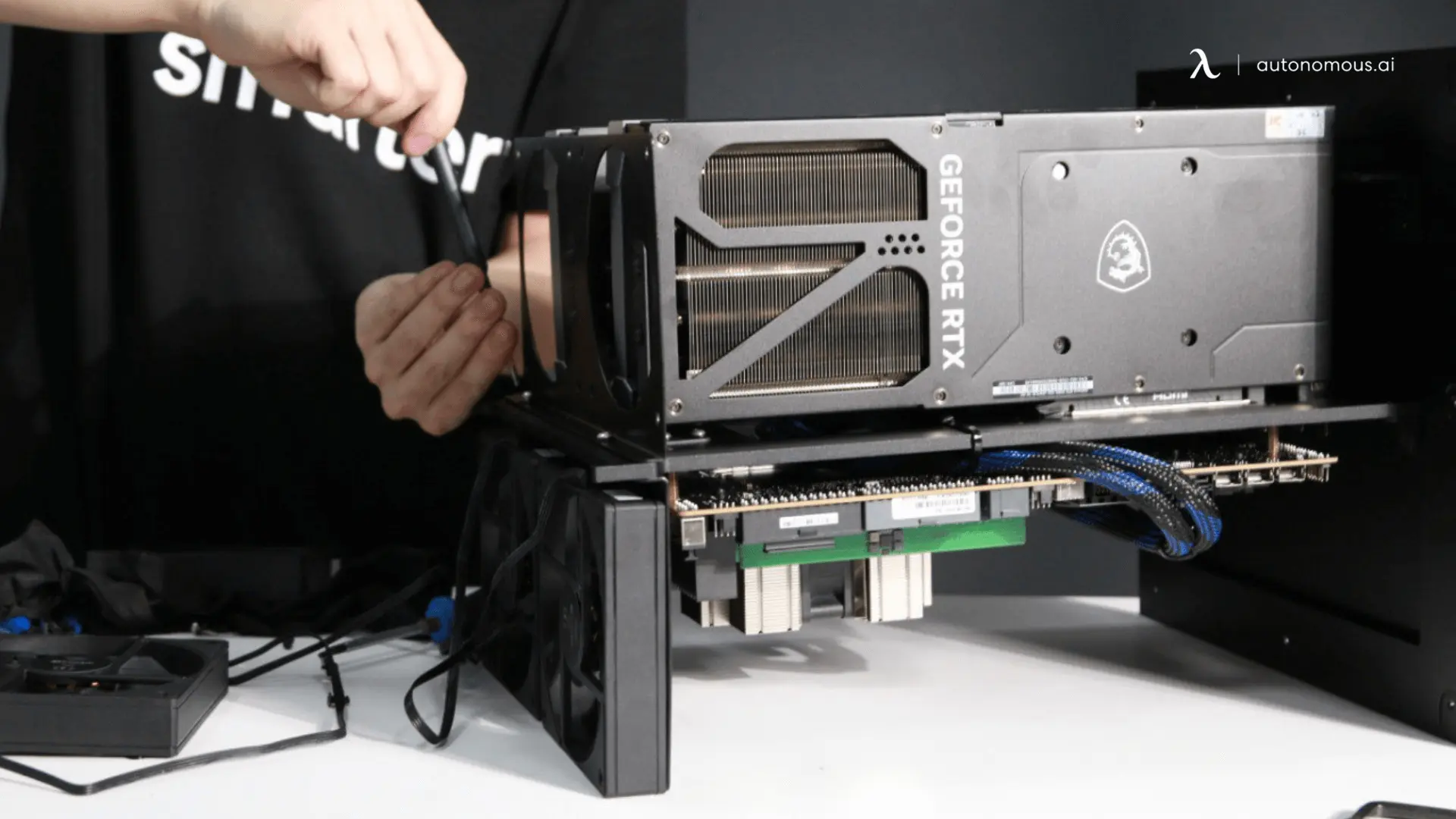
One of the biggest generational upgrades in the RTX 5080 is its move to GDDR7 memory. Compared to GDDR6 and GDDR6X used in previous cards, GDDR7 delivers:
- Higher bandwidth
- Improved power efficiency
- Better stability at high resolutions
This upgrade is especially noticeable in 4K gaming, large texture packs, and creative workloads like video editing and 3D rendering—particularly when building a video editing PC that relies on GPU acceleration. It also helps future-proof the RTX 5080 for next-generation games and content creation workflows.
Positioning vs Previous Generations
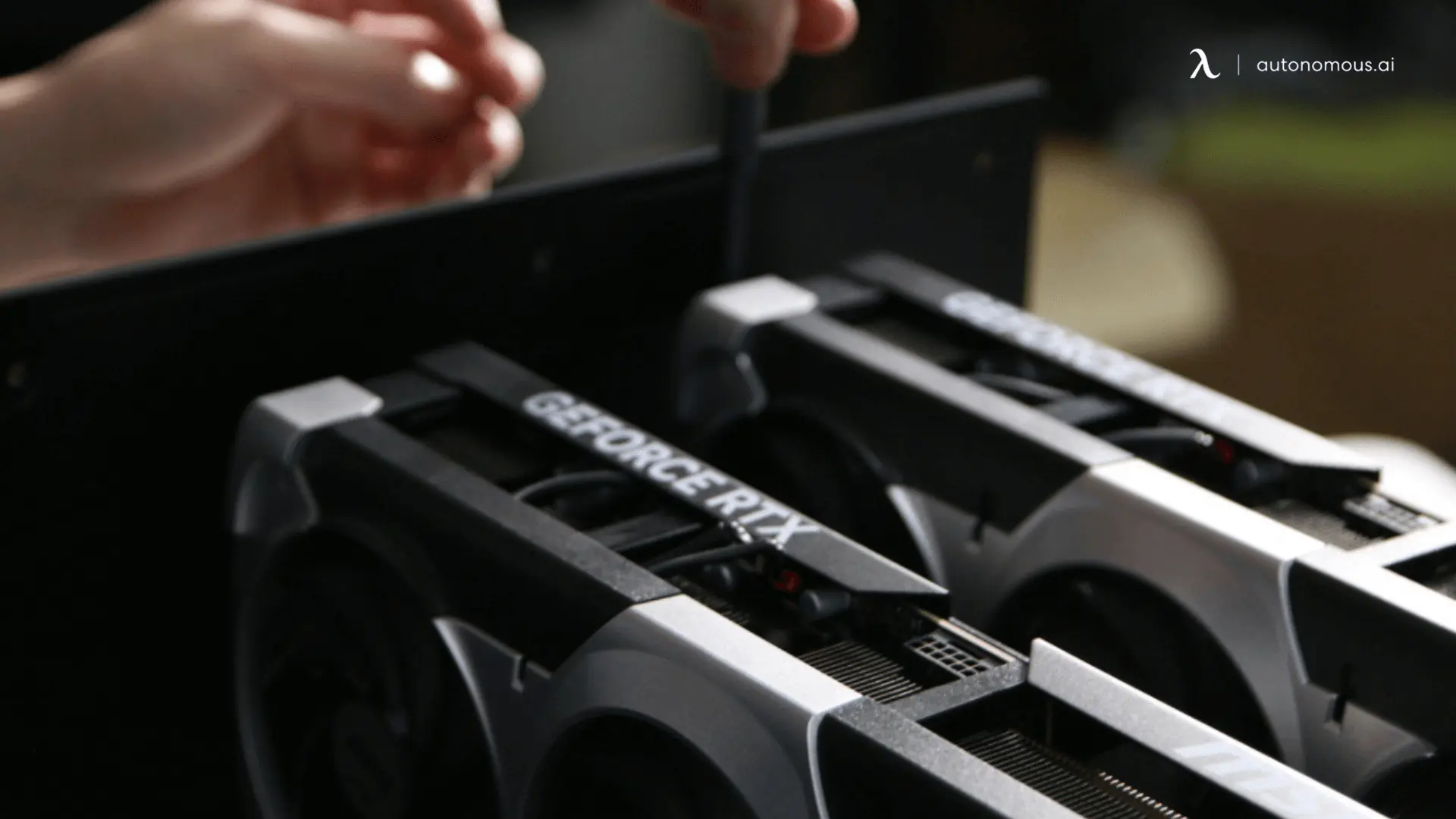
From a specs perspective, the RTX 5080 is clearly not a minor refresh. It sits in a unique position:
- More advanced than the RTX 4080 and RTX 3080
- Significantly more efficient than the RTX 3090
- Close enough to the RTX 5090 in practical gaming, but far more affordable
This balance is a key reason why many reviewers consider the RTX 5080 the “sweet spot” of the RTX 50 series.
1. RTX 5080 vs RTX 4090
The RTX 4090 is still Nvidia’s most powerful consumer GPU, but the RTX 5080 is the more practical choice for most gamers and creators in 2025. While the 4090 dominates in raw compute and extreme workloads, the 5080 delivers far better price-to-performance, especially for 4K gaming with DLSS 4 enabled.
In real-world use, the RTX 5080 handles modern AAA titles at 4K max settings smoothly, with excellent ray tracing performance and significantly lower power demands. Unless you specifically need the extra VRAM and compute headroom for heavy AI training or professional 3D workloads—such as those discussed when choosing the best graphics card for machine learning—the RTX 4090 is often overkill.
Feature | RTX 5080 | RTX 4090 |
Architecture | Blackwell | Ada Lovelace |
Target Use | High-end gaming & creators | Extreme enthusiasts & pros |
4K Gaming | Excellent with DLSS 4 | Best-in-class |
Ray Tracing | 4th-gen RT cores | 3rd-gen RT cores |
AI / DLSS | DLSS 4, Multi Frame Gen | DLSS 3 |
Power Consumption | More efficient | Very power-hungry |
Launch Price | ~$999 | ~$1,599+ |
Value for Gamers | ✅ High | ❌ Low for most users |
- Choose RTX 5080 if you want top-tier 4K gaming, strong ray tracing, and AI features without spending flagship-extreme money.
- Choose RTX 4090 if you run professional workloads that scale with brute-force GPU power or need massive VRAM.
Verdict: For gaming and most creative work, the RTX 5080 clearly hits the sweet spot. It offers excellent 4K performance, strong ray tracing, and modern AI features without the extreme cost or power demands of the RTX 4090. The RTX 4090 remains a niche option for users who truly need absolute maximum performance, while the RTX 5080 is a more practical choice—even when paired with a compact setup like a mini PC for video editing or a high-end desktop build.
2. RTX 5070 Ti vs RTX 5080
The RTX 5070 Ti vs RTX 5080 comparison is one of the most searched because it represents the jump from upper-midrange to true high-end in NVIDIA’s Blackwell lineup. While both cards benefit from DLSS 4 and the Blackwell architecture, they target very different users.
The RTX 5070 Ti is ideal for high-refresh 1440p gaming and light 4K with compromises, making it attractive for users planning a more cost-controlled build and carefully considering how much it costs to build a gaming PC. The RTX 5080, by contrast, is designed for uncompromised native 4K gaming, heavier ray tracing, and longer-term performance headroom.
Feature | RTX 5070 Ti | RTX 5080 |
Target Resolution | 1440p / light 4K | Native 4K (max settings) |
Architecture | NVIDIA Blackwell | NVIDIA Blackwell |
Tensor Cores | 5th-gen | 5th-gen (higher throughput) |
Ray Tracing | Strong | Significantly stronger |
Memory | Lower VRAM, narrower bus | GDDR7, wider bus |
DLSS Support | DLSS 4 | DLSS 4 + Multi Frame Gen (4×) |
Power Requirement | Lower | Higher (850W PSU recommended) |
Price Tier | Upper midrange | High-end flagship |
Real-World Performance Difference
In real gameplay, the RTX 5080 delivers a noticeably more stable experience at 4K. Where the RTX 5070 Ti often relies heavily on DLSS performance modes or reduced ray tracing settings, the RTX 5080 can sustain high frame rates with ray tracing enabled and DLSS set to quality or balanced.
The gap becomes even more obvious in:
- Ray-traced open-world games
- Heavily modded titles
- Future AAA releases designed around advanced lighting and geometry
Which One Should You Buy?
- Choose RTX 5070 Ti if you play mostly at 1440p, care about efficiency, and want strong performance at a lower cost.
- Choose RTX 5080 if you want uncompromised 4K gaming, better longevity, and a GPU that won’t feel outdated in two to three years.
In short, the RTX 5070 Ti is excellent value—but the RTX 5080 is the safer long-term investment for enthusiasts who want maximum performance without stepping into RTX 5090 pricing.
3. RTX 3090 vs RTX 5080
The RTX 3090 vs RTX 5080 comparison highlights just how far NVIDIA’s GPU architecture has evolved in a few generations. While the RTX 3090 was once a halo product aimed at enthusiasts and creators, the RTX 5080 delivers clearly superior real-world performance with far better efficiency and modern features.
Feature | RTX 3090 | RTX 5080 |
Architecture | Ampere | Blackwell |
Ray Tracing | 2nd gen RT cores | 4th gen RT cores |
AI / DLSS | DLSS 2 | DLSS 4 (Multi Frame Gen) |
4K Gaming | Good, limited with RT | Excellent, smooth with RT |
Power Efficiency | Poor by modern standards | Much improved |
Best For | Legacy high-end systems | Modern 4K gaming & creators |
If you already own an RTX 3090, the RTX 5080 represents a meaningful upgrade, not just a small bump. You gain smoother 4K gaming, dramatically better ray tracing, and modern AI features that future-proof your system. This makes the RTX 5080 a strong choice not only for gaming but also for setups like a dedicated streaming PC where consistent performance and efficiency matter.
4. RX 9070 XT vs RTX 5080
The RX 9070 XT vs RTX 5080 comparison mainly comes down to raster performance vs advanced features. AMD’s RX 9070 XT is competitive in traditional rasterized gaming and may offer strong value in certain titles, especially at high resolutions without ray tracing.
However, the RTX 5080 clearly leads in ray tracing, AI acceleration, and upscaling technology. With DLSS 4 and Multi Frame Generation, the RTX 5080 achieves higher playable frame rates in modern AAA games that rely heavily on advanced lighting and effects—highlighting why many users still lean AMD or NVIDIA toward NVIDIA for next-generation features.
Feature | RX 9070 XT | RTX 5080 |
Raster Performance | Strong | Strong |
Ray Tracing | Moderate | Excellent |
Upscaling | FSR | DLSS 4 + MFG |
AI Features | Limited | Advanced |
4K Ray-Traced Gaming | ❌ | ✅ |
Best For | Value-focused gamers | High-end, future-proof builds |
Verdict: Choose the RX 9070 XT if you prioritize raster performance and price. Choose the RTX 5080 if you want the best experience in ray-traced and DLSS-supported games.
5. RTX 5080 vs RTX 5090
The RTX 5090 is undeniably faster, offering more raw compute and higher memory bandwidth for extreme workloads like AI training or heavy 3D rendering. However, the RTX 5080 delivers a much better price-to-performance ratio for most users.
In real-world gaming—especially with DLSS 4 enabled—the perceived performance gap is far smaller than the price difference, making the RTX 5080 the more practical choice unless you specifically need a GPU for deep learning or professional-grade compute power.
Feature | RTX 5080 | RTX 5090 |
Price | ~$999 | ~$1,999 |
Target User | Enthusiasts | Extreme pros |
4K Gaming | Excellent | Best possible |
Ray Tracing | Very strong | Best-in-class |
Power Draw | High but manageable | Extremely high |
Value | ✅ High | ❌ Niche |
Verdict: The RTX 5090 is for users who truly need maximum compute. For almost everyone else, the RTX 5080 is the smarter buy.
6. RTX 5080 vs RTX 4080
The RTX 5080 vs RTX 4080 comparison shows a clear generational refinement rather than a massive leap. Raw raster performance gains are moderate, but improvements in ray tracing efficiency, AI throughput, and DLSS 4 support make the RTX 5080 meaningfully better in modern workloads.
Thanks to GDDR7 memory, the RTX 5080 also delivers improved bandwidth and efficiency—most noticeable in 4K gaming and creative tasks, especially for users who might otherwise consider alternatives like renting GPUs for AI instead of upgrading locally.
Feature | RTX 4080 | RTX 5080 |
Architecture | Ada Lovelace | Blackwell |
Memory | GDDR6X | GDDR7 |
DLSS | DLSS 3 | DLSS 4 |
Ray Tracing | 3rd-gen | 4th-gen |
Power Efficiency | Good | Improved |
Longevity | Limited | Strong |
Verdict: If you already own an RTX 4080, upgrading isn’t mandatory. But for new builds, the RTX 5080 is the better long-term choice.
7. RTX 5080 vs RTX 3080
The RTX 5080 vs RTX 3080 comparison clearly favors the newer card across every metric that matters today. While the RTX 3080 was excellent for its time, it struggles with modern ray tracing and lacks support for DLSS 4 and advanced AI features.
At 4K, the RTX 5080 delivers dramatically smoother performance, especially in ray-traced games where the RTX 3080 often requires heavy compromises. The gap becomes even clearer in modern AI-assisted tasks, where understanding GPU vs CPU for AI workloads highlights why newer GPUs like the RTX 5080 are far better suited for today’s demands.
Feature | RTX 3080 | RTX 5080 |
Architecture | Ampere | Blackwell |
DLSS | DLSS 2 | DLSS 4 |
Ray Tracing | 2nd-gen | 4th-gen |
4K Gaming | Limited | Excellent |
Power Efficiency | Poor | Much better |
Upgrade Value | ❌ | ✅ |
Verdict: For RTX 3080 owners, the RTX 5080 is a major and worthwhile upgrade—especially for 4K gaming and ray tracing.
FAQs
Is the GeForce RTX 5080 worth buying in 2025?
Yes, the GeForce RTX 5080 is worth buying if you want strong 4K gaming performance, modern ray tracing, and DLSS 4 without paying RTX 5090 prices. It delivers a balanced mix of power, efficiency, and future-proof features.
What is the RTX 5080 price?
The RTX 5080 starts at $999 USD for the Founders Edition, with partner cards often priced higher depending on cooling and factory overclocks. Prices may vary by region and availability.
How does the RTX 5080 perform in 4K gaming?
In 4K gaming, the RTX 5080 delivers smooth performance in modern AAA titles, especially when paired with DLSS 4. It handles ray tracing more efficiently than previous generations.
What power supply do you need for the RTX 5080?
Nvidia recommends an 850W power supply for the RTX 5080 to ensure stable performance under gaming and creative workloads, including tasks like a music production computer build.
Who should buy the GeForce RTX 5080?
The RTX 5080 is ideal for gamers targeting 4K resolution, creators using GPU-accelerated apps, and users who want modern AI features without flagship pricing. It’s a strong long-term upgrade for high-end PCs.
.webp)
Is the GeForce RTX 5080 Worth It?
The GeForce RTX 5080 is a well-balanced high-end GPU that makes sense for gamers and creators targeting 4K gaming, ray tracing, and AI-accelerated workloads. It brings meaningful gains in efficiency and modern features over the RTX 4080, without the steep cost and diminishing returns of the RTX 5090—making it a practical upgrade for many builds, including a desktop computer for working from home that also handles serious gaming or creative tasks.
Compared to older cards like the RTX 3080 or RTX 3090, the upgrade is substantial, especially with DLSS 4 and improved ray tracing. For users planning a new computer setup or exploring what defines what is an AI PC, the RTX 5080 fits naturally into modern, future-ready systems. It also works well in more advanced configurations like a 2 PC setup for streaming or content creation.
While it’s not the biggest generational leap, the RTX 5080 is a smart choice for users who want strong longevity and excellent real-world performance without overspending. If you’re upgrading from a 30-series GPU or planning a high-value build—such as a $1000 PC build that prioritizes GPU power—it’s absolutely worth considering.