8 Best Vintage Standing Desks for a Thoughtful Space

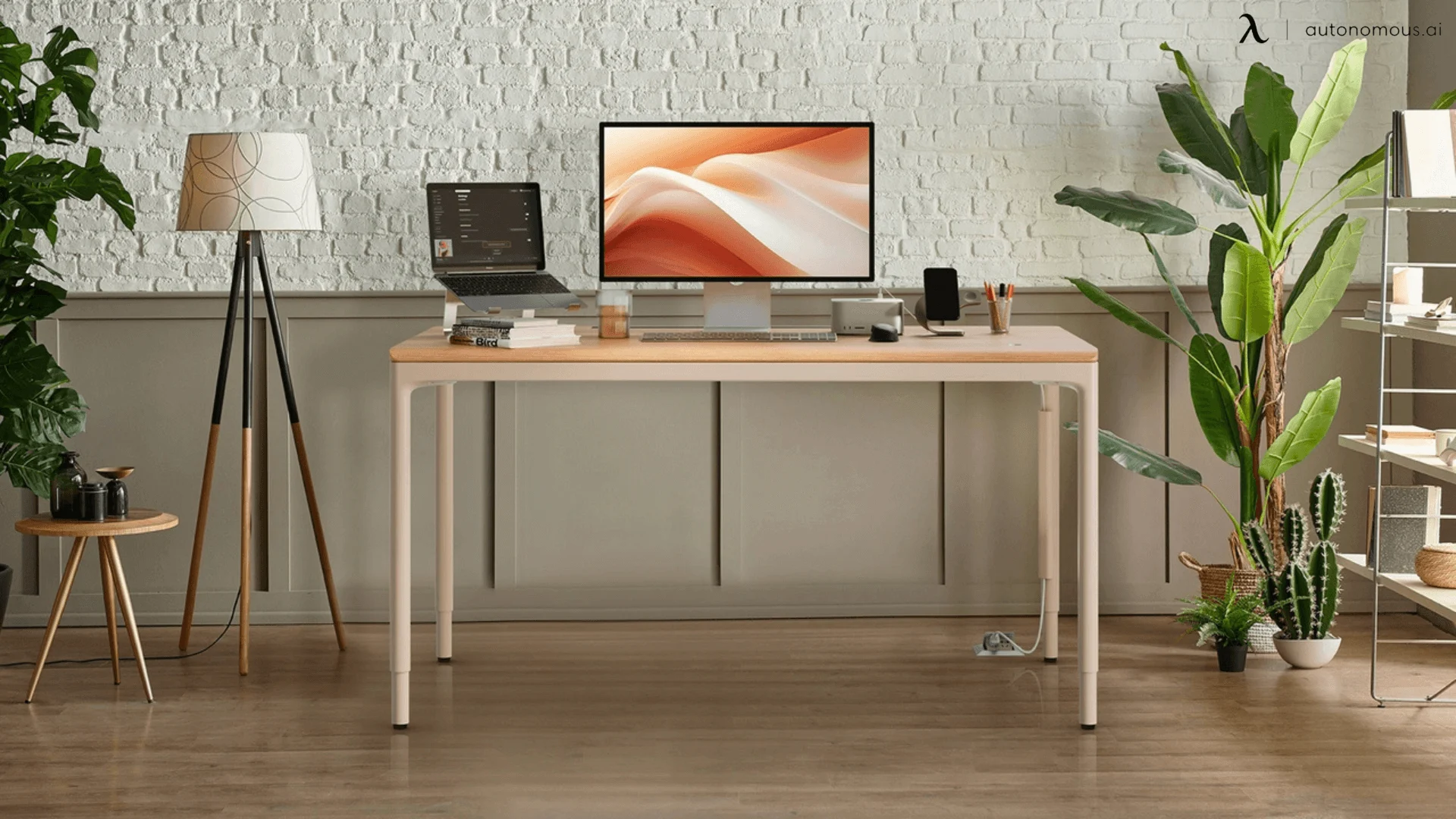
Table of Contents
- Making a Vintage Standing Desk Work for Modern Workflows
- 8 Best Vintage Standing Desks for Your Home Office
- 1. Autonomous Desk 2
- 2. Autonomous Desk Levitate 2
- 3. Aiterminal Standing Desk
- 4. VIVO Electric Stand Up Desk
- 5. HULALA HOME Louise Electric Standing Desk
- 6. Orren Ellis Retro Brown Electric Height-Adjustable Desk
- 7. Millwood Pines Dessens Manual Sit-to-Stand Desk
- 8. The Twillery Co. Radnor Executive Standing Desk with Built-In Storage
- Vintage Standing Desk Décor Ideas
- FAQs
- Conclusion
Most standing desks prioritize function over form. They adjust, they hold your monitors, they do the job. But they rarely feel like furniture — pieces chosen with care, not just purchased to fill a gap.
A vintage standing desk changes that equation. You get the ergonomic benefits of alternating between sitting and standing, wrapped in something worth looking at. Real wood. Intentional proportions. A desk that earns its place in your home office setup instead of just occupying it. Below, we break down the best vintage-style standing desks across styles and budgets.
Making a Vintage Standing Desk Work for Modern Workflows
A vintage standing desk doesn't mean giving up on functionality. Most desks in this roundup already include cable management, built-in charging, and electric height adjustment.
For those drawn to true antiques or simpler designs, a few additions bridge the gap: a sit-stand desk converter can motorize a fixed-height piece, while a dual monitor stand keeps screens at eye level without cluttering the surface. Pair either with an ergonomic chair, and the setup handles eight-hour days as well as any contemporary workstation.
8 Best Vintage Standing Desks for Your Home Office
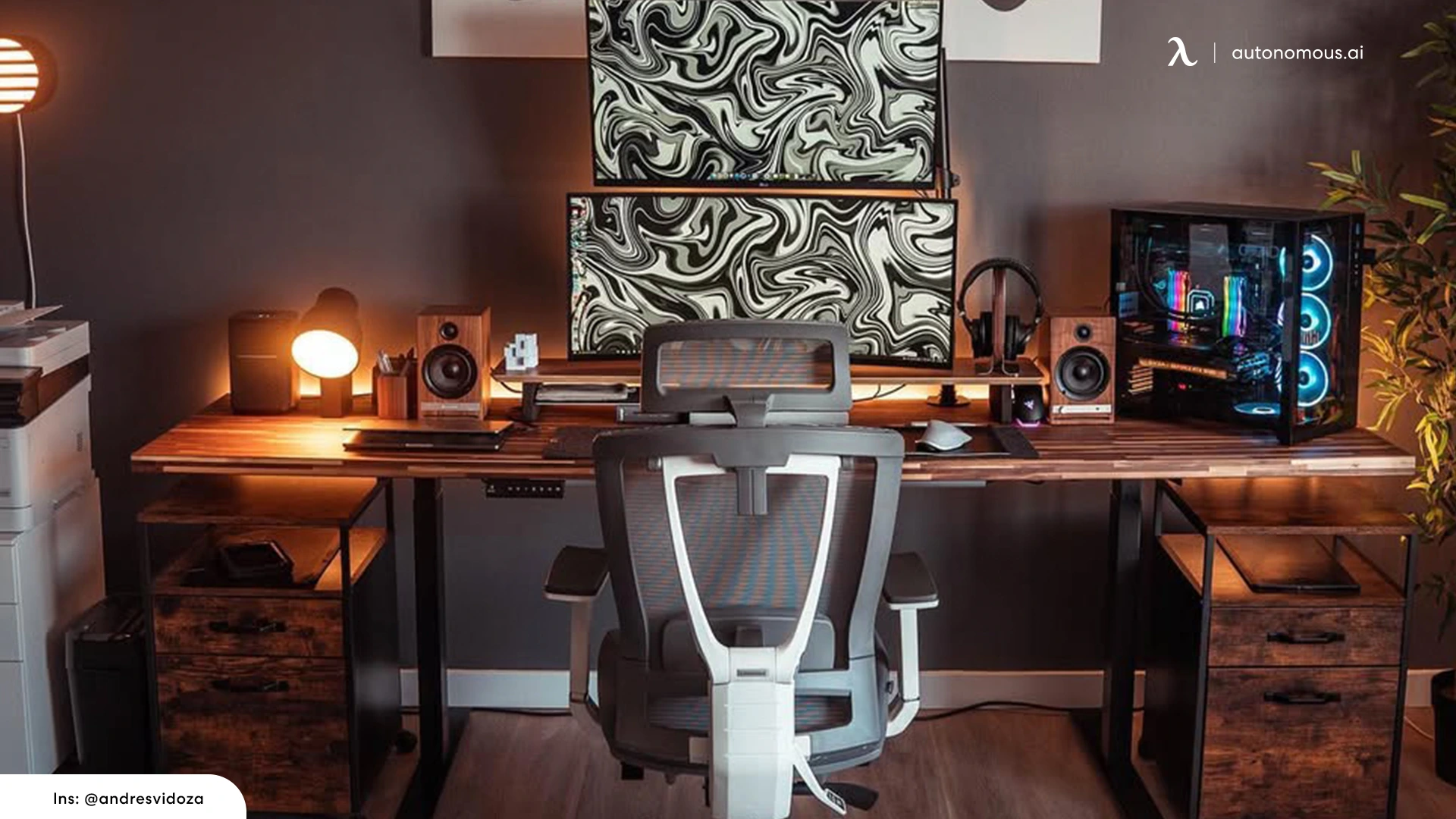
Vintage standing desks tend to fall into three camps. Industrial pieces lean on cast iron and raw metal — rugged, unapologetic, built to anchor a room. Mid-century modern goes the opposite direction: clean lines, tapered legs, restraint as a design principle. Traditional antique sits somewhere warmer — solid wood, visible grain, the kind of craftsmanship that invites you to run your hand across the surface.
The right choice depends on what's already in the room. An industrial desk adds edge to a minimal space; a wooden antique softens one that skews too sterile. Below, we've gathered 8 vintage style standing desks across price points, proof that an aesthetic standing desk doesn't have to sacrifice function for form.
1. Autonomous Desk 2
/https://storage.googleapis.com/s3-autonomous-upgrade-3/production/ecm/240114/5(9).jpg)
Best for: Home offices drawn to organic materials and understated design
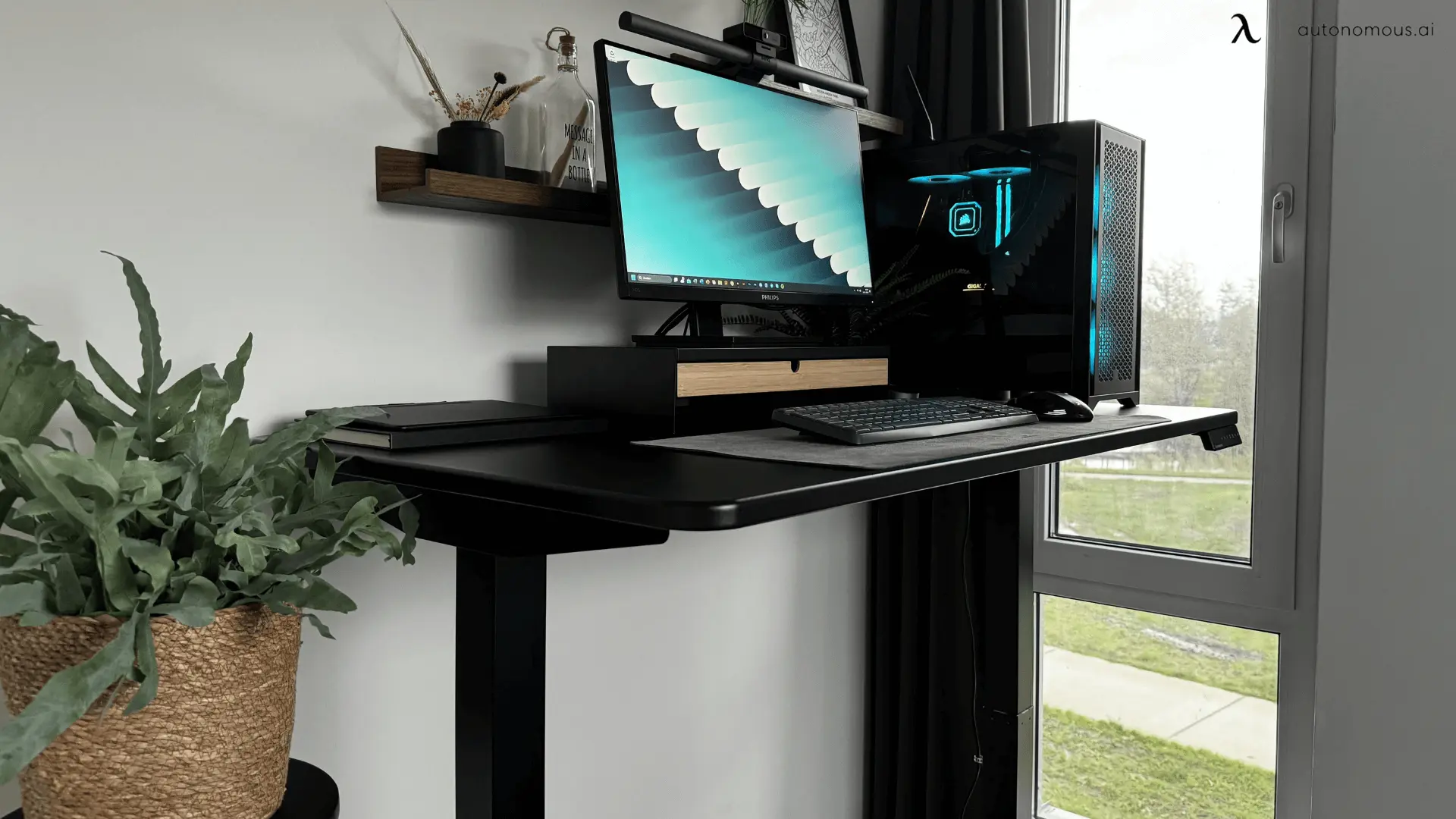
Bamboo has a quiet presence that most desk materials don't. The grain is subtle, the tone is warm without being dark, and it doesn't demand attention the way walnut or industrial steel might. The Autonomous Desk 2 in bamboo leans into that restraint, a minimalist desk that feels natural in the room rather than imposed on it.
In daily use, the bamboo surface stays cool to the touch and resists the smudges that show easily on glossy finishes. Height transitions are smooth enough to go unnoticed during calls, no jarring motor sounds, no shuddering stops. The frame disappears into the background, doing what it should without drawing attention. It's the kind of a desk you stop thinking about once it's set up, which is exactly the point.
Dual motors keep transitions smooth and quiet, under 45 dB, roughly the sound level of a library. The 310 lb capacity handles dual monitor setups, a laptop, and whatever else your workflow requires without strain.
Specs:
- Desktop: 53" × 29" (Classic) or 70.5" × 30" (XL)
- Height range: 26.2" - 52"
- Motor: Dual motor, 2.3"/sec lift speed
- Capacity: 310 lbs
Trade-offs: Bamboo shows wear differently than hardwood, scratches may be more visible over time.
2. Autonomous Desk Levitate 2
Best for: Users who prioritize stability and furniture-grade materials
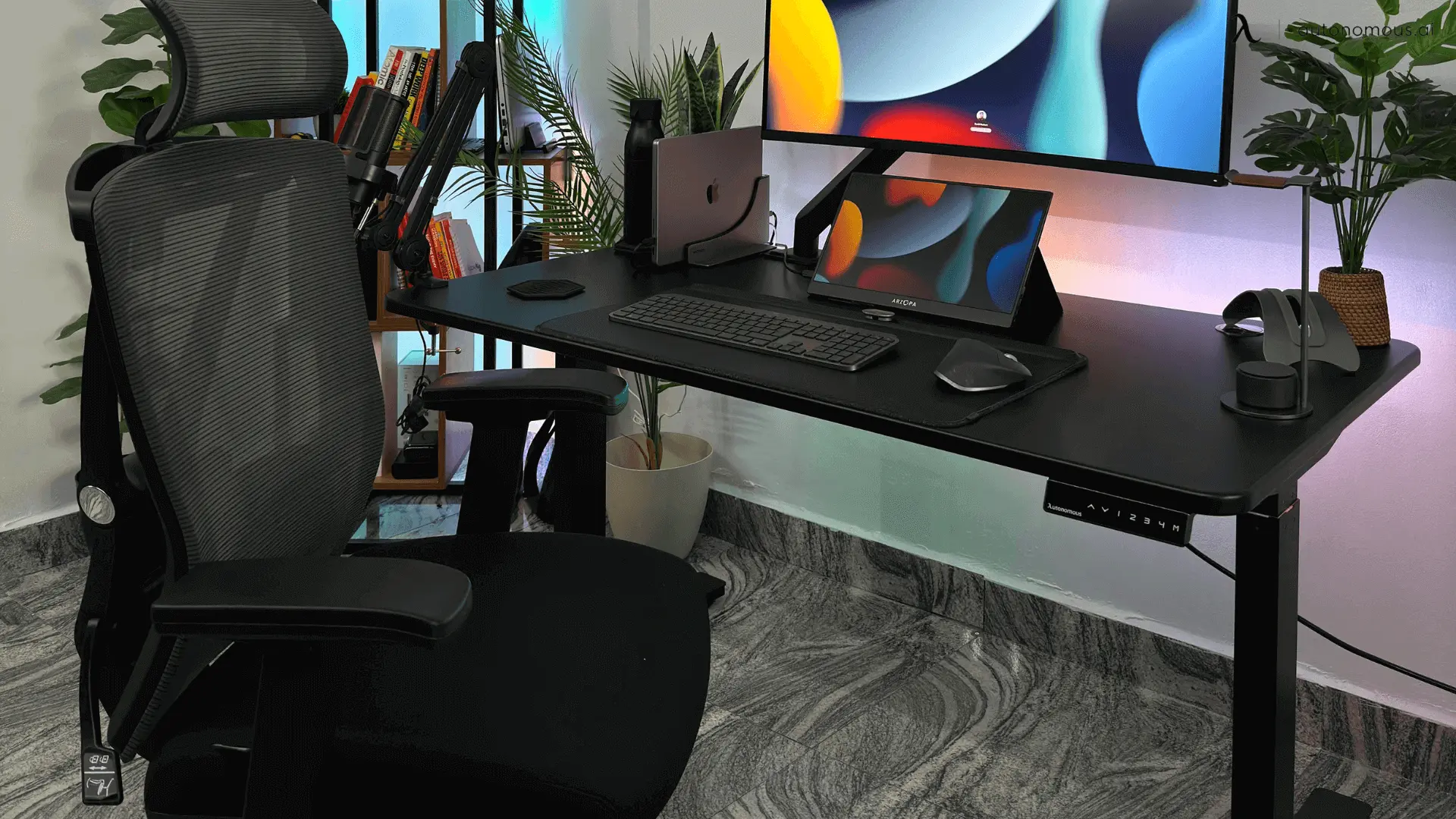
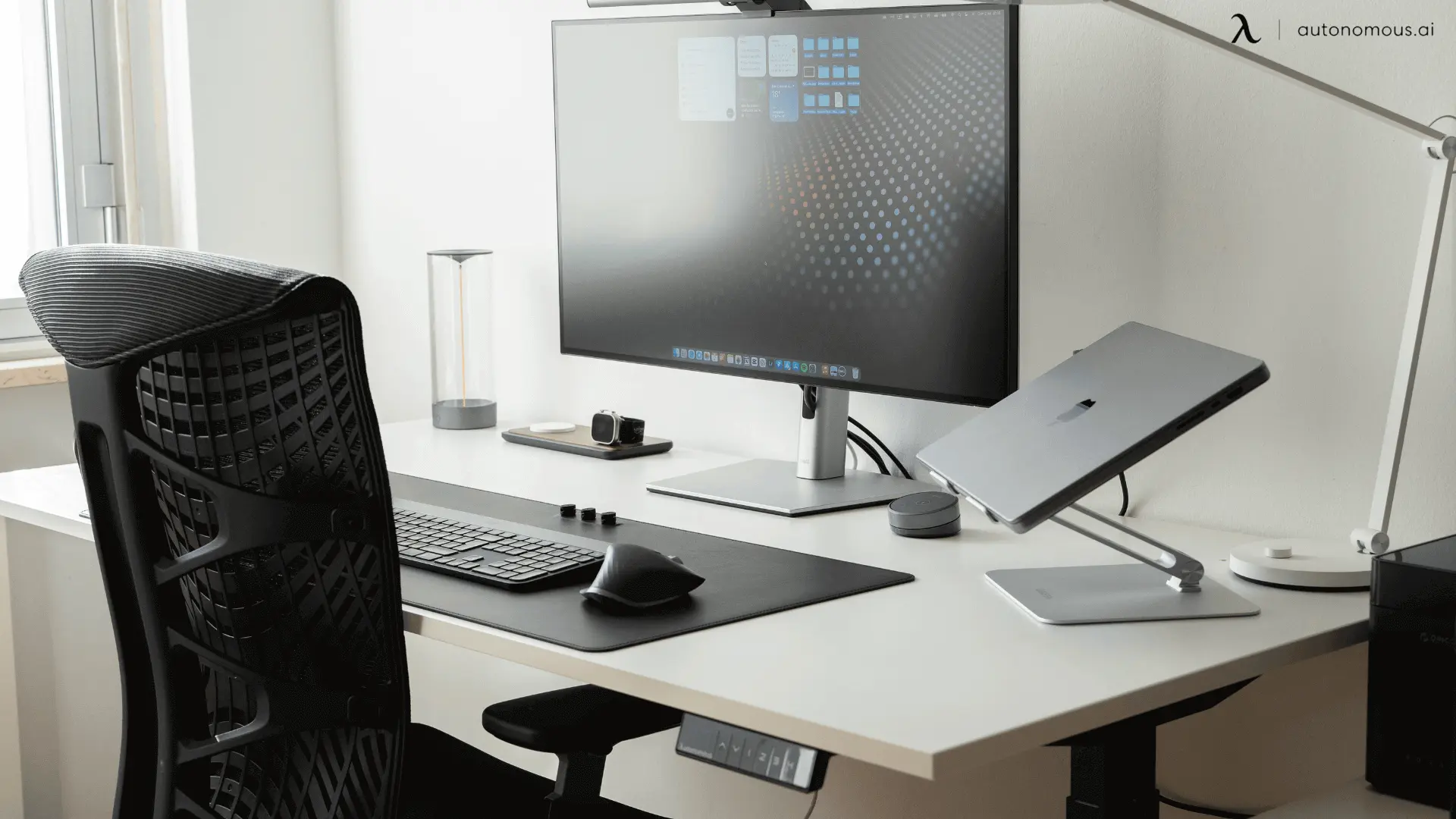
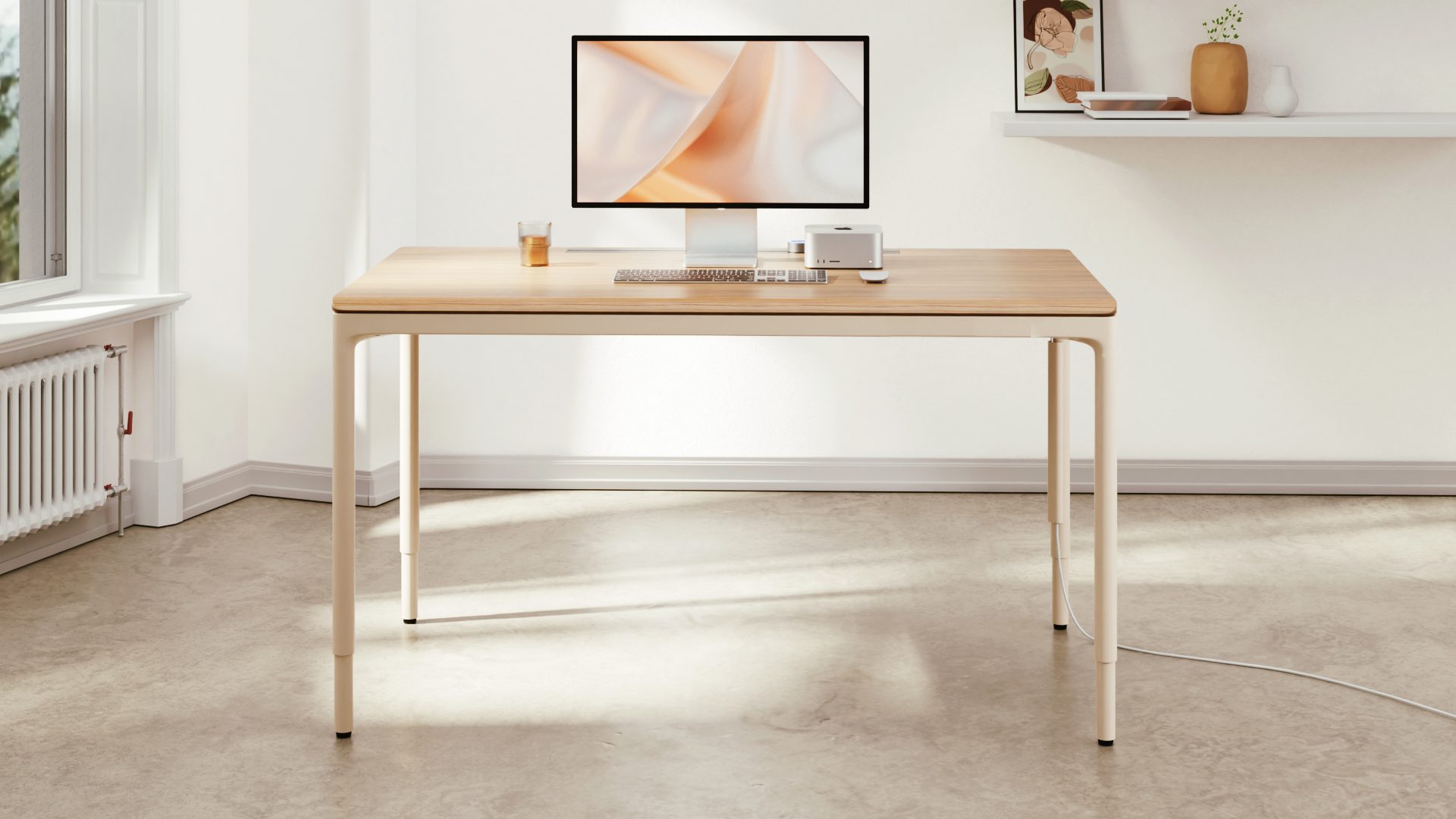
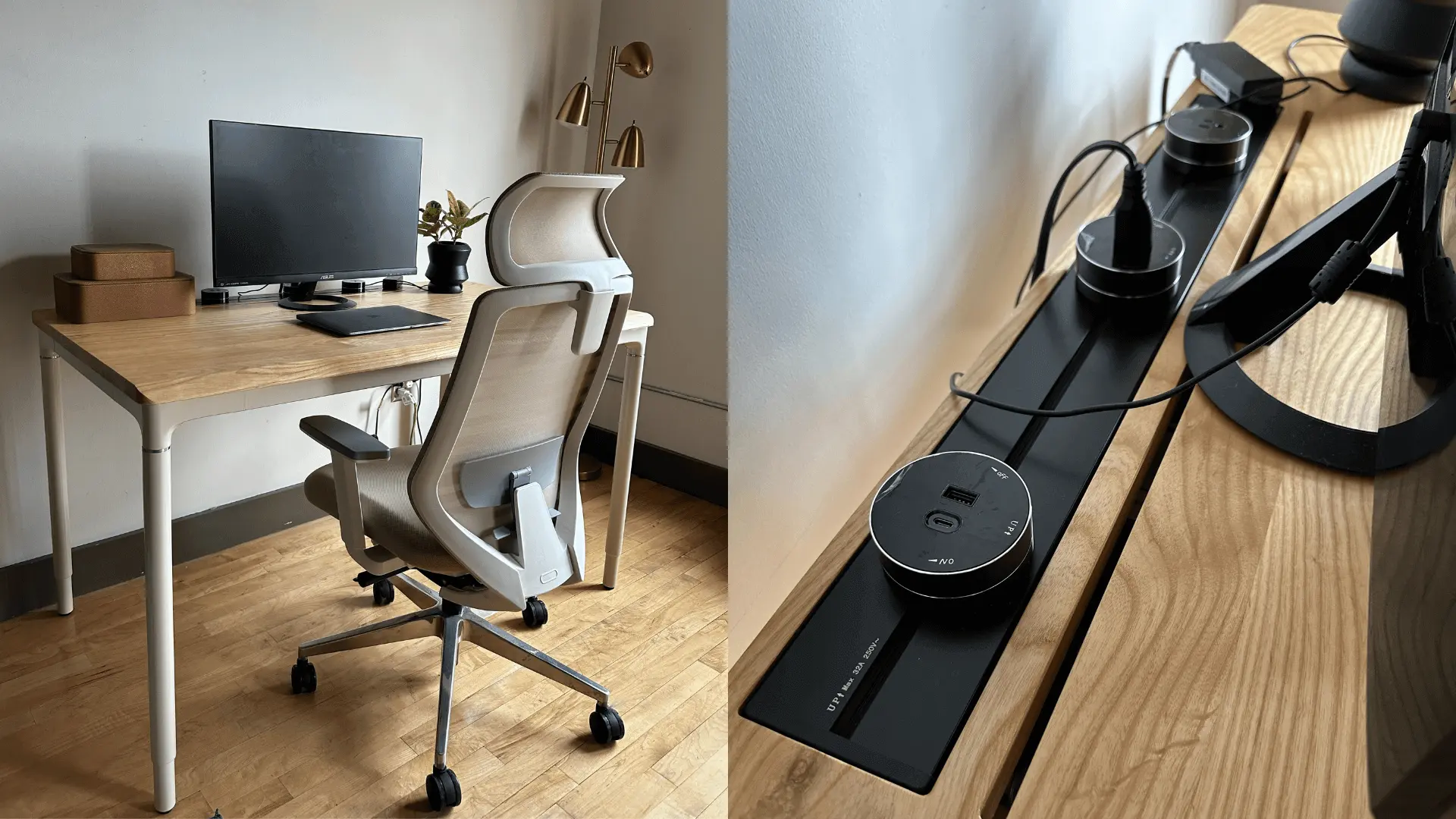
Most standing desks rest on two legs. The Autonomous Levitate 2 is a 4-leg standing desk, and you feel the difference immediately. . There's no sway at standing height, no wobble when you type. It's the kind of stability you'd expect from a dining table, not office equipment.
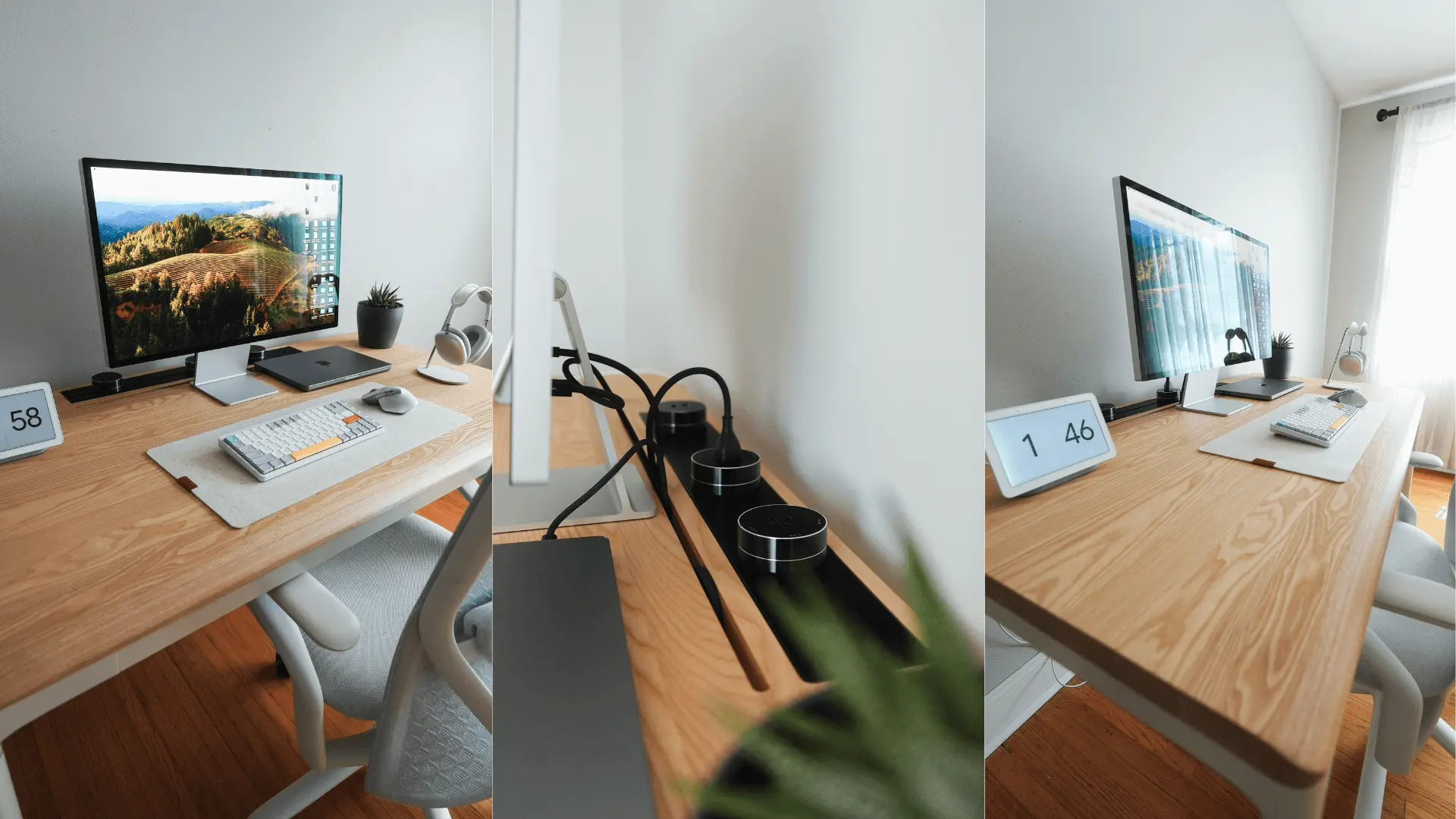
The desktop is solid natural ash, not veneer, not laminate. That means real weight, real durability, and a surface that holds up over years of daily use without chipping or peeling at the edges. The four-leg base supports up to 380 lbs, handling dual monitors, a laptop, and whatever else your workflow demands. Among vintage style standing desks, few commit this fully to real materials and structural overkill. This standing desk reads as furniture rather than office equipment, which matters if your workspace doubles as a living space.
Specs:
- Desktop: 53" × 29" or 59" × 31.5"
- Height range: 27" - 44"
- Motor: Quad motor system
- Capacity: 380 lbs
- Material: Solid natural ash wood
- Features: Touch-free height sensor, built-in cable management groove
Trade-offs: Higher investment at $999. More complex assembly due to 4-leg design and wiring. Narrower height range may not suit very tall or very short users.
3. Aiterminal Standing Desk
/https://storage.googleapis.com/s3-autonomous-upgrade-3/static/upload/images/customer/croppedimage-2_1669342724.jpg)
Best for: Budget-conscious buyers testing the sit-stand workflow
Not everyone needs a $500+ desk to find out if standing while working suits them. The Aiterminal offers a simpler proposition: a wood-grain top, a steel frame, and the basic ergonomics of sit-stand adjustment, without the premium markup.
The frame includes features you'd expect at higher price points: anti-collision detection, overload protection, and four programmable height presets. At 47.25” x 23.6”, it's a small standing desk that still leaves room for a monitor, laptop, and notebook without crowding the surface.
The wood-grain laminate won't pass for solid walnut up close, but it reads warmer than the plain black or white surfaces common at this price. As a vintage stand up desk, it leans more toward workshop utility than mid-century elegance. That honesty is part of its appeal: nothing here pretends to be more than it is, which makes the desk easier to live with than budget options that overpromise.
Specs:
- Desktop: 47" × 24"
- Height range: 27.1" - 46.3"
- Motor: Single motor
- Capacity: 165 lbs
- Features: Anti-collision detection, overload protection, 4 programmable presets
Trade-offs: Lower weight capacity limits heavier setups. Slower lift speed than dual-motor alternatives. Laminate finish shows its budget origins upon close inspection.
4. VIVO Electric Stand Up Desk
Best for: Users who need workspace above all else
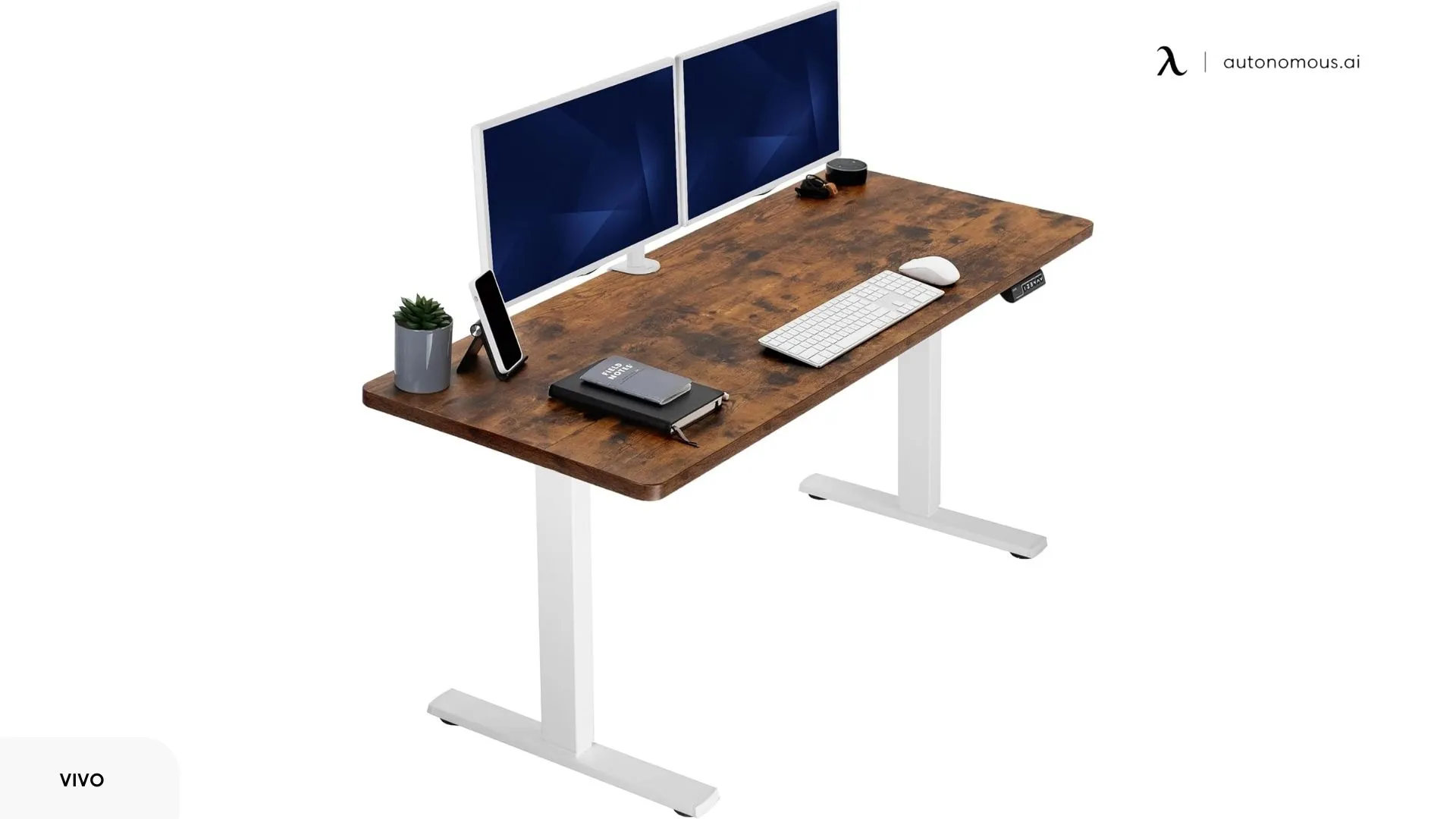
Some workflows demand surface area. Triple monitor setups, reference materials spread across the desk, equipment that doesn't fit on a standard 48" top. This vintage style standing desk addresses this directly: 63" × 32" of usable space at a price well below most desks this size.
63 inches changes how you work. Reference documents sit beside your main monitor instead of stacked underneath. A second laptop stays open for calls while your primary screen handles focused work. The surface accommodates spread — blueprints, sketch pads, sample materials, without forcing you to clear space constantly. For workflows that demand room to think, the VIVO delivers square footage that more design-forward desks often sacrifice.
Specs:
- Desktop: 63" × 32"
- Height range: 25.3" - 51"
- Motor: Single motor, 3-stage legs
- Capacity: 176 lbs
- Features: Touch-screen controller, memory presets
Trade-offs: No vintage character, purely utilitarian appearance. Particle board surface lacks the warmth and feel of real wood. Moderate weight capacity relative to the desk's size.
5. HULALA HOME Louise Electric Standing Desk
Best for: Users who want era-specific design without sacrificing modern conveniences
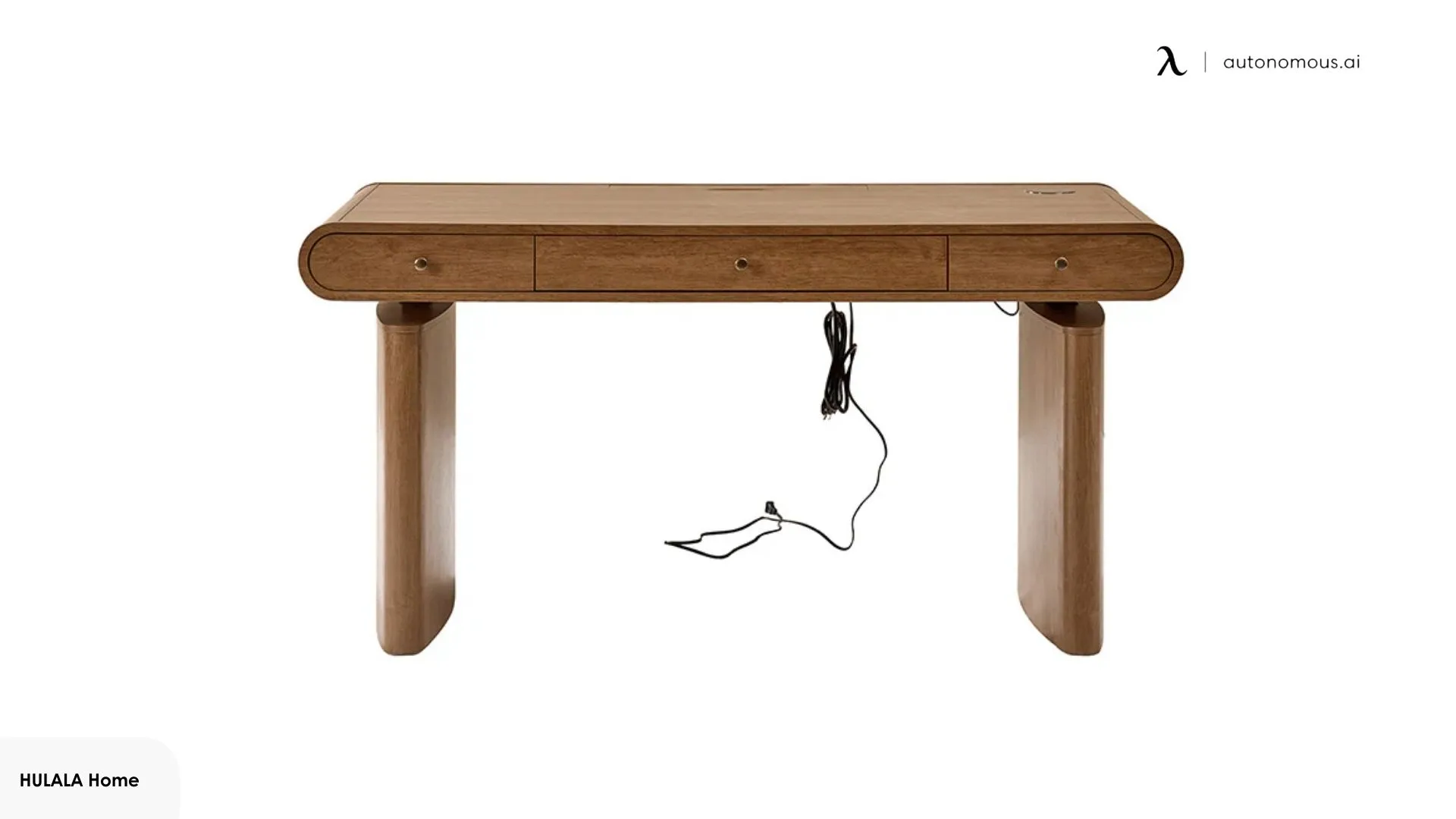
Most vintage style standing desks reference the past in broad strokes. The Louise commits to mid-century modern specifically — rounded edges, tapered wood legs, the kind of proportions you'd find in a restored Eames-era office. It's not trying to look old. It's trying to look like 1962, with Bluetooth. For anyone building a mid-century home office, this is the standing desk that actually belongs there.
What sets the Louise apart from generic retro aesthetics is its integration of technology you'd actually use. Drop your phone on the desktop, it charges wirelessly. Flip up the hidden panel, you find power outlets and USB ports. Three soft-close drawers keep the surface clear. There's even a sedentary reminder that nudges you to stand — a feature that feels oddly appropriate for a desk inspired by an era when people still typed standing at drafting tables.
The height adjustment is smooth and quiet, though the 100 lb capacity limits heavier monitor setups. As a vintage adjustable desk, it strikes a rare balance: recognizable period style that doesn't force you to sacrifice functionality.
Specs:
- Desktop: 60" × 28"
- Height range: 28.5" - 46.7"
- Motor: Single motor electric lift
- Capacity: 100 lbs (desktop)
- Features: Wireless charging, flip-top power panel with USB/outlets, 3 soft-close drawers, sedentary reminder
Trade-offs: Lower weight capacity than dual-motor alternatives. Premium price point at $1,699. The period-specific aesthetic may feel limiting if your office leans industrial or farmhouse.
6. Orren Ellis Retro Brown Electric Height-Adjustable Desk
Best for: Those seeking executive presence with vintage warmth
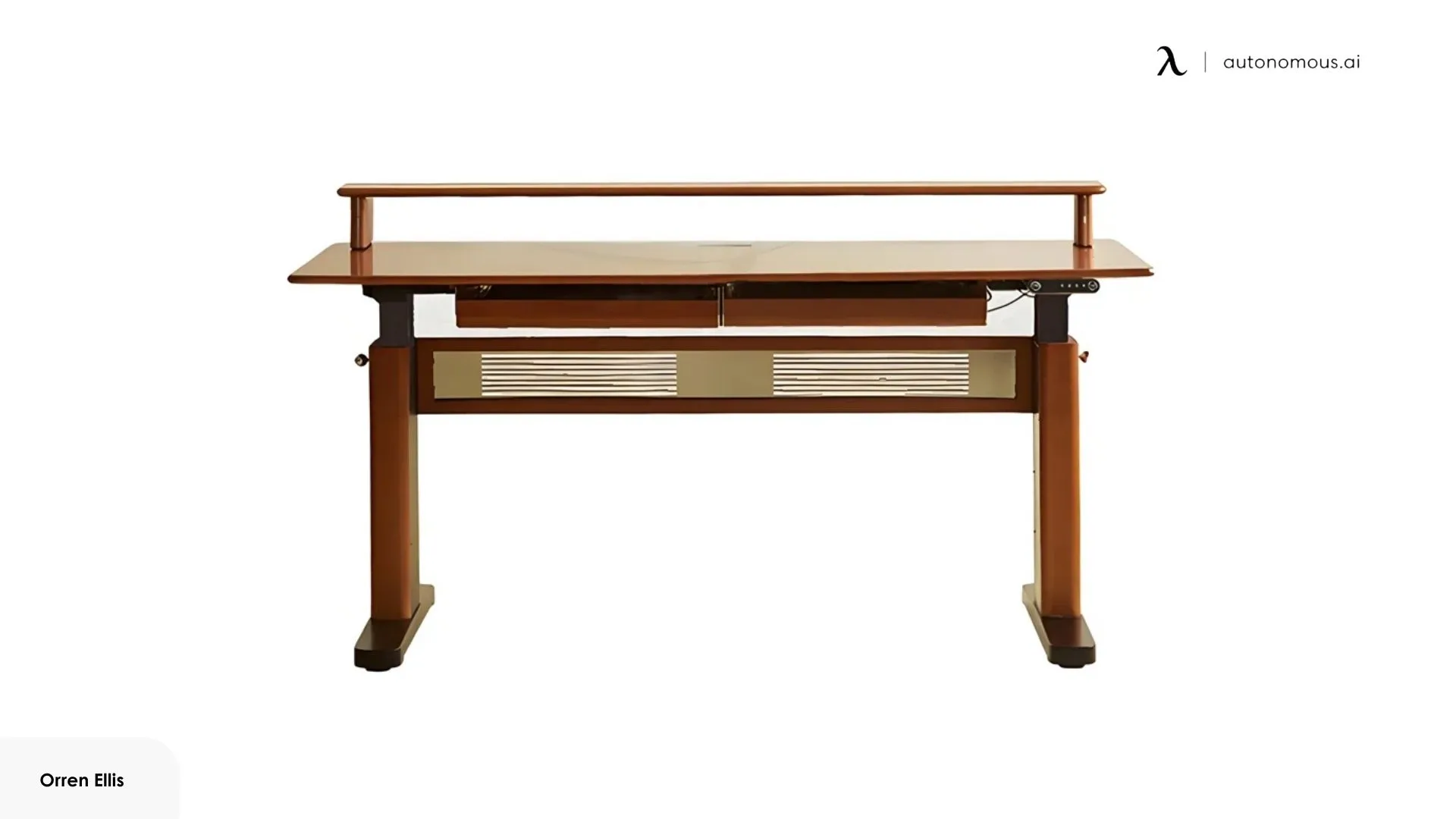
Some desks announce themselves the moment you enter a room. This vintage stand up desk sits in that category, a substantial piece that brings boardroom gravitas to a home office without feeling corporate. The solid wood and boxwood construction gives it heft and visual weight that laminate surfaces can't replicate, while the retro brown finish recalls the richly stained executive furniture of decades past.
Electric height adjustment brings this vintage stand up desk into the present. The dual-motor system moves the substantial top smoothly between sitting and standing heights, and memory presets mean you won't fiddle with buttons every time you want to change positions. Soft-close drawers and integrated cable management add practical touches that keep the desktop clear.
For a vintage sit-stand desk that needs to impress clients on video calls while still supporting actual work, the combination of real wood presence and modern ergonomics delivers.
Specs:
- Desktop: 59.06" × ~28"
- Height range: ~29" - 48"
- Motor: Dual motor electric lift
- Capacity: 220 lbs
- Material: Solid wood with boxwood construction
- Features: Soft-close drawers, cable management, memory height presets
Trade-offs: Higher price point reflects solid wood construction. The executive aesthetic may feel too formal for casual creative spaces. Heavier weight makes repositioning the desk more difficult.
7. Millwood Pines Dessens Manual Sit-to-Stand Desk
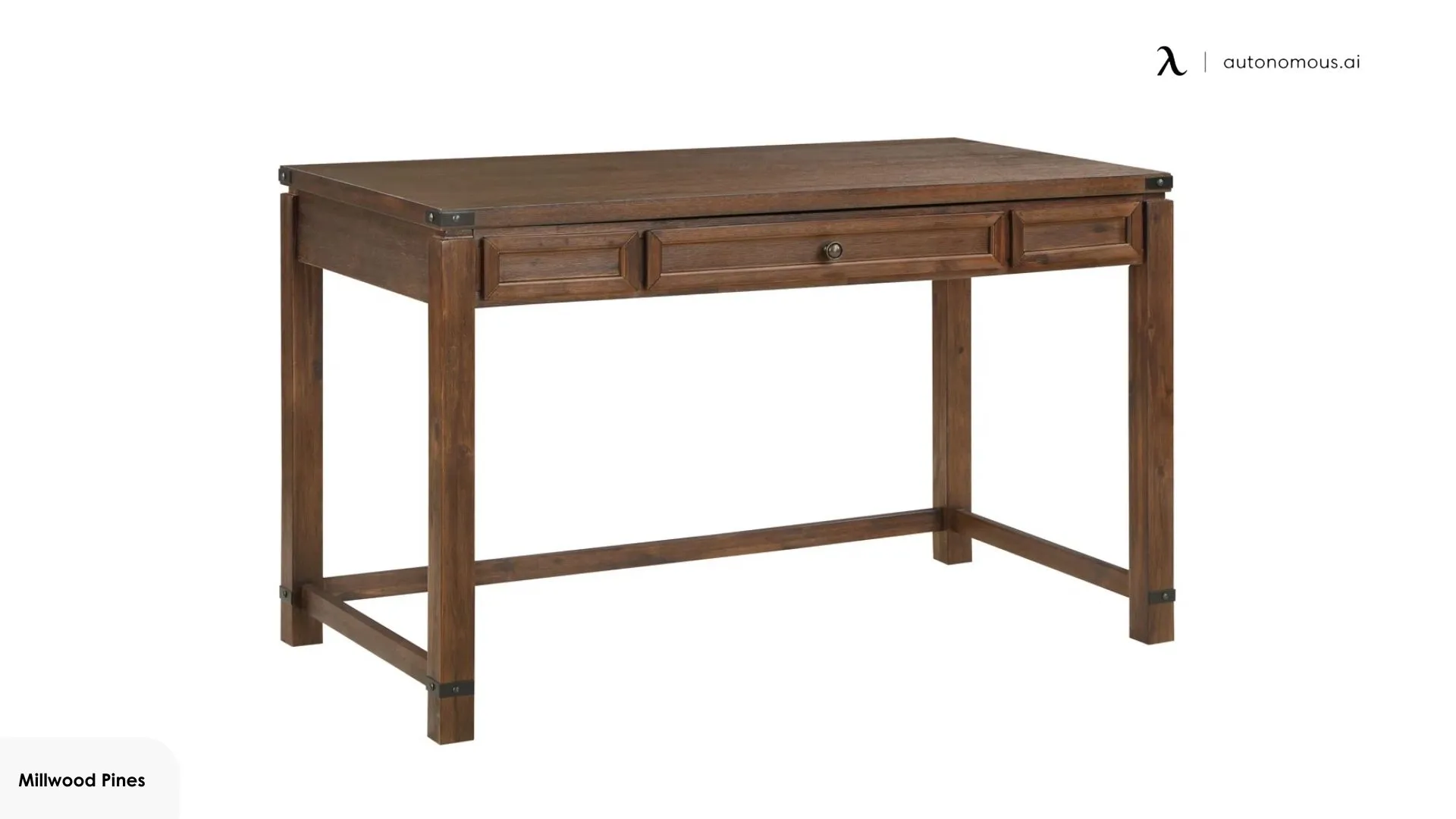
Best for: Budget-conscious buyers who want vintage character and basic height adjustment
Not every workflow demands motorized precision. The Millwood Pines takes a simpler approach to sit-stand functionality: a manual lifting desktop that adjusts to three fixed positions. It's a traditional desk. Raise it once for drafting-stool height. Raise it again, then once more for full standing.
The appeal here is honest materials at an accessible price. Solid wood and select veneers give the desk a warmth that particle board alternatives lack. A paneled top drawer holds office accessories. Available in dark woodgrain or light antiqued wash finishes, the Dessens suits anyone drawn to modern rustic office decor — natural materials, visible texture, unfussy warmth.
As a vintage looking standing desk, it leans more farmhouse than mid-century. The manual adjustment won't suit those who switch positions constantly, but for users who stand for focused work sessions and sit for everything else, the three-position system handles the job without adding complexity.
Specs:
- Desktop: Standard writing desk dimensions
- Height positions: 3 manual positions (sitting, drafting/counter height, standing)
- Adjustment: Manual lift mechanism with soft-close
- Material: Solid wood and select veneers
- Features: Paneled storage drawer, soft-close lifting mechanism
Trade-offs: Manual adjustment limits how often you'll realistically switch positions. Fixed height increments won't work for all body types. No electric features like charging ports or motorized presets.
8. The Twillery Co. Radnor Executive Standing Desk with Built-In Storage
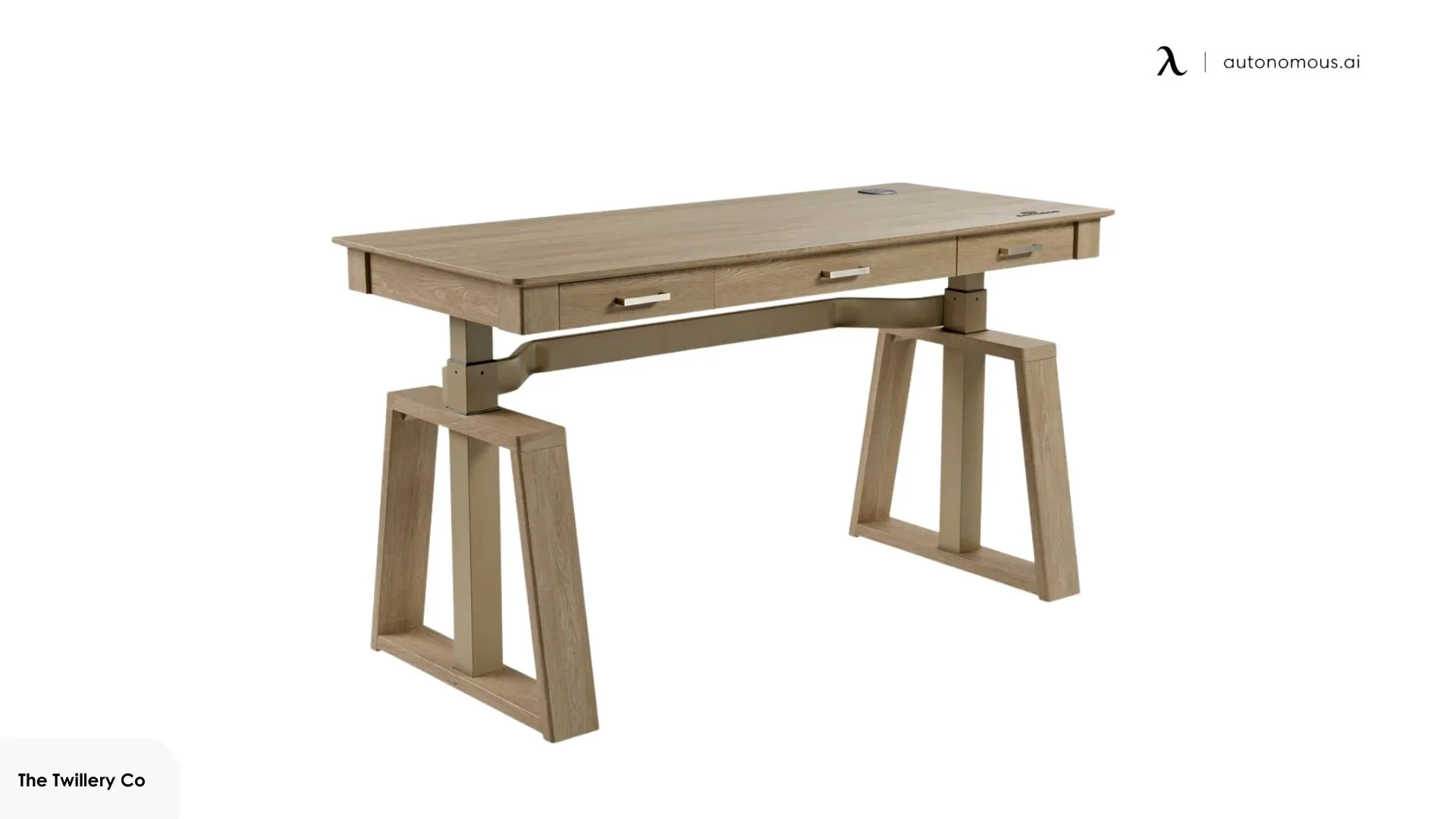
Best for: Users who need organization built into the desk, not bolted onto it
Standing desks rarely solve the clutter problem. They adjust, they support your monitors, but your cables, supplies, and paperwork still end up in piles or in a separate cabinet across the room. The Twillery Co. Radnor takes a different approach: three integrated drawers beneath the 60" × 28" desktop, deep enough to hold what you'd otherwise stash elsewhere.
The oak-texture veneer and trapezoidal legs give it a transitional look, clean enough for a contemporary space, warm enough to sit alongside older furniture. It doesn't chase a specific era the way some vintage adjustable desks do, which makes it easier to place in rooms with mixed styles. The embedded control panel, anti-collision detection, and height memory presets handle the ergonomic basics without requiring a learning curve.
Specs:
- Desktop: 60" × 28"
- Height range: Adjustable (electric dual-motor)
- Motor: Dual motor, under 50 dB
- Capacity: 220 lbs
- Material: Oak texture veneer with PU paper laminate
- Features: 3 built-in drawers, wireless charging pad, 3 USB ports, embedded control panel
Trade-offs: The transitional styling won't appeal to those seeking stronger period character. Veneer surface lacks the tactile depth of solid wood. Storage drawers add weight, limiting repositioning.
Vintage Standing Desk Décor Ideas
The desk sets the tone. Everything around it either reinforces that tone or fights against it. A few intentional choices can make a vintage standing desk feel like the anchor of a room rather than an isolated statement piece.
- Start with materials, not themes
Brass, leather, solid wood, matte ceramics, these tend to sit naturally next to a vintage style standing desk because they share a similar honesty. A leather pencil cup or a wooden letter tray doesn't demand attention, but it reinforces what's already there.
A walnut desk setup, for example, pairs well with warm-toned accessories that echo the grain rather than compete with it. The instinct to "go retro" with themed accessories often backfires; a single worn object with real history says more than a shelf of reproduction pieces.
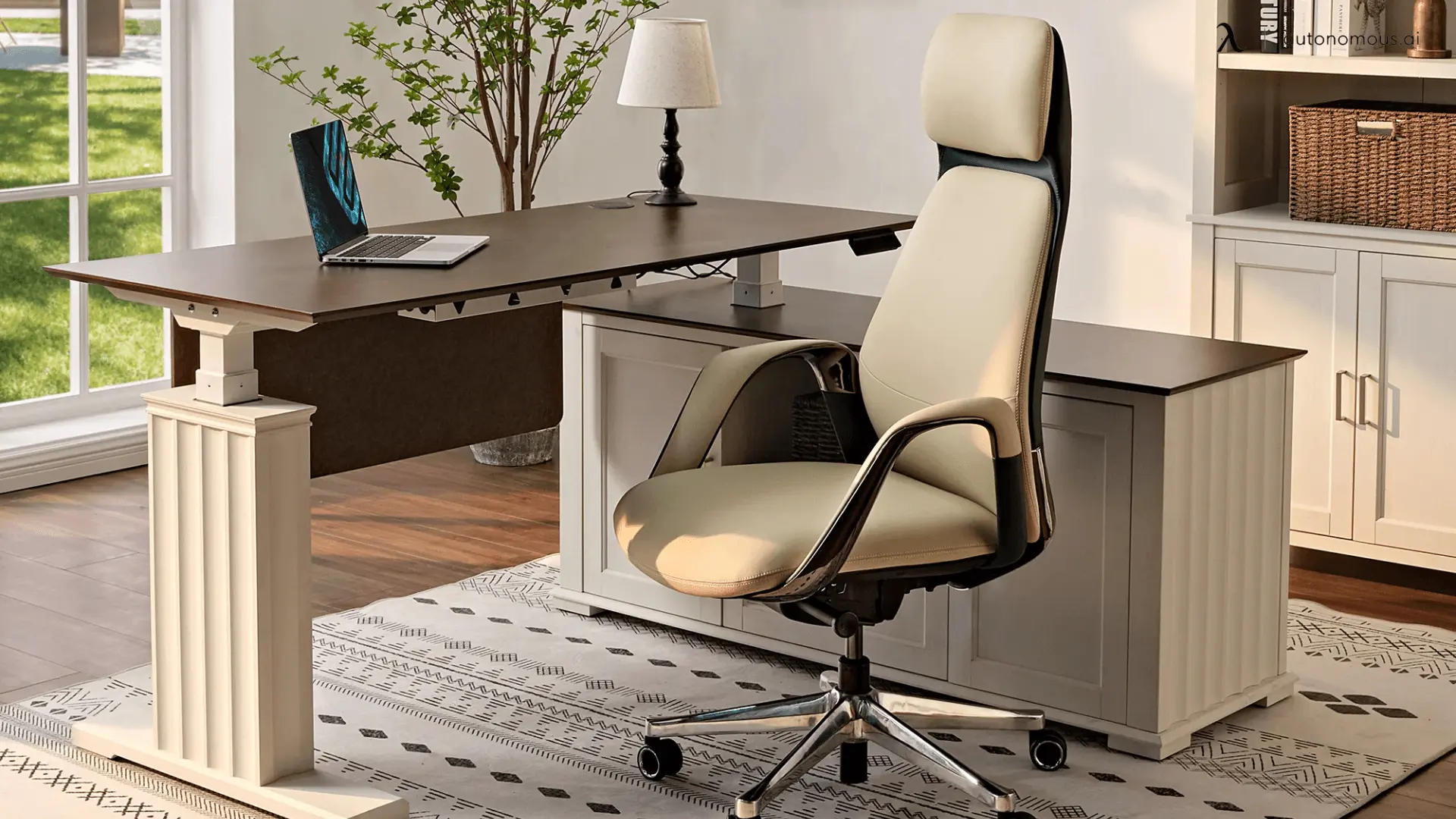
- Let technology recede:
Monitors, chargers, and cables are unavoidable, but they don't need to dominate. A monitor arm lifts the screen off the surface and creates breathing room. Cord covers or the desk's own cable management keep wiring out of sight. When the tech feels like a tool rather than a feature, the desk stays the focal point.
- Add something living
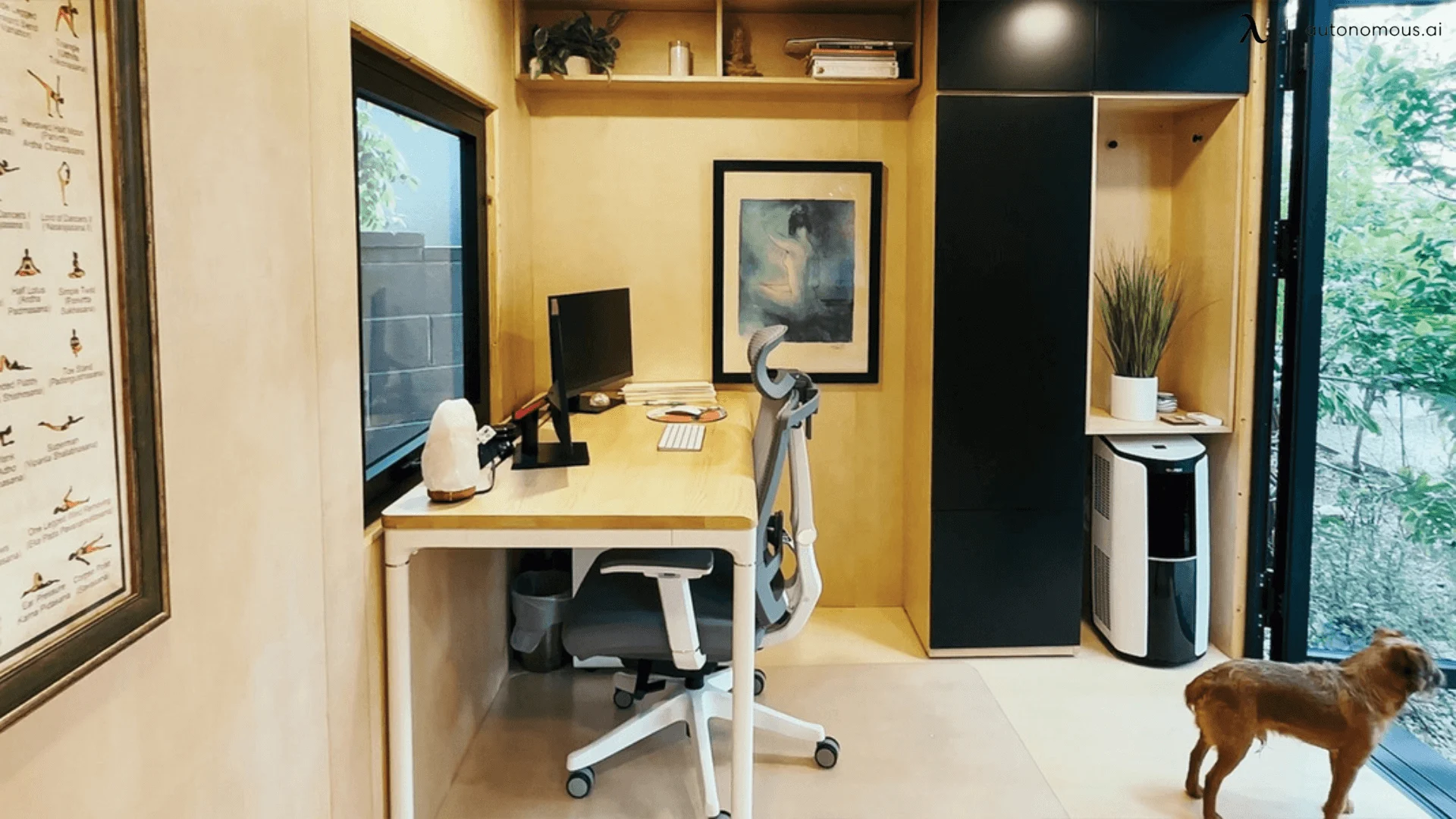
A small potted fern, a trailing pothos, a succulent in a simple clay pot—greenery introduces texture and softness that balances wood and metal. One or two plants placed near natural light tend to feel more intentional than a collection scattered across the surface
- Keep the surface clear.
A vintage looking standing desk loses its presence when buried under stacks and accessories. A few functional objects, an organizer, a lamp, a notebook, leave enough open space for the desk's grain and finish to come through. The emptiness isn't wasted; it's part of what makes the piece feel considered.
The aim isn't period accuracy. It's building a standing desk setup where everything visible earns its place, functional, textured, and quiet enough to let you focus.
FAQs
Are vintage standing desks good for everyday work?
Yes, a well-built vintage standing desk can fully support daily work when it includes electric height adjustment and sufficient weight capacity. Many modern vintage-style desks are designed for long workdays with monitors, laptops, and accessories.
Can a vintage standing desk be electric?
Absolutely. Many vintage standing desks use electric motors hidden within traditional frames, offering smooth height adjustment without compromising the classic look. Dual- or quad-motor systems provide the best stability.
What materials are best for a vintage standing desk?
Solid wood like ash, walnut, bamboo, or oak is most common for a vintage standing desk. These materials age well, feel furniture-grade, and reinforce the authentic vintage appearance compared to laminate surfaces.
Is a vintage standing desk ergonomic?
A vintage standing desk is ergonomic if it offers a wide height range that fits your body and allows seamless switching between sitting and standing. Pairing it with an ergonomic chair and monitor arm further improves posture and comfort.
What is the difference between a vintage standing desk and an antique desk?
A vintage standing desk is newly manufactured with retro design cues and modern technology, while an antique desk is an original historical piece with fixed height. True antiques usually require a desk converter to function as a sit-stand workstation.
How much does a vintage standing desk cost?
Vintage standing desks range from around $300 for basic laminate models to $1,500+ for solid wood, furniture-grade designs. Price typically reflects material quality, motor system, and craftsmanship.
Is a vintage standing desk good for small home offices?
A vintage standing desk can work well in small spaces if you choose a compact size and lighter wood tones. Designs with clean lines and minimal hardware tend to feel less visually heavy in tight rooms.
Are vintage standing desks stable at standing height?
Yes, high-quality vintage standing desks with solid wood tops and reinforced frames are very stable, especially four-leg or dual-motor designs. Budget models with single motors may show slight wobble at full height.
Conclusion
A vintage standing desk does two jobs at once: it supports how you work and it contributes to the room you work in. That combination is rarer than it should be. Even among modern standing desks, most office furniture asks you to choose between ergonomics and aesthetics, or settles for a compromise that satisfies neither.
The eight desks here take different approaches, from solid wood executive pieces to budget-friendly farmhouse designs. What they share is intention. Each one looks like it was chosen, not defaulted to. Find the style that fits your space, and the rest, comfort, function, focus, follows.